The vast open site of Japan's 8th-century capital, with reconstructed gates and halls set against wide horizons and the Nara hills.
The Heijo Palace Site, or Heijo-kyo, is the sweeping archaeological heartland of Japan's ancient capital, the seat of imperial government during much of the eighth century when Nara was the flourishing centre of a newly centralised state. Today the site is an enormous open expanse of grassland and reconstructed monuments, a UNESCO World Heritage property, and it offers not a mountaintop panorama but a rare and evocative kind of viewpoint: wide, unobstructed vistas across the plain of the old capital, framed by the surrounding hills and punctuated by grand recreated buildings that convey the astonishing scale of early Japan's power.
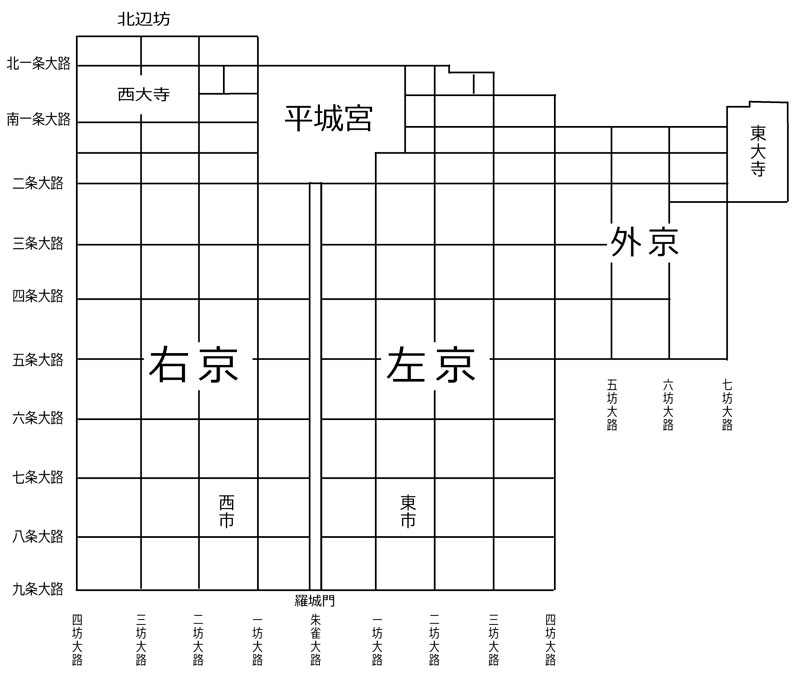
When the capital was laid out here, it was modelled on the great Chinese city of Chang'an, with a vast palace precinct at its northern end from which broad avenues ran south through a grid of streets. After the capital moved away, the palace fell into ruin and the land returned to fields, preserving the site beneath the soil for centuries. Modern excavation and research have revealed its plan in detail, and several key structures have been faithfully reconstructed, allowing visitors to sense the grandeur of the original city.
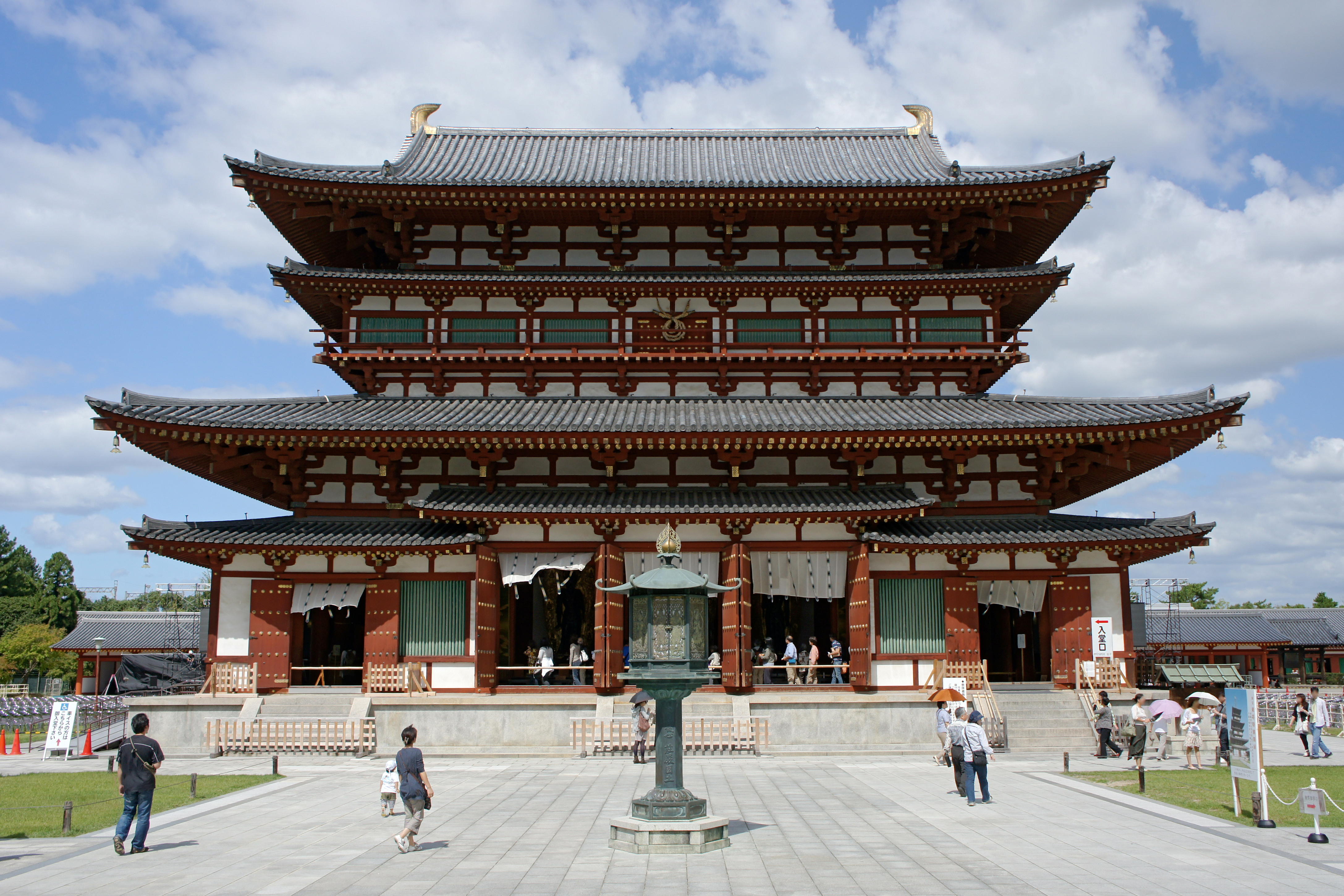
The two most striking reconstructions dominate the site and its views. The Suzakumon Gate, the great southern gateway to the palace, rises in vermilion and dark timber at the head of the ancient main avenue, and standing before it one can look across the open ground toward the reconstructed First Daigokuden, the immense audience hall where the emperor once presided over affairs of state. The distance between them, crossed by wide open space, dramatises the ambition of the eighth-century planners, and the low horizons let the eye travel out to the Nara hills beyond, creating a feeling of expansiveness rare among the city's crowded temple precincts.
Because the site is so large and open, exploring it feels like walking through a landscape as much as a monument. On-site museums and exhibition halls explain the history and display excavated artefacts, models and reconstructions, deepening the sense of what once stood here, and a curious quirk is that a working railway line crosses part of the grounds. The overall effect is contemplative and atmospheric, especially on a clear day when the reconstructed buildings glow against a wide sky, and in spring cherry blossom adds colour to the edges of the plain.
To reach the site, walk about fifteen to twenty minutes south from Yamato-Saidaiji Station on the Kintetsu lines, or use the local loop bus that serves the grounds. Entry to the site and its main facilities is free, with buildings generally open from morning to late afternoon and closed on Mondays, though the open grounds can always be enjoyed. Allow around ninety minutes to walk between the Suzakumon Gate and the Daigokuden, visit an exhibition hall and take in the sweeping views. For history lovers and anyone seeking open horizons and a sense of ancient grandeur, the Heijo Palace Site is a distinctive and rewarding Nara viewpoint.
A local's tip
Stand between the reconstructed Suzakumon Gate and the great Daigokuden hall to grasp the sheer scale of Japan's 8th-century capital, with the Nara hills framing the horizon.
Best time to visit
Clear days for open vistas across the ancient capital site
Getting there
From Yamato-Saidaiji Station walk about 15-20 minutes south to the vast open Heijo Palace site, or use the local loop bus; the reconstructed Suzakumon Gate and Daigokuden hall dominate the grounds.
Good to know
- Museum
- Restrooms
- Open Vistas
- Wheelchair Access
Plan the whole trip offline
Heijo Palace Site and Suzakumon Gate is one of many places in the Real Japan app — with turn-by-turn directions, nearby spots and full offline maps you can use with no signal.