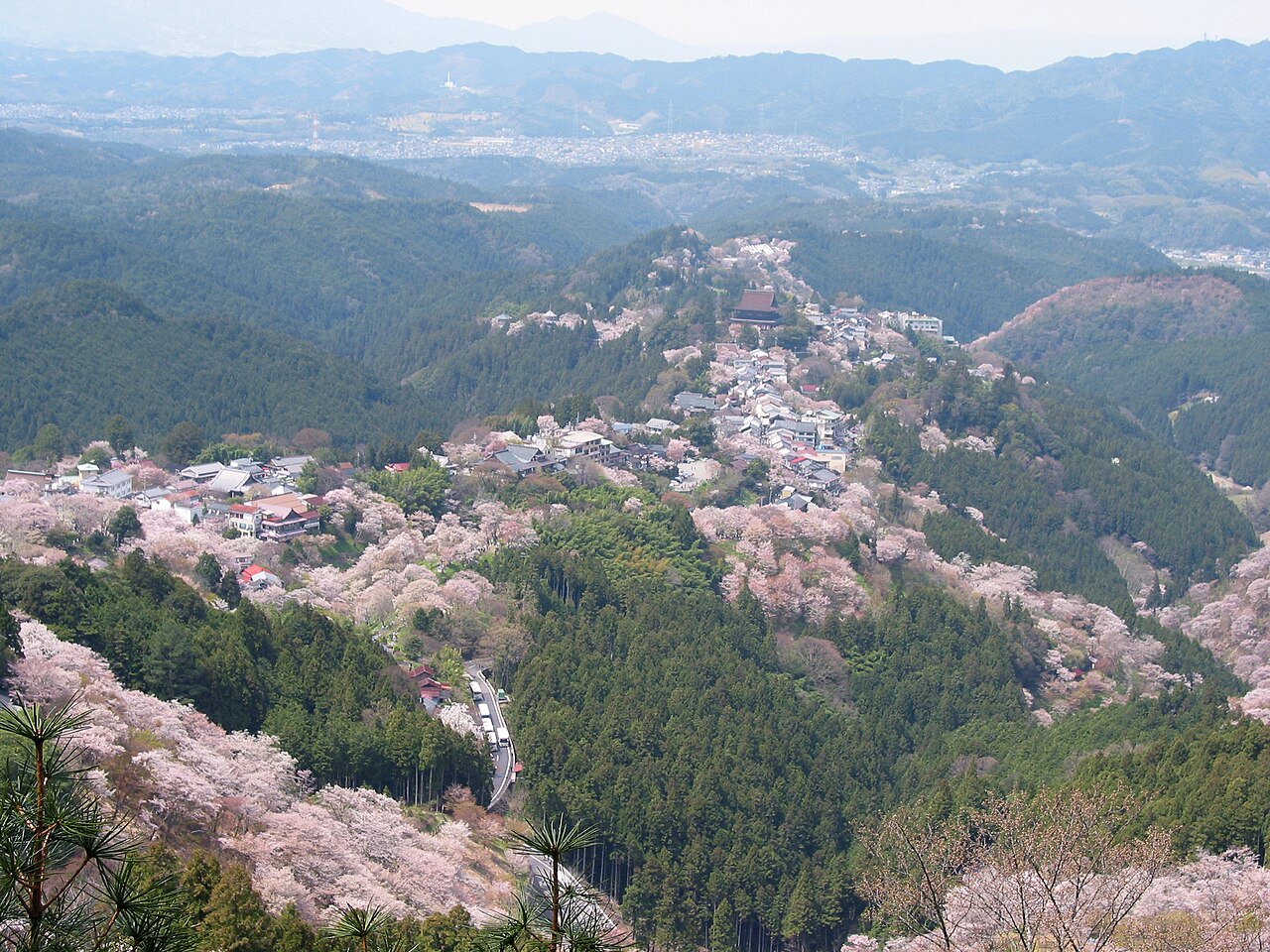
A sacred mountain in southern Nara famed as Japan's greatest cherry-blossom viewpoint, with thousands of trees covering the slopes.
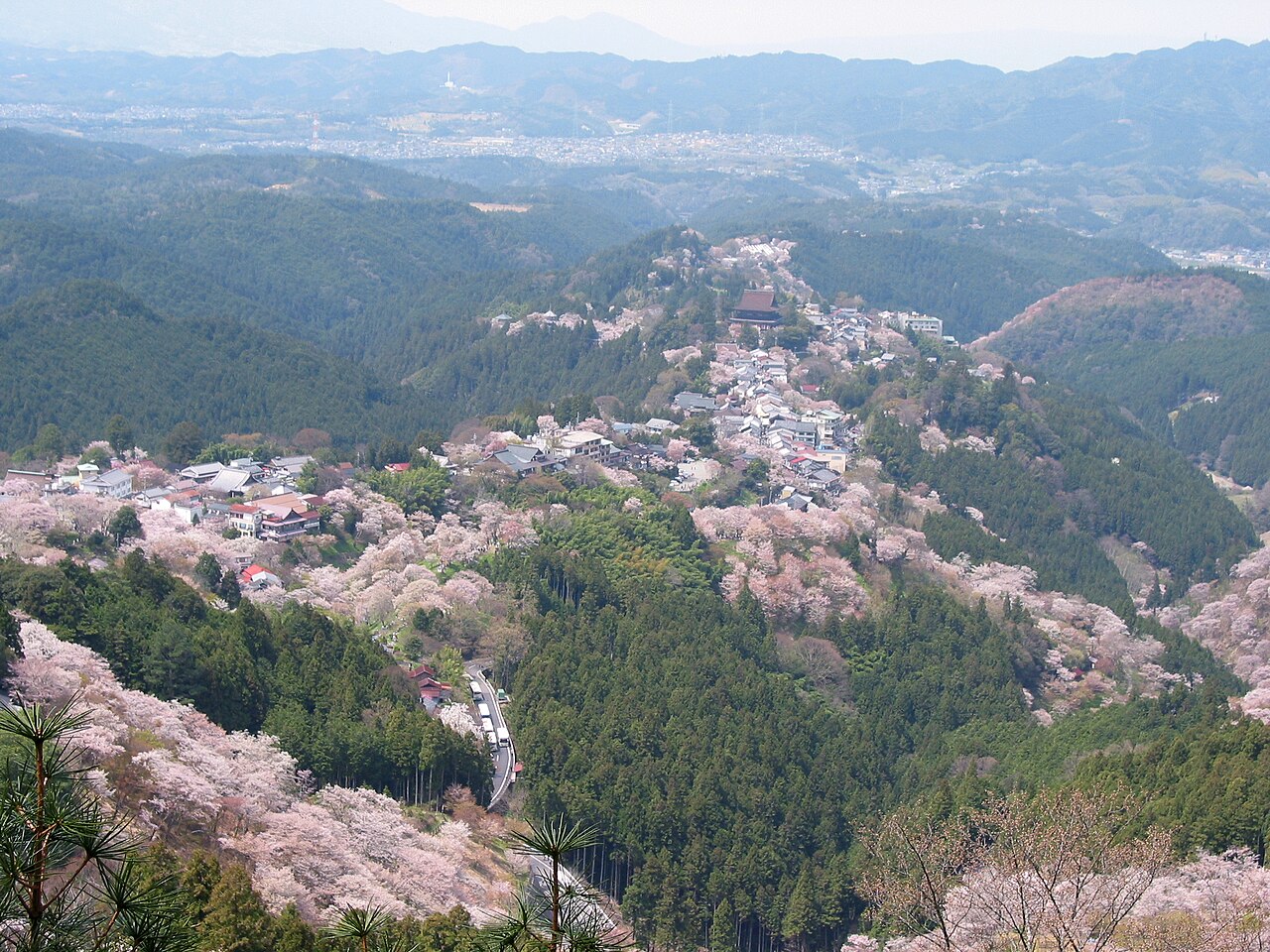
Mount Yoshino, or Yoshinoyama, in the mountainous south of Nara Prefecture, is celebrated as perhaps the most magnificent cherry-blossom viewing site in all of Japan. Each spring, tens of thousands of cherry trees blanket the mountainside in successive waves of pink, and the slopes become a living tapestry that draws admirers from across the country and beyond. As a part of the UNESCO World Heritage sacred sites of the Kii Mountain Range, Yoshino is also a place of deep spiritual significance, and its combination of natural spectacle and religious heritage makes it unforgettable.
The cherry trees of Yoshino have been planted and revered for well over a thousand years, many as sacred offerings connected to the mountain's role in Shugendo, the ascetic mountain religion. They are traditionally grouped into four areas ascending the slope, from the lower to the upper mountain, and because the higher groves bloom later than those below, the flowering season is unusually long, with the pink tide seeming to climb the mountain over the course of the spring. From the celebrated Hanayagura lookout in the upper reaches and various vantage points along the way, visitors gaze out over an ocean of blossoms flowing down the valleys, one of the great scenic sights of Japan.
Beyond the blossoms, Yoshino is a working sacred landscape dotted with important temples and shrines. Kimpusen-ji, with its towering wooden main hall, is a centre of Shugendo, and other historic sites line the mountainside village, whose single main street is packed with traditional inns, shops selling local sweets and crafts, and restaurants. Wandering this atmospheric village between viewpoints, with temples, cedar-scented air and mountain vistas at every turn, is a pleasure in itself, and the mountain rewards visits in autumn too, when the foliage turns the slopes to red and gold.
Exploring Yoshino involves a fair amount of walking on slopes and steps, so a moderate level of fitness helps, though a ropeway assists the initial ascent from the station and buses run higher up the mountain during busy periods. The mountainside is best appreciated slowly, following the main street and side paths from the lower groves toward the upper lookouts, pausing at temples and teahouses along the way.
To reach Yoshino, take the Kintetsu Yoshino Line to its terminus at Yoshino Station, then continue up to the village by ropeway or on foot. The mountain itself is free to roam, with charges only for the ropeway and for entry to certain temples. Because the peak cherry season is short and immensely popular, aim to visit on a weekday and early in the morning to enjoy the blossoms in relative calm, and allow at least half a day, ideally more, to do the mountain justice. For sheer scale and beauty, Mount Yoshino in bloom is a bucket-list viewpoint and one of Nara's crowning glories.
A local's tip
For the classic sea-of-blossoms panorama head to the Kami-senbon area and the Hanayagura lookout, and go early in the day during the short cherry season to beat the crowds.
Best time to visit
Early to mid April for the cherry blossoms
Getting there
Take the Kintetsu Yoshino Line to its terminus at Yoshino Station, then the ropeway or a walk up to the mountainside village; viewpoints line the slopes among temples and cherry groves.
Good to know
- Shops
- Ropeway
- Restrooms
- Panoramic View
Plan the whole trip offline
Mount Yoshino (Yoshinoyama) is one of many places in the Real Japan app — with turn-by-turn directions, nearby spots and full offline maps you can use with no signal.