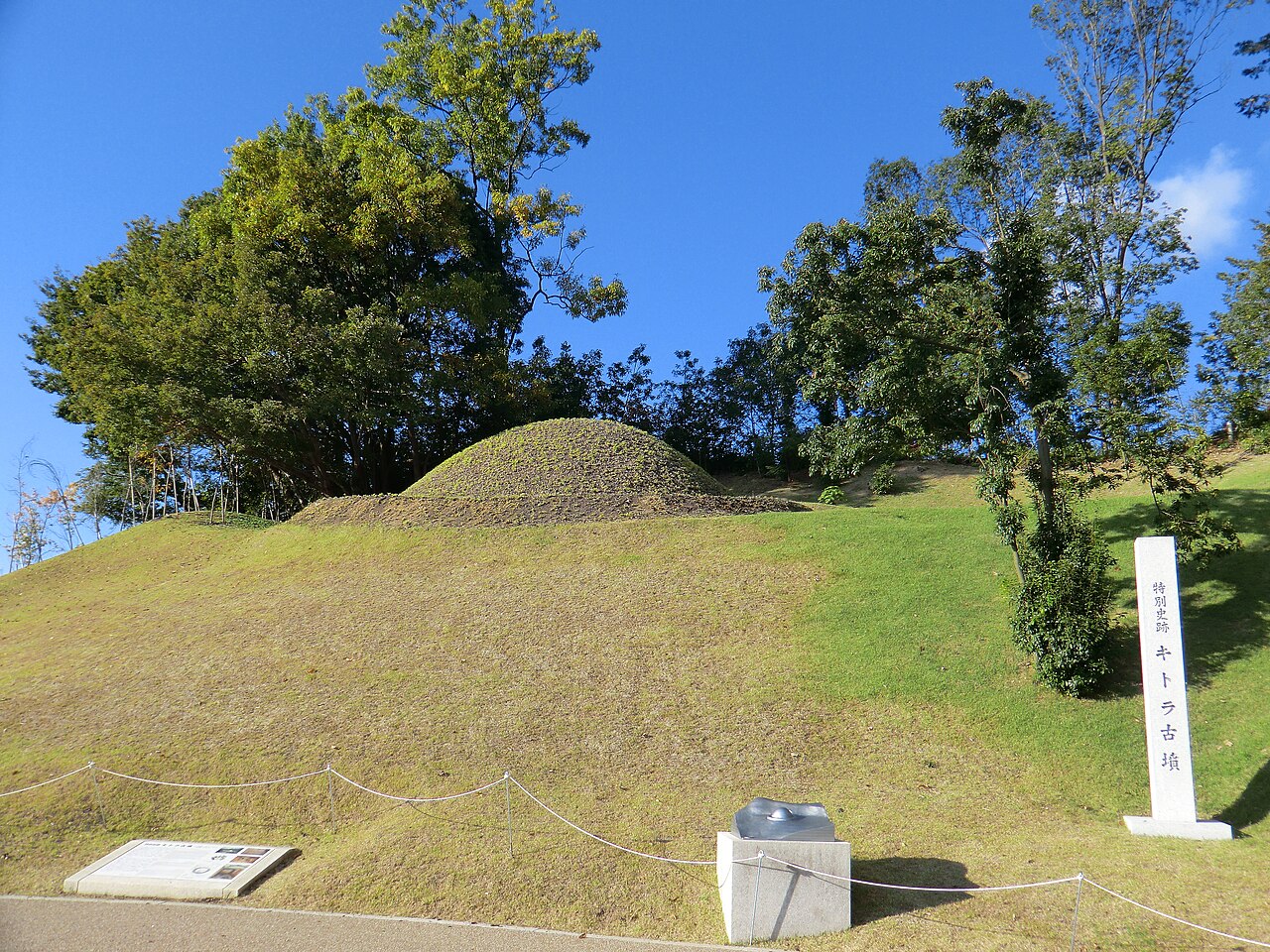
A painted Asuka-period tomb whose ceiling bears the oldest known star map in the world.
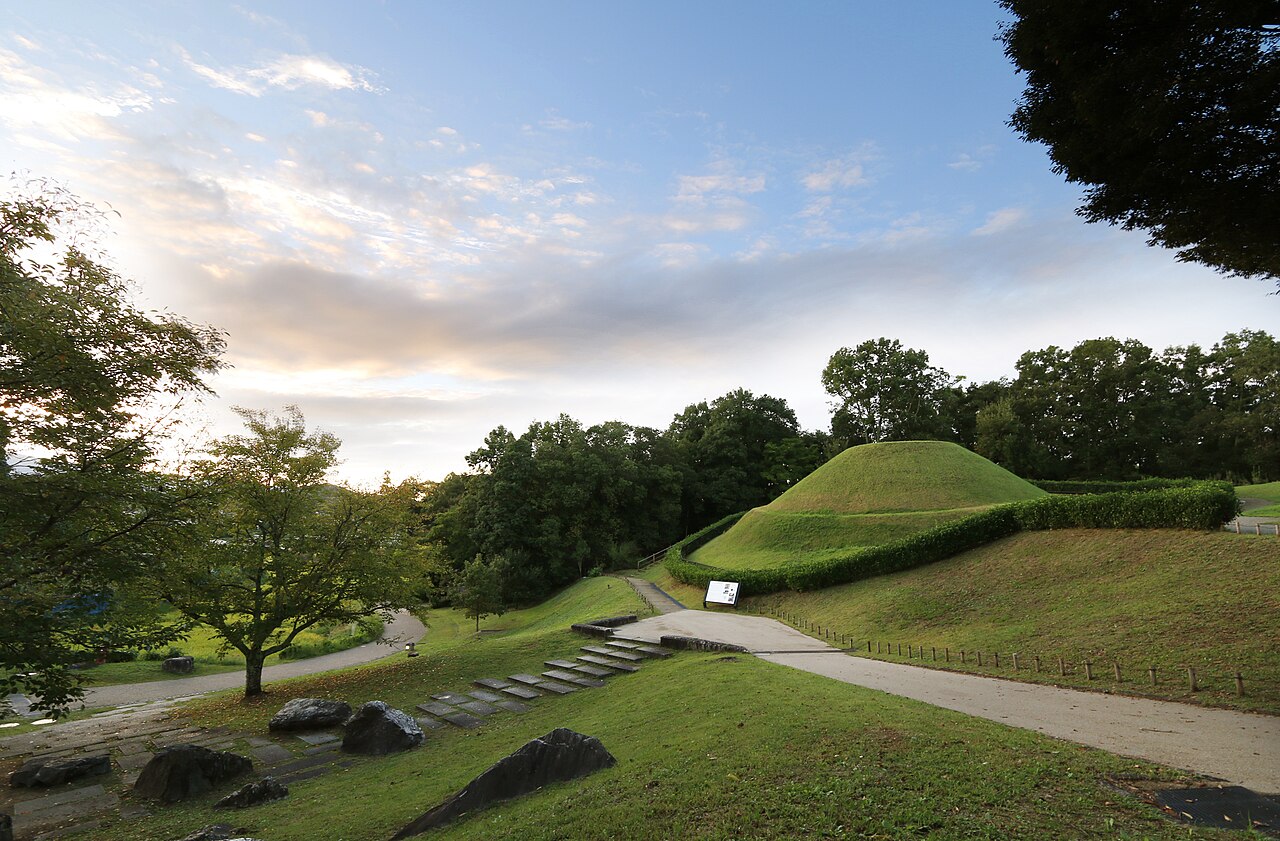
The Kitora Tomb is the quieter twin of nearby Takamatsuzuka, and in some ways the more extraordinary of the two. This small circular mound in the far south of Asuka village dates from around the late 7th to early 8th century, and like its neighbour it hides a stone burial chamber decorated with painted murals of exceptional historical importance. The two tombs together rewrote what scholars knew about the art, astronomy and international connections of Japan's formative age.
Kitora's murals were discovered gradually, first glimpsed by a camera probe inserted into the sealed chamber in the 1980s and then studied in detail over following decades. On the four walls are the guardian deities of the directions — the Azure Dragon of the east, the White Tiger of the west, the Vermilion Bird of the south and the Black Tortoise-and-snake of the north — rendered with real vitality. Below them runs a band of figures representing the twelve zodiac animals, painted with human bodies and animal heads. But the true marvel is overhead: the ceiling carries a complete astronomical chart, with gold-leaf stars linked into constellations and concentric circles marking the celestial equator and the sun's path. It is recognised as the oldest surviving star map of its kind in the world, a direct window onto how educated people of the Asuka court pictured the heavens.
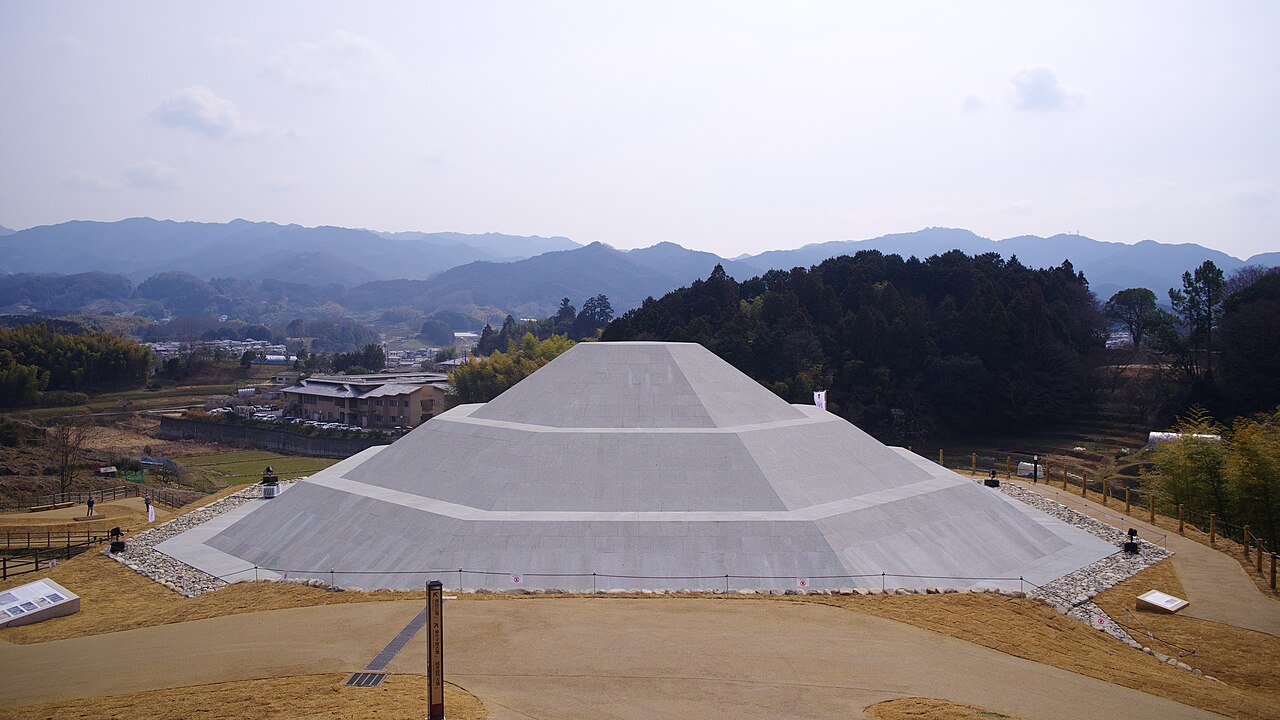
The stylistic parallels with the tomb art of the Korean kingdom of Goguryeo are striking, and Kitora is often cited as key evidence of the flow of ideas, craftsmen and imagery between the continent and the young Japanese state. Because the plaster and pigments are so fragile, the murals have been carefully removed from the chamber for conservation, and the mound visitors see today is a faithful restoration of the original earthwork.
At the foot of the tomb stands the Kitora Tomb Mural Experiential Museum, known as Shijin no Yakata, meaning 'Hall of the Four Gods.' Admission is free. Inside, high-resolution reproductions let you examine every deity, zodiac figure and star at leisure, and rotating displays sometimes present conserved fragments of the genuine murals under tightly controlled conditions. Interactive panels explain the astronomy and the tomb's place in the wider Asuka story. It is a thoughtful, unhurried museum that rarely feels crowded.
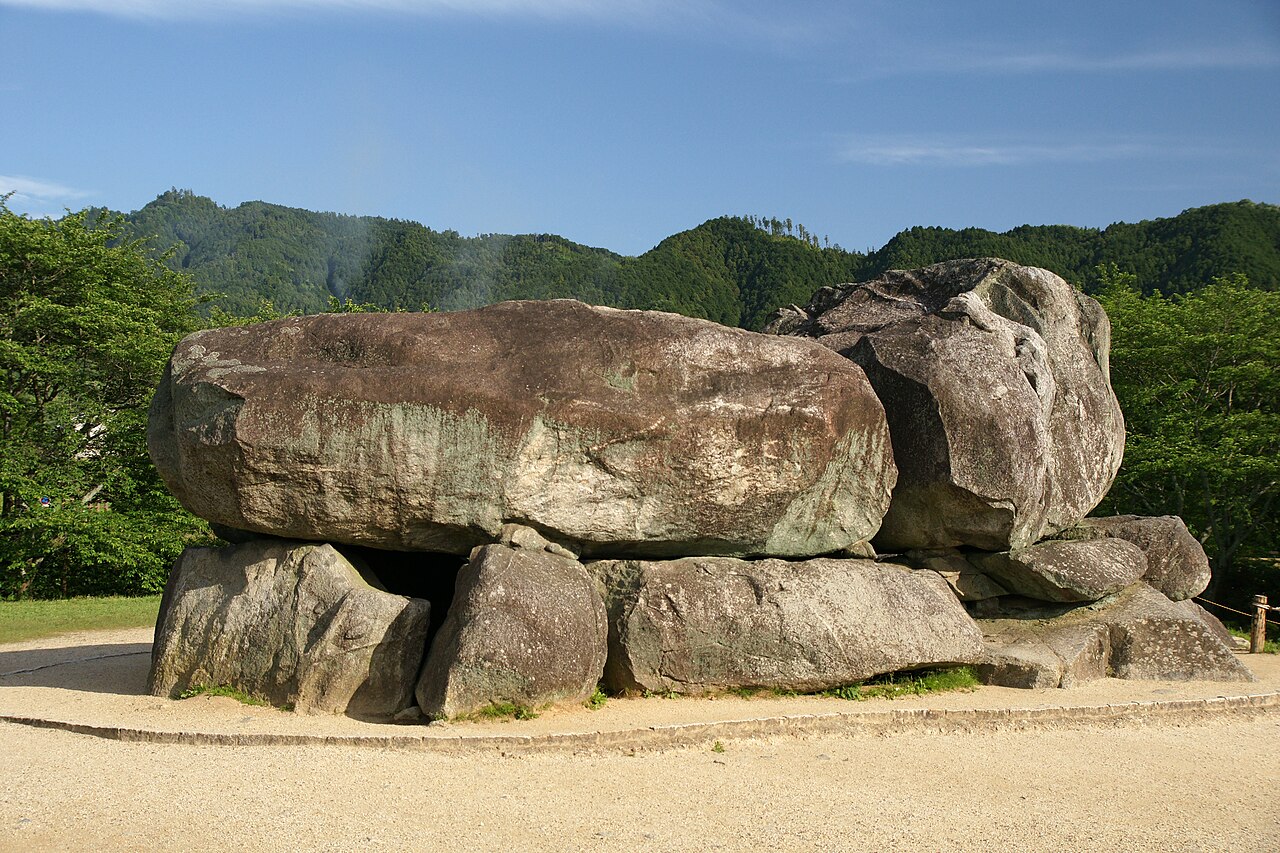
The surrounding National Asuka Historical Park is a landscape of rice fields, low wooded hills and blossoming cherry trees, laced with cycling and walking routes that connect Kitora to Takamatsuzuka, Ishibutai and the village's mysterious carved stones. Seeing the two painted tombs on the same visit makes their similarities and differences vivid.
Getting there: from Asuka Station on the Kintetsu Yoshino Line, Kitora is roughly a 30-minute walk or an easy bicycle ride to the south of the village. The mound and the free museum keep daytime hours. Come on a clear day, allow time to study the star chart, and you will leave having stood beneath a picture of the night sky drawn some 1,300 years ago.
A local's tip
The oldest surviving star chart in the world is on the chamber ceiling. The free museum periodically shows fragments of the real murals on a rotating conservation schedule — check which panel is on display before you go.
Best time to visit
Spring; any clear day
Getting there
About 30 minutes on foot from Asuka Station or a short cycle ride south. The Kitora Tomb Mural Experiential Museum 'Shijin no Yakata' sits at the base of the restored mound.
Good to know
- Museum
- Parking
- Restrooms
Plan the whole trip offline
Kitora Tomb is one of many places in the Real Japan app — with turn-by-turn directions, nearby spots and full offline maps you can use with no signal.