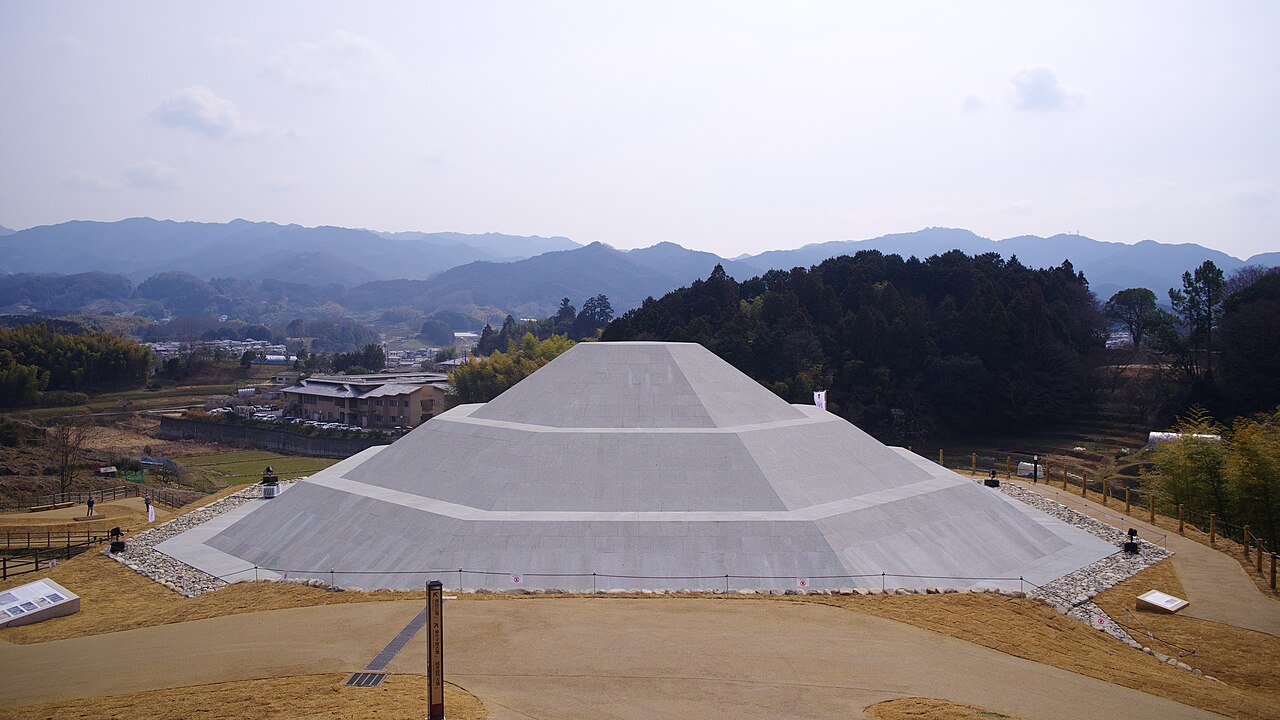
A restored octagonal royal tomb, its rare eight-sided form marking an imperial burial of the late Asuka court.
The Kengoshizuka Kofun is one of the more quietly remarkable monuments in the Asuka countryside, a restored burial mound whose unusual octagonal shape sets it apart from the round and keyhole tombs that dominate earlier Japanese history. Standing on a low terrace among the fields of central Asuka, it offers a clear, well-interpreted glimpse of how the imperial court of the late 7th century buried its very highest-ranking dead.
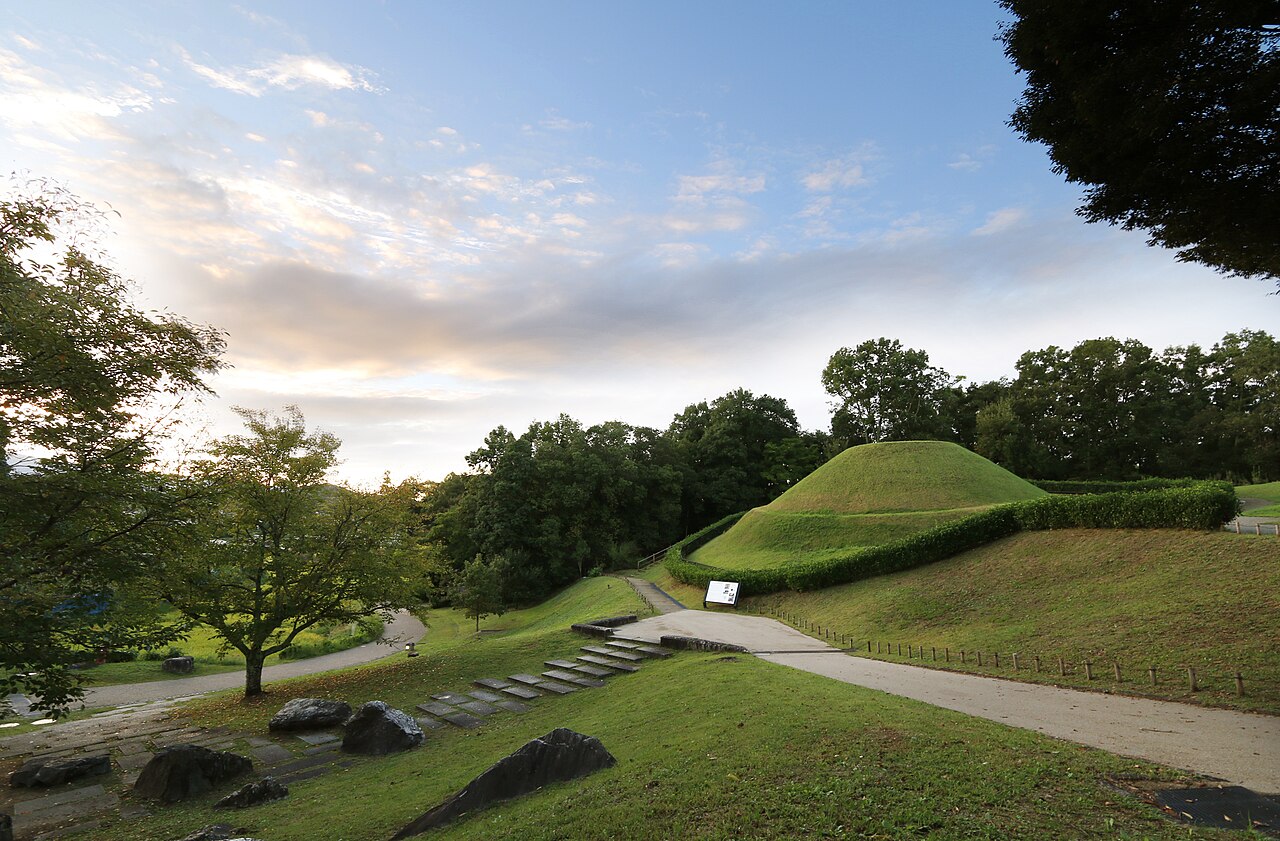
By the Asuka period, the eight-sided tomb had emerged as a form reserved for emperors and empresses, its geometry thought to carry cosmological meaning, echoing the eight directions of the world. Kengoshizuka is one of the finest surviving examples. Excavations revealed a carefully engineered mound faced with stone and rising in terraces, with a stone burial chamber at its heart, and the site has since been restored so that visitors can appreciate its distinctive polygonal outline — something almost impossible to read from most other tombs, which have eroded into shapeless hummocks.
Scholars widely associate Kengoshizuka with Empress Saimei, one of the most striking rulers of the age, who reigned twice in the mid-7th century and presided over Asuka during a period of intense construction and continental influence. Recent archaeological work in the area, including the discovery of nearby stone structures and worked blocks, has strengthened the case that this was a royal mausoleum of the first importance, and the tomb is often discussed alongside the great questions of who lies where in the crowded necropolis of Asuka.
For visitors, the appeal is partly the shape itself and partly the setting. The restored mound is easy to walk around, with information boards explaining the octagonal form and its imperial significance, and from the rise there are gentle views across the Asuka basin to the surrounding hills. It is an unhurried, uncrowded spot, the kind of place where you can stand alone and absorb the strangeness of an eight-sided grave built for a monarch more than 1,300 years ago.
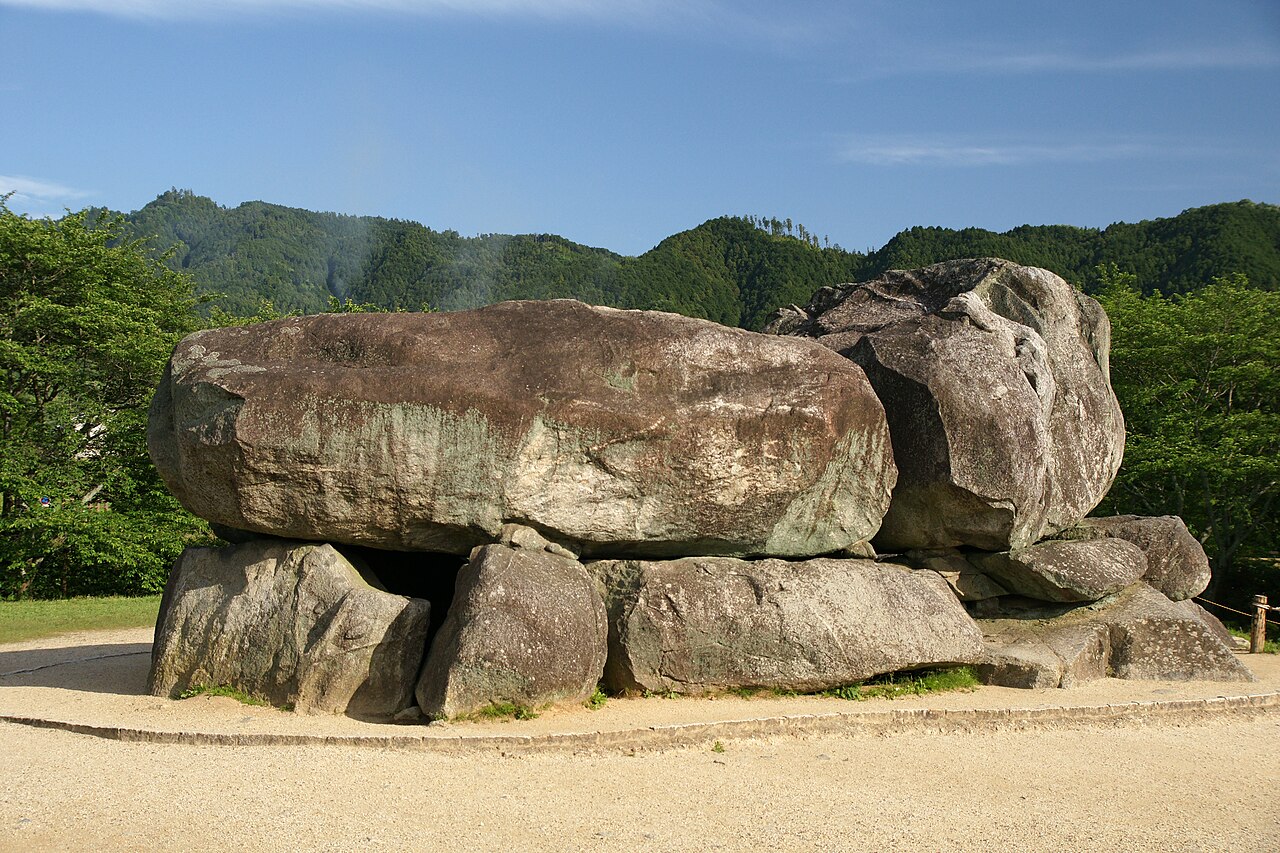
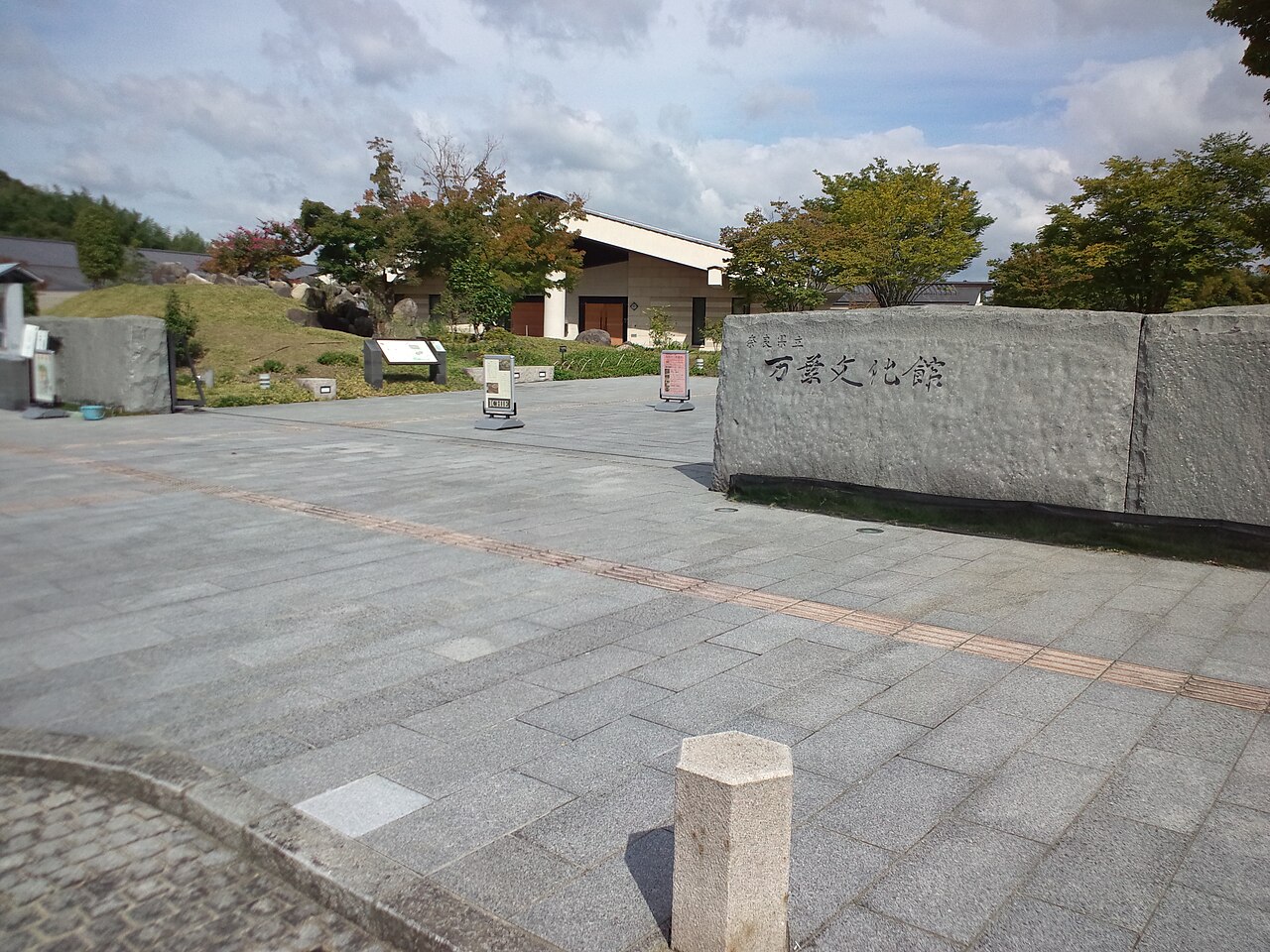
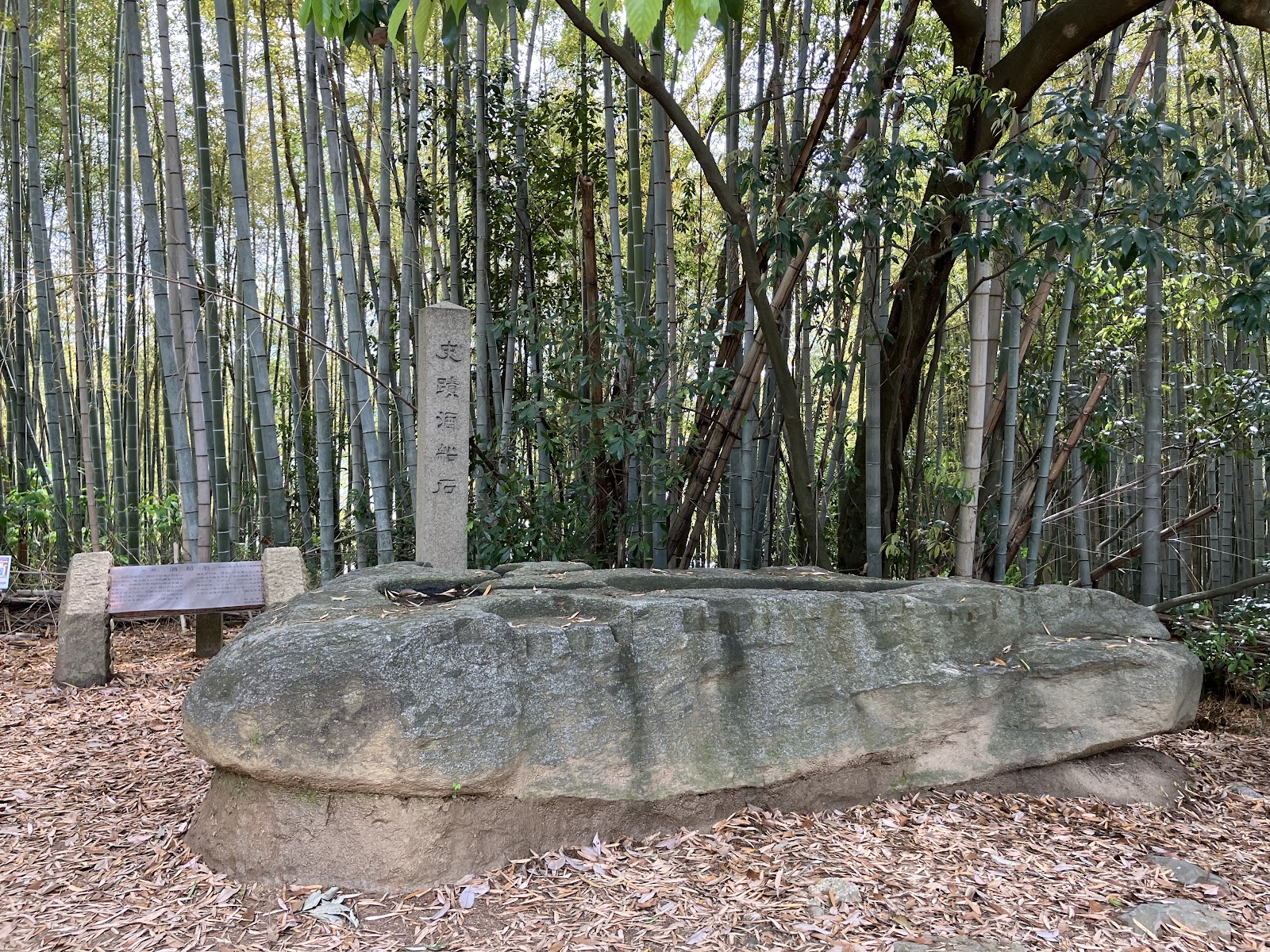
Kengoshizuka sits conveniently close to the Asuka Historical Museum and to the cluster of other monuments — Ishibutai, the painted tombs of Takamatsuzuka and Kitora, and the enigmatic carved stones — that make this village such an exceptional concentration of early Japanese history. Seeing it as part of a cycling circuit lets you compare tomb forms directly: the exposed megalithic chamber of Ishibutai, the mural-lined circular mounds of Takamatsuzuka and Kitora, and here the rare imperial octagon.
Getting there: from Asuka Station on the Kintetsu Yoshino Line, the tomb is about 20 minutes away on foot or, better, by rental bicycle, which is the ideal way to explore the flat and beautiful Asuka landscape. The site is open and free, with no gate. Roll it into a day of monument-hopping through Asuka, and you will add to your picture of the age one of its most exclusive and geometrically curious royal graves.
A local's tip
This rare octagonal tomb is widely thought to belong to Empress Saimei. The restored mound lets you clearly see the unusual eight-sided, terraced shape that marked the very highest imperial burials of the late 7th century.
Best time to visit
Any clear day; best by bicycle on an Asuka loop
Getting there
About 20 minutes by bicycle or on foot from Asuka Station, on a low rise in the central Asuka fields near the Asuka Historical Museum.
Good to know
- Restrooms
- Museum nearby
- Bicycle rental at station
Plan the whole trip offline
Kengoshizuka Kofun is one of many places in the Real Japan app — with turn-by-turn directions, nearby spots and full offline maps you can use with no signal.