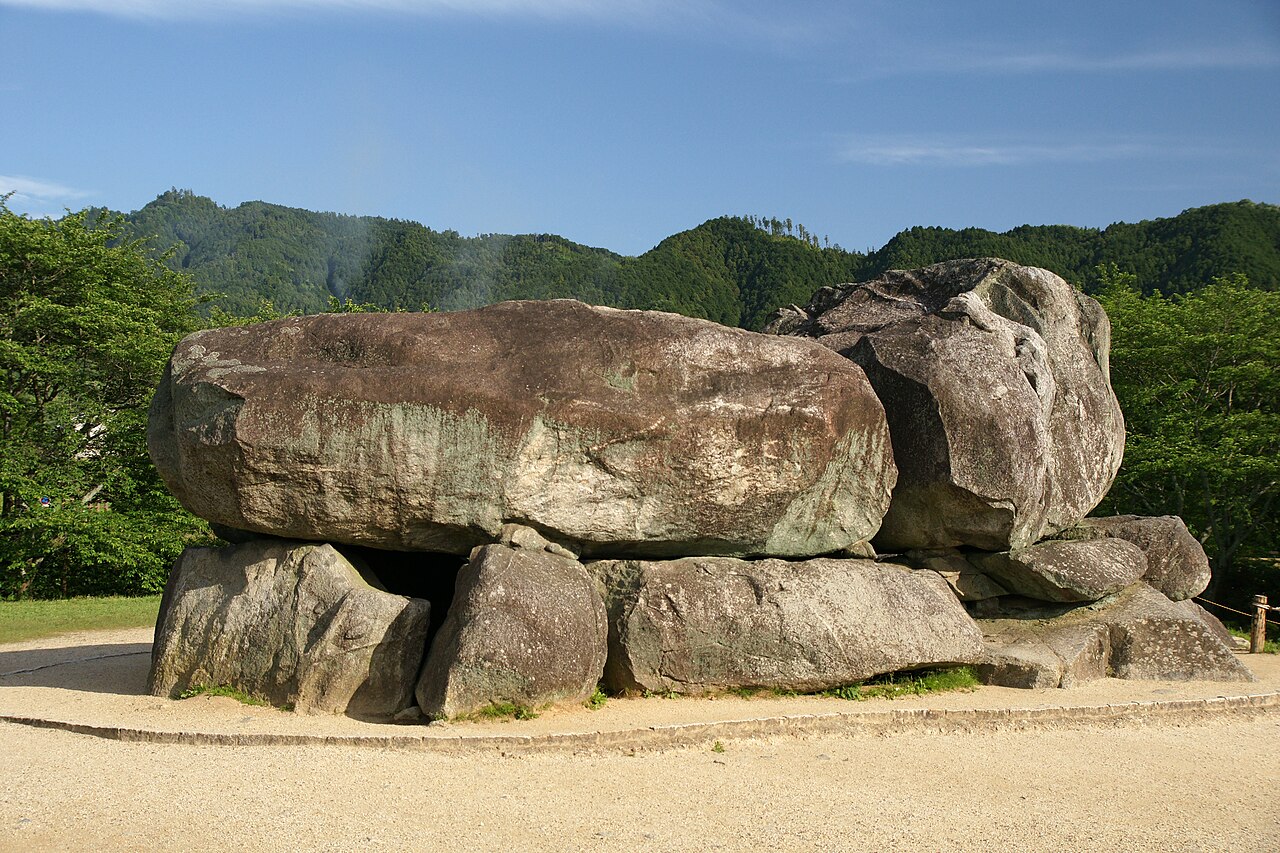
Japan's largest exposed megalithic tomb, a stripped-bare stone chamber built for a 7th-century Soga clan lord.
Ishibutai Kofun is the most striking of all the ancient monuments scattered across the Asuka countryside, and one of the most important archaeological sites in Japan. It is a megalithic tomb from the Asuka Period, built in the early 7th century, and it is widely believed to be the burial place of Soga no Umako — the powerful statesman who dominated the imperial court and helped establish Buddhism as a force in Japan before his death in 626.
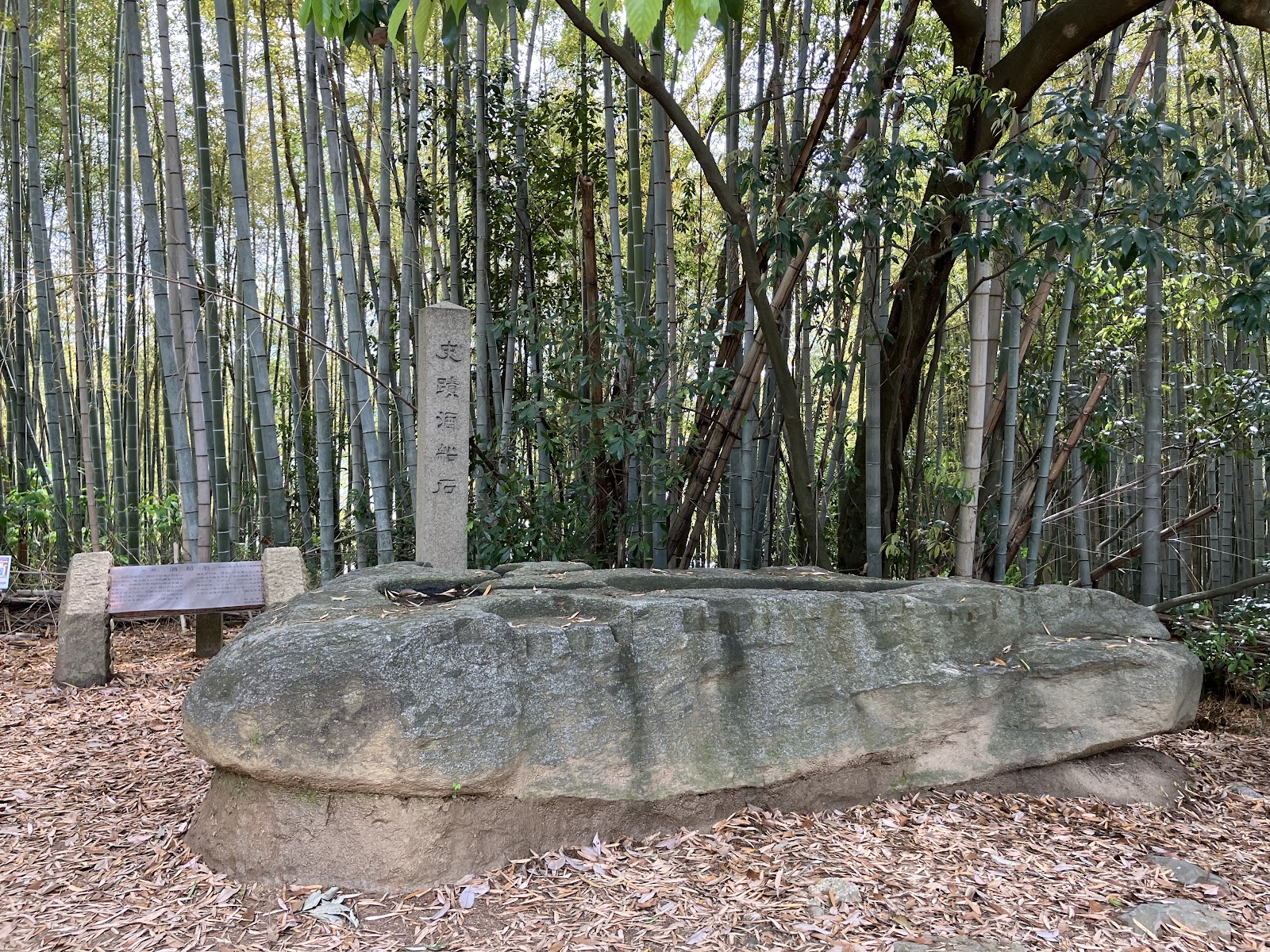
What makes Ishibutai so unusual is that the earthen mound that once covered it has long since eroded or been removed, leaving the enormous stone burial chamber standing exposed to the open sky. Some thirty granite boulders were used in its construction, and the two capstones alone are estimated to weigh around 77 tons combined. The total mass of stone is thought to exceed 2,300 tons — a staggering feat of engineering for its era, hauled and levered into place without any modern machinery. The name Ishibutai, meaning 'stone stage,' comes from the broad flat surface of the top stones, which local legend says was once used by a dancing fox spirit, or alternatively by travelling performers.
Visitors can walk right up to the tomb and step down into the burial chamber itself. Inside, the sheer volume of the roof stones pressing overhead gives an immediate, visceral sense of the labour and ambition behind the structure. A drainage channel runs along the floor, and a reconstructed stone coffin sits nearby to show how the interior would have been furnished. The chamber is around 7.7 metres long, and standing within it is the closest most people will ever come to touching Japan's protohistoric age.
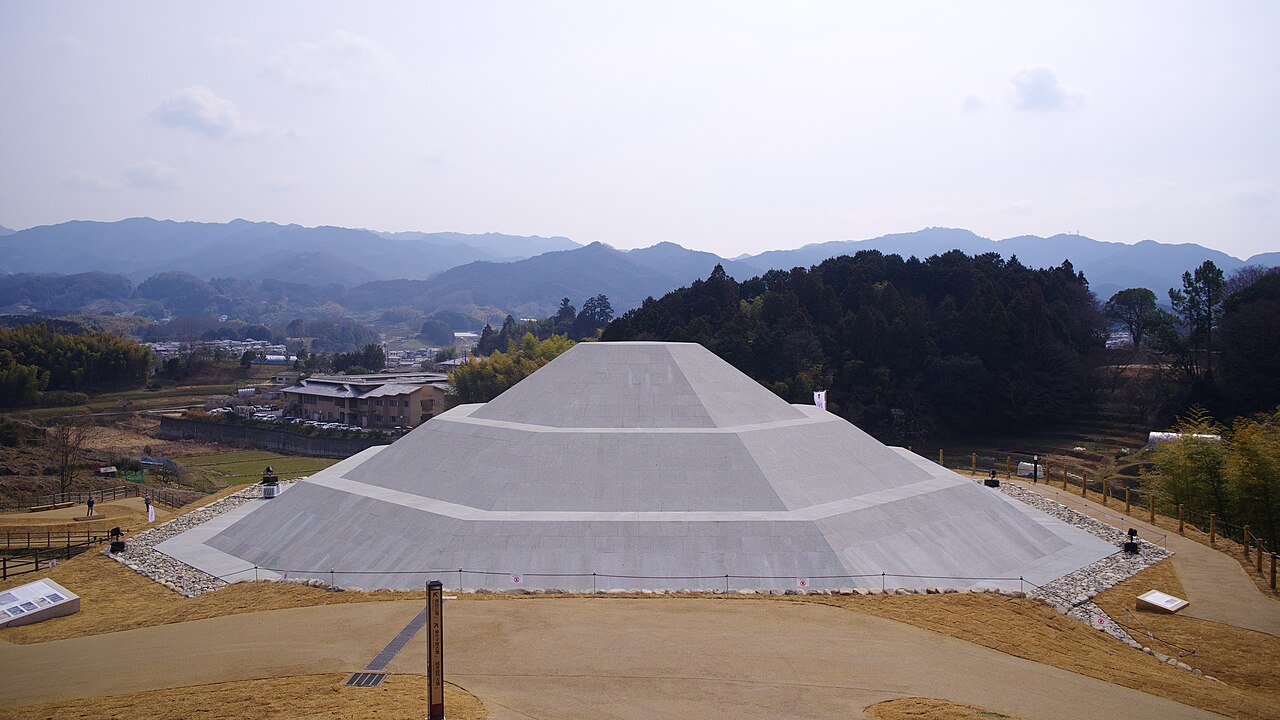
The setting is as memorable as the monument. Ishibutai sits in a gently terraced field ringed by low hills and rice paddies, with a border of cherry trees that erupt into blossom each spring and turn the site into one of Asuka's loveliest picnic spots. In 1935 it was designated a National Historic Site, and in 1954 it was elevated to the higher rank of Special Historic Site, reflecting its exceptional value.
Because Asuka was Japan's political heart in the century before the capital moved to Nara and then Kyoto, the whole village is effectively an open-air museum, and Ishibutai is its centrepiece. It pairs naturally with Asuka-dera, the Takamatsuzuka and Kitora painted tombs, and the enigmatic carved stones dotted through the fields.
Getting there: take the Kintetsu Yoshino Line to Asuka Station, then either rent a bicycle at the station — the flat, quiet lanes of Asuka are perfect for cycling — or ride the 'Kame' loop bus to the Ishibutai stop. The site is open daily and charges a small entrance fee. Come early on a clear morning, before the tour groups, and you may have this 1,400-year-old stone giant almost to yourself.
A local's tip
Buy the combined Asuka ticket if you also plan to see Asuka-dera and the Takamatsuzuka murals — it pays for itself. Duck inside the burial chamber; the scale of the roof stones is only obvious from within.
Best time to visit
Spring for surrounding cherry trees; clear mornings
Getting there
From Asuka Station, rent a bicycle at the station forecourt (the flat Asuka countryside is made for cycling) or take the Asuka village 'Kame' loop bus to the Ishibutai stop. On foot it is about 25 minutes through rice fields.
Good to know
- Parking
- Restrooms
- Bicycle rental nearby
Plan the whole trip offline
Ishibutai Kofun is one of many places in the Real Japan app — with turn-by-turn directions, nearby spots and full offline maps you can use with no signal.