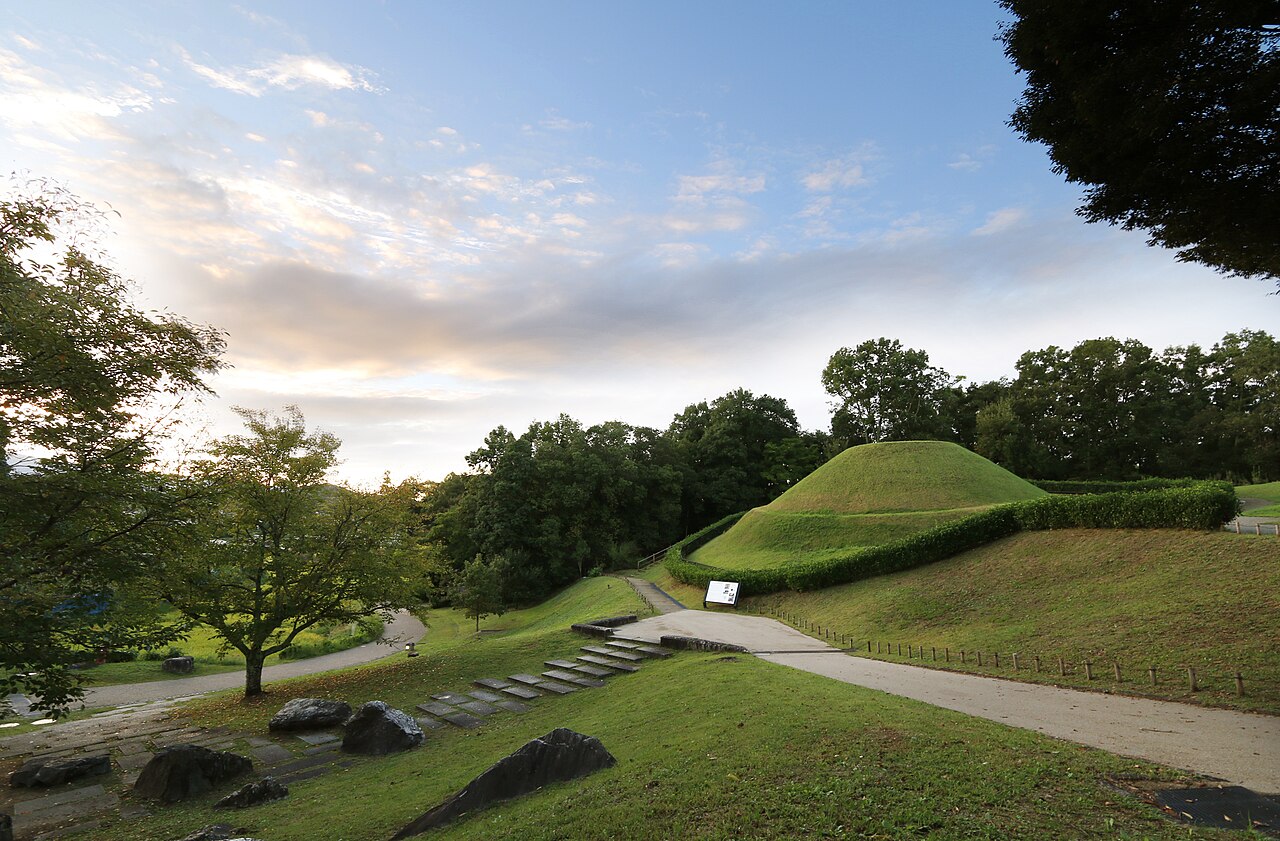
A late-7th-century burial mound whose vivid painted murals, including the famous 'Asuka Beauties', are national treasures.
The Takamatsuzuka Tomb is a small circular burial mound in the village of Asuka that produced one of the most sensational archaeological discoveries in modern Japanese history. Built at the very end of the 7th or start of the 8th century, it looks unremarkable from outside — a low grassy dome in the National Asuka Historical Park. But when it was excavated in 1972, researchers found the interior stone chamber covered in exquisite coloured murals, the first painted tomb of its kind ever found in Japan.
The paintings transformed understanding of the Asuka age. On the walls are the Four Directional Gods — the Azure Dragon, White Tiger, Black Tortoise and (once) Vermilion Bird — along with a detailed star chart on the ceiling and, most famously, groups of courtiers in procession. The women on the western wall, dressed in flowing striped skirts and carrying fans and staffs, have become icons of the period; the best known figure is affectionately called the 'Asuka Bijin', or Beauty of Asuka. Their costumes and hairstyles show clear influence from Tang dynasty China and from the Korean kingdom of Goguryeo, evidence of just how connected this early court was to the wider continent. Inside the chamber the excavators also found a wooden coffin fastened with metal fittings and a bronze mirror of Tang origin.
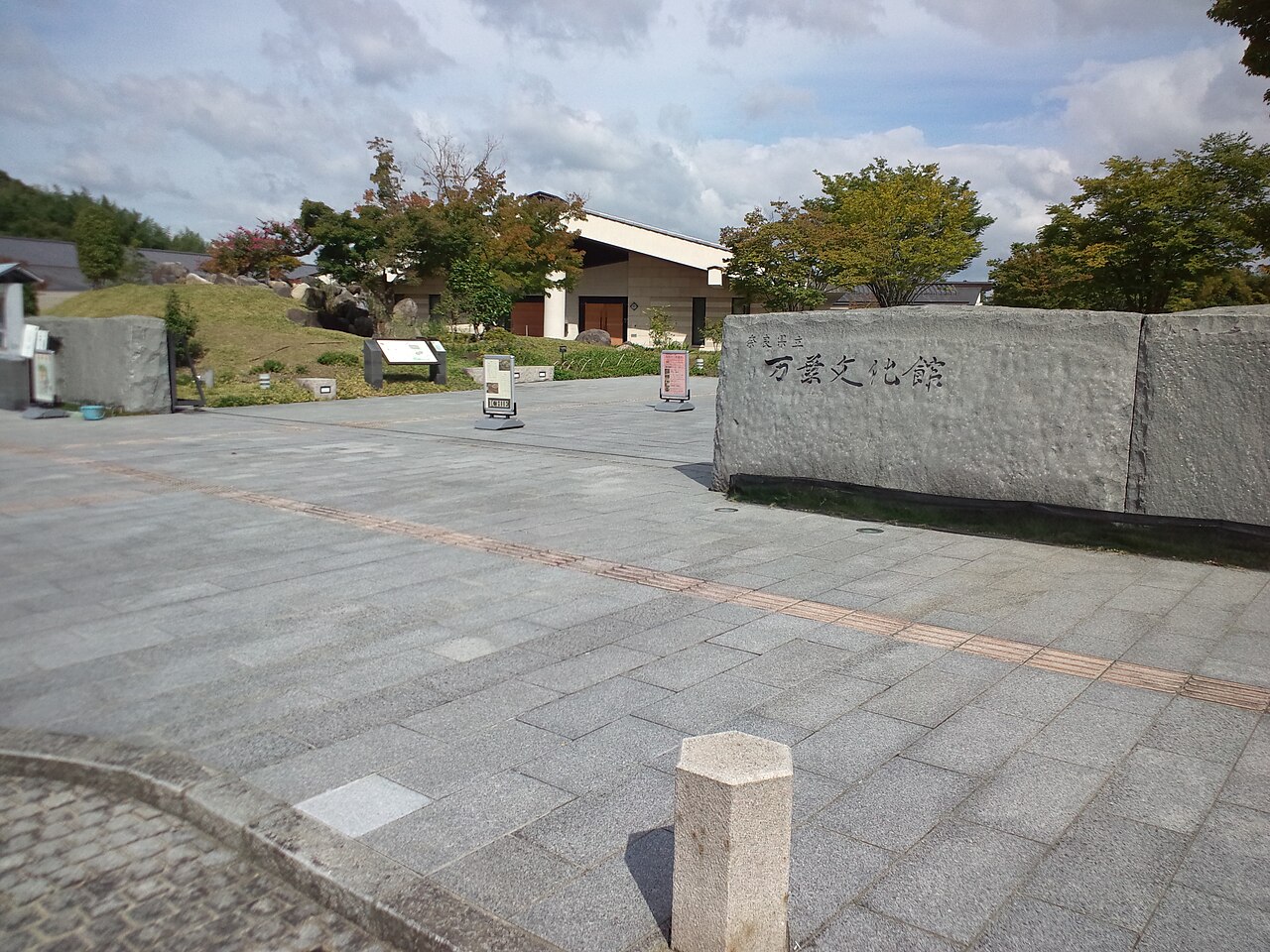
Because the murals proved extremely fragile once exposed to air, and later suffered damage from mould, the original chamber has been dismantled and the paintings are now conserved off-site under strict climate control. To let visitors appreciate them, the adjacent Takamatsuzuka Mural Hall displays a meticulous full-scale reproduction of the entire chamber interior, reproducing every figure, animal and star in its original position and colour. Replicas of the mirror, sword fittings and other grave goods are shown alongside, with clear explanations of what the discovery meant. It is genuinely one of the most rewarding small museums in the Kansai region.
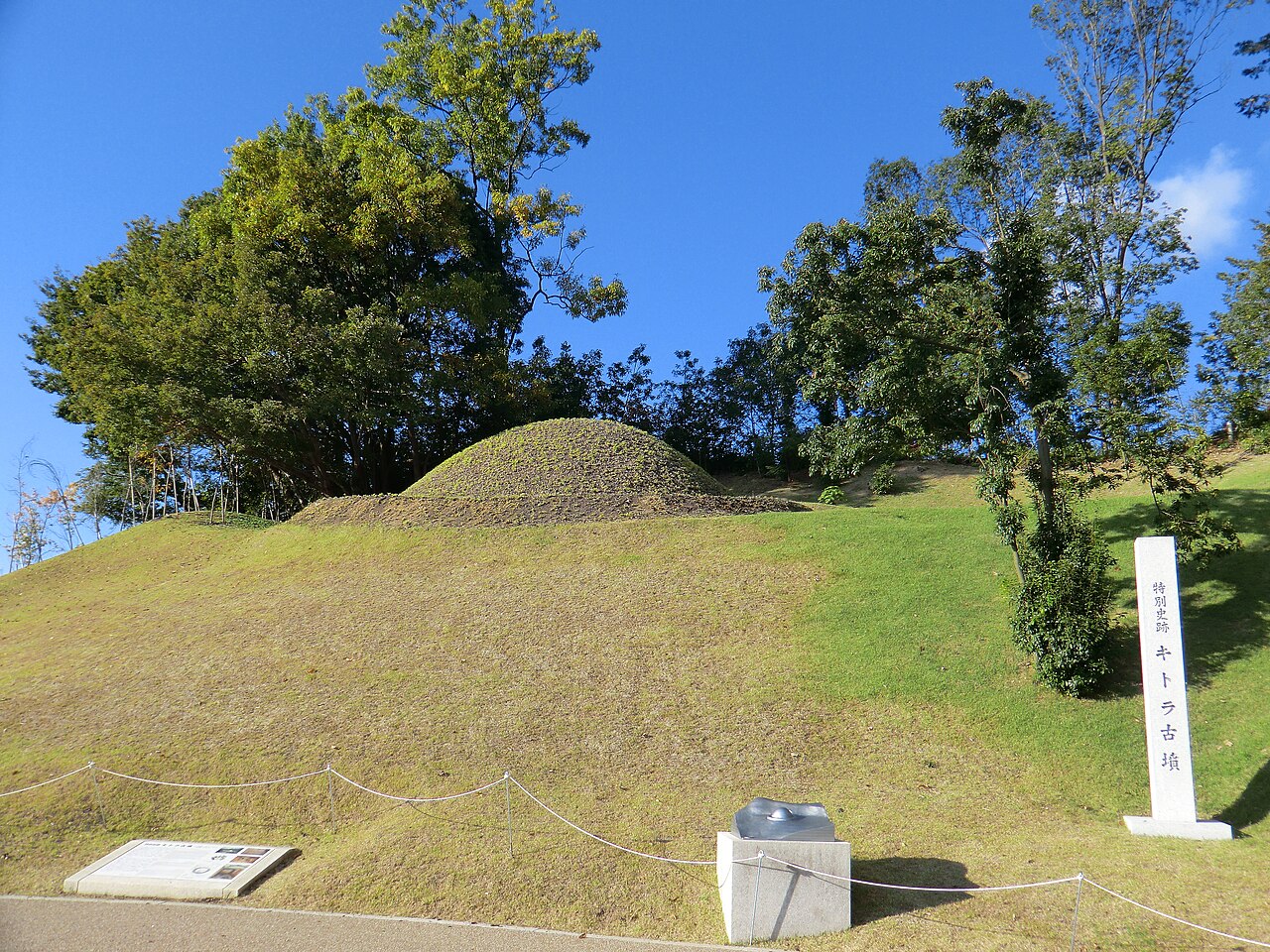
The mound itself, restored to its original two-tiered shape, sits in landscaped parkland threaded with walking paths and framed by cherry trees that bloom spectacularly in spring. The whole area is quiet and green, ideal for a slow half-day of cycling between monuments. Takamatsuzuka lies within easy reach of the Kitora Tomb, whose murals are similar and equally celebrated, so many visitors see the two together as a pair.
Getting there: from Asuka Station on the Kintetsu Yoshino Line it is about a 12-minute walk south through the historical park, or a few minutes by rental bicycle. The grassed mound can be viewed for free at any reasonable hour, while the Mural Hall keeps daytime opening hours and charges a modest entrance fee. Visit on a bright day, take your time inside the hall, and you will come away with a rare, intimate picture of how Japan's earliest imperial elite lived, dressed and imagined the cosmos.
A local's tip
The real murals are sealed away for conservation, but the full-scale reproduction in the Mural Hall is faithful down to the pigment, and far easier to study than the fragile original ever was.
Best time to visit
Spring; any clear day
Getting there
A pleasant 12-minute walk from Asuka Station through the National Asuka Historical Park, or a short bicycle ride. The Mural Hall stands beside the grassed-over mound.
Good to know
- Museum
- Parking
- Restrooms
Plan the whole trip offline
Takamatsuzuka Tomb is one of many places in the Real Japan app — with turn-by-turn directions, nearby spots and full offline maps you can use with no signal.