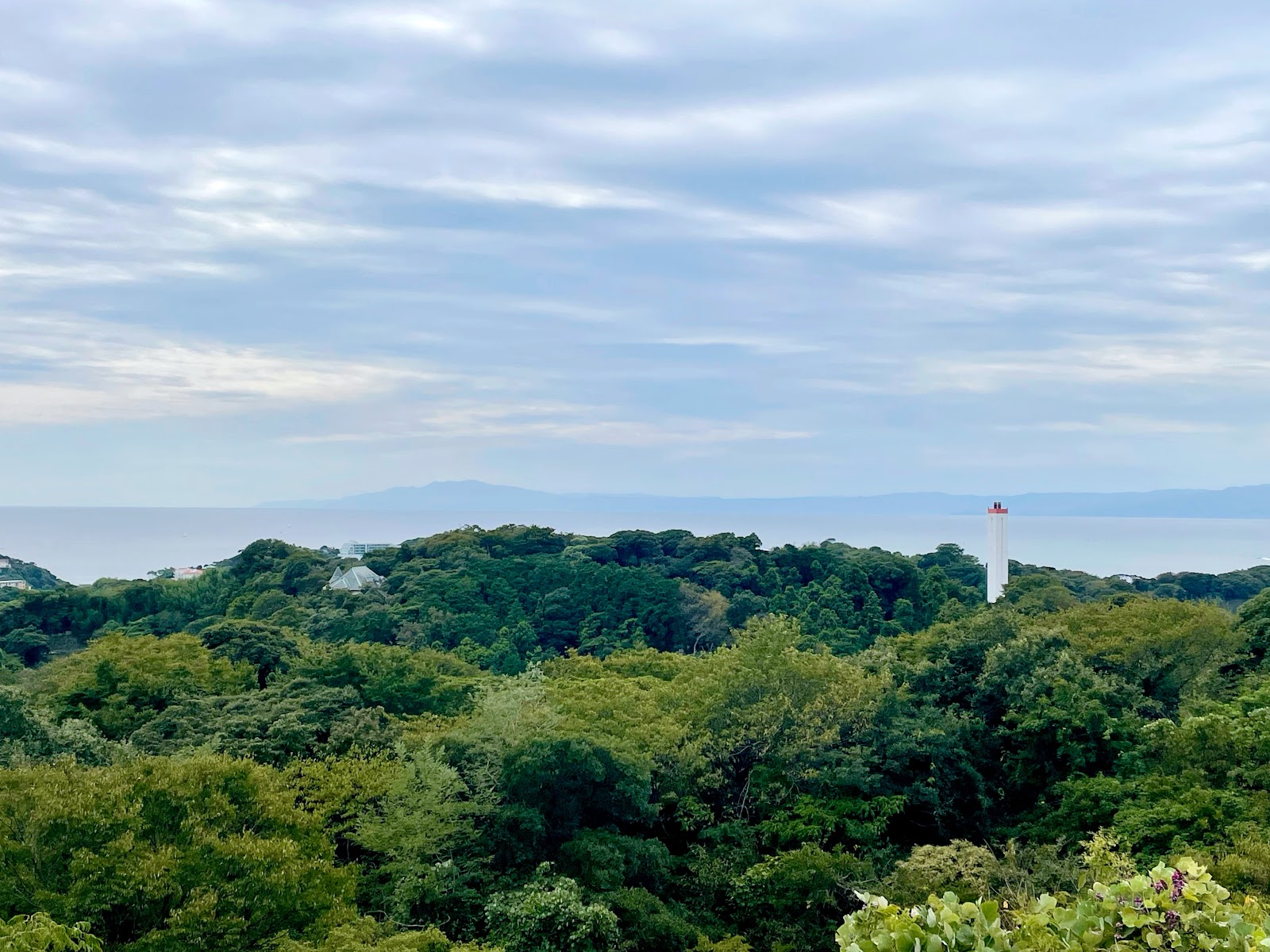
A gentle 121m hill southeast of central Kamakura with a panoramic summit over Sagami Bay, the town, and Mt Fuji.
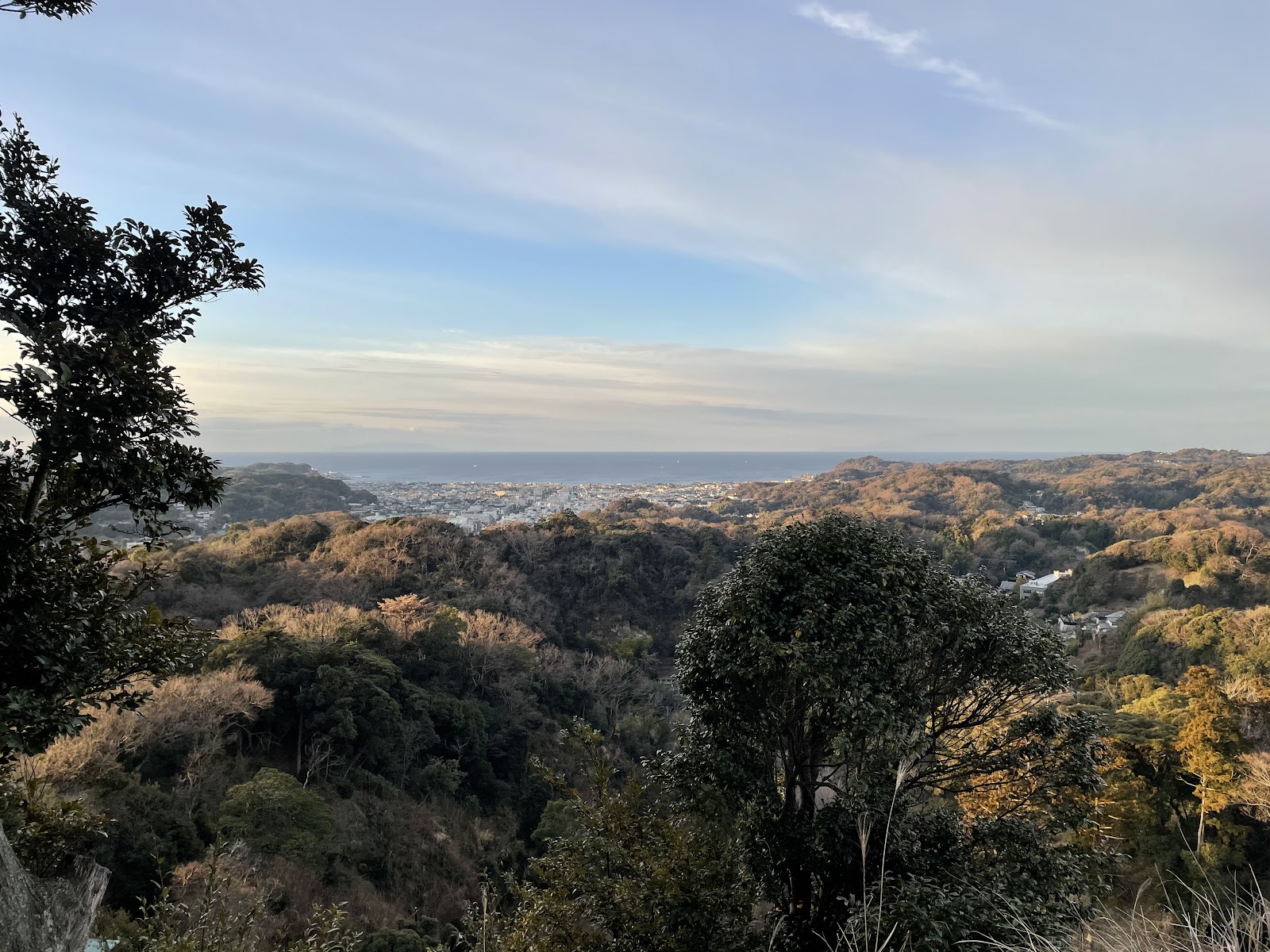
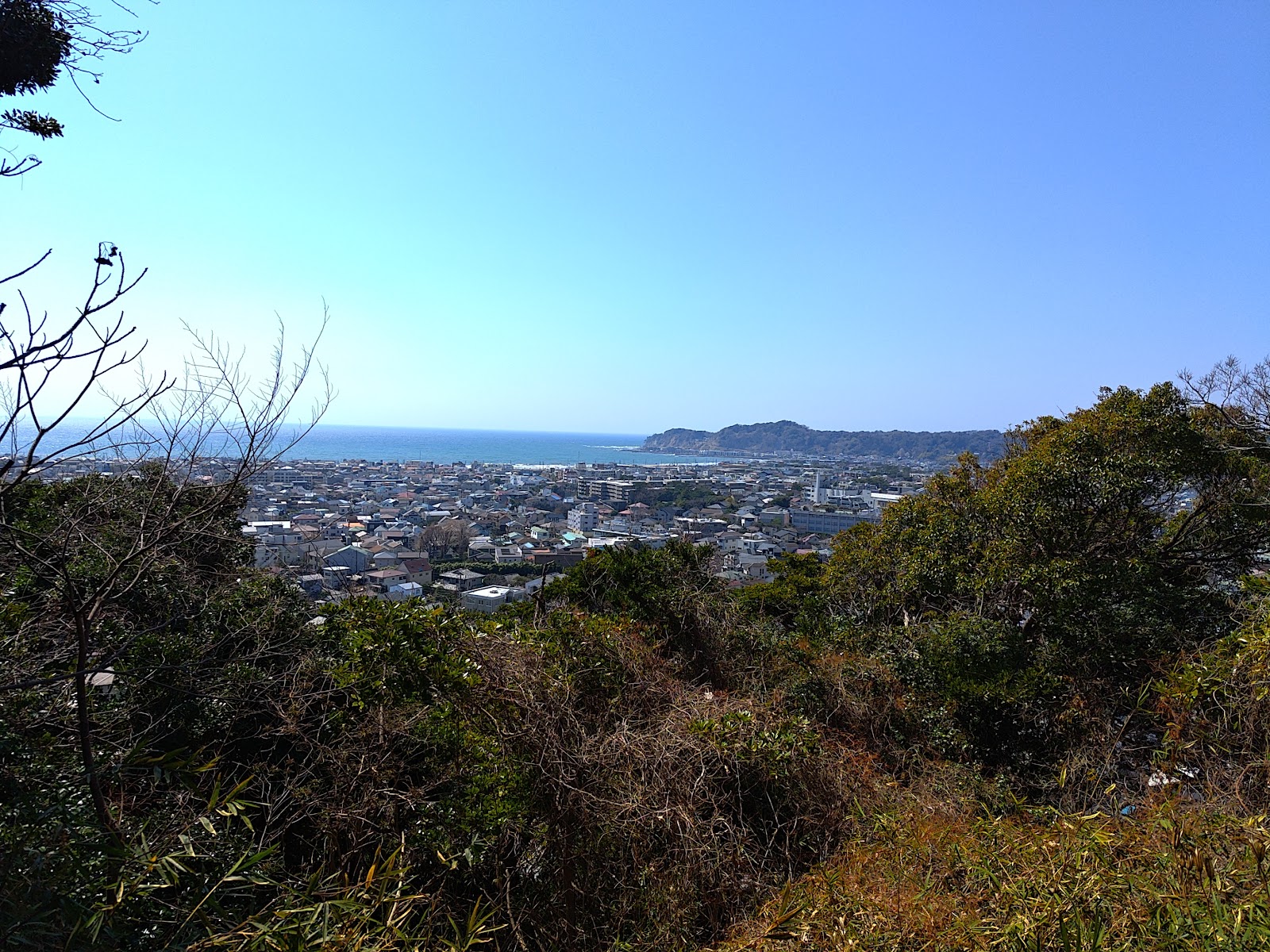
Mount Kinubari, or Kinubariyama, is a modest 121-metre hill rising just southeast of central Kamakura, and despite its small stature it delivers one of the most rewarding panoramas in the area. From the grassy summit the land drops toward the coast, opening a wide view of the curving beaches of Yuigahama and Zaimokuza, the broad blue expanse of Sagami Bay merging into the Pacific, and the tiled roofs of Kamakura nestled among its wooded hills. On a clear day Mt Fuji rises on the western horizon, completing a classic Shonan-coast composition of mountain, town and sea.
The hill carries an old and charming legend. According to the 'Shinpen Sagami no Kuni Fudokiko', a local gazetteer, its name derives from an episode in which Minamoto no Yoritomo, founder of the Kamakura shogunate, is said to have draped white cloth over the mountain on a hot summer day at the wish of his wife Hojo Masako, so that it resembled a cool, snow-covered peak. Whether history or folklore, the tale ties the hill directly to the warrior clan that made Kamakura the political capital of Japan in the late twelfth century.
Kinubariyama forms the centrepiece of a short but genuinely scenic hiking course that many walkers combine with a visit to the bamboo temple Hokoku-ji nearby. The route climbs through cool forest of cedar and broadleaf trees, and although the summit is low, sections of the ridge are steep, rooty and slippery after rain, so proper footwear is important. Just beyond the top the trail continues to a second lookout at Asama-yama, dotted with small stone Jizo statues, which offers an equally sweeping view and is usually even quieter. From there the path descends a narrow forest track that eventually spills out near a residential area and small park.
The summit is an ideal spot for a rest or a packed lunch, with room to sit and take in the scenery in relative calm compared with the crowded temples below. Because the hill is undeveloped there are no restrooms, shops or vending machines on the trail, so bring your own water and snacks and use facilities before setting off. The area is best enjoyed as a daylight hike; there is no lighting, and the forest becomes dark and disorienting after sunset.
Seasonally, the clear, dry air of winter gives the best chance of a sharp Mt Fuji, while late November paints the surrounding slopes in autumn reds and golds. Summer greenery is lush but Fuji often hides in haze. To reach the trail, take the JR Yokosuka Line to Kamakura Station, a stop covered by the Japan Rail Pass, then either ride a local bus or walk roughly 25 minutes east toward Hokoku-ji and the Namerigawa area, where signs mark the Kinubariyama trailhead. Allow about an hour for the climb, the summit view and the short onward stretch to Asama-yama, and choose a crisp, clear morning for the finest panorama.
A local's tip
Continue a few minutes past the summit to the Asama-yama viewpoint marked by small Jizo statues for an even wider sea-and-Fuji panorama with far fewer people.
Best time to visit
Clear winter days for Mt Fuji over Sagami Bay
Getting there
From Kamakura Station on the JR Yokosuka Line, take a bus or walk about 25 minutes east toward Hokoku-ji, then pick up the Kinubariyama trail near Namerigawa; the wooded summit is a further 15-20 minute climb.
Plan the whole trip offline
Mount Kinubari (Kinubariyama) Summit Viewpoint is one of many places in the Real Japan app — with turn-by-turn directions, nearby spots and full offline maps you can use with no signal.