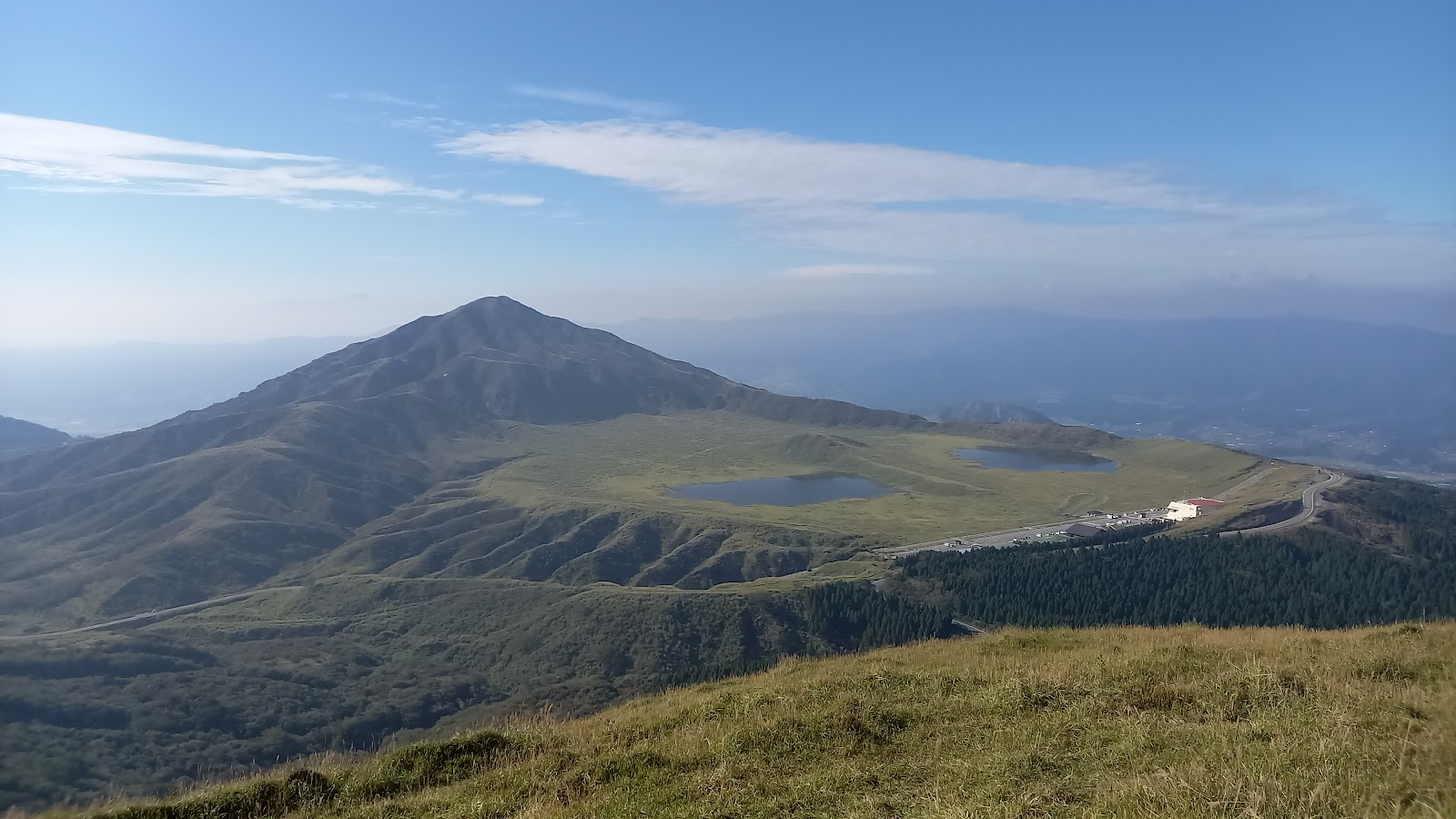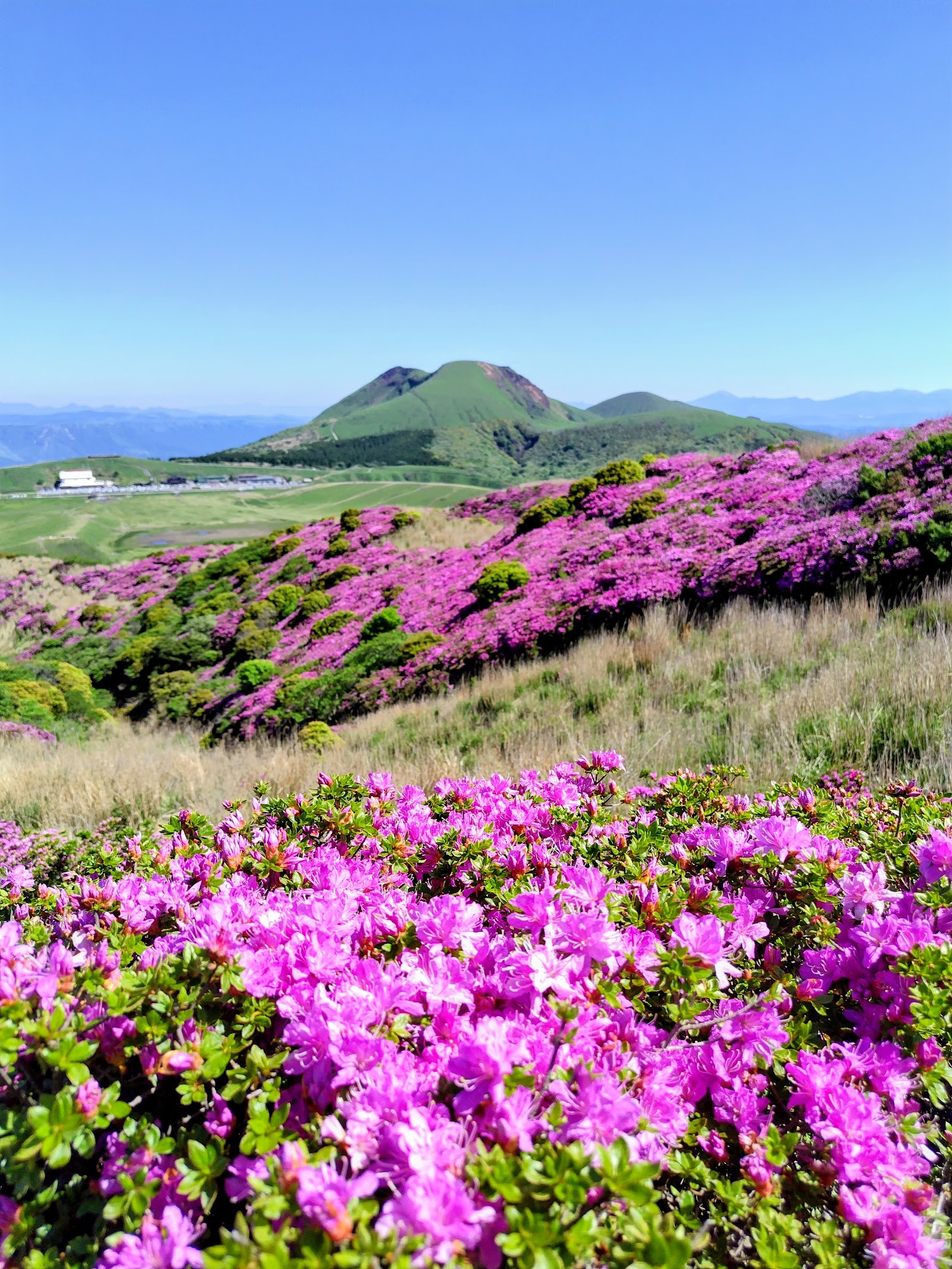
A gentle grass-covered volcanic cone above Kusasenri, offering one of Aso's finest all-round caldera panoramas.
Mount Eboshidake, rising to 1,337 metres on the southern edge of Mount Aso's central cone group, is the most approachable of the famous Aso Five Peaks (Aso Gogaku) and one of the best places to grasp the sheer scale of the world's largest inhabited caldera. Its name means "lacquered-hat mountain," a nod to the smooth, rounded silhouette that sets it apart from its jagged neighbours. Where Nakadake smokes and Nekodake bristles with rock, Eboshidake is clothed in soft summer grasses that turn silver and gold as the seasons change, making it feel less like a volcano than a great rolling meadow lifted into the sky.
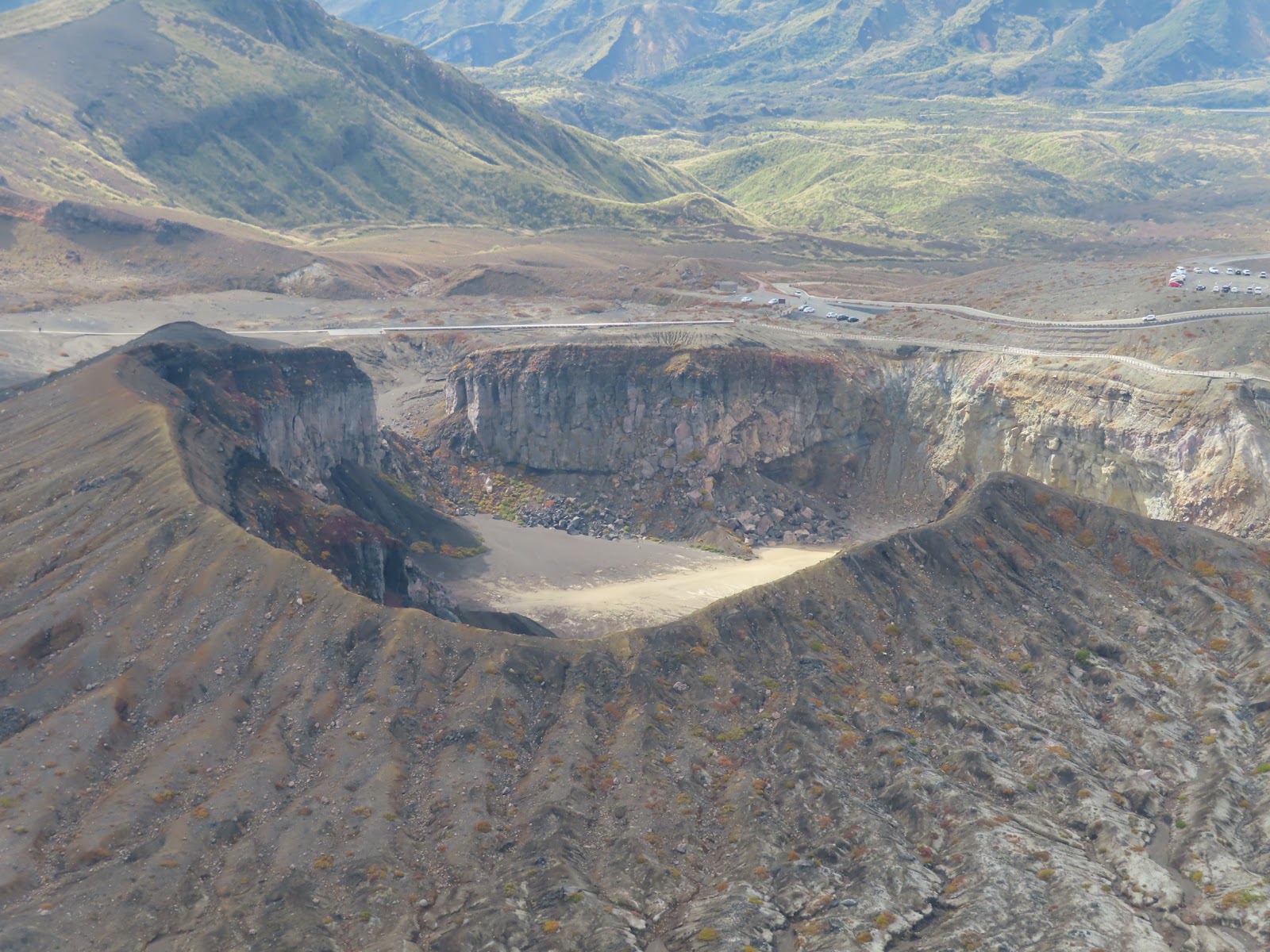
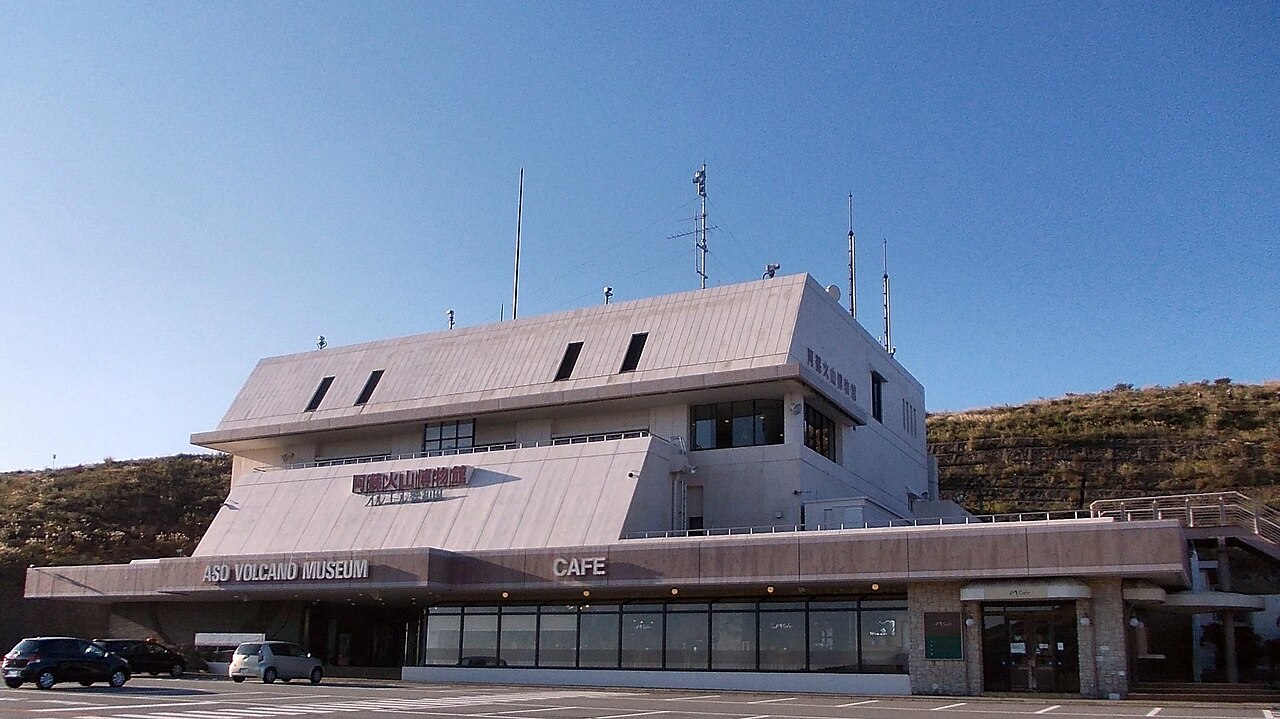
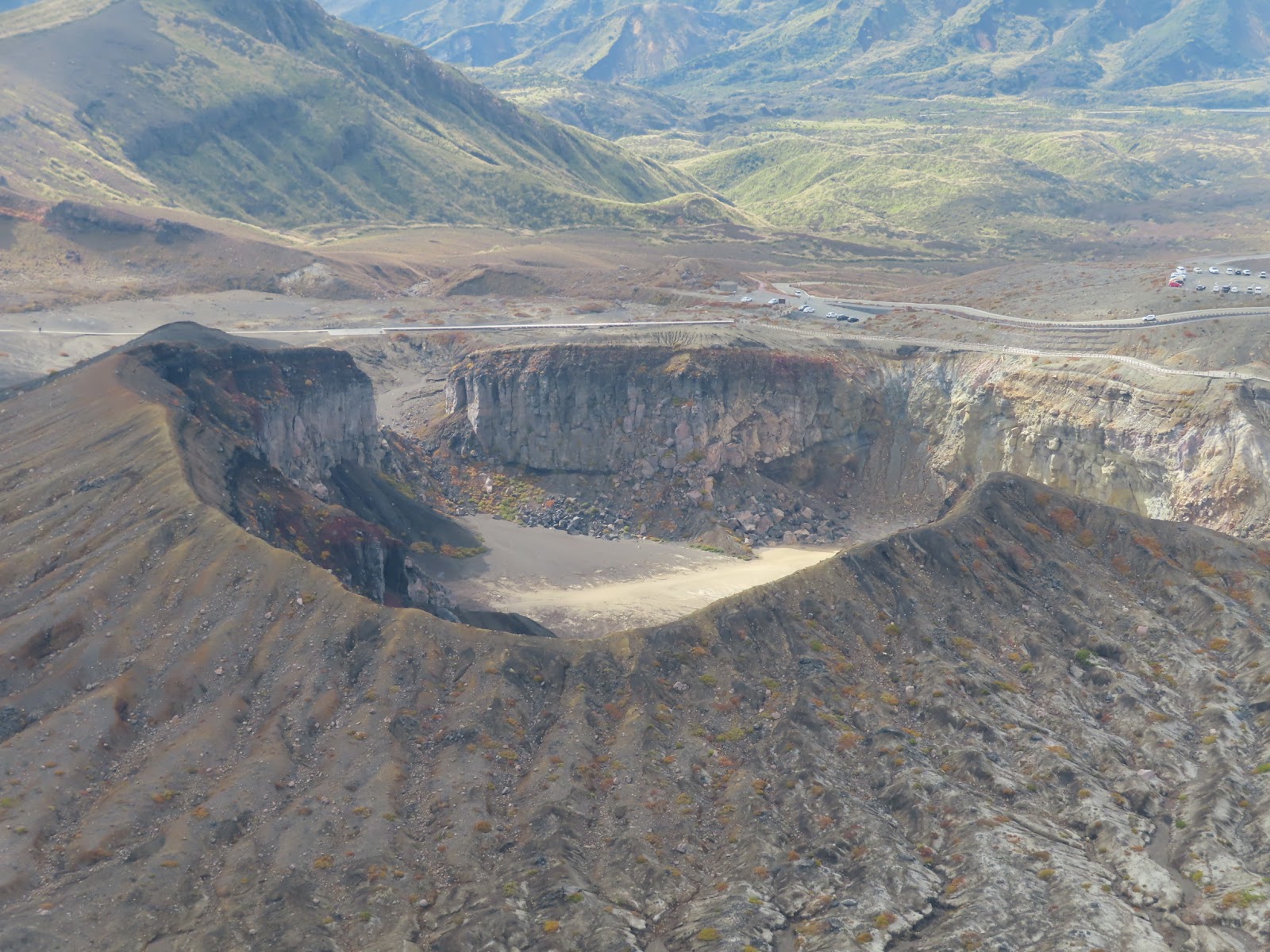
The mountain sits directly above Kusasenri, the vast grassland basin that most visitors reach first, and the two are usually explored together. From the trailhead near the Aso Volcano Museum, a well-trodden path climbs steadily through pampas and wildflowers to the summit ridge in roughly forty-five minutes to an hour. The reward is a genuine 360-degree survey of the caldera: the still-active Nakadake crater venting sulphurous steam to the north, the perfect green cone of Komezuka below, the sweep of Takadake and Nekodake to the east, and, on clear days, the distant blue outlines of Mount Unzen and the Ariake Sea far to the west.
Geologically, Eboshidake is part of the somma-and-cone structure left behind by four colossal eruptions between roughly 300,000 and 90,000 years ago, which emptied the magma chamber and collapsed the surface into the 18-by-25-kilometre caldera you now stand within. Understanding that history transforms the view: the horizon-ringing walls in the distance are the caldera's outer rim, and everything between is the floor of a vanished super-volcano, now farmed, grazed and lived in by tens of thousands of people.
The walk is graded moderate rather than hard, but there is little shade and the weather on the ridge changes quickly, so carry water, sun protection and a windproof layer even in summer. Spring brings fresh green and grazing cattle; autumn sets the susuki grass aflame and offers the clearest air of the year; winter can dust the whole cone in snow. Whatever the season, early morning gives the calmest light and the best chance of the caldera's celebrated sea of clouds.
Getting here is straightforward without a car. JR trains on the Hohi Main Line stop at Aso Station, from where Sanko buses run up to the Kusasenri area; the summit trail begins a short walk beyond the bus stop. Drivers can follow the Aso Panorama Line and use the large Kusasenri car park. Note that access to the neighbouring Nakadake crater is periodically restricted when volcanic activity or gas levels rise, but Eboshidake itself remains open, making it a reliable alternative when the crater is closed. For anyone with only a few hours in Aso, it delivers the region's grandest panorama for the least effort.
A local's tip
Climb Eboshidake for sunrise in autumn when the caldera floor fills with a sea of clouds and Nakadake's steam glows pink above it.
Best time to visit
Late spring to autumn, mid-morning
Getting there
From Aso Station take the Sanko bus toward Aso-san Nishi (Kusasenri); alight at Kusasenri-ga-hama, then follow the marked trail up the grassy flank. By car it is about 25 minutes up the Aso Panorama Line, parking at the Kusasenri lot.
Good to know
- Parking
- Restrooms
Plan the whole trip offline
Mount Eboshidake is one of many places in the Real Japan app — with turn-by-turn directions, nearby spots and full offline maps you can use with no signal.