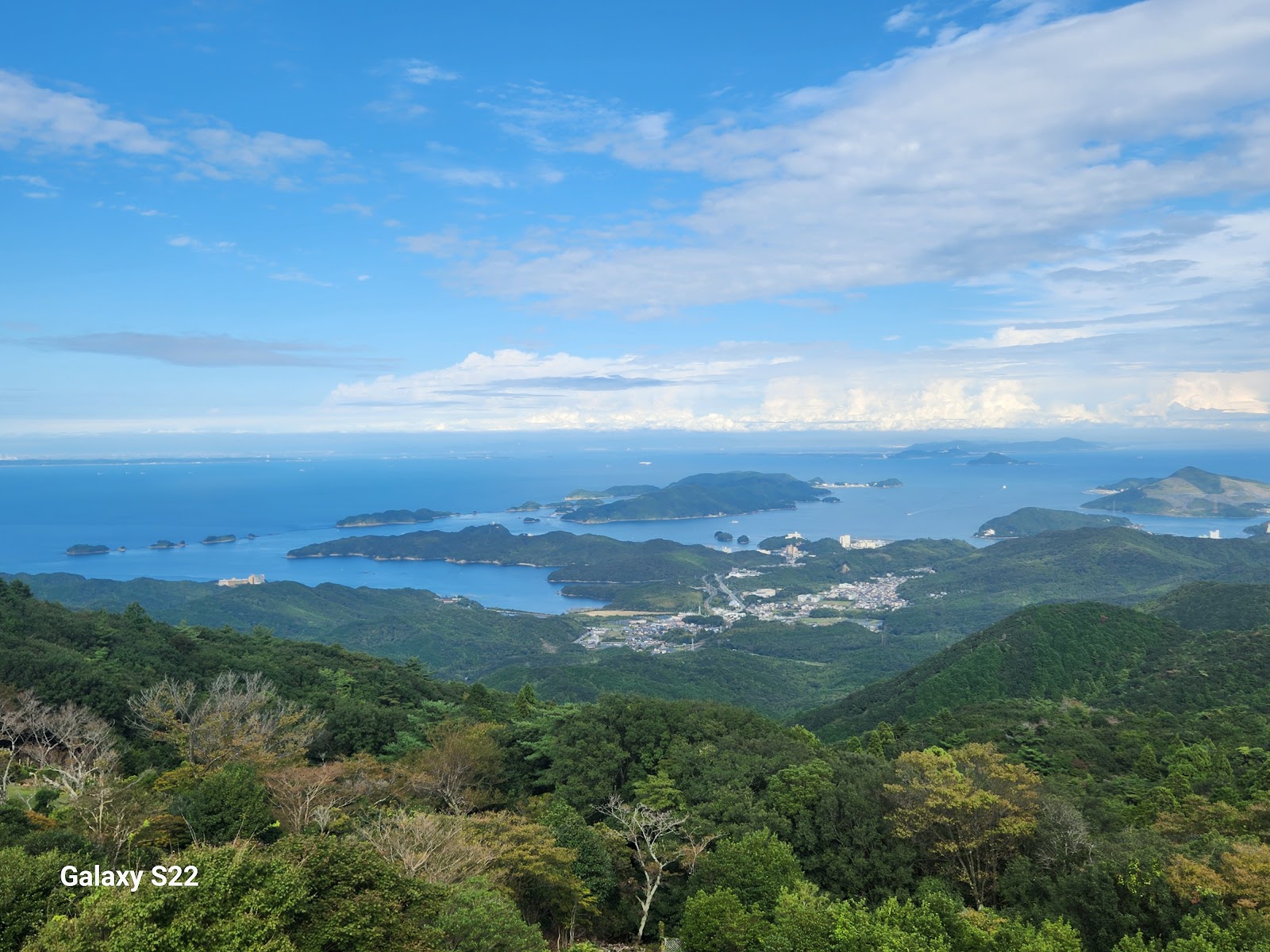
The highest peak of Ise-Shima at 555m, with a summit deck and foot bath overlooking Ise Bay to Mount Fuji.
Mount Asama, rising to 555 metres, is the highest peak of the Shima peninsula and the crowning viewpoint of Ise-Shima National Park. From its summit observatory the land falls away on every side to reveal a truly commanding panorama: Ise Bay spread out below, the sacred forests and city of Ise, the indented coastline of the peninsula running toward the Pacific, and — on the clearest days, particularly in the crisp air of autumn and winter — the distant, unmistakable cone of Mount Fuji floating on the far horizon across the bay. Few viewpoints in the Kansai region offer such a sweeping union of sea, mountain and sacred landscape.
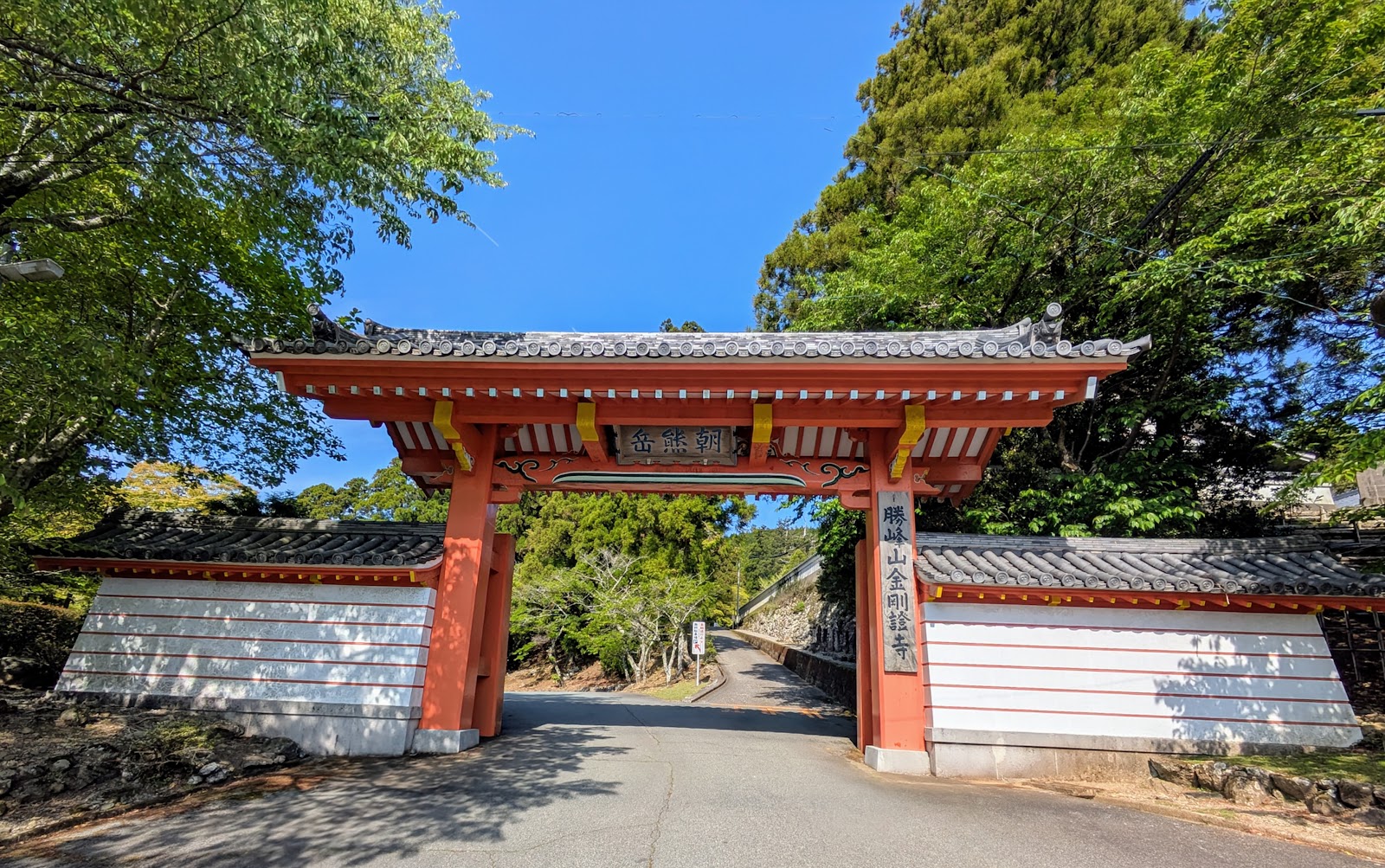
The mountain has been a place of reverence for well over a thousand years. Near the summit stands Kongoshoji, an ancient and atmospheric temple long associated with Ise Jingu and traditionally regarded as guarding the shrine from the northeast; pilgrims once climbed Asama as a natural extension of their visit to Ise, believing a pilgrimage incomplete without it. This layering of the spiritual and the scenic gives the summit a depth beyond its views, and the forested slopes, dotted with stone monuments and the temple's precincts, are rich in history and atmosphere.
The summit is reached most easily by the Ise-Shima Skyline, a scenic 16-kilometre toll road that winds up from the Ise (Naiku) side and down toward Toba, threading through the forests of the national park with viewpoints along the way. At the top, a well-appointed observatory area awaits, with a viewing deck, a cafe, and one of the summit's most delightful and unusual features: an open-air foot bath, or ashiyu, where visitors can soak tired feet in warm water while gazing out over Ise Bay. Relaxing there with the whole panorama laid out before you is a memorable and characteristically Japanese pleasure, blending onsen culture with a mountaintop view.
The scenery shifts with the seasons and the hours. Autumn brings crisp visibility and touches of colour to the wooded slopes; winter offers the best odds of spotting Mount Fuji; and clear days at any season reward with the full sweep to the horizon. Sunrise and sunset transform the bay into sheets of gold and rose, and the elevated position catches sea breezes that make the summit pleasant even in warmer months.
Access does require some planning. Most visitors drive the Ise-Shima Skyline toll road, which can be entered from either the Ise or Toba side and leads directly to the summit car park; the observatory itself is free once you are there. Seasonal buses sometimes serve the summit, and the energetic can hike up via the old pilgrimage paths from the shrine area, a walk of a couple of hours through the forest. Combined with a visit to Kongoshoji temple beside it, the summit makes a rewarding half-day.
For travellers, Mount Asama's summit observatory is the grand aerial climax of an Ise-Shima tour — the single highest and most far-reaching viewpoint in the park, uniting the sacred forests of Ise, the pearl bays of Shima, the open Pacific and, on the finest days, the sacred silhouette of Fuji itself in one unforgettable panorama.
A local's tip
Relax at the summit's open-air foot bath (ashiyu) while taking in the panorama — a soak with a view over Ise Bay is a uniquely satisfying reward for the climb.
Best time to visit
Clear autumn or winter days for views to Mount Fuji
Getting there
Drive the Ise-Shima Skyline toll road to the summit car park from either the Ise (Naiku) or Toba side; buses run seasonally, otherwise a taxi or hike from the shrine paths is needed.
Good to know
- Cafe
- Parking
- Foot bath
- Restrooms
Plan the whole trip offline
Mount Asama Summit Observatory is one of many places in the Real Japan app — with turn-by-turn directions, nearby spots and full offline maps you can use with no signal.