A vast brackish lagoon and Ramsar wetland east of Matsue that draws tens of thousands of wintering waterbirds.
Lake Nakaumi is the great brackish lagoon that spreads across the eastern edge of Matsue, straddling the border between Shimane and Tottori prefectures. Covering about 86 square kilometres, it is one of the largest lakes in Japan and forms a linked water system with neighbouring Lake Shinji, to which it is joined by the short Ohashi River; at its eastern end the Sakai Channel connects it to the Sea of Japan. This mix of fresh river water and incoming seawater makes Nakaumi genuinely brackish, and that unusual chemistry underpins its remarkable wildlife.
Because of its ecological importance, Lake Nakaumi is registered under the Ramsar Convention on Wetlands of International Importance, jointly with Lake Shinji. It is above all a haven for birds. Each winter the shallow lake and its reedy margins host tens of thousands of migratory waterfowl, including large flocks of tundra swans that fly in from Siberia, along with diving ducks, pochards and grebes. For birdwatchers the western and southern embankments, viewed at first light, are among the best cold-season nature outings anywhere in San'in.
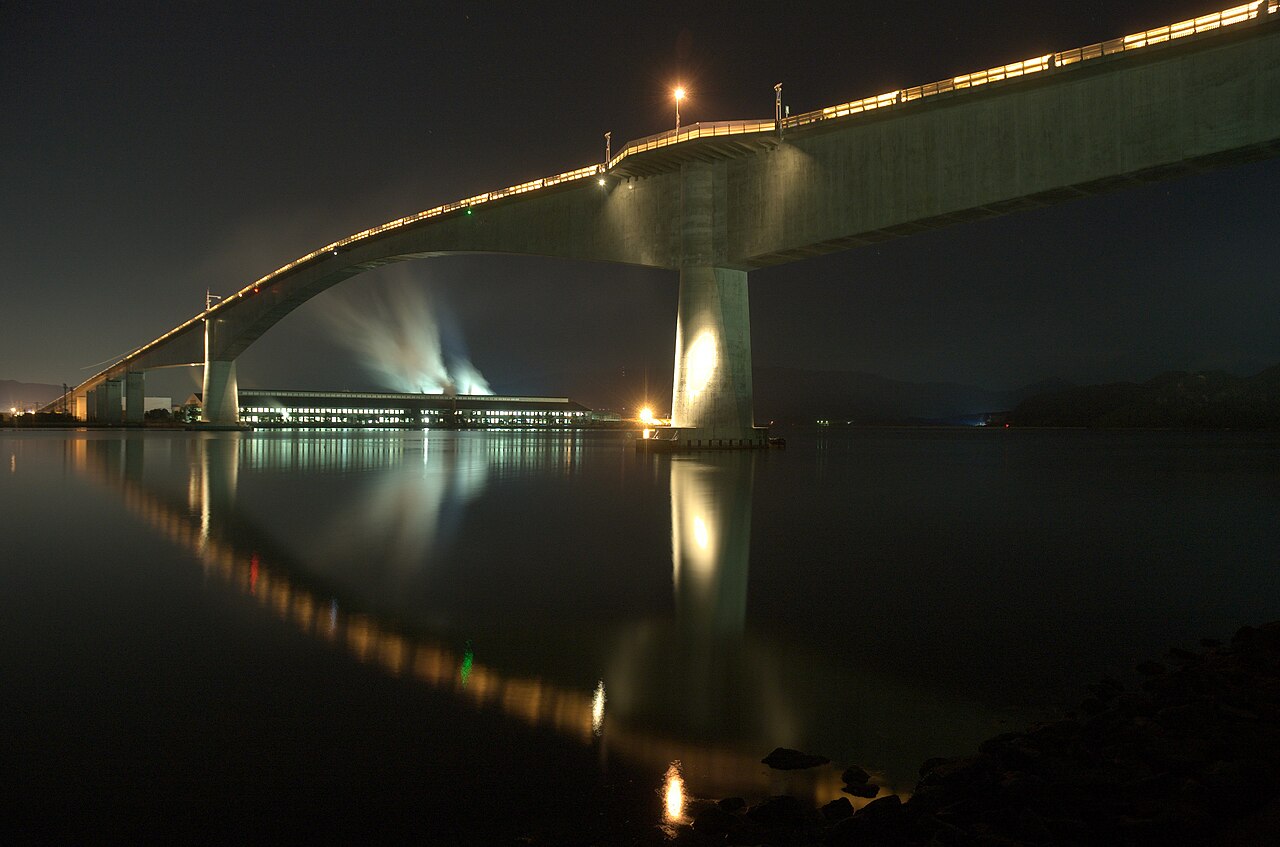
The lake is also studded with islands, the largest being flat, volcanic Daikonshima, famous for its peony fields, and the smaller Eshima, linked to the Tottori side by the dramatic Eshima Ohashi bridge. Roads and causeways thread across these islands, so a slow drive or cycle along Route 431 offers constantly changing views of open water, distant mountains and working fishing boats. The lake has long supported local fisheries, and shijimi clams, whitebait and other catches remain part of the regional cuisine.
Visiting Nakaumi is less about a single attraction than about absorbing a wide, calm waterscape. Shoreline parks on the Matsue side provide benches, walking paths and parking, and the low horizon makes for enormous skies at sunrise and sunset. On still days the water turns to a sheet of silver, mirroring the clouds and the far ridgeline of the Chugoku Mountains. Unlike the busier city lakefront of Lake Shinji, much of Nakaumi's shore feels quiet and rural, which is part of its charm.
Access is easy and free, though the lake is large enough that you should pick a specific access point. The western shoreline is closest to central Matsue and can be reached by a short taxi or local bus ride; buses running toward Yatsuka and on to Sakaiminato skirt the lake and cross its islands, giving car-free travellers a way to see the water. Drivers can follow Route 431 across Daikonshima and over the Eshima Ohashi bridge, combining several sights in one loop.
The standout season is winter, when the waterbirds gather and the air is crisp and clear; bring a telephoto lens or binoculars and warm, windproof clothing, because the open embankments are exposed. Autumn is also rewarding, with migrating flocks arriving and comfortable temperatures for walking the shore. In warmer months the lake is a peaceful backdrop for a drive or a lazy hour by the water, best enjoyed toward sunset when the light softens over the lagoon.
A local's tip
Come in December or January at dawn: thousands of tundra swans and diving ducks winter here, and the flat light over the brackish water is superb for birdwatching from the western embankments.
Best time to visit
Winter mornings for waterbirds, or sunset year-round
Getting there
Lake Nakaumi lies east of central Matsue. Reach the shore by local bus toward Yatsuka or Sakaiminato from Matsue Station, or drive along Route 431 across the lake's islands. The western shoreline parks are a short taxi ride from the city centre.
Good to know
- Parking
- Restrooms
Plan the whole trip offline
Lake Nakaumi is one of many places in the Real Japan app — with turn-by-turn directions, nearby spots and full offline maps you can use with no signal.