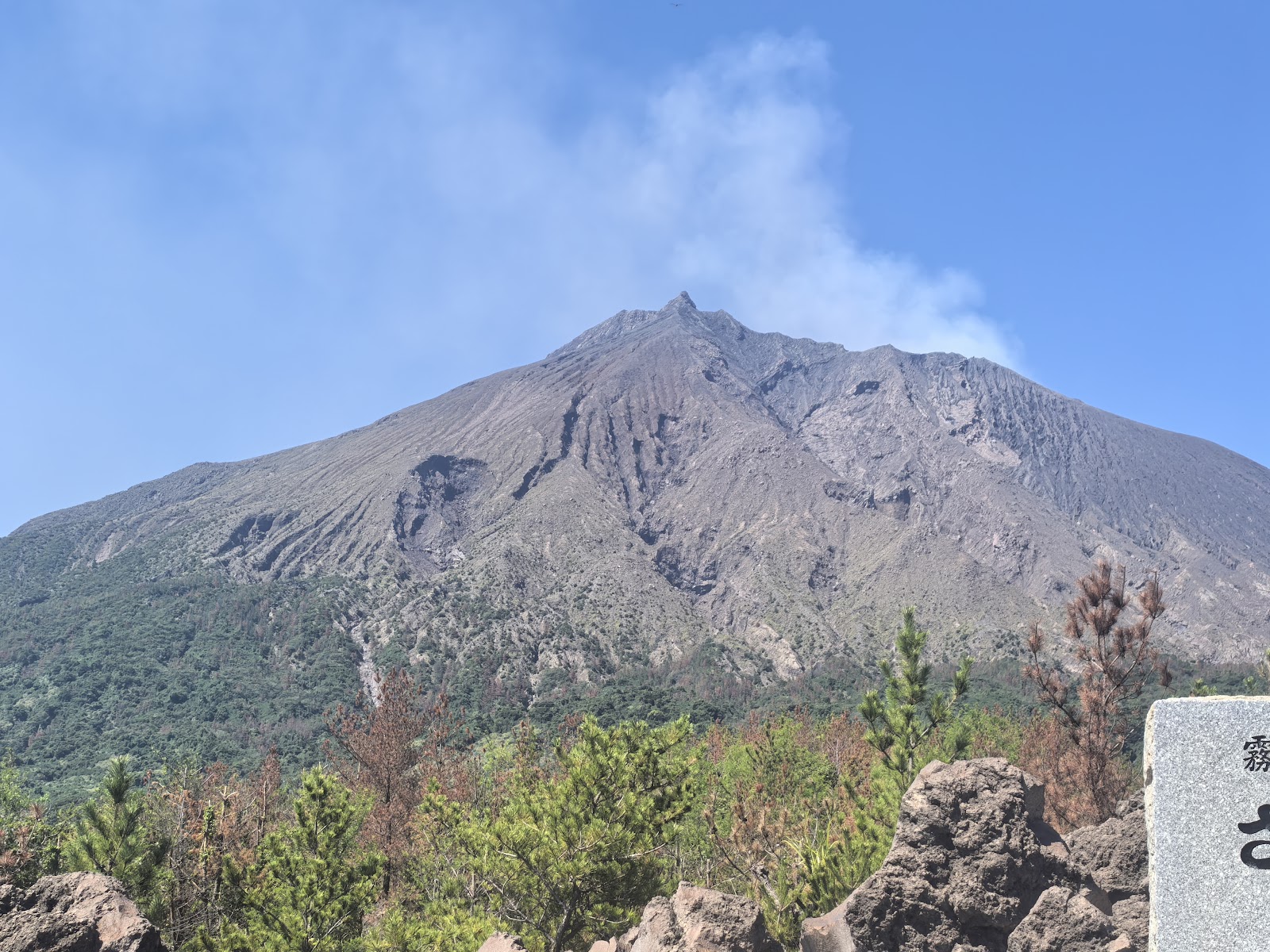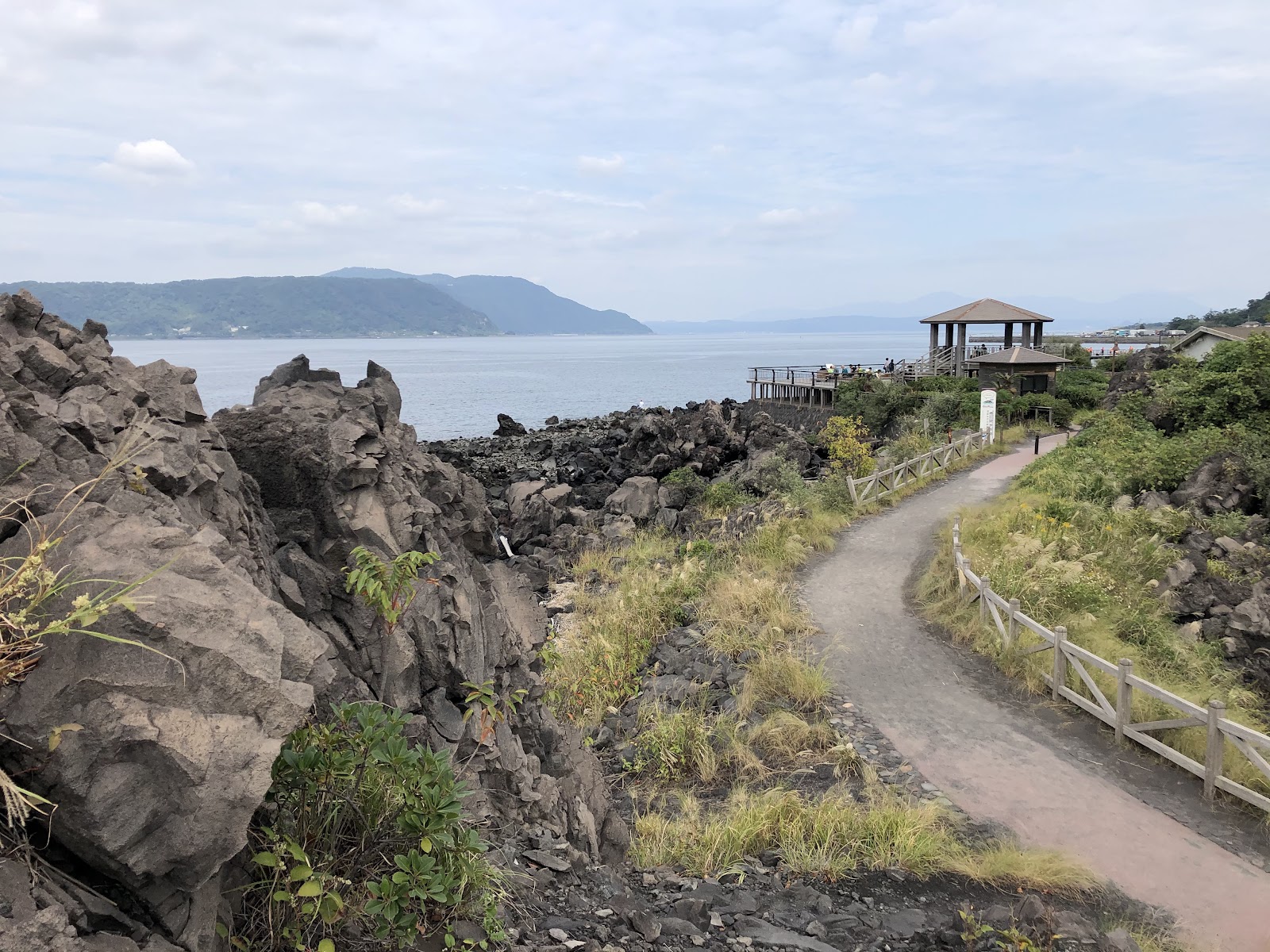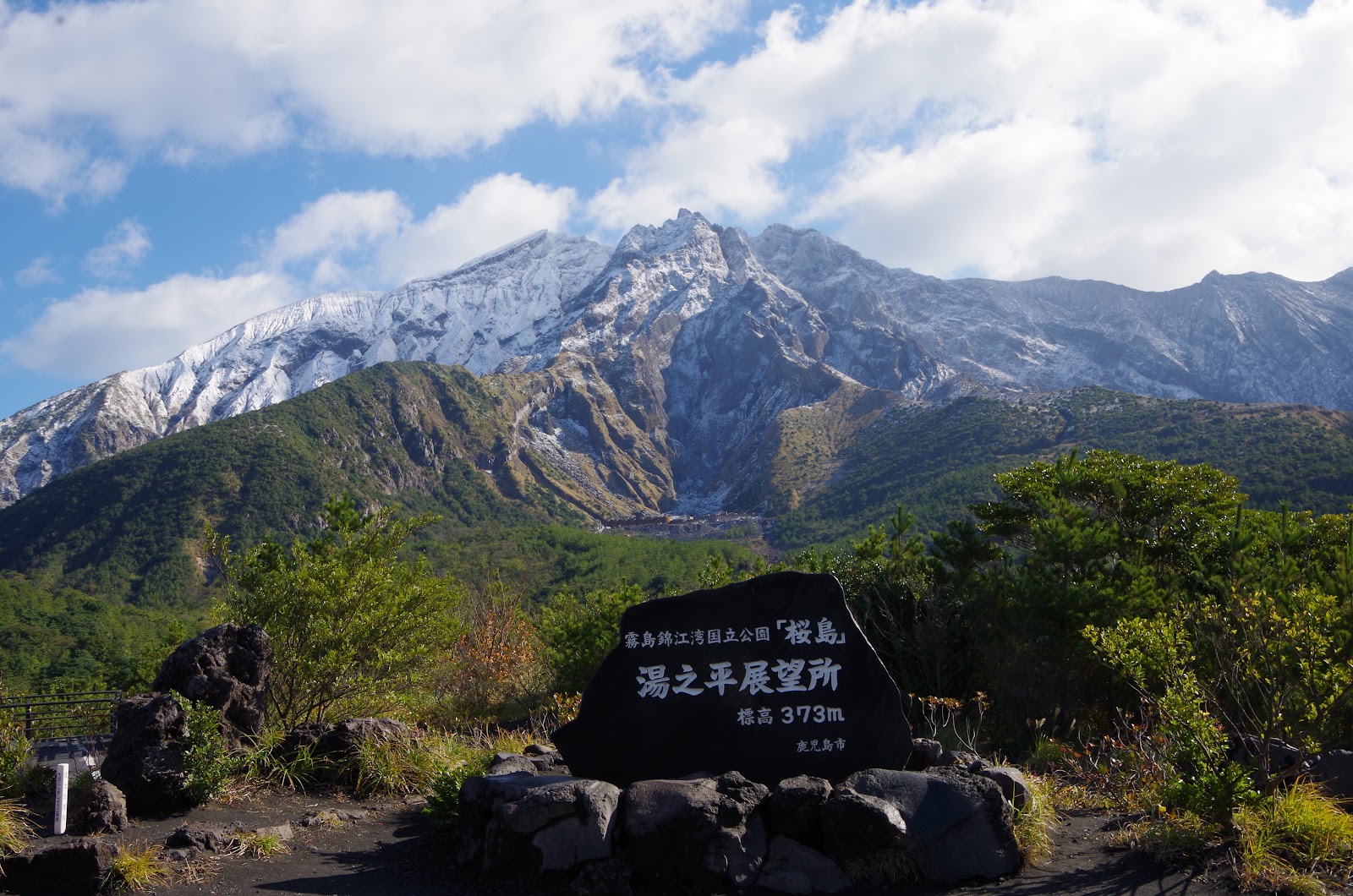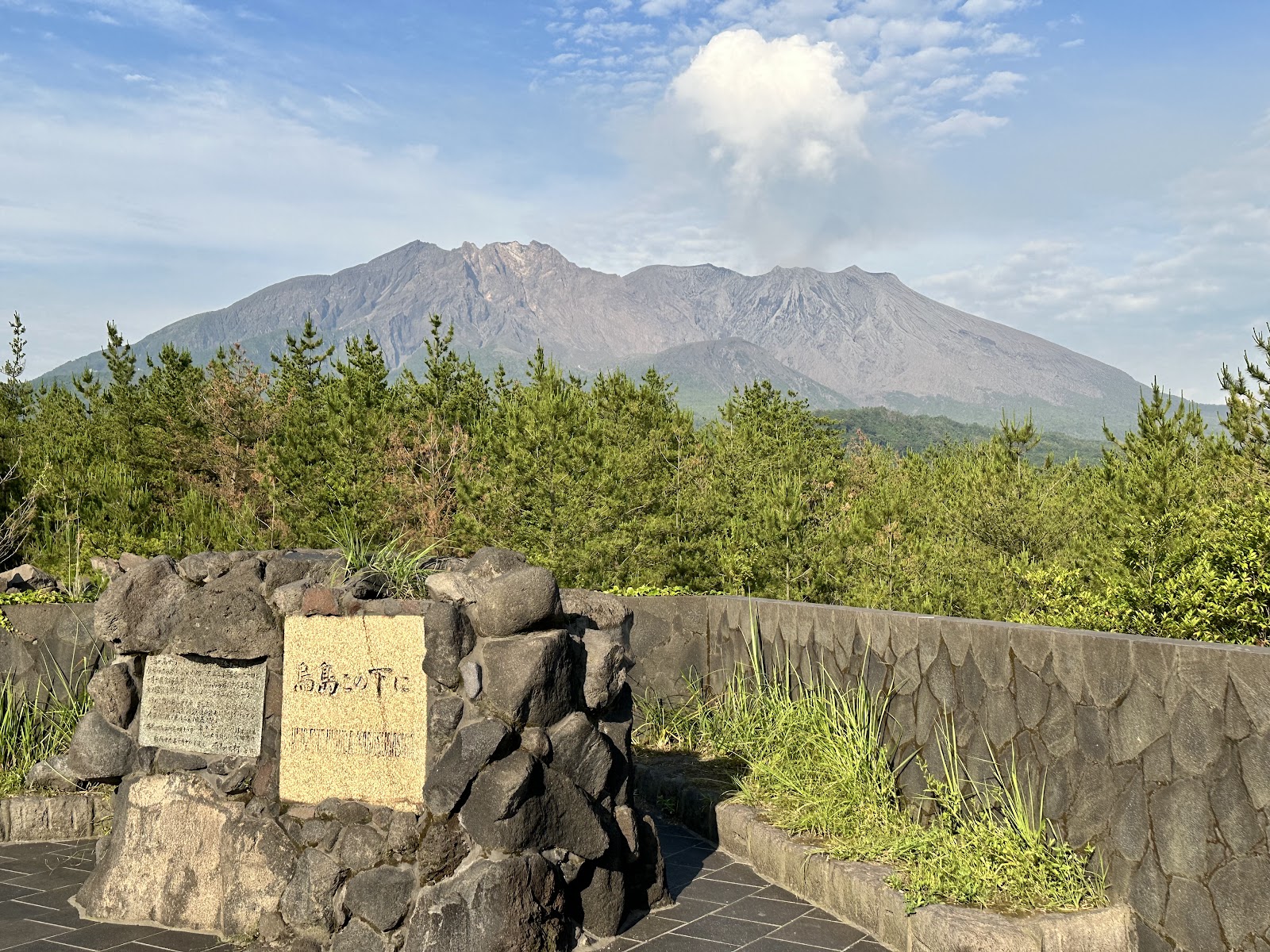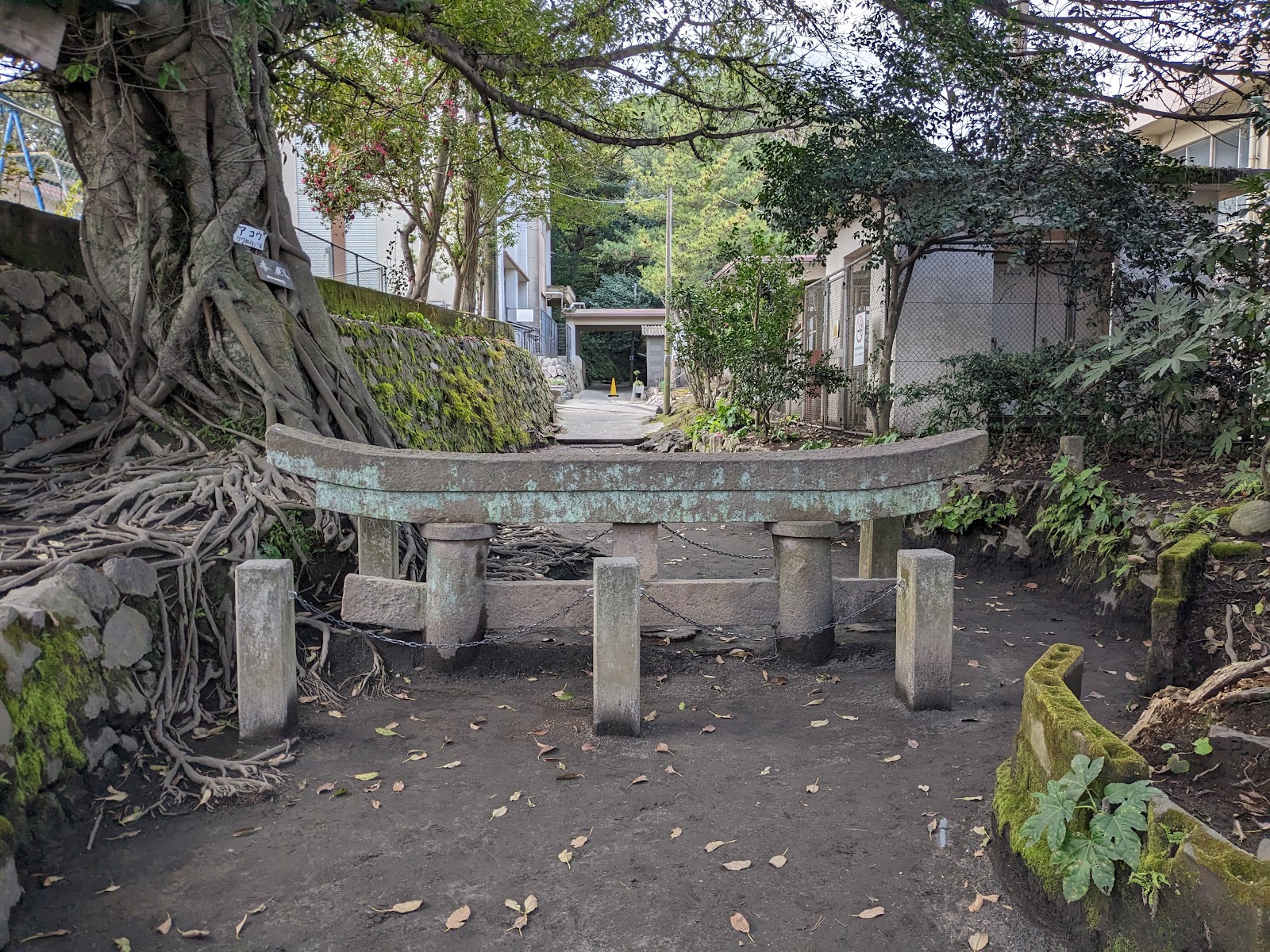
A shrine gate half-buried by Sakurajima's great 1914 eruption, left as a warning to future generations.
On the eastern flank of Sakurajima, the smoking volcano that looms over Kagoshima Bay, stands one of Japan's most haunting monuments to the power of nature: the buried torii gate of Kurokami. What you see is only the crossbar and the very top of a stone shrine gate poking out of the ground. The rest — pillars that once stood more than three meters tall — lies entombed beneath a thick blanket of volcanic ash and rock.
The cause was the great Taisho eruption of January 1914, the most powerful eruption in twentieth-century Japan. Over several days Sakurajima disgorged enormous flows of lava and buried the surrounding villages in ash. The eruption was so vast that its lava permanently connected Sakurajima, until then a true island, to the Osumi Peninsula on the far shore — the "island" has been a peninsula ever since. Here at Kurokami, the local Haragosha Shrine and its torii were swallowed up to the crossbar, the ground level raised by roughly two meters in a single catastrophe.
In the aftermath, the village headman made a decision that gives the site its lasting meaning. When authorities proposed digging the gate out and restoring it, he insisted it be left exactly as the eruption had left it — buried — so that future generations would never forget the mountain's destructive power. That act of deliberate remembrance is why the gate still stands half-swallowed today, a deliberate memorial rather than a ruin awaiting repair.
Standing before it, the scale of the 1914 event becomes real in a way statistics cannot convey. You are looking at the top of a structure that once towered over worshippers, now reduced to a shin-high stub, with the still-active cone of Sakurajima brooding overhead. On many days you can see thin plumes of ash rising from the summit, a reminder that this is one of the most active volcanoes in the world and that the people who farm the fertile ash-enriched soil around it live in a constant, matter-of-fact truce with the mountain.
A visit takes only a short while but leaves a deep impression, and it pairs naturally with a broader tour of Sakurajima — the lava fields, the observation points, and the foot baths heated by geothermal energy. Reaching Kurokami is part of the adventure: take the frequent ferry from central Kagoshima across the bay to Sakurajima (a short, scenic crossing), then continue by island bus or rental car around the loop road to the eastern side. Entry is free, there is parking and an information board, and the site is open at all hours. Few places anywhere let you stand so directly in the aftermath of a great eruption.
A local's tip
Only the top of the once-3-meter gate shows above ground — the rest is entombed in volcanic ash from a single 1914 eruption.
Best time to visit
Combine with a Sakurajima day trip
Getting there
On the eastern side of Sakurajima at Kurokami; take the ferry from Kagoshima to Sakurajima, then the island bus toward Kurokami, or drive the island loop road.
Good to know
- Parking
- Restrooms
- Information Board
Plan the whole trip offline
Kurokami Buried Torii Gate is one of many places in the Real Japan app — with turn-by-turn directions, nearby spots and full offline maps you can use with no signal.