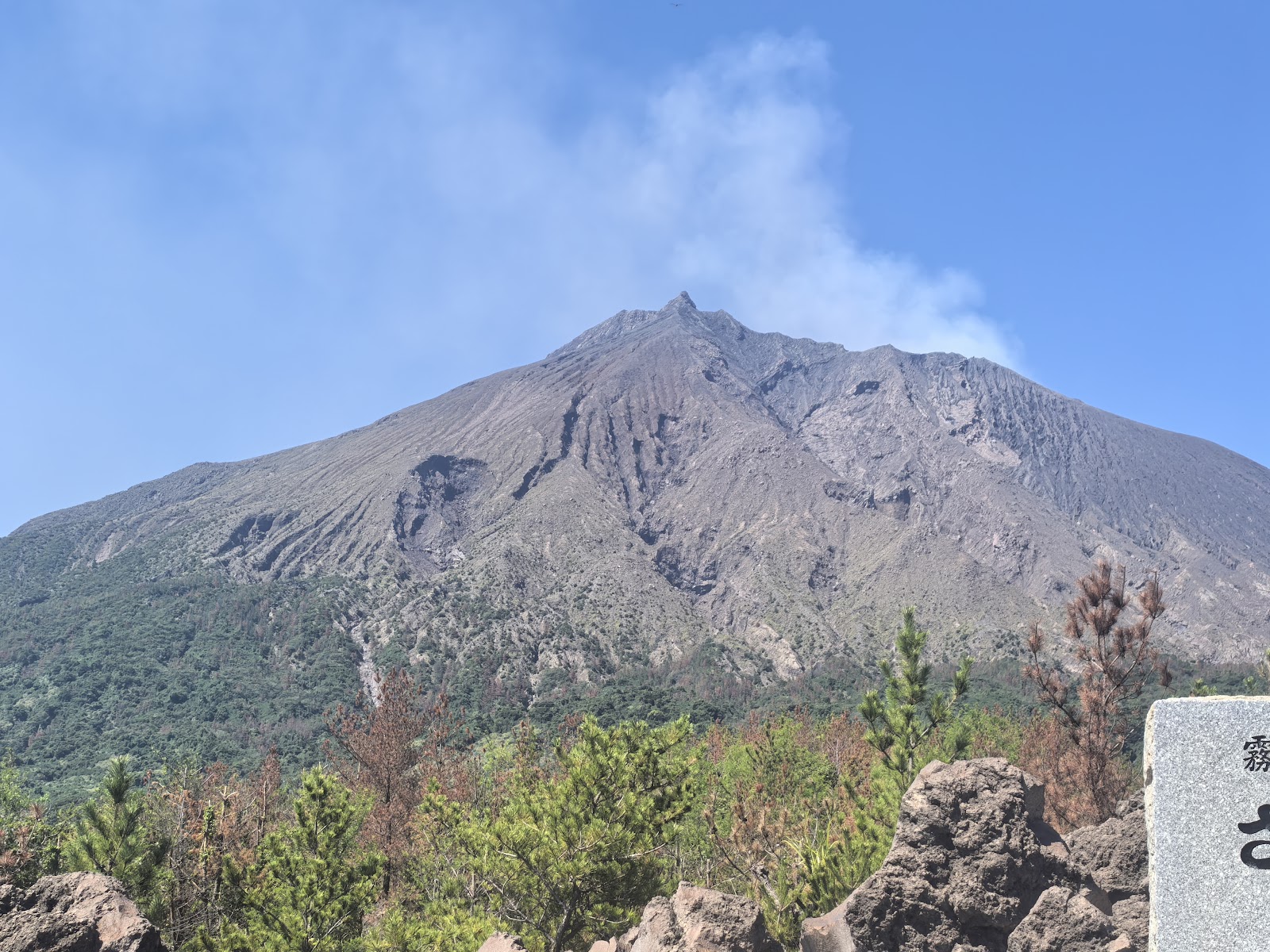
A boardwalk viewpoint atop a 1946 lava flow, the closest public look at Sakurajima's smoking active crater.
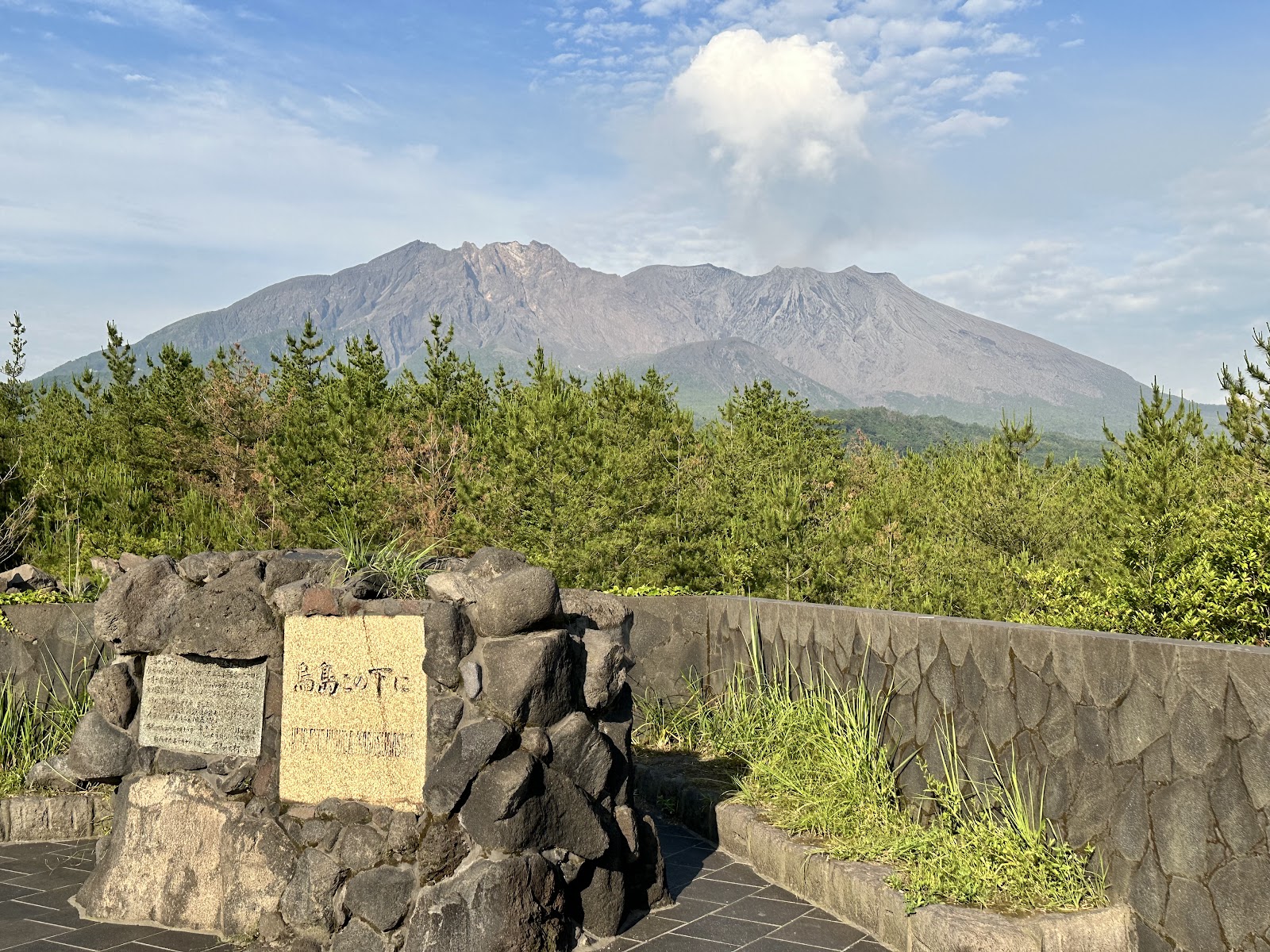
The Arimura Lava Observatory offers one of the most thrilling and up-close encounters with an active volcano anywhere in Japan. Perched on the southern flank of Sakurajima, the still-erupting volcano that looms over Kagoshima city, the observatory sits atop a vast field of black lava laid down by the great eruption of 1946. From here you look almost straight up at the smoking Minamidake summit crater, close enough to feel the raw power of a mountain that regularly puffs ash into the sky.
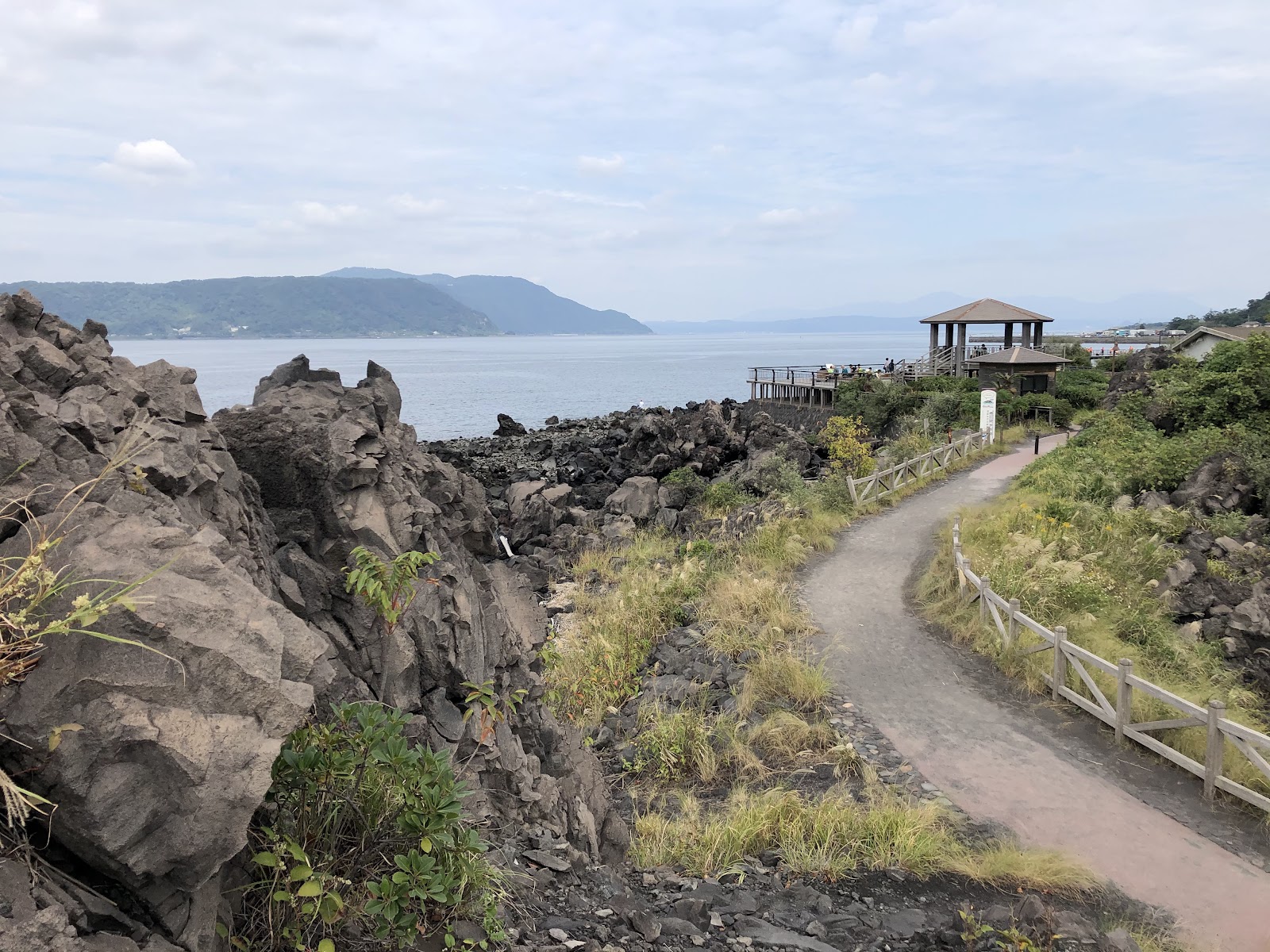
Sakurajima is one of the most active volcanoes in Japan, and Arimura is prized as the closest publicly accessible viewpoint to its restless crater. A walking trail roughly one kilometre long winds across the hardened lava, including a short tunnel and a series of raised boardwalks and platforms that lead to elevated lookouts. As you walk, the twisted, ropey textures of the lava underfoot tell the story of the flows that reshaped this coastline, while sparse pioneering plants show nature slowly reclaiming the rock.
From the observation decks the views are extraordinary in two directions. Turn one way and the massive bulk of Sakurajima rises overhead, often trailing a plume of white steam or grey ash; turn the other and the calm expanse of Kinko Bay, also called Kagoshima Bay, opens out toward the city on the far shore. On active days you may even see or hear the volcano rumble, a genuinely primal experience that makes the geology feel vividly alive.
Because this is a working volcano, conditions change with the weather and the mountain's mood. The single most important factor for a good visit is the wind: when it carries the ash plume away from Arimura, the crater stands out crisply and the air stays clear, but a wind blowing your way can bring falling ash. Checking the forecast and the volcano's activity level before you set out is well worth the effort. Shelters along the trail double as evacuation points, a reminder that you are a guest on an unpredictable landscape.
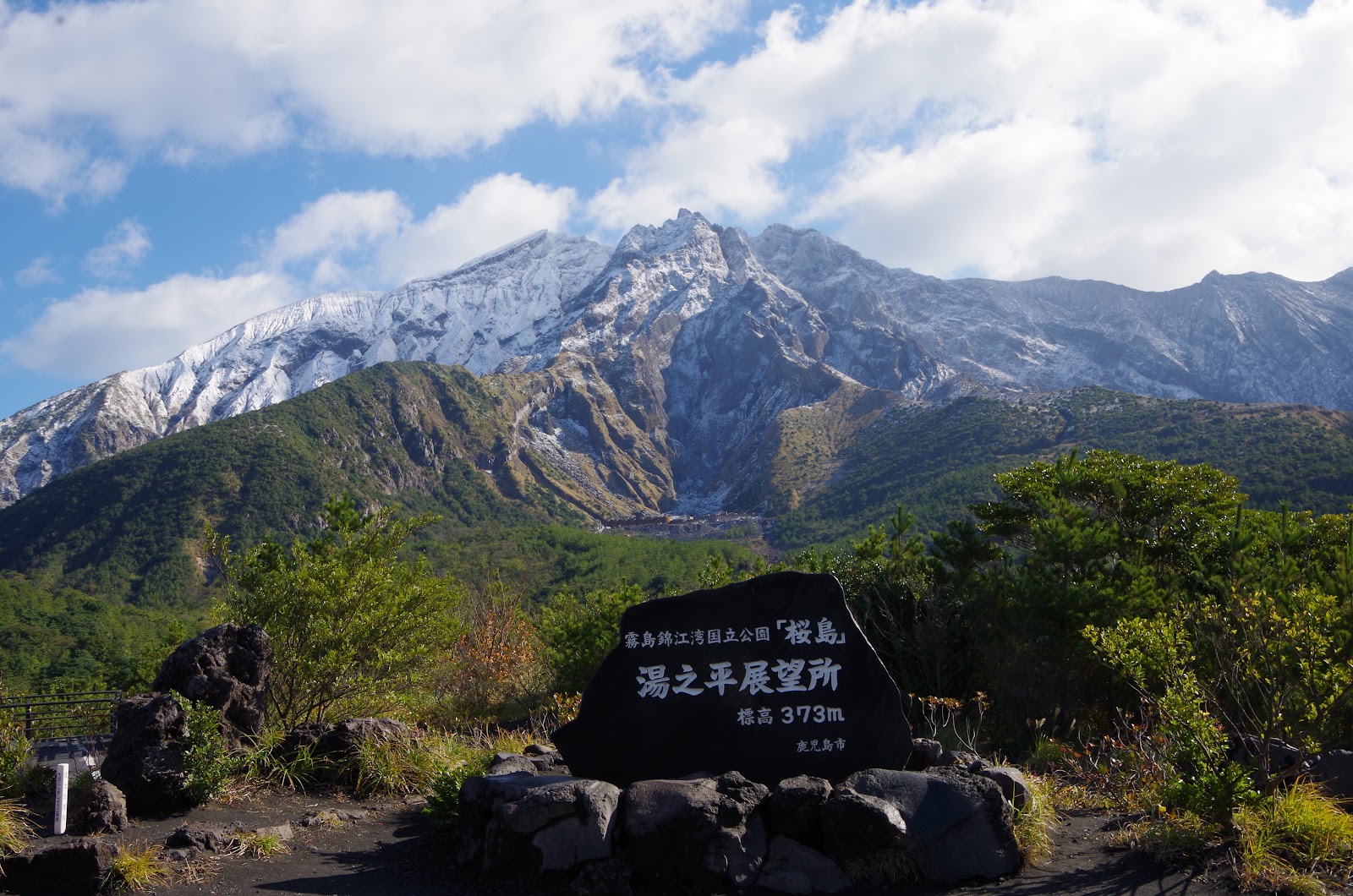
Arimura pairs naturally with the other sights that ring Sakurajima. The nearby Sakurajima Visitor Center explains the volcano's history and monitoring, the Yunohira Observatory higher up the slope gives a broader panorama, and the Karasujima Observatory marks an island swallowed whole by the 1914 eruption. Many visitors circle the island by car or the Island View sightseeing bus, stopping at each viewpoint and soaking in a free footbath along the way.
To reach Arimura, take the short and frequent car ferry from central Kagoshima to Sakurajima Port, a crossing of only about fifteen minutes, then continue roughly 17 minutes by car or local bus around the island to the observatory. Note that the ferry and buses are not covered by the Japan Rail Pass, but fares are modest. Admission is free, parking is available, and the site is open at all hours, though daylight best reveals the crater. Allow around forty minutes to walk the lava trail and take in the lookouts. For anyone fascinated by volcanoes, Arimura delivers an unforgettable front-row seat.
A local's tip
Check the day's wind direction before you go; when the wind blows the ash plume away from Arimura you get the clearest, safest view straight up at the smoking Minamidake crater.
Best time to visit
Daytime with a westerly wind that keeps ash away
Getting there
About 17 minutes by car or the Sakurajima Island View area buses from the Sakurajima Port ferry terminal, which is reached by a short, frequent ferry from central Kagoshima.
Good to know
- Parking
- Restrooms
- Walking trail
Plan the whole trip offline
Arimura Lava Observatory is one of many places in the Real Japan app — with turn-by-turn directions, nearby spots and full offline maps you can use with no signal.