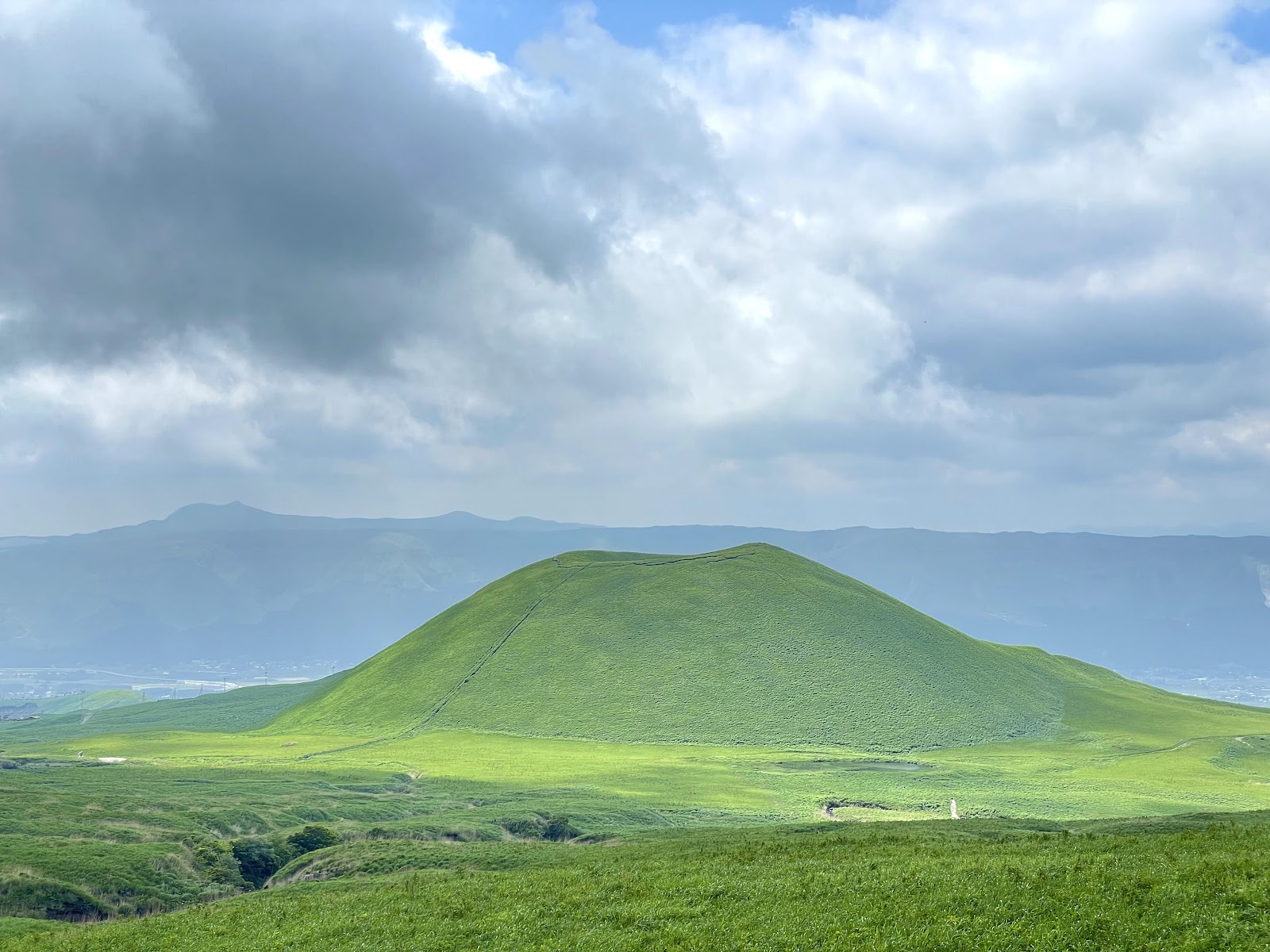
The perfectly symmetrical, grass-covered volcanic cone on the Aso Panorama Line, one of the caldera's most iconic sights.
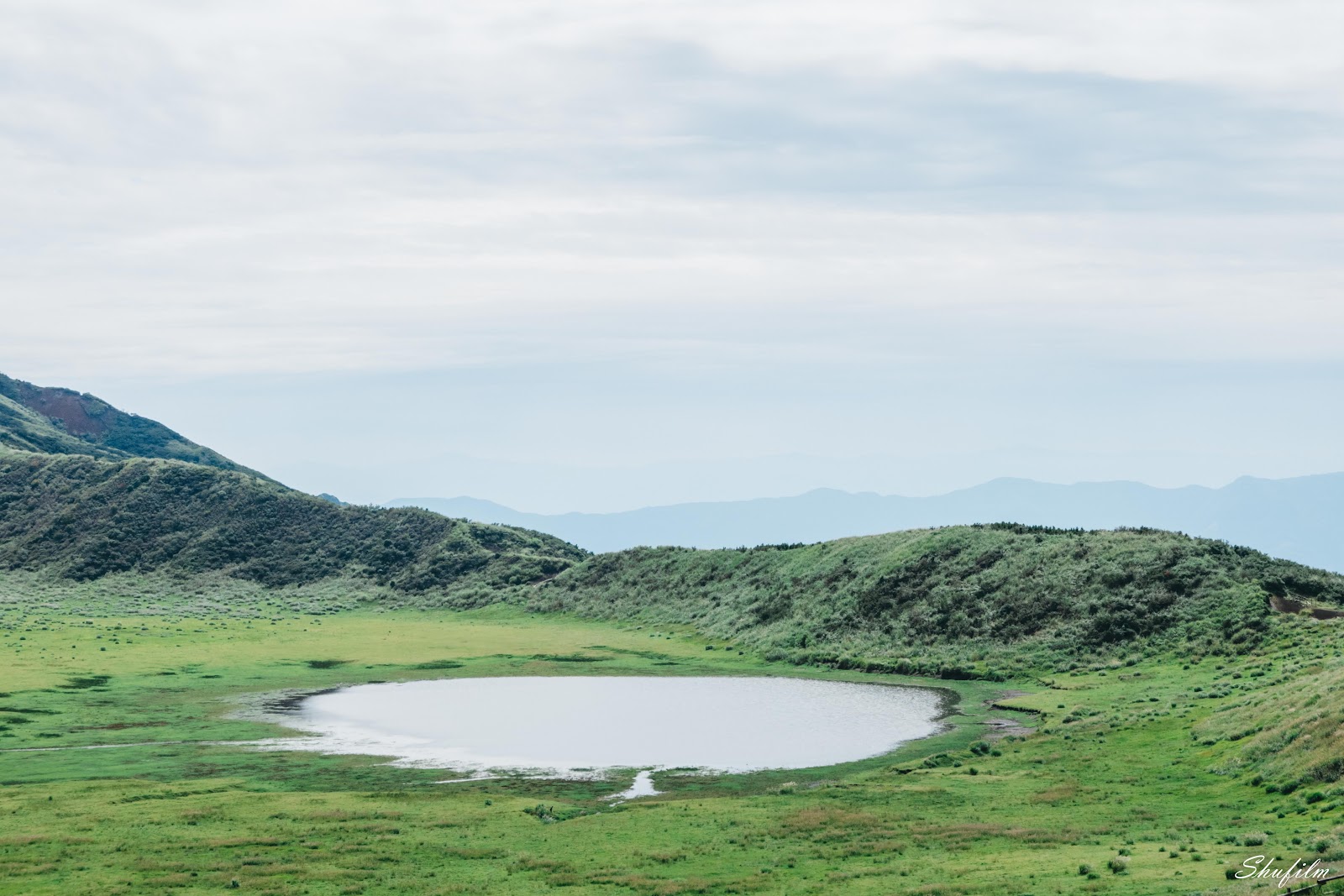
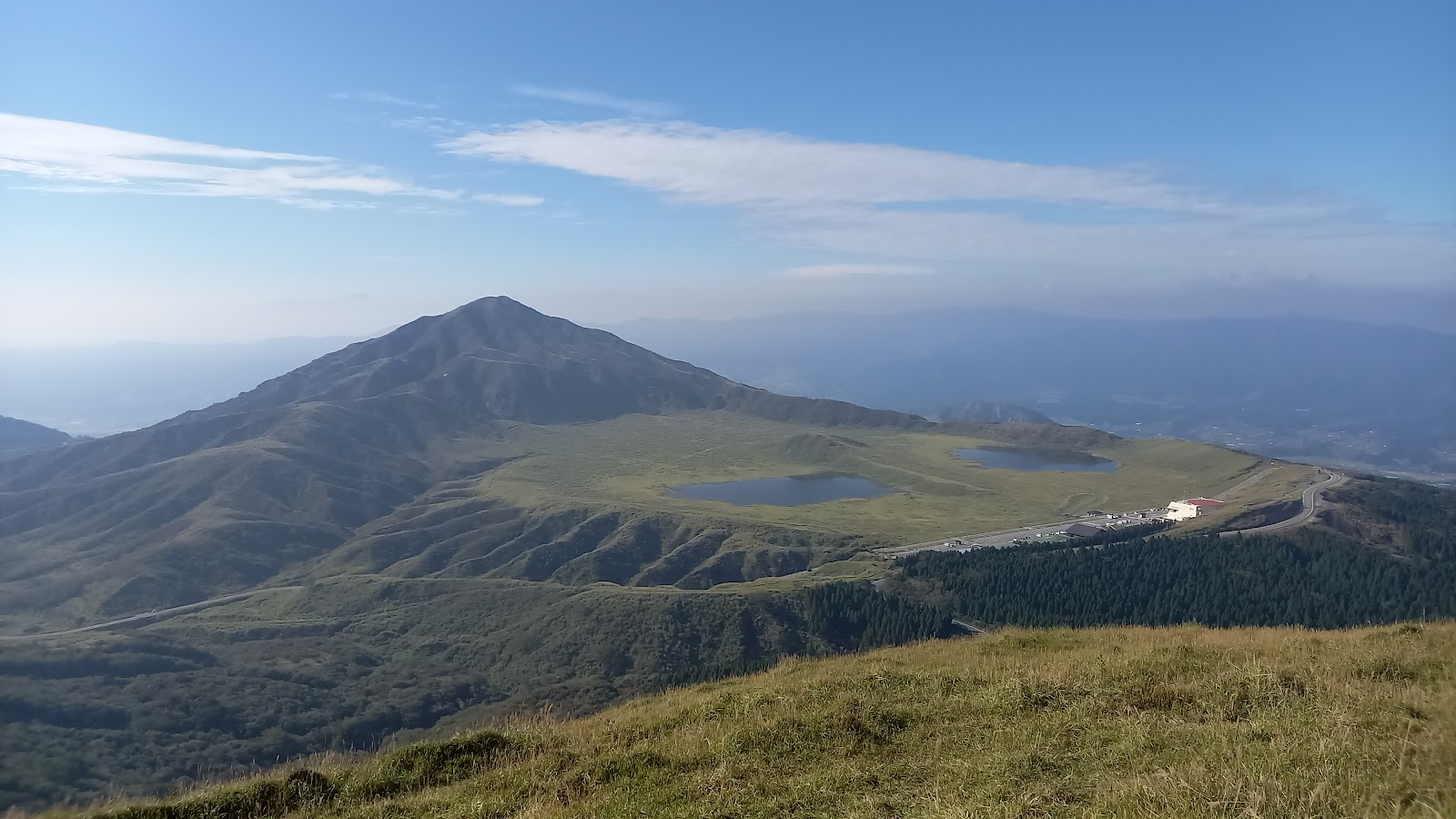
Komezuka is one of the most photographed and best-loved landmarks of the entire Aso region, a small, almost impossibly perfect volcanic cone rising from the grasslands on the Aso Panorama Line, the road that climbs from the caldera floor up toward the Nakadake crater and Kusasenri. Only about 50 metres high, entirely blanketed in smooth green turf, and crowned with a neat scooped hollow at its summit, it looks less like a real volcano than a model of one, and it has become a symbol of Aso's gentle, pastoral volcanic beauty.
The name Komezuka means 'rice mound', and it comes from a local legend. The Shinto deity Takeiwatatsu no Mikoto, the mythical founder-god of Aso, is said to have heaped up rice here and given it to the people in a time of famine, scooping a handful from the top, which is why the cone has its distinctive dished summit. Geologically it is a scoria cone formed by a relatively recent eruption, its slopes long since softened and greened by grass, and its symmetry is genuinely rare.
The experience of Komezuka is purely visual and beautifully simple. Viewed from the pull-offs along the Panorama Line, its rounded form changes character with the seasons and the light: brilliant emerald in late spring and summer, tawny gold in autumn, and dramatic when cloud shadows sweep across the open grassland around it. It is at its most striking seen from a little above, from the road toward Kusasenri, where the scooped top is clearly visible. Photographers return again and again for its clean lines against the bigger backdrop of the Aso peaks.
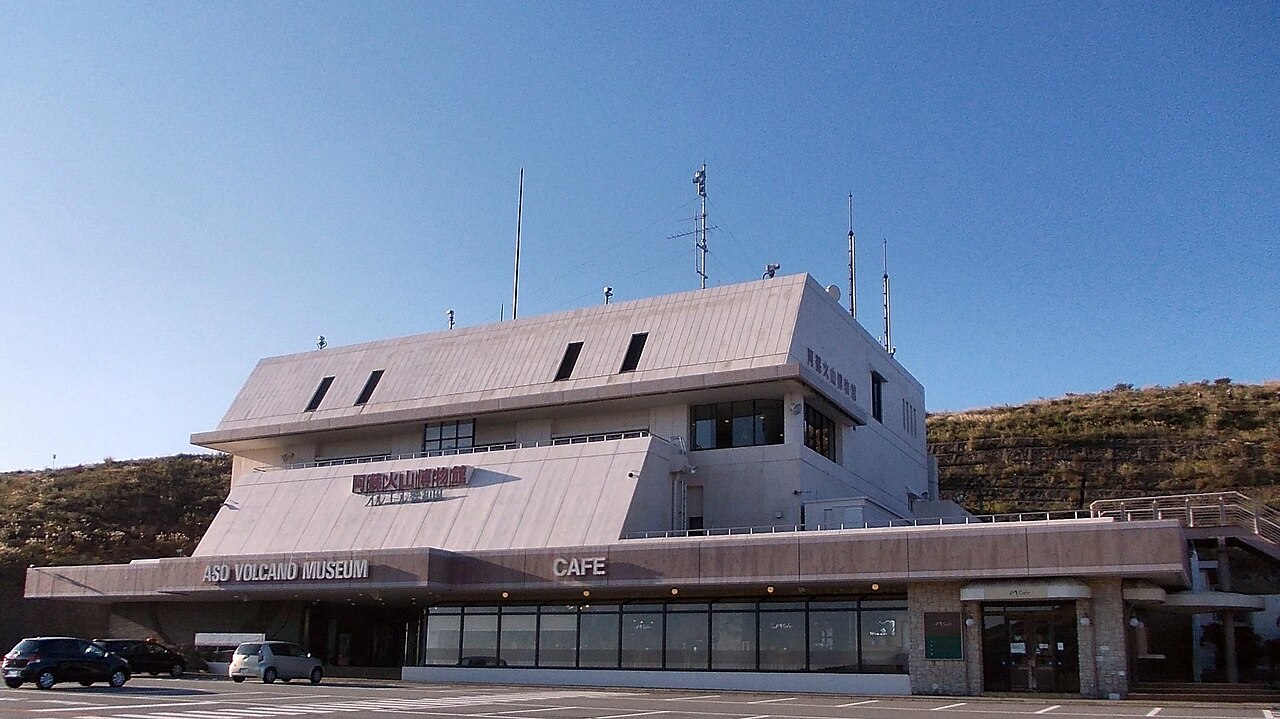
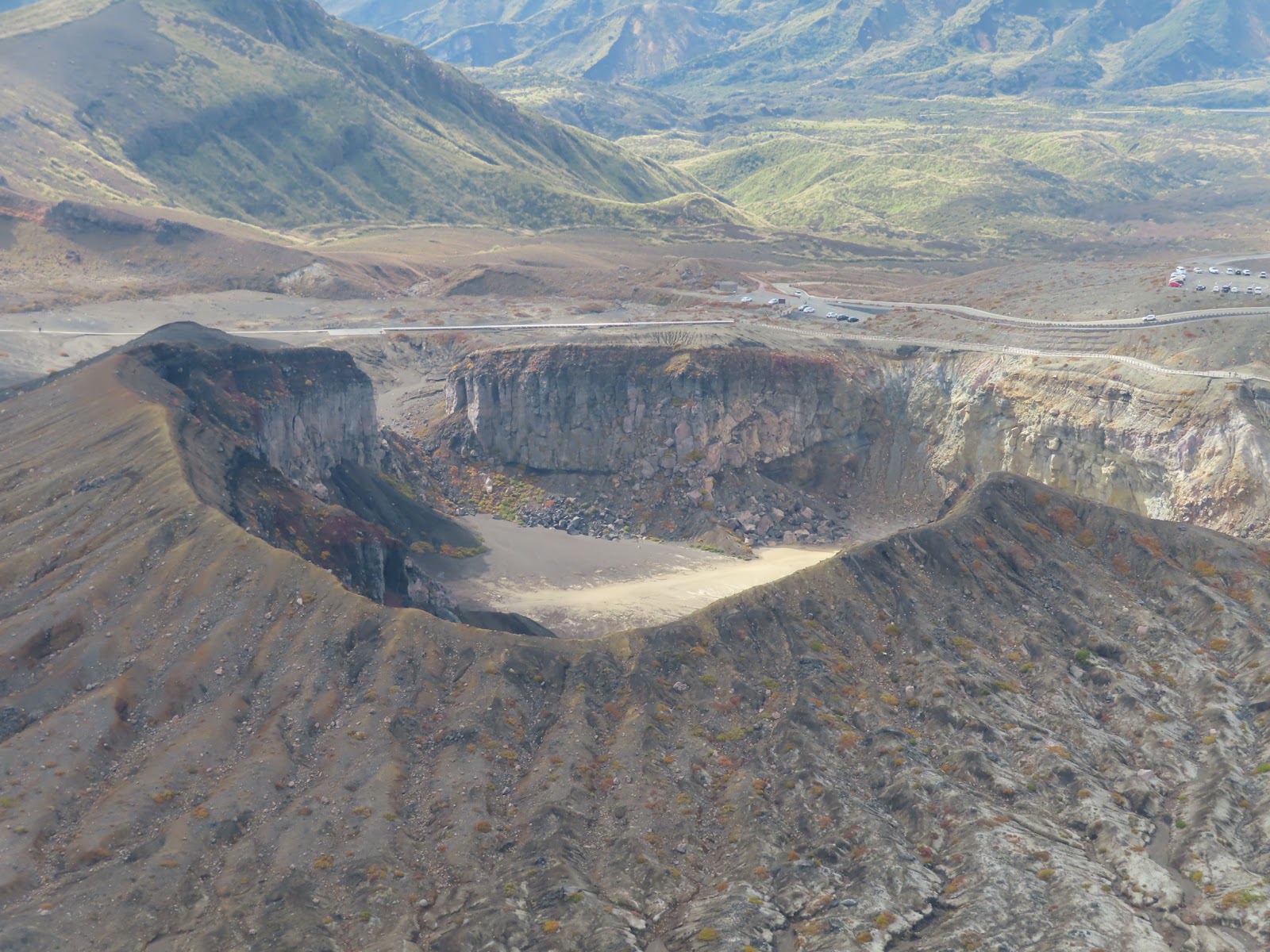
It is important to know that climbing Komezuka is strictly prohibited. The cone is treated as sacred, and its fragile grass surface is protected, so visitors admire it only from the surrounding roadside viewpoints, never from its slopes. This is not a hike but a photo stop and a moment of quiet appreciation, usually combined with the wider Panorama Line drive up to Kusasenri, the Aso Volcano Museum and, conditions permitting, the Nakadake crater.
Because it sits right on the main sightseeing route, Komezuka is one of the easiest highlights to enjoy. There is no admission, and it can be seen at any time from the road. Roadside pull-offs and nearby parking give safe places to stop and photograph it; there are no facilities at the cone itself, though the Kusasenri hub with its museum, shops and restrooms is only a short drive on.
Access is by the Aso Panorama Line, either by rental car from JR Aso Station or on the Aso sightseeing bus that climbs the same road toward Kusasenri. Come in late spring or summer for the most vivid green, pause at the viewpoints, and take in one of the caldera's simplest and most perfect sights, a rice mound left by a god, wrapped in grass on the flank of a living volcano.
A local's tip
Do not climb it, the cone is sacred and off-limits, but the pull-off just below gives the classic photo of its scooped-out top and perfect grassy slopes.
Best time to visit
Late spring and summer, when the cone is vivid green
Getting there
On the Aso Panorama Line between Aso Station and Kusasenri; view it from the roadside pull-offs (climbing the cone itself is prohibited).
Good to know
- Parking
- Viewpoint
Plan the whole trip offline
Komezuka is one of many places in the Real Japan app — with turn-by-turn directions, nearby spots and full offline maps you can use with no signal.