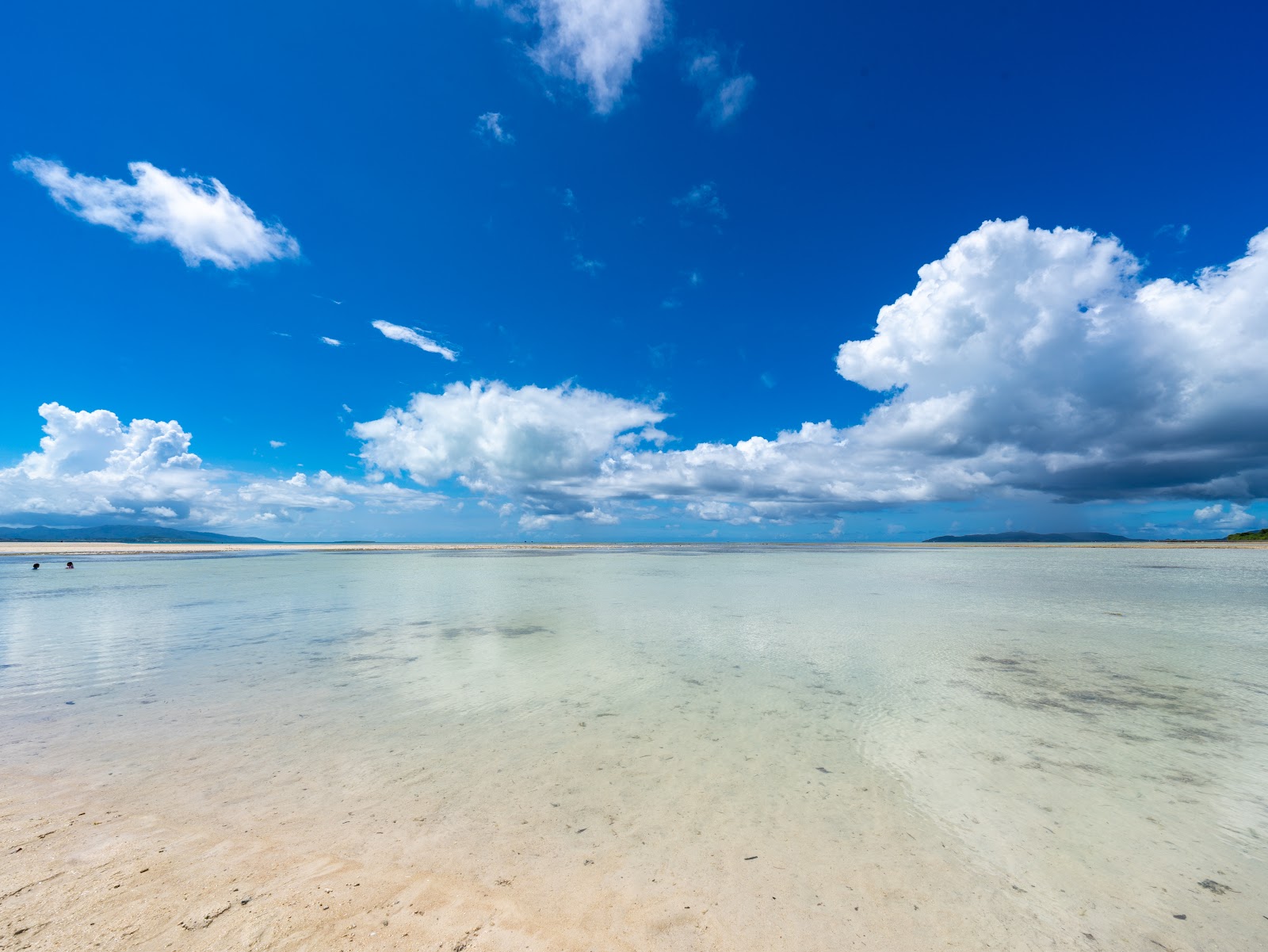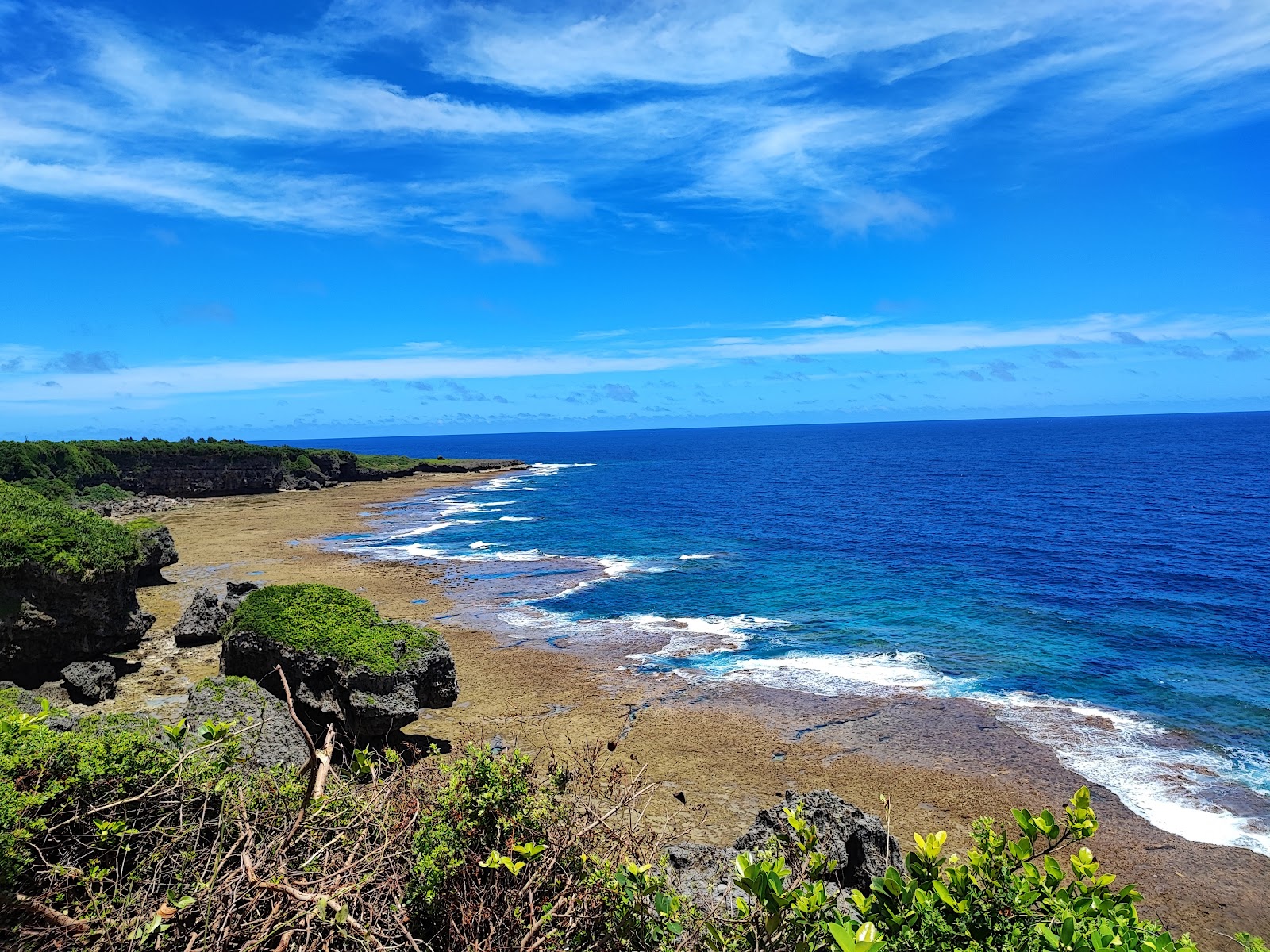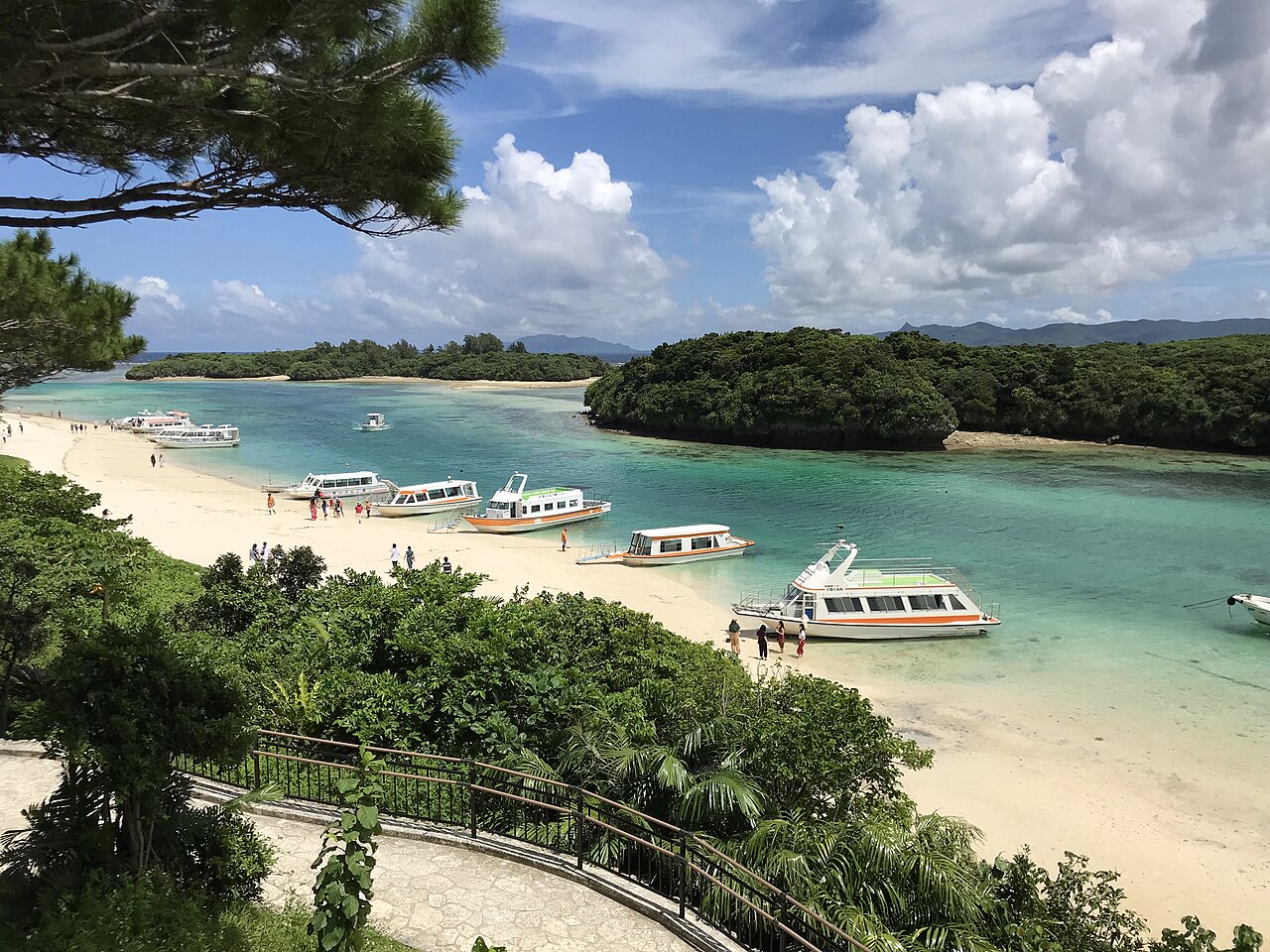
Ishigaki's iconic bay, where jade-green water, white sand and scattered islets form one of Japan's most photographed seascapes.
Kabira Bay, on the northwestern coast of Ishigaki Island in the remote Yaeyama archipelago, is the image that launches a thousand Okinawa brochures, and it earns the fame. A shallow, sheltered inlet dotted with small forested islets, it holds water that shifts through every shade of green and blue as the light changes: pale jade over the sandbars, turquoise in the channels, deep sapphire where the reef falls away. The bay is one of very few places in Japan awarded three stars in the Michelin Green Guide Japan, and standing at the overlook you understand why.
Unlike Okinawa's swimming beaches, Kabira Bay is protected: bathing is prohibited to safeguard the cultured black-pearl beds farmed in its waters and to protect the fragile marine environment. Instead, the classic way to experience it is aboard one of the glass-bottom boats that glide out from the shore several times an hour. Through the hull you can watch living coral, clouds of tropical fish, and often sea turtles and rays passing beneath, all without setting foot in the water. The short cruise is inexpensive and suitable for all ages, and it reveals the marine life that makes the bay's colours so vivid.
On land, a series of viewpoints and short paths lead along the headland above the beach, each framing the islets and the shifting water differently. The white coral sand is soft underfoot, safe for paddling at the edge, and popular for photographs, especially in the strong midday sun when the lagoon lights up most intensely. A cluster of souvenir shops, cafes, and the Ryukyu-style buildings of local pearl companies sit just behind the beach, selling the black and gold pearls cultivated here since the early twentieth century.
Kabira Bay sits within the Iriomote-Ishigaki National Park, which protects some of the richest marine ecosystems in Japan, and its calm, reef-sheltered waters are a big part of that story. The bay faces north and is well protected, so it looks serene in almost any weather, though the colours are at their most breathtaking under clear skies. It is beautiful year-round; the subtropical Yaeyama climate stays mild even in winter, when Ishigaki becomes a welcome escape from the cold of mainland Japan.
Reaching Kabira means a real journey, and that is part of its appeal. Ishigaki lies far south of Okinawa's main island, closer to Taiwan than to Naha, and is reached by air via New Ishigaki Airport, with direct flights from Naha, Tokyo, and Osaka. From the airport the bay is about 35 minutes by car or local bus. Many visitors base themselves on Ishigaki to explore the wider Yaeyama Islands, taking ferries to Taketomi, Iriomote, and beyond. Facilities at the bay include parking, restrooms, and shops, and the site is free to visit, with only the glass-bottom boat charging a modest fare. For anyone venturing to Japan's far southwestern frontier, Kabira Bay is the unmissable centrepiece, a seascape so perfectly composed it hardly looks real.
A local's tip
Swimming is banned here to protect the pearl beds, so take the glass-bottom boat instead to see the coral and rays without disturbing the water.
Best time to visit
Midday when sunlight lights the lagoon; year-round
Getting there
On Ishigaki Island in the Yaeyama chain, far south of Okinawa's main island. Fly to New Ishigaki Airport, then about 35 minutes by car or the Karita bus toward Kabira.
Good to know
- Shops
- Parking
- Restrooms
Plan the whole trip offline
Kabira Bay is one of many places in the Real Japan app — with turn-by-turn directions, nearby spots and full offline maps you can use with no signal.