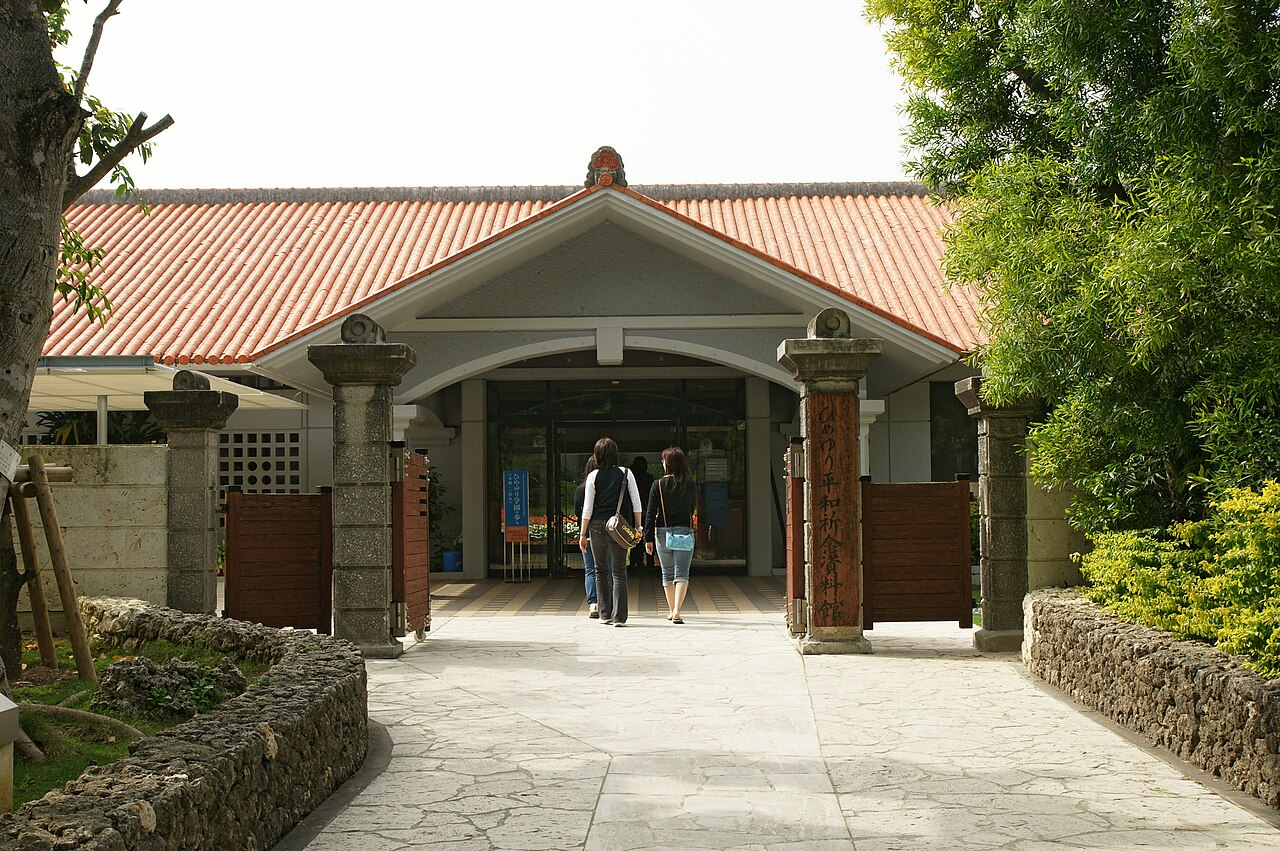
A moving memorial museum in southern Okinawa telling the tragic story of the Himeyuri student nurses in the 1945 battle.
The Himeyuri Peace Museum in Itoman, southern Okinawa, is one of the most affecting war-memorial sites in Japan, dedicated to the memory of the Himeyuri Student Corps — a group of teenage schoolgirls and their teachers mobilised as nurses during the Battle of Okinawa in the spring of 1945. Quiet, dignified and deeply human, it stands as both a memorial to those who died and an unforgettable lesson in the cost of war.
In March 1945, as American forces prepared to invade Okinawa, more than two hundred students from two girls' schools, together with their teachers, were conscripted to serve in makeshift military field hospitals set up in caves. As the battle — among the bloodiest of the Pacific War — engulfed the south of the island, these young women tended horrifically wounded soldiers in appalling conditions underground, with little food, water or medicine, and under constant bombardment. In the final chaotic days of the fighting, the corps was abruptly dissolved and the girls ordered out into an active battlefield; many were killed by shelling, in mass casualties, or took their own lives. Of the students and teachers involved, well over a hundred perished.
The museum stands on the site of one of the field-hospital caves and beside the Himeyuri monument that marks it. Inside, the story is told with restraint and overwhelming emotional force. Photographs of the smiling students before the war line the walls, each a young life; personal belongings, letters and a recreation of the cramped, terrifying cave hospital convey the reality they endured; and the heart of the museum is the survivors' own testimony, recorded in writing and on video. For decades after the war, survivors returned to the museum to speak with visitors and ensure the students were remembered as individuals rather than statistics, and their words remain the exhibition's most powerful element.
This is not a conventional sightseeing attraction but a place of mourning and reflection, and it should be approached in that spirit. Visitors typically move through in silence, and the experience is sobering, particularly the sections describing the final days. Yet the museum's purpose is ultimately hopeful: by confronting what happened, it appeals for peace and for the prevention of such suffering ever again, a message that resonates far beyond Okinawa.
The museum lies in the south of the island, in the area where the battle reached its terrible climax, and is often visited alongside the nearby Okinawa Prefectural Peace Memorial Park and its Cornerstone of Peace. A rental car makes access easiest, around forty minutes from Naha, though buses also serve the area. Allow around seventy-five minutes to read the testimonies and watch the interviews with the attention they deserve. Heartbreaking and essential, the Himeyuri Peace Museum ensures that the students' story — and the human meaning of the Battle of Okinawa — will not be forgotten.
A local's tip
Read the survivor testimonies slowly and watch the video interviews — the museum's power lies in the students' own words. It is a sombre site, so treat it as a place of remembrance rather than a sightseeing stop.
Best time to visit
Any time; allow quiet space to reflect
Getting there
Drive about 40 minutes south from Naha to Itoman, or take a bus toward the Peace Memorial area and alight at Himeyuri-no-to; a car is easiest.
Good to know
- Parking
- Gift shop
- Restrooms
Plan the whole trip offline
Himeyuri Peace Museum is one of many places in the Real Japan app — with turn-by-turn directions, nearby spots and full offline maps you can use with no signal.