A protected patch of ancient Musashino woodland in central Tokyo, wild and unmanicured, rich in birds and old trees.
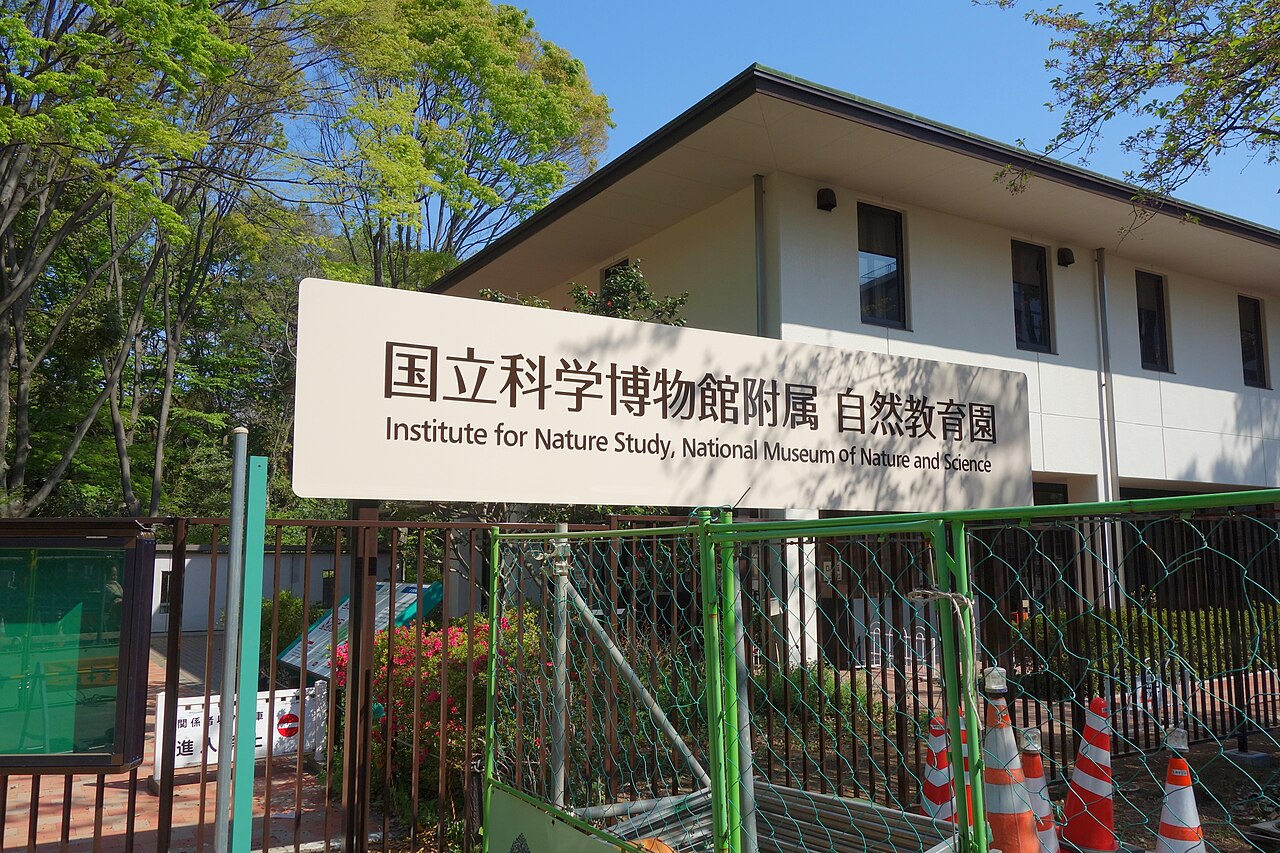
The Institute for Nature Study is unlike any other green space on this list: rather than a designed garden, it is a deliberately preserved fragment of wild nature in the middle of the city, a dense woodland, marsh, and pond that offers a glimpse of what the Musashino plain looked like before Tokyo covered it. Run as a branch of the National Museum of Nature and Science, its purpose is scientific and educational, and it is kept as natural as possible—trees are allowed to fall and decay, paths are simple earthen trails, and the tangle of undergrowth is left largely to itself.
The site has an extraordinarily long human history layered beneath its wildness. Shell middens show it was inhabited some 2,500 years ago; in the Edo period it was the estate of a daimyo, and a few of its pine trees survive from that era's garden. After the Meiji Restoration it became a gunpowder magazine for the military, then an imperial estate in 1917, which is largely why this pocket of forest was never developed. In 1949 it passed to the education ministry and was opened as a nature study park, and it is today designated both a National Natural Monument and a Historic Site.
Within its roughly 20 hectares grow more than 8,000 trees and over 1,400 species of plants, many of them representative of the original Musashino landscape, alongside a great pond, marshy wetland, and quiet groves. The wildlife is the real draw: kingfishers, herons, and mandarin ducks frequent the water, tanuki (Japanese raccoon dogs) live in the woods, and in summer the forest hums with insects and birdsong that seem impossible so close to Meguro Station. To protect the habitat, the number of visitors admitted at any one time is capped, which keeps the trails peaceful and the atmosphere genuinely tranquil.
The visiting experience is closer to a gentle nature walk than a garden stroll. A small visitor centre near the entrance explains the ecology and current wildlife sightings, and the network of flat woodland paths loops past the pond and through varied habitats over about ninety unhurried minutes. Because the trails are natural earth, some sections can be muddy after rain, and while the main routes are broadly accessible, this is a place best enjoyed at a slow, observant pace with comfortable shoes and, ideally, binoculars.
Admission is 320 yen and the park is closed on Mondays. The best time to visit is early summer, when the woodland is at its most lush and alive, or a quiet late-autumn weekday. From Meguro Station on the JR Yamanote Line and several subway lines it is a ten-minute walk along Meguro-dori, and it sits beside the Tokyo Metropolitan Teien Art Museum, so nature lovers and art lovers can happily combine the two into a restful half-day away from the crowds.
A local's tip
This is a preserved wild woodland, not a manicured garden, so bring the binoculars—the marshy pond area is one of central Tokyo's best spots for kingfishers, and the trailside benches let you simply sit and listen to a forest that predates the city.
Best time to visit
Early summer for lush greenery; late autumn for quiet foliage
Getting there
From Meguro Station (JR Yamanote Line, Tokyo Metro Namboku Line, Toei Mita Line, Tokyu Meguro Line) take the east exit and walk about 10 minutes along Meguro-dori to the entrance.
Good to know
- Restrooms
- Wheelchair
- Visitor center
Plan the whole trip offline
Institute for Nature Study is one of many places in the Real Japan app — with turn-by-turn directions, nearby spots and full offline maps you can use with no signal.