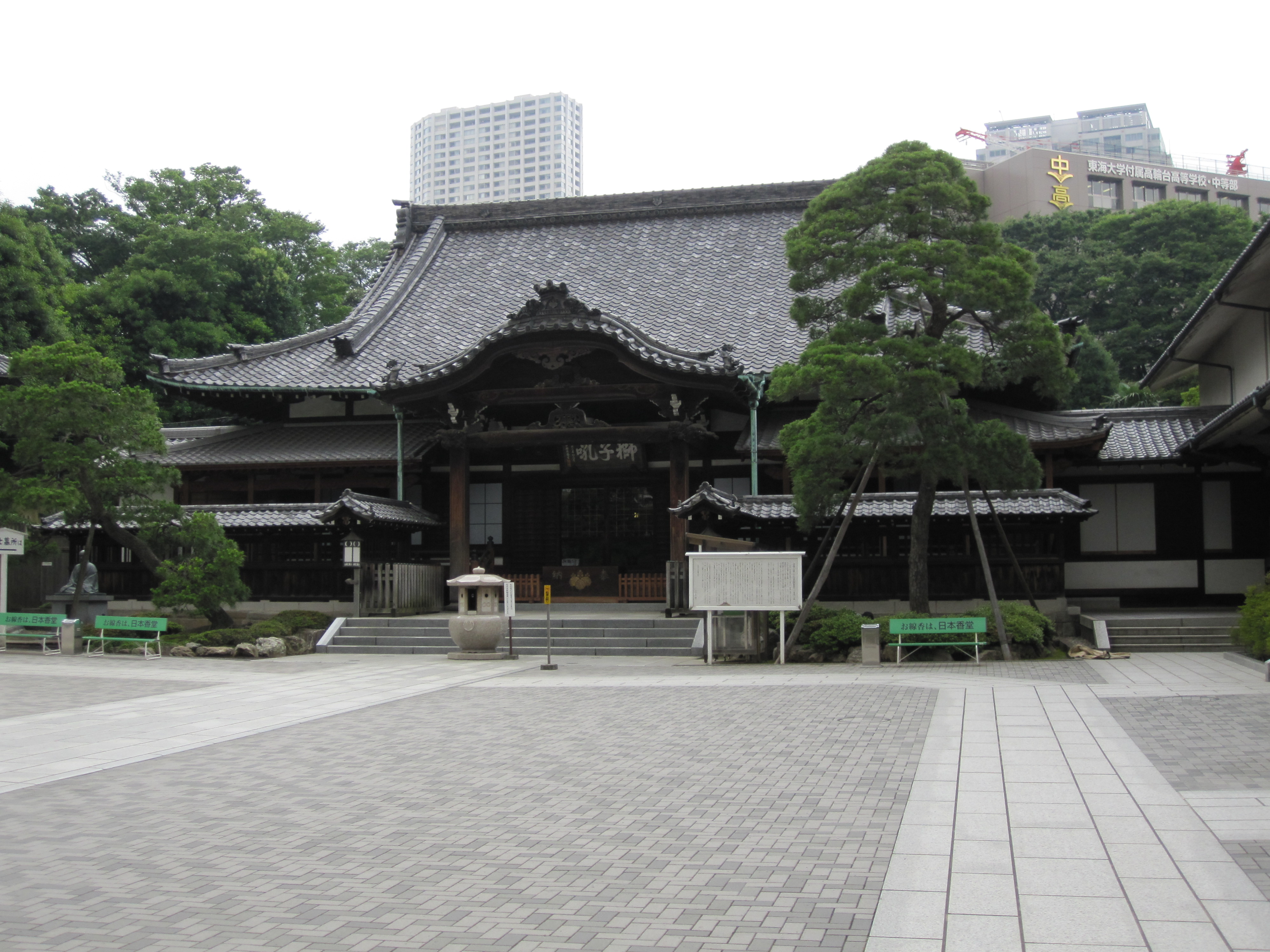
The Zen temple where Japan's legendary 47 Ronin are buried beside the lord they died to avenge.
Sengaku-ji is a modest Sōtō Zen temple in the Takanawa district of Minato ward, but it holds one of the most powerful stories in Japanese history: it is the burial place of the Forty-Seven Rōnin, the masterless samurai whose act of loyalty and revenge became the nation's defining tale of honour, the Chūshingura.
The temple was founded in 1612 near Edo Castle at the order of Tokugawa Ieyasu and later moved to Takanawa after a fire. Its fame, though, dates to 1703. Two years earlier, the young lord Asano Naganori had been provoked into drawing his sword against the court official Kira Yoshinaka inside Edo Castle — a capital offence for which Asano was ordered to commit seppuku, his lands seized and his retainers made rōnin. For nearly two years his loyal samurai, led by Ōishi Kuranosuke, plotted in secret. On a snowy December night in 1703 the 47 rōnin stormed Kira's mansion, killed him, and carried his severed head across Edo to Sengaku-ji, laying it on their master's grave to complete their revenge. The shogunate, torn between admiration and law, ordered them to die honourably by seppuku, and they were buried here beside Lord Asano.
Today the graves lie in a compact, incense-clouded cemetery behind the main hall. Visitors buy bundles of incense at the gate and lay a stick on each of the 47 weathered stones — a constant blue haze rising over the moss is part of the temple's atmosphere. Nearby is the well where the rōnin are said to have washed Kira's head before offering it, and Ōishi's own grave stands slightly apart, sheltered under a roof.
The small on-site museum (Akō Gishi Memorial Hall) deepens the visit, displaying armour, weapons, letters and personal effects of the rōnin, along with an account of the raid and the historical debate it still provokes about the conflict between personal loyalty and state law. It is the best place to understand why this event has been retold in countless kabuki plays, films and novels for three centuries.
The temple comes alive each December 14 for the Gishi-sai, a festival commemorating the raid, when a procession in Edo-period costume marches to the graves and crowds fill the grounds with incense and offerings. Autumn also brings colour to the temple's maples.
The visiting experience is quiet and contemplative, and entry to the grounds and graves is free; only the museum charges a small fee. The cemetery involves a short climb up stone steps, but the main hall and much of the site are reachable on level ground. Getting there is simple: Sengakuji Station on the Toei Asakusa Line is a three-minute walk, and the temple is an easy detour from the new Takanawa Gateway district. For anyone drawn to samurai history, it is among the most meaningful stops in Tokyo.
A local's tip
Buy a bundle of incense at the gate and lay a stick on each of the 47 ronin's graves as locals do — the drifting smoke over the mossy stones is unforgettable, especially in the quiet of early morning.
Best time to visit
December 14 for the Gishi-sai (47 Ronin) festival
Getting there
Three minutes on foot from Sengakuji Station on the Toei Asakusa Line; also walkable from the new Takanawa Gateway JR station.
Good to know
- Museum
- Restrooms
- Incense stall
Plan the whole trip offline
Sengaku-ji is one of many places in the Real Japan app — with turn-by-turn directions, nearby spots and full offline maps you can use with no signal.