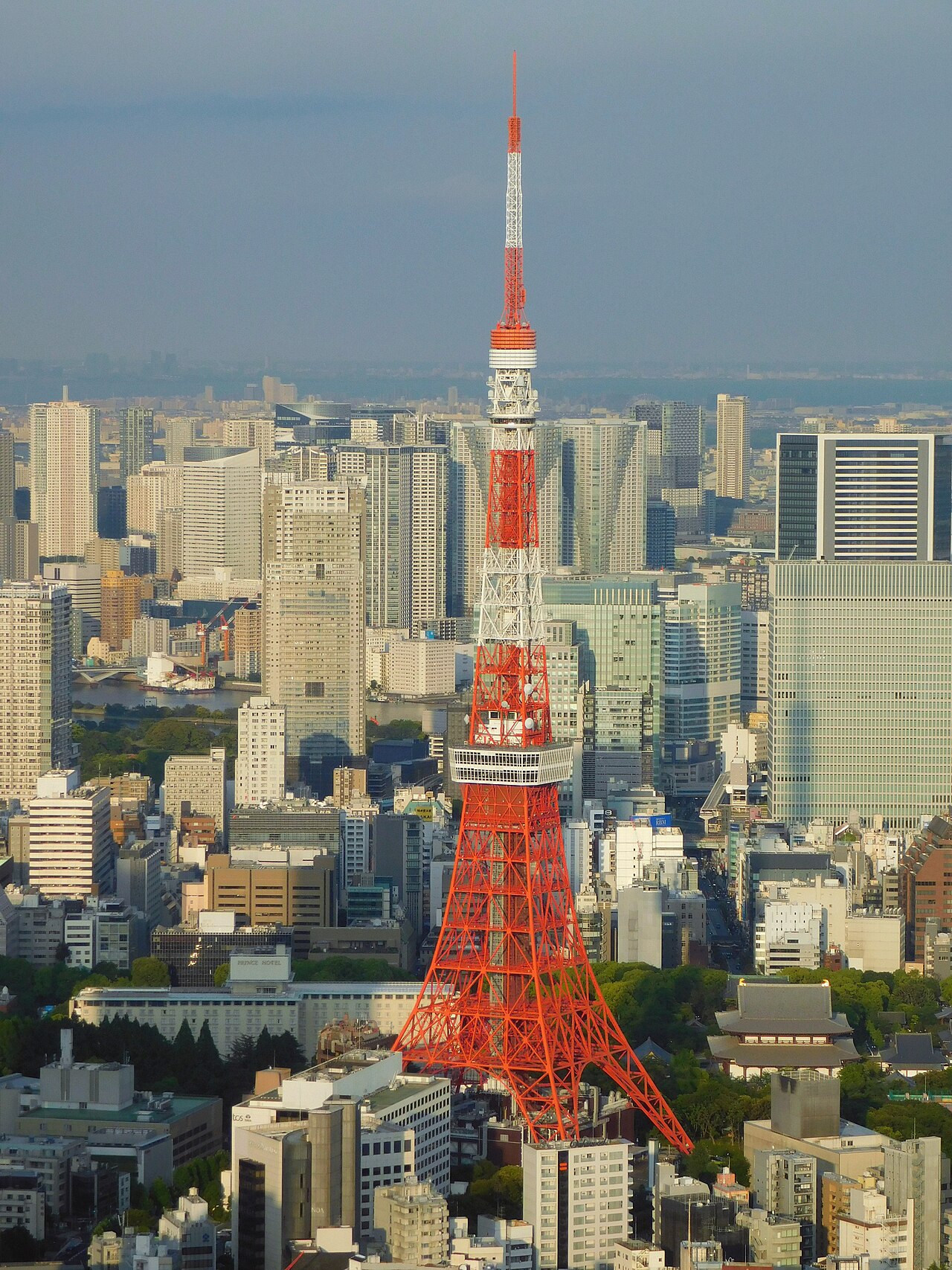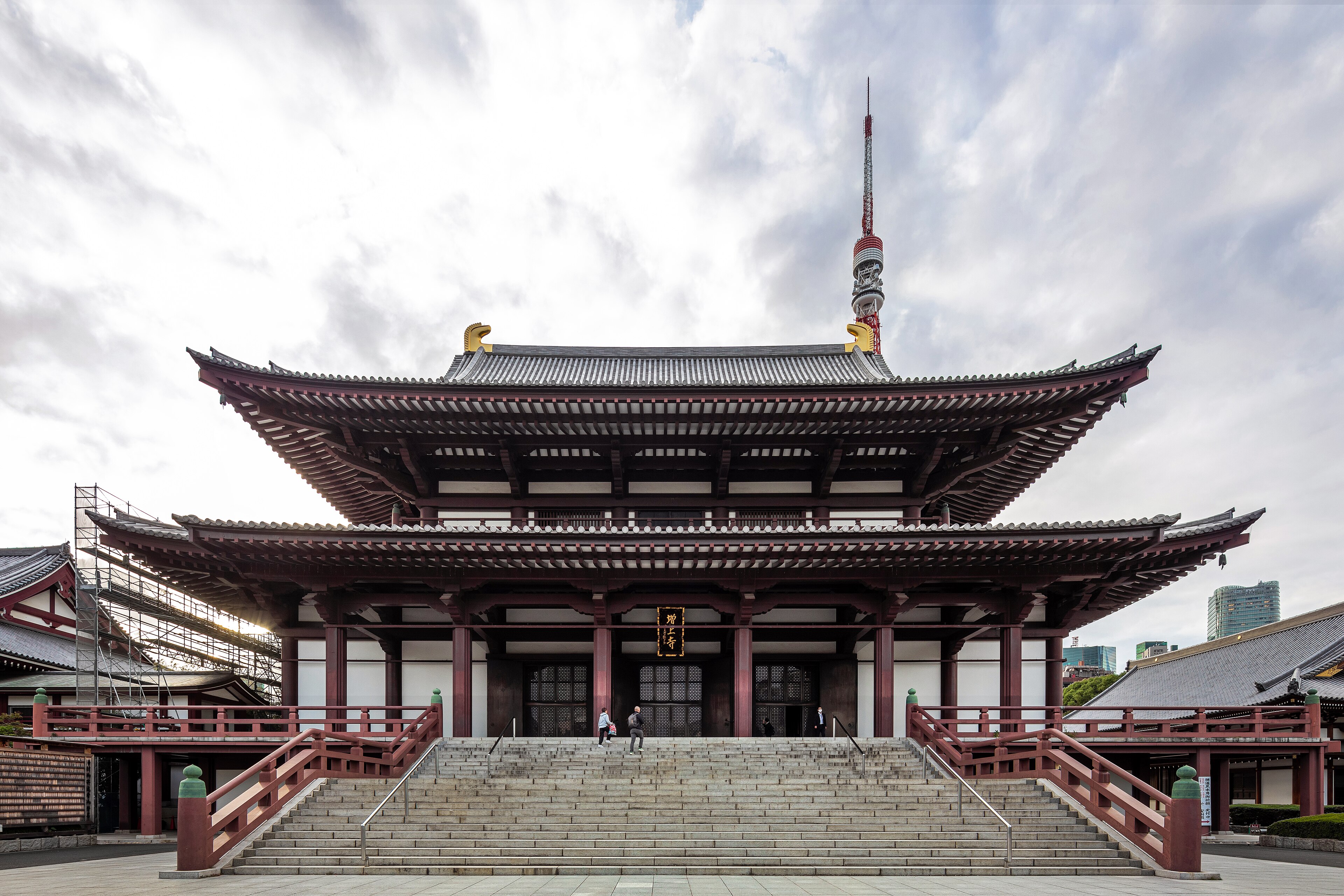
The Tokugawa family temple beneath Tokyo Tower, home to the oldest wooden gate in the city.
Zōjō-ji is one of Tokyo's most photographed temples, and for good reason: its sweeping tiled roofs sit directly beneath the red lattice of Tokyo Tower, fusing centuries of Buddhist history with the modern skyline in a single frame. Founded in 1393 and relocated to its present site in Shibakōen in 1598, it is the main temple of the Chinzei branch of the Jōdo-shū (Pure Land) sect in the Kantō region.
The temple's fortunes were sealed when Tokugawa Ieyasu chose it as the family temple of the shogunate. Six of the fifteen Tokugawa shōguns are buried in the Taitoku-in Mausoleum on the grounds, and for the entire Edo period Zōjō-ji was one of the most powerful religious institutions in Japan, its precinct once holding more than 100 buildings and 3,000 monks. Much of that was lost to fire, earthquake and wartime bombing, but the great Sangedatsumon main gate survives from 1622 and is the oldest wooden building in Tokyo, a designated Important Cultural Property whose name refers to release from the three passions of greed, anger and foolishness.
What you see today is a mix of the genuinely ancient and the carefully rebuilt. Pass through the towering vermilion Sangedatsumon and the broad courtyard opens toward the Daiden (main hall), reconstructed in 1974, where visitors can step inside to see the gilded Amida Buddha altar. To one side stand rows of small stone Jizō statues in red bibs and pinwheels — the Sentai Kosodate Jizō, dedicated to the souls of unborn and lost children, a quietly moving sight that photographs beautifully against the tower.
A notable stop is the temple's small treasures gallery beneath the Daiden, which displays a remarkable wooden model of the original Taitoku-in Mausoleum built for the British Japan–British Exhibition of 1910. The mausoleum gate, or Nishō-mon, and other Tokugawa relics reward a slower visit.
The visiting experience is relaxed and largely free. The grounds are open around the clock and never feel as crowded as Sensō-ji, so you can wander the courtyards, ring the great bell, and browse the seasonal festivals that fill the plaza. It is fully step-accessible across flat, paved ground, making it one of the easier major temples for wheelchairs and strollers. Cherry trees frame the gate in early April, and the setting is at its most dramatic after dark when both temple and tower are illuminated.
Getting there is simple: the Toei Mita Line to Onarimon Station puts you three minutes from the gate, while Shibakōen and Daimon stations (Toei Ōedo and Asakusa lines) are only slightly farther. Combine a visit with Shiba Park and a climb up Tokyo Tower next door for an easy half-day that pairs old Edo with the postwar city.
A local's tip
Stand in the main courtyard at dusk when the temple is floodlit and Tokyo Tower glows red directly behind the Daiden — it is the single best free photo composition in the city.
Best time to visit
Late afternoon for Tokyo Tower backdrop
Getting there
Take the Toei Mita Line to Onarimon Station (exit A1) and walk about 3 minutes to the main gate; Shibakoen and Daimon stations are also close.
Good to know
- Cafe
- Gift shop
- Restrooms
Plan the whole trip offline
Zōjō-ji is one of many places in the Real Japan app — with turn-by-turn directions, nearby spots and full offline maps you can use with no signal.