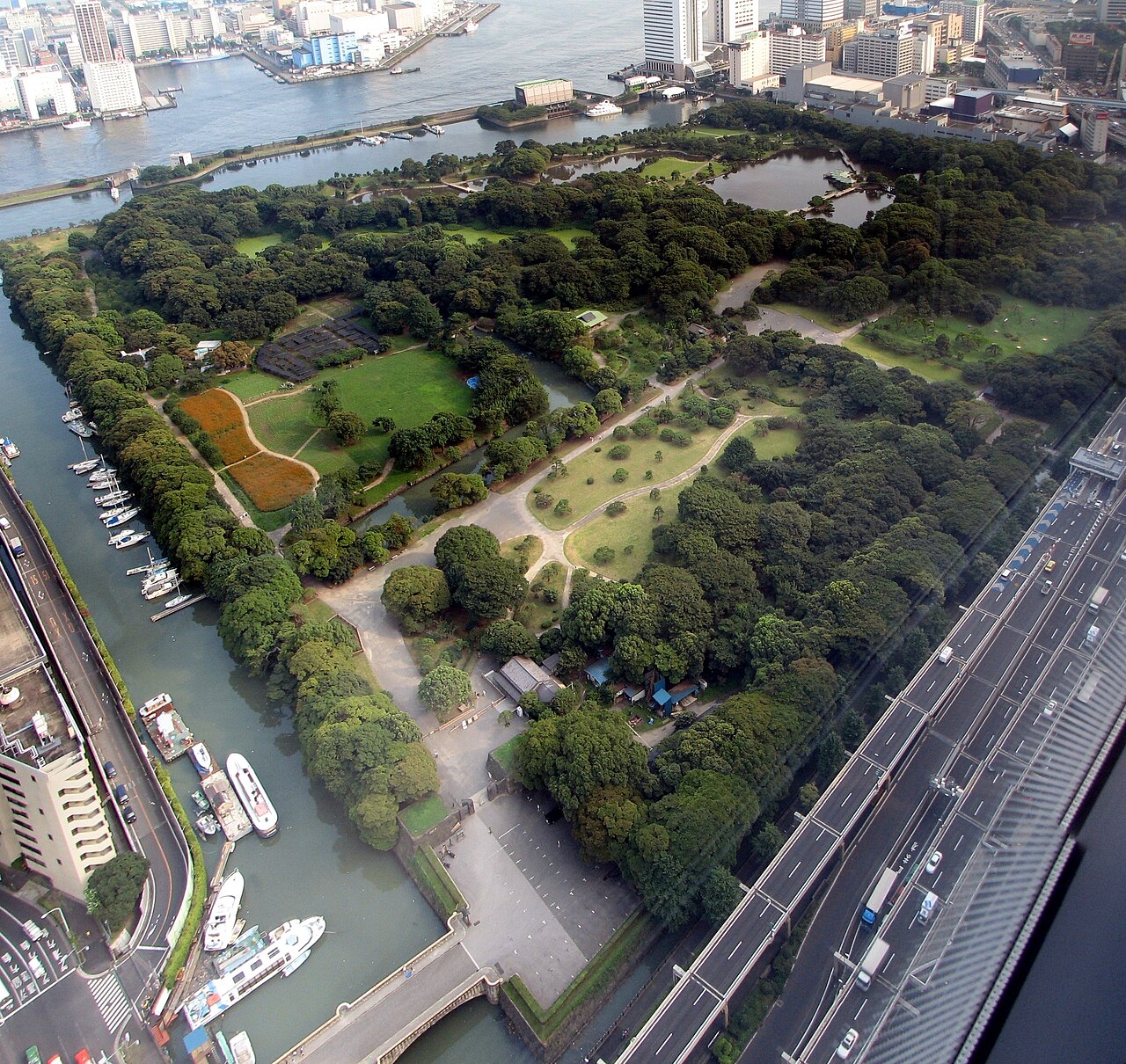
A former shogunal seaside retreat where a tidal saltwater pond and a floating teahouse sit beneath the Shiodome skyscrapers.
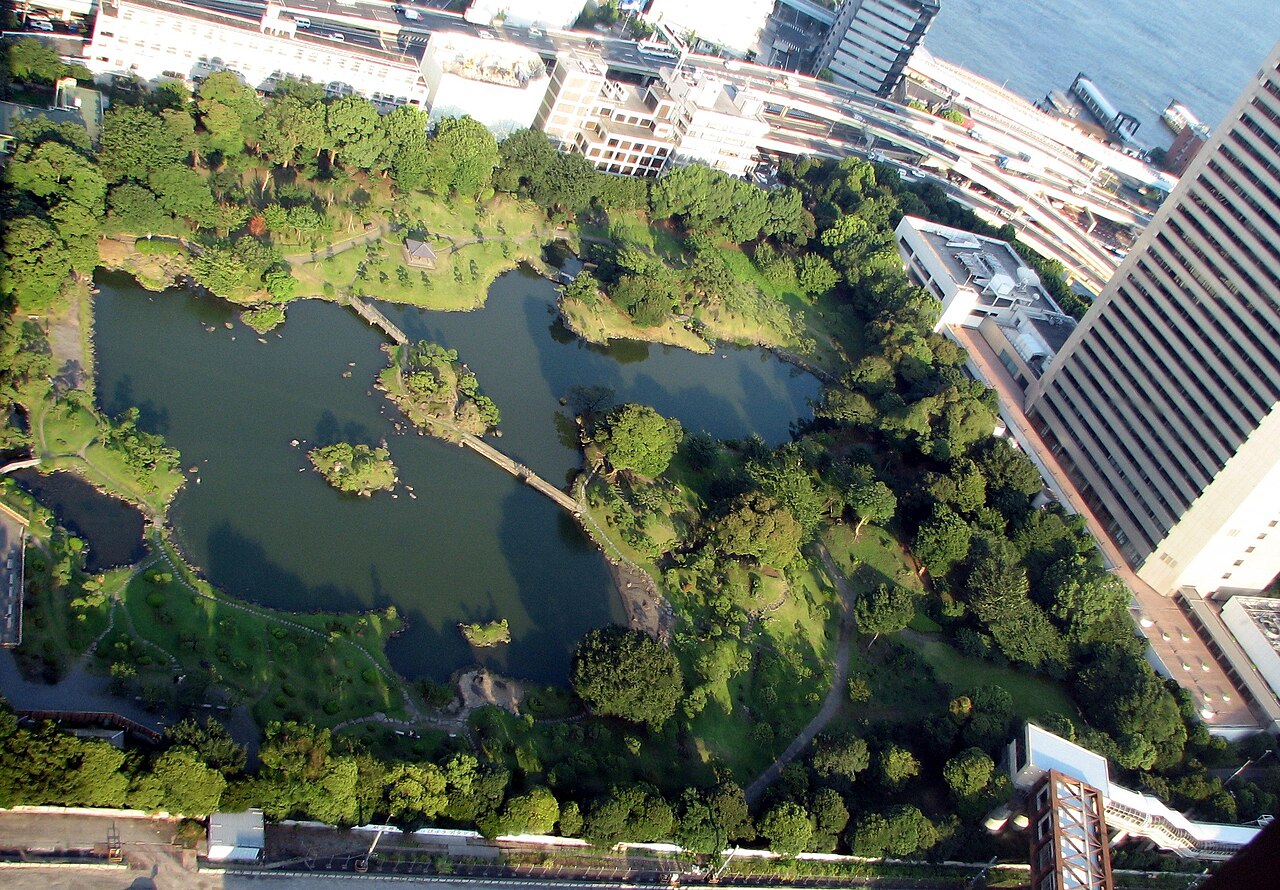
Hama-rikyu Gardens occupy a broad, walled expanse where the Sumida River meets Tokyo Bay, a green oasis framed on one side by the glass towers of Shiodome and on the other by open water. It is one of Tokyo's most distinctive gardens because its central pond is tidal: seawater flows in and out through a gate from the bay, so the level and even the fish change with the ocean, a living link to the sea that few other city gardens can claim.
The land began as a duck-hunting marsh, and in 1654 a brother of the fourth shogun reclaimed it to build a villa. It passed into the hands of the Tokugawa shoguns, who used it for falconry, banquets, and receiving guests, and it later served as a detached palace of the imperial family, welcoming visitors such as former U.S. President Ulysses S. Grant. After suffering damage in earthquakes, fires, and wartime bombing, it was given to the City of Tokyo and opened to the public in 1946. Today it is designated a Special Place of Scenic Beauty and Special Historic Site.
The garden's signature sight is the Nakajima-no-ochaya, a wooden teahouse standing on stilts in the middle of the tidal pond, reached by long timber bridges including the striking Otsutai-bashi covered in wisteria. Visitors can sit on tatami with a bowl of matcha and a wagashi sweet and watch the skyscrapers shimmer on the water. Elsewhere the grounds hold a 300-year-old pine tree, one of Tokyo's largest, planted by a shogun; a peony garden; a plum grove; and a broad field of yellow rapeseed flowers in spring and cosmos in autumn. Reconstructed duck-hunting blinds recall the site's origins.
The visiting experience is spacious and relaxed, easily filling ninety minutes of slow wandering. Because the garden is flat and open, with wide gravel paths, most of it is accessible, and benches and restrooms are dotted throughout. Arriving by water is part of the appeal: the Tokyo Cruise water bus runs down the Sumida from Asakusa and docks at a pier inside the garden walls, turning the visit into a mini river voyage past Tokyo's bridges.
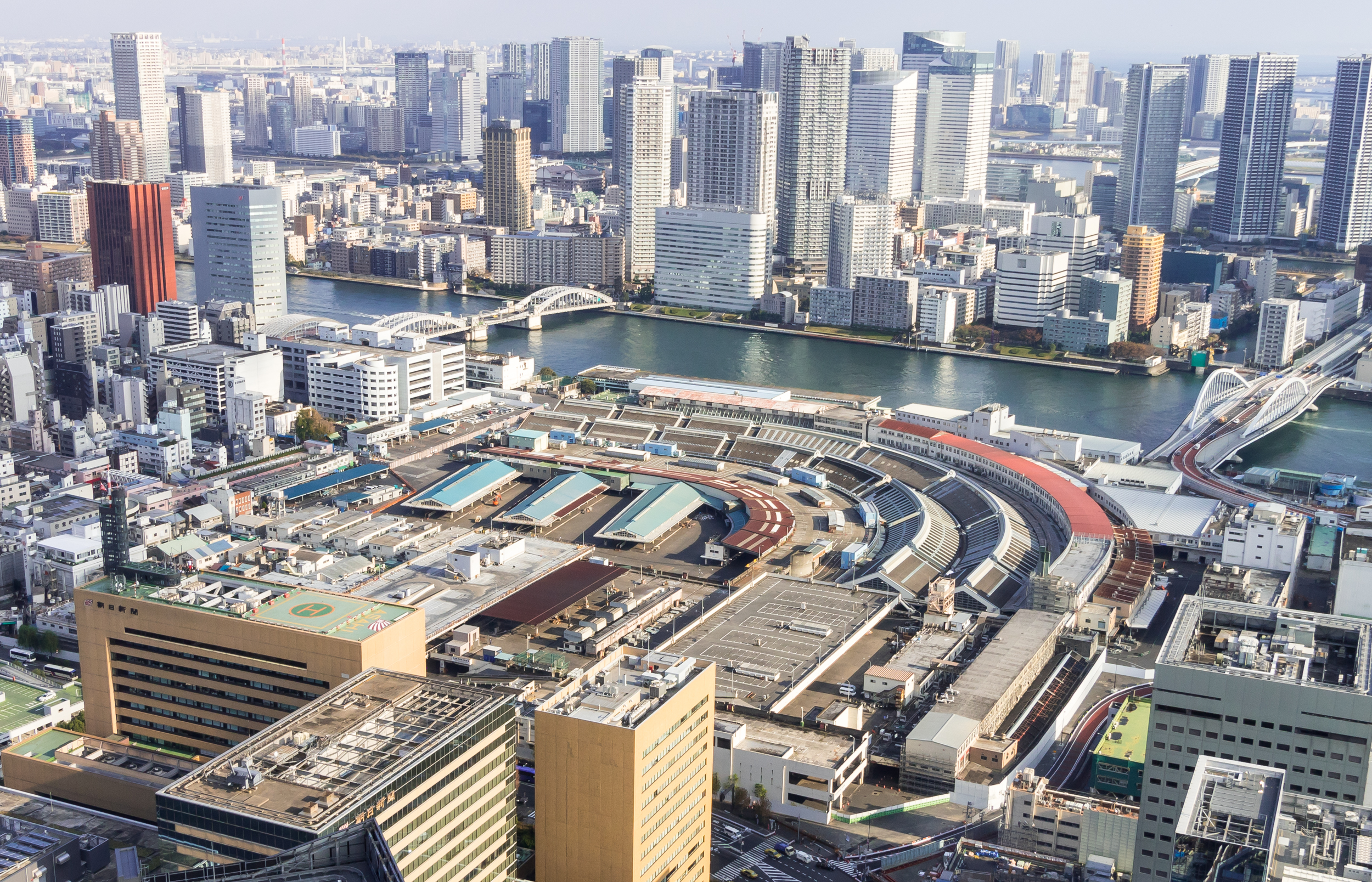
The best time to come is a bright, clear day when the contrast between the traditional pond and the mirrored towers is at its sharpest, or early March when the plum blossom and rapeseed bloom together. To reach it on foot, take the Toei Oedo Line or Yurikamome to Shiodome and walk about seven minutes, or the JR lines to Shimbashi and walk a little farther. Its bayside location makes it a natural pairing with the nearby Tsukiji outer market or a Sumida River cruise, and it offers one of the most photogenic collisions of old and new Tokyo anywhere in the city.
A local's tip
Arrive by the Sumida River water bus from Asakusa: you glide under a dozen bridges and step off directly inside the garden, then reward yourself with matcha at the Nakajima teahouse floating in the tidal pond.
Best time to visit
Early March for plum and rapeseed flowers; a clear afternoon for skyline contrast
Getting there
From Shiodome Station (Toei Oedo Line or Yurikamome) it is about a 7-minute walk. The gardens can also be reached by Tokyo Cruise water bus from Asakusa, which docks inside the garden itself.
Good to know
- Boat dock
- Restrooms
- Tea house
- Wheelchair
Plan the whole trip offline
Hama-rikyu Gardens is one of many places in the Real Japan app — with turn-by-turn directions, nearby spots and full offline maps you can use with no signal.