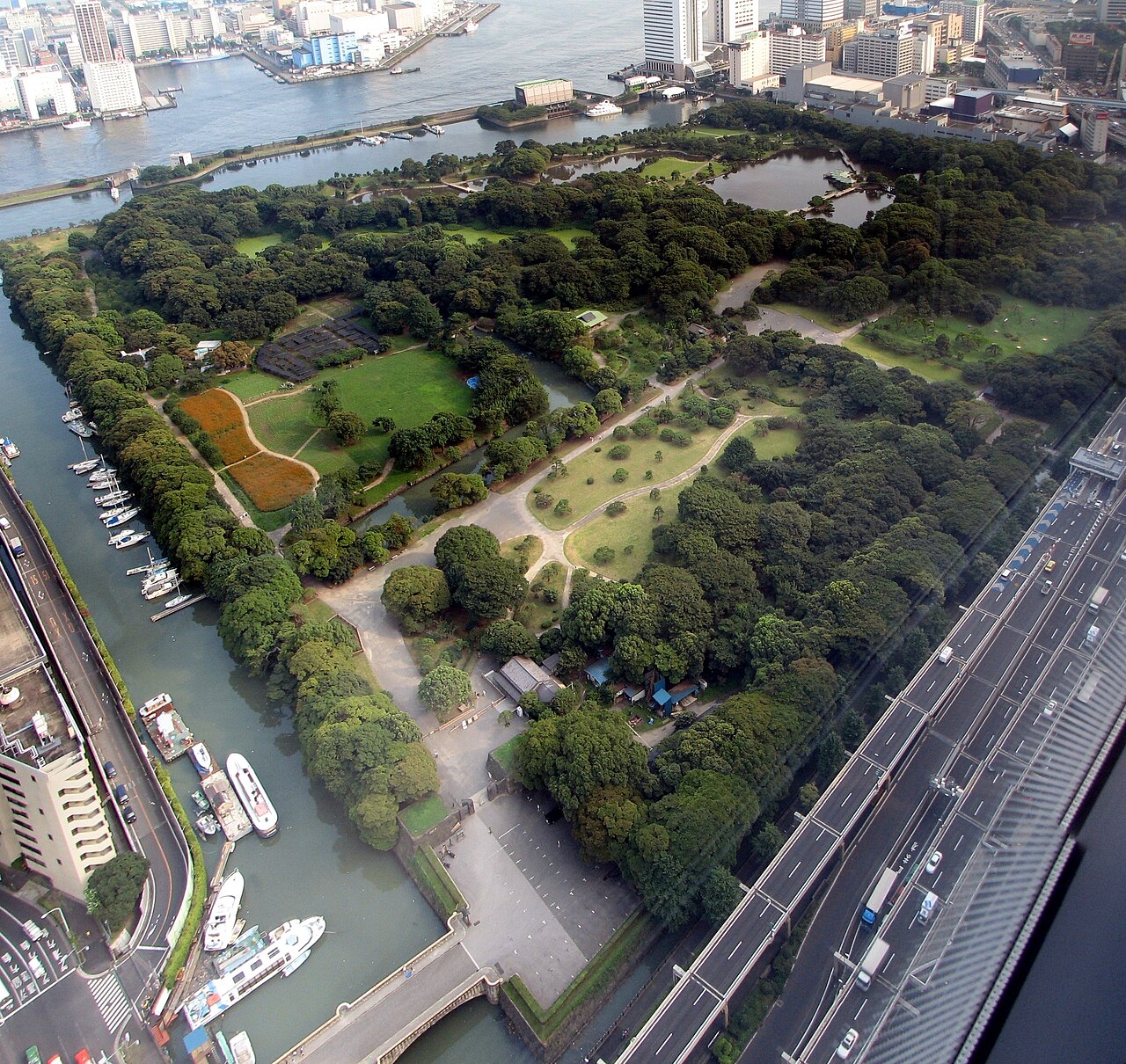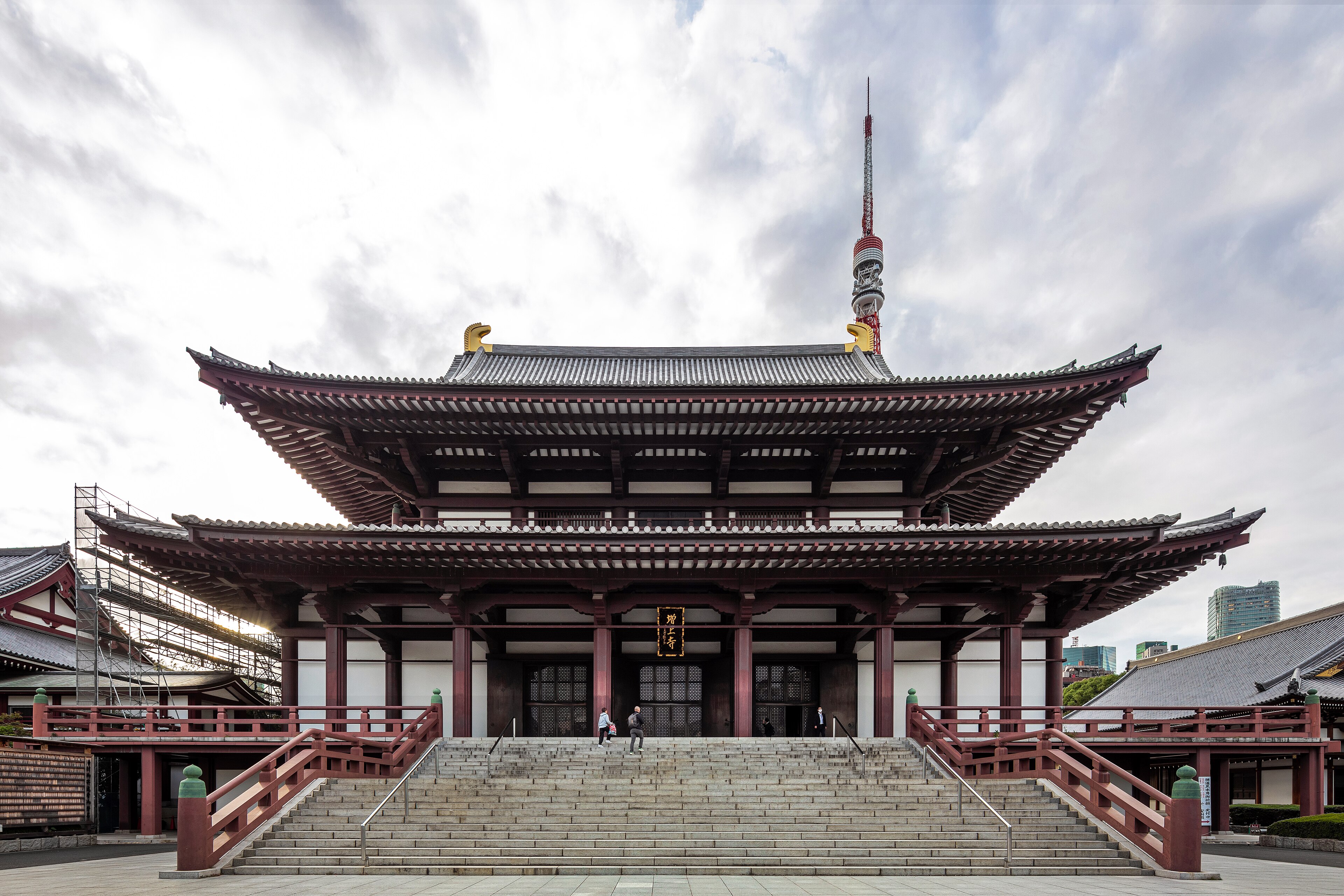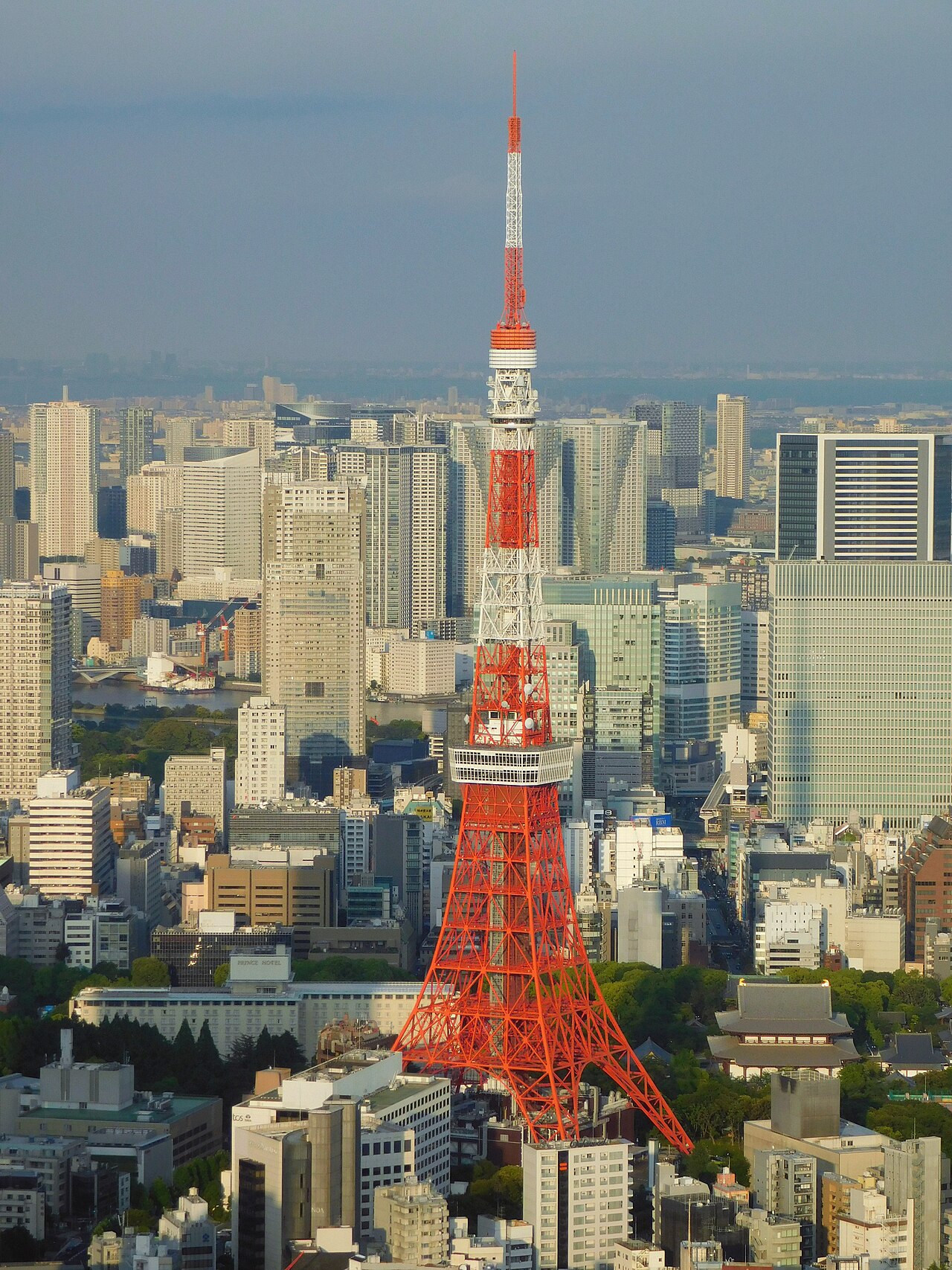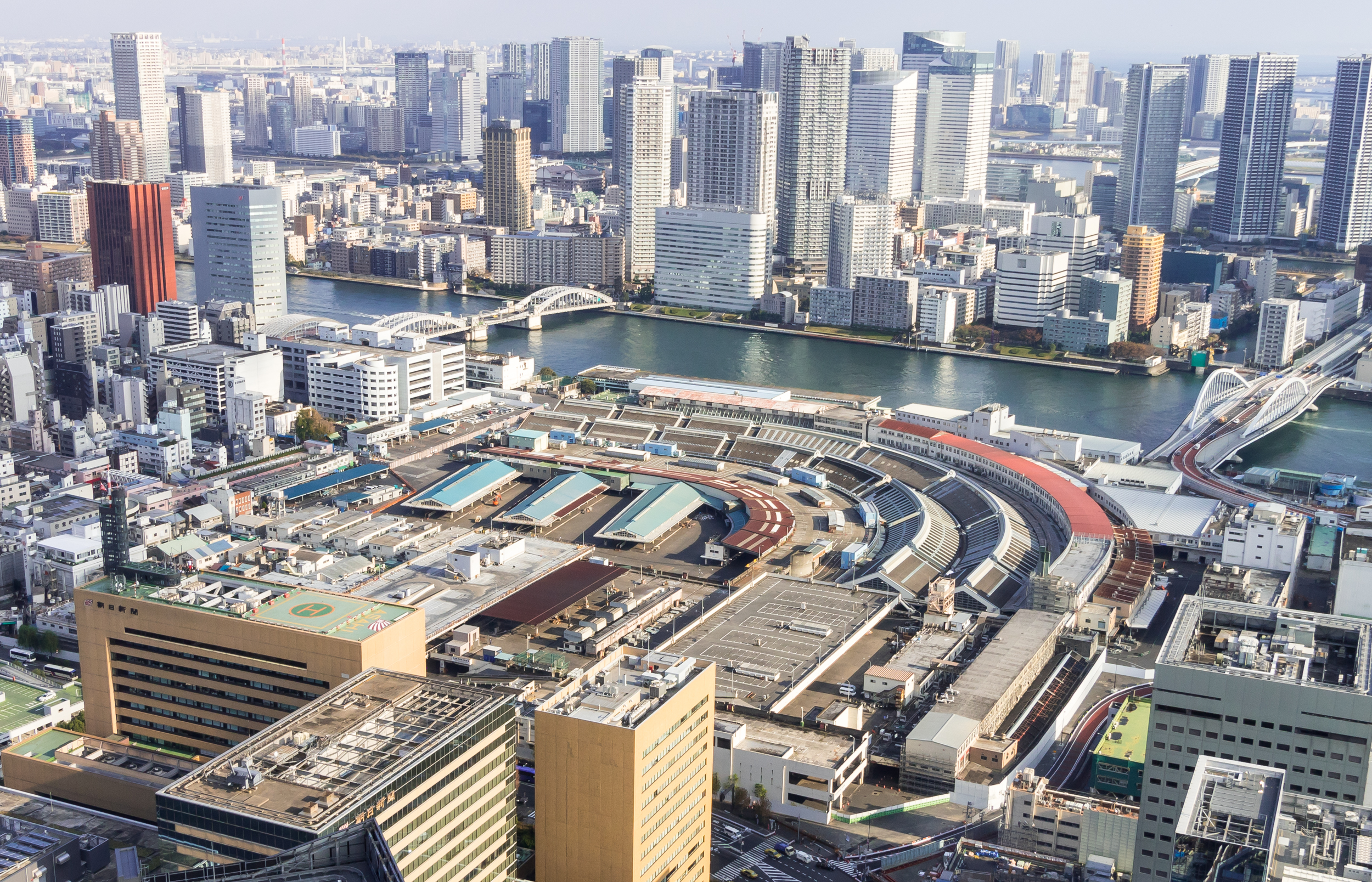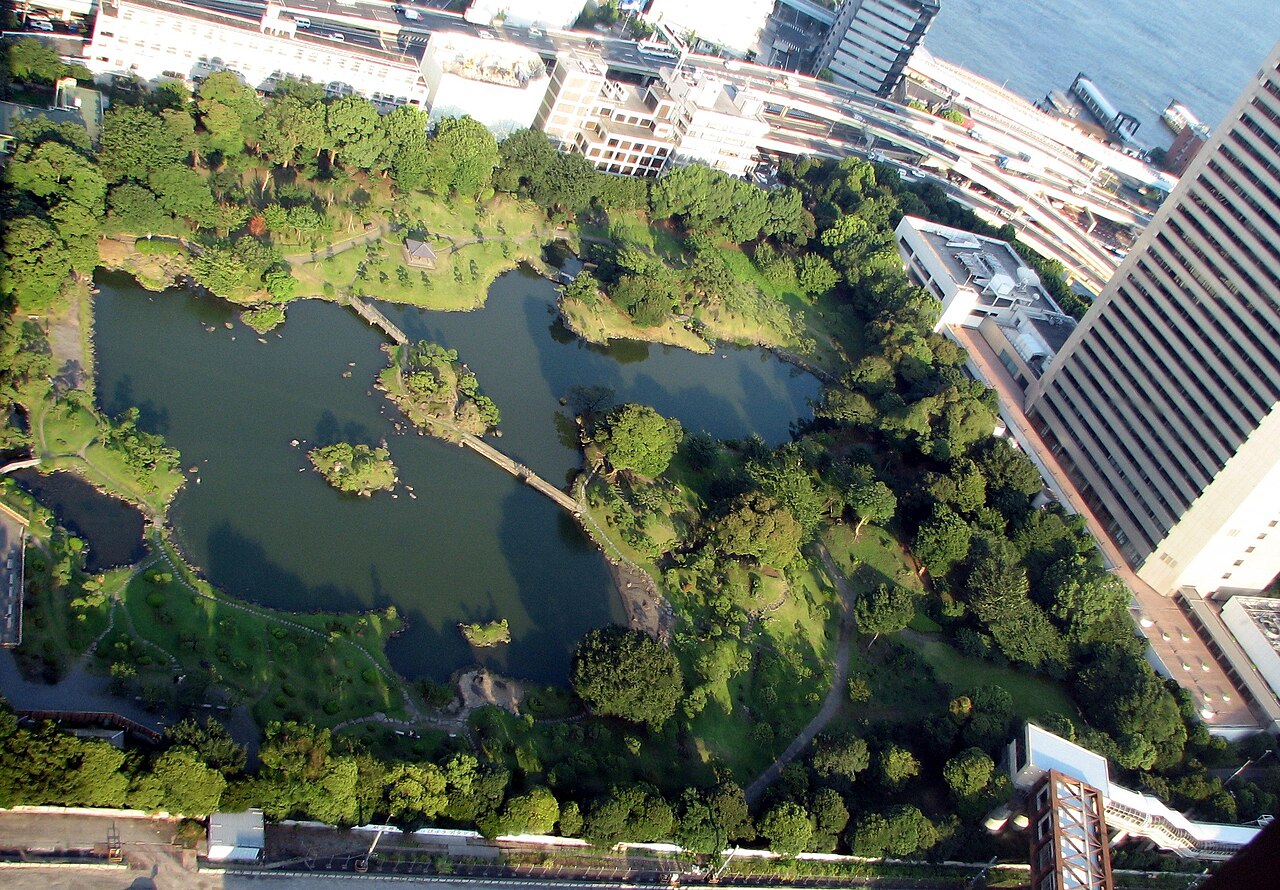
A compact Edo-era daimyo garden of miniature islands and stone bridges framed by Hamamatsucho's skyscrapers.
Kyu-Shiba-rikyu Gardens is one of the oldest surviving daimyo gardens in Tokyo and, despite its modest size, one of the most rewarding for its concentrated beauty and its startling backdrop of high-rise towers. Sitting right beside Hamamatsucho Station, it packs the full vocabulary of Edo-period garden art—a central pond, rocky islands, stone bridges, a dry waterfall, and a viewing hill—into a space small enough to walk in under an hour, all framed by the mirrored glass of modern Tokyo.
The land was reclaimed from Tokyo Bay in the 1650s, and the garden was created around 1678 for Okubo Tadatomo, a senior official of the shogunate, who named his residence Rakujuen. Like several of Tokyo's great gardens it changed hands among powerful families over the centuries before becoming an imperial detached palace in 1875. The Great Kanto Earthquake of 1923 destroyed all of its buildings and much of its planting, after which it was given to the City of Tokyo and reopened to the public in 1924. It is designated a Place of Scenic Beauty and a Special Historic Site.
The design centres on a large pond, the Sensui, dotted with islands connected by earthen and stone bridges, and is a fine example of the "pond-stroll" style meant to be experienced from constantly shifting viewpoints as you walk. Several scenes are miniature reproductions of famous landscapes, including islands said to evoke the celebrated West Lake in Hangzhou, China. A dry stone waterfall, a wisteria trellis that blooms in late April, a stone lantern, and a low central hill called Oyama complete the composition. From the top of Oyama the view crystallises everything that makes the garden special: rugged little islands in the foreground and a solid wall of skyscrapers behind.
The visiting experience is quick but memorable, ideal for travellers with limited time or a train to catch from nearby Hamamatsucho, the gateway station to Haneda Airport by monorail. Because the garden is compact and flat, with wide gravel paths, the main circuit is easy and largely accessible, though the hill involves a short climb. A rest house and restrooms sit near the entrance, and at just 150 yen it is one of the best-value stops in the city.
The best time to visit is a clear day when the glass towers reflect blue sky behind the pond, or late April for the wisteria; spring cherry and autumn maples add seasonal colour to the compact grounds. From Hamamatsucho Station on the JR Yamanote Line the North exit brings you to the gate in about three minutes, and Daimon Station on the Toei lines is barely farther. Its location makes it an easy pairing with the nearby Hama-rikyu Gardens or a Tokyo Bay cruise, and it offers perhaps the most efficient introduction to Edo garden design anywhere in the capital.
A local's tip
Climb the small central hill, Oyama, for the classic shot: the miniature rocky islands of the pond in the foreground and a wall of glass skyscrapers rising directly behind—the sharpest old-versus-new contrast of any Tokyo garden, and it takes only a few steps.
Best time to visit
Any clear day; late April for wisteria on the trellis
Getting there
From Hamamatsucho Station (JR Yamanote and Keihin-Tohoku lines, Tokyo Monorail) take the North exit and walk about 3 minutes to the garden gate. Daimon Station on the Toei Asakusa and Oedo lines is about 5 minutes away.
Good to know
- Restrooms
- Rest house
- Wheelchair
Plan the whole trip offline
Kyu-Shiba-rikyu Gardens is one of many places in the Real Japan app — with turn-by-turn directions, nearby spots and full offline maps you can use with no signal.