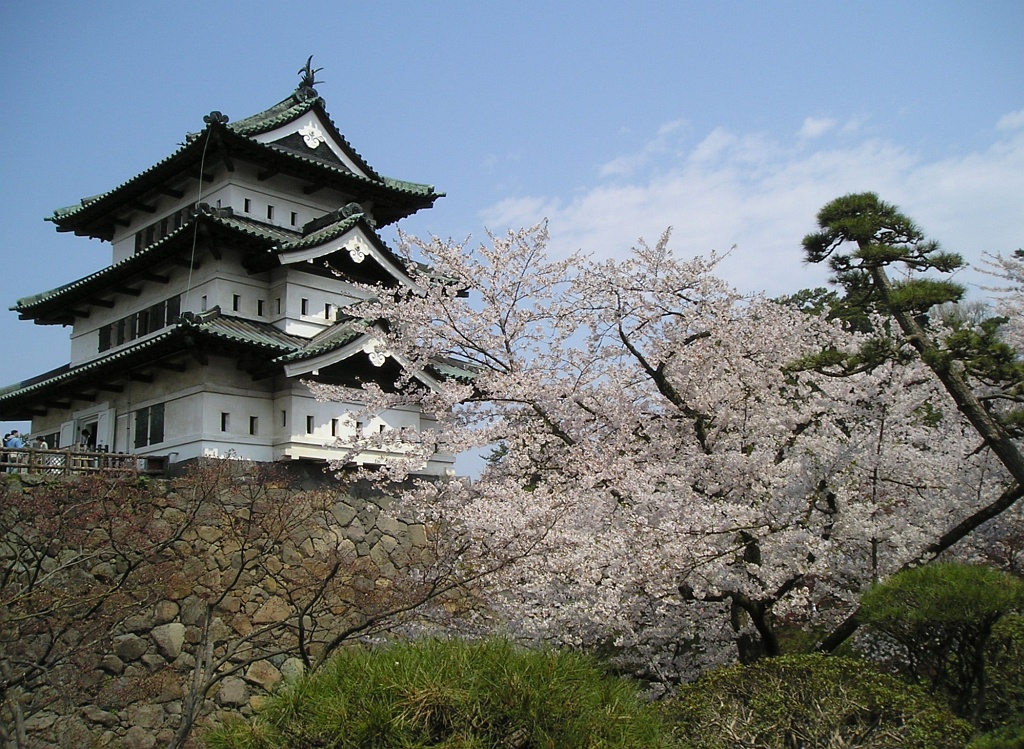
A preserved lane of former samurai residences and tall cedar hedges just north of Hirosaki Castle, several open free to visitors.
Just north of Hirosaki Castle lies the Nakacho district, one of the best-preserved samurai neighbourhoods in the Tohoku region and a designated national preservation area for groups of historic buildings. During the Edo period, when the Tsugaru clan ruled from Hirosaki Castle, this quarter housed middle-ranking samurai who served the domain. Its quiet lanes, running roughly 500 metres from east to west, still convey the ordered, restrained atmosphere of a castle town, offering a low-key but rewarding counterpoint to the grandeur of the castle and its cherry-blossom park.
The district's most distinctive feature is its greenery. The former samurai plots are screened by tall, dense hedges of Japanese cedar, planted both to mark boundaries and to shelter the wooden houses from the fierce winds and heavy snow of the Tsugaru winter. Walking the streets between these dark green walls, past traditional gates and glimpses of inner gardens, gives a strong sense of how the samurai class lived — modest and functional compared with the lords, yet dignified and carefully maintained. The layout faces the northern moat of the castle, so the district and the fortress form a single historic landscape.
Several of the residences have been preserved and opened to the public, and admission to them is free. The Ito, Iwata, Umeda, and Sasamori houses are the best known, each an example of a samurai dwelling with its characteristic entrance, tatami rooms, and garden. Stepping inside, visitors can see the compact scale of the interiors, the arrangement of formal and private spaces, and the construction techniques suited to a snowy northern climate. Interpretive signage helps explain the ranks and daily lives of the families who once lived here.
The area is easy and pleasant to explore on foot, with level streets and little traffic, and a stroll through the lanes and one or two open houses takes about an hour. Because it sits immediately beside Hirosaki Park, it is best treated as an extension of a castle visit rather than a separate excursion: in spring the cherry blossoms spill over from the park, and in autumn the maples add colour, so both seasons suit a combined walk. The district's calm makes it an especially nice place to slow down after the crowds around the castle keep.
Getting there follows the same route as the castle. From Tokyo, take the Tohoku Shinkansen to Shin-Aomori and change to the JR Ou Main Line for Hirosaki Station. From the station, the 100-yen Dotemachi Loop Bus runs to the Hirosaki Park area; from the park it is a short walk north around the moat to the Nakacho lanes, which lie just beyond the castle's Kamenoko-mon gate. Walking the whole way from the station takes around half an hour. Since the residences keep daytime hours and may close seasonally or on certain days, it is worth checking opening times if seeing the interiors is a priority, though the atmospheric streets themselves are open to wander at any time.
A local's tip
Step inside the free-to-enter Ito, Iwata, and Umeda residences to see original samurai-house interiors and gardens, then note the tall cedar hedges that shielded homes from Tsugaru's harsh winters.
Best time to visit
Spring and autumn; combine with Hirosaki Park
Getting there
From Hirosaki Station take the Dotemachi Loop Bus (100 yen) toward Hirosaki Park; the Nakacho district lies just north of the castle's Kamenoko-mon gate, a few minutes' walk from the park.
Good to know
- Wi-Fi
- Parking
- Restrooms
Plan the whole trip offline
Hirosaki Nakacho Samurai District is one of many places in the Real Japan app — with turn-by-turn directions, nearby spots and full offline maps you can use with no signal.