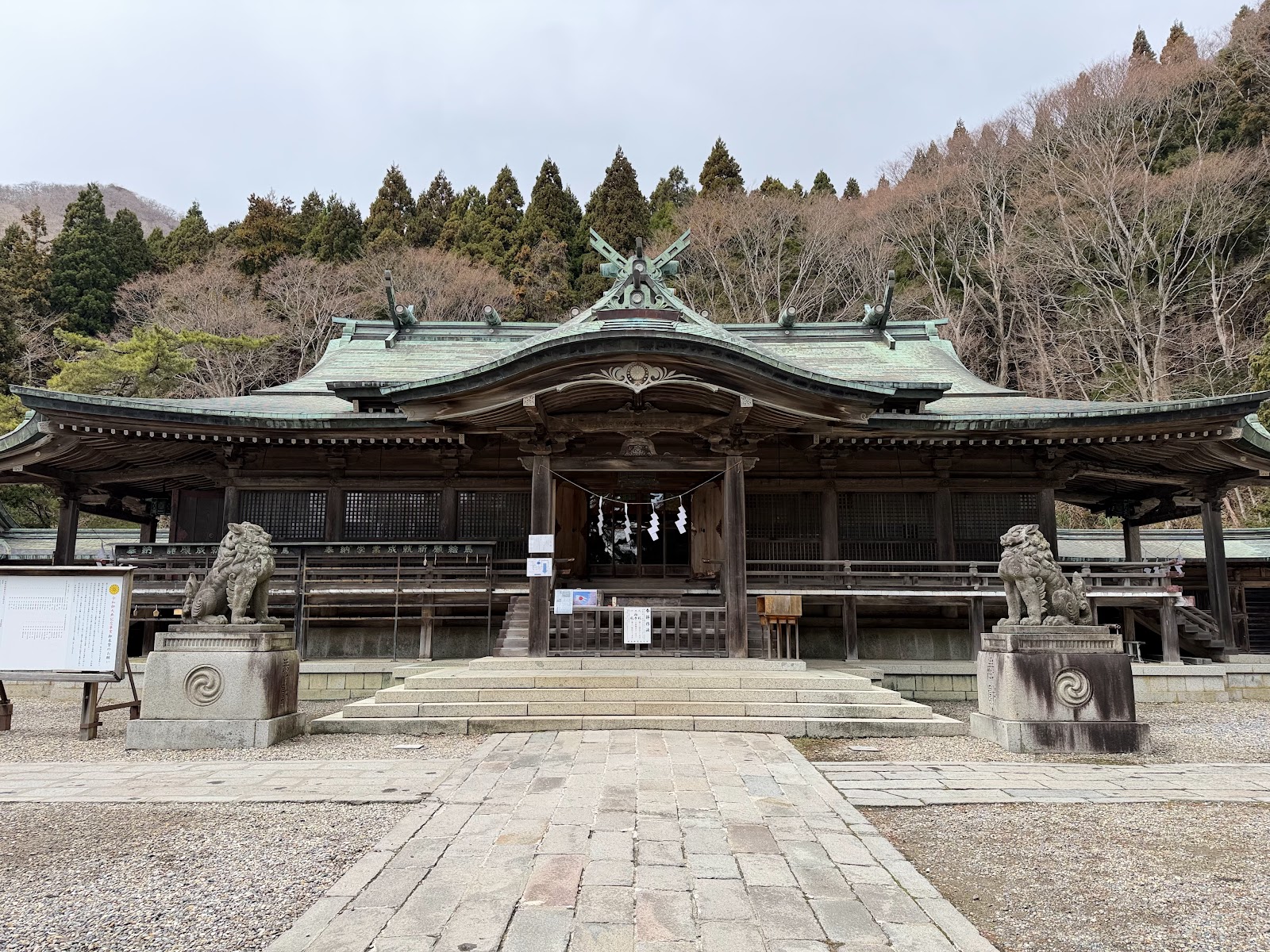
Hakodate's guardian Hachiman shrine, reached by a long stone stairway on the wooded eastern slope of Mount Hakodate.
Hakodate Hachiman-gu is the guardian shrine of Hakodate, standing on the bracing, forested eastern slope of Mount Hakodate above the Yachigashira district. Affectionately called "Hachiman-san" by residents, it is dedicated to the kami Hachiman and also serves as a soja shrine, enshrining the assembled deities of the region — a role that has made it the spiritual anchor of the port city for centuries.
The shrine traces its origins to 1445, when a local official is said to have enshrined a Hachiman deity within the Kameda fort that predated modern Hakodate. Over the following centuries the shrine moved several times as the town grew and burned and rebuilt, finally settling on its present site. The current main hall, completed around a century ago, is admired for its formal, dignified construction and especially its magnificent tiled roof, a strong example of the shrine architecture of its era.
The approach is the experience. From near Yachigashira you pass beneath a large torii and climb a long flight of stone steps flanked by trees, passing the small Tsuruwaka Inari shrine along the way. At the top the air is noticeably cooler and quieter than the streets below, and the framed view back across Hakodate's rooftops toward the sea is quietly spectacular. The grounds feel worlds away from the tourist bustle of the bay area, which is exactly why locals treasure them.
The shrine comes fully alive at New Year, when tens of thousands of residents climb the steps for hatsumode, the year's first prayer, and the approach fills with lantern light and food stalls. At other times of year it is a place of calm — a spot to collect a goshuin seal at the office, watch a Shinto wedding, or simply rest under the cedars. Autumn brings warm color to the surrounding slope.
Because it sits on the mountain's flank rather than in the flat historic quarter, Hachiman-gu is often skipped by day-trippers who stick to Motomachi and the ropeway, and that is part of its appeal. Getting there is easy: ride tram line 2 to Yachigashira, then walk up the gentle main approach for about ten minutes to the torii and steps. Allow time to climb slowly and to pause at the top, both for breath and for the view. Wear proper shoes in winter, when the stone steps can ice over, and consider timing a visit for early morning when the shrine is at its most serene and the light through the trees is best for photographs.
A local's tip
Climb the stone steps rather than driving in — the framed view back over the city from the top of the approach is the reward locals come for.
Best time to visit
New Year, or early morning for quiet
Getting there
Take tram line 2 to Yachigashira, then walk up the main approach toward the eastern slope of Mount Hakodate; a large torii gate and a long flight of stone steps mark the entrance.
Good to know
- Parking
- Restrooms
- Goshuin (seals)
Plan the whole trip offline
Hakodate Hachiman-gu is one of many places in the Real Japan app — with turn-by-turn directions, nearby spots and full offline maps you can use with no signal.