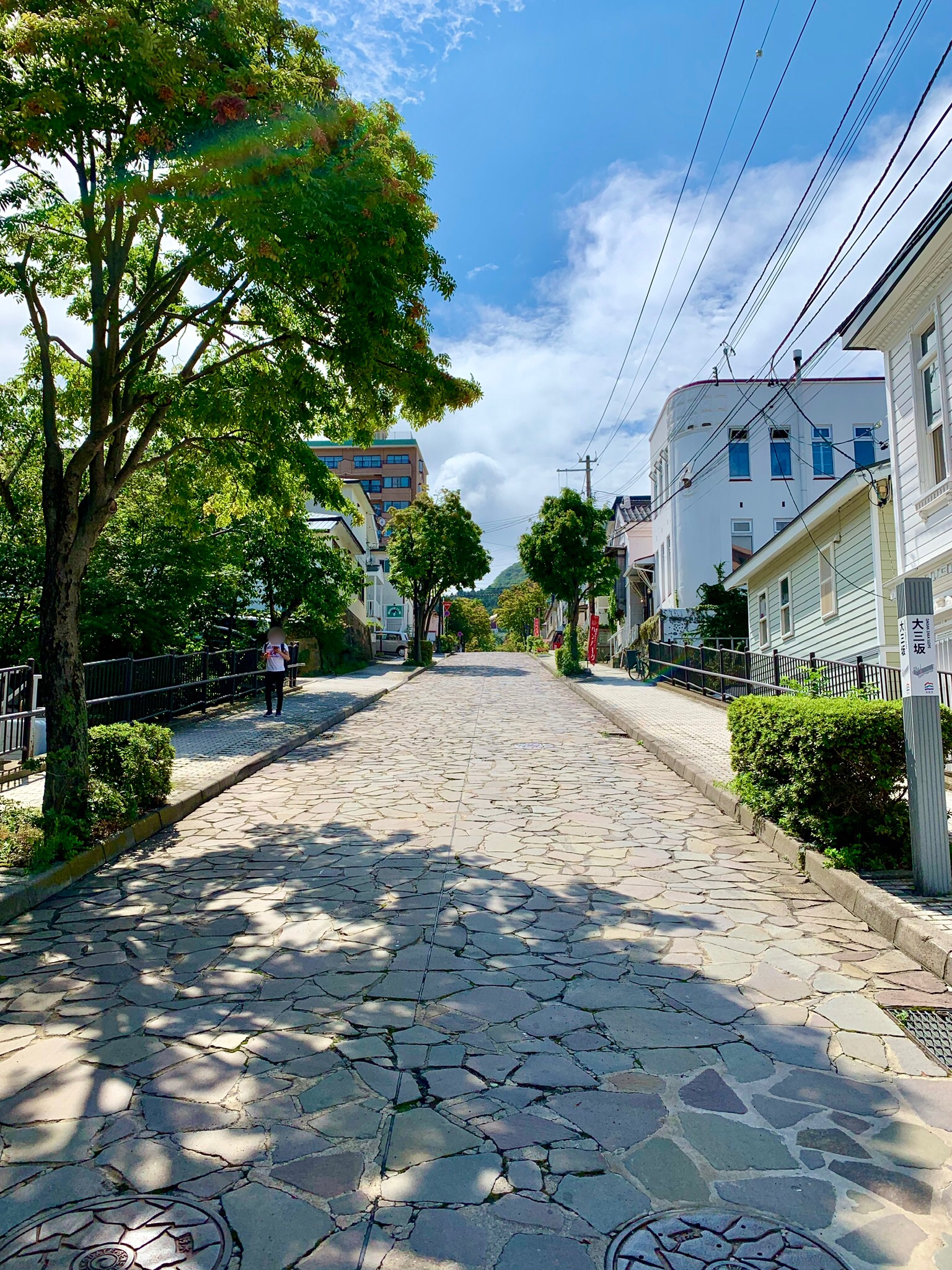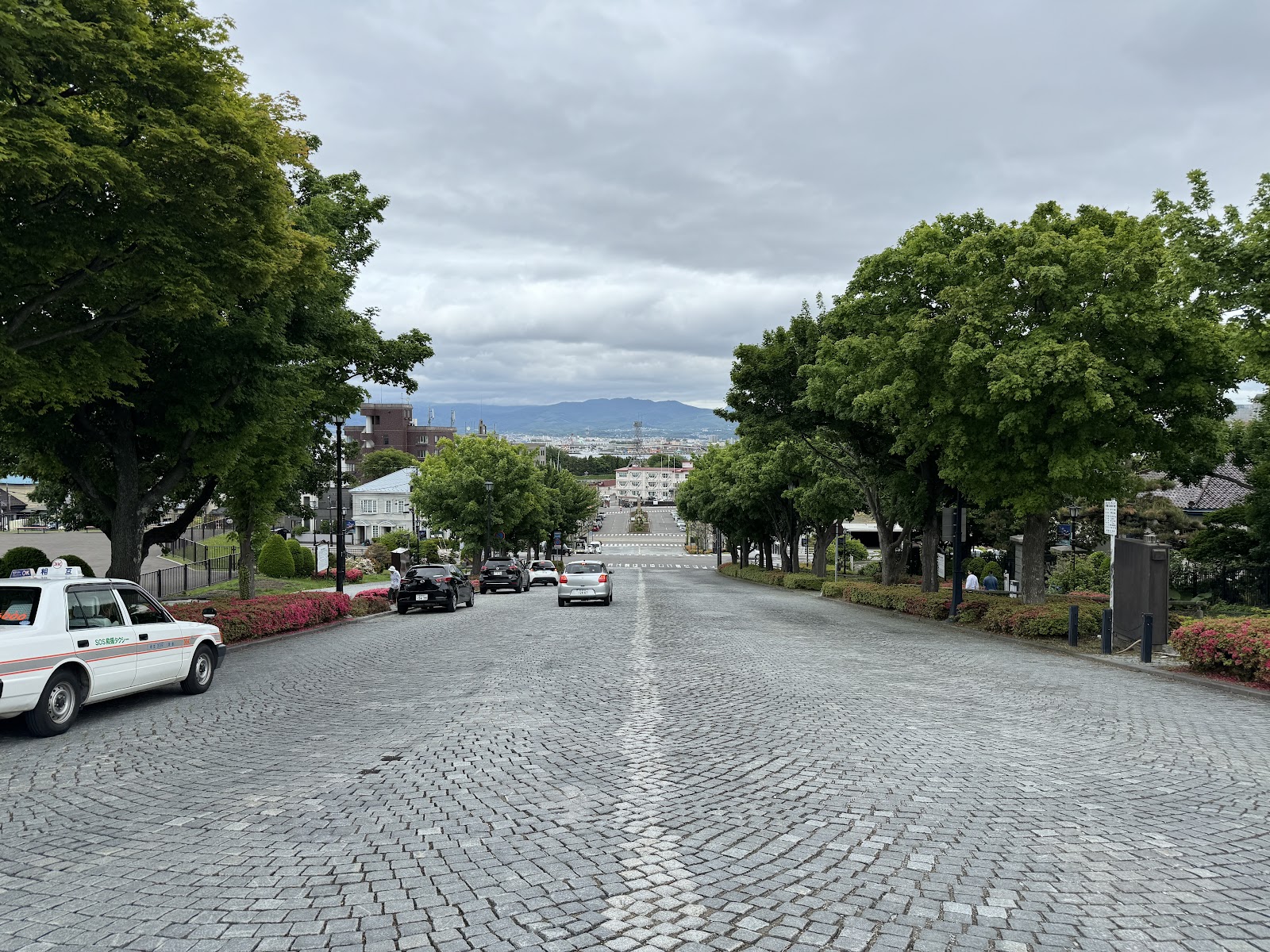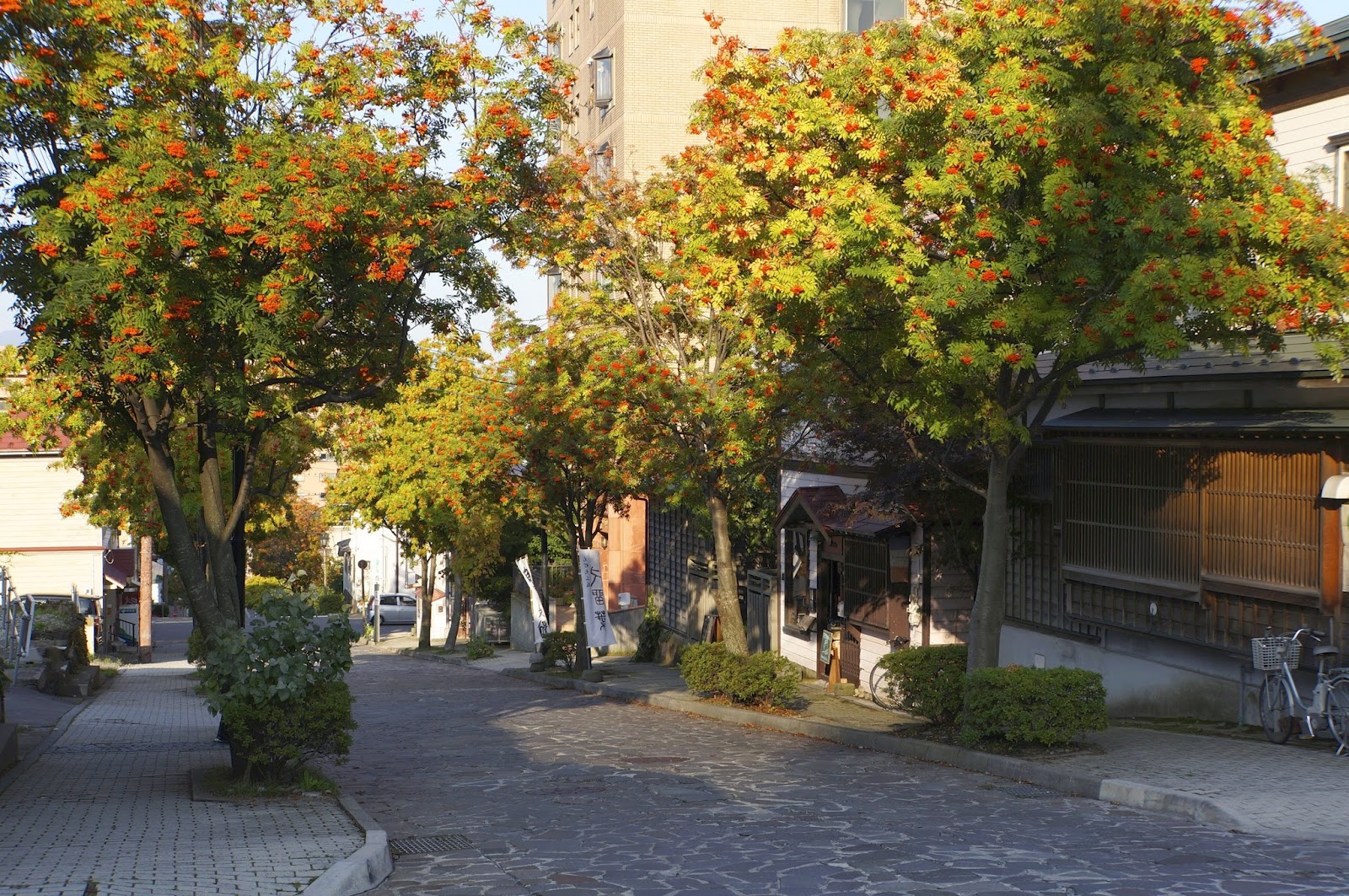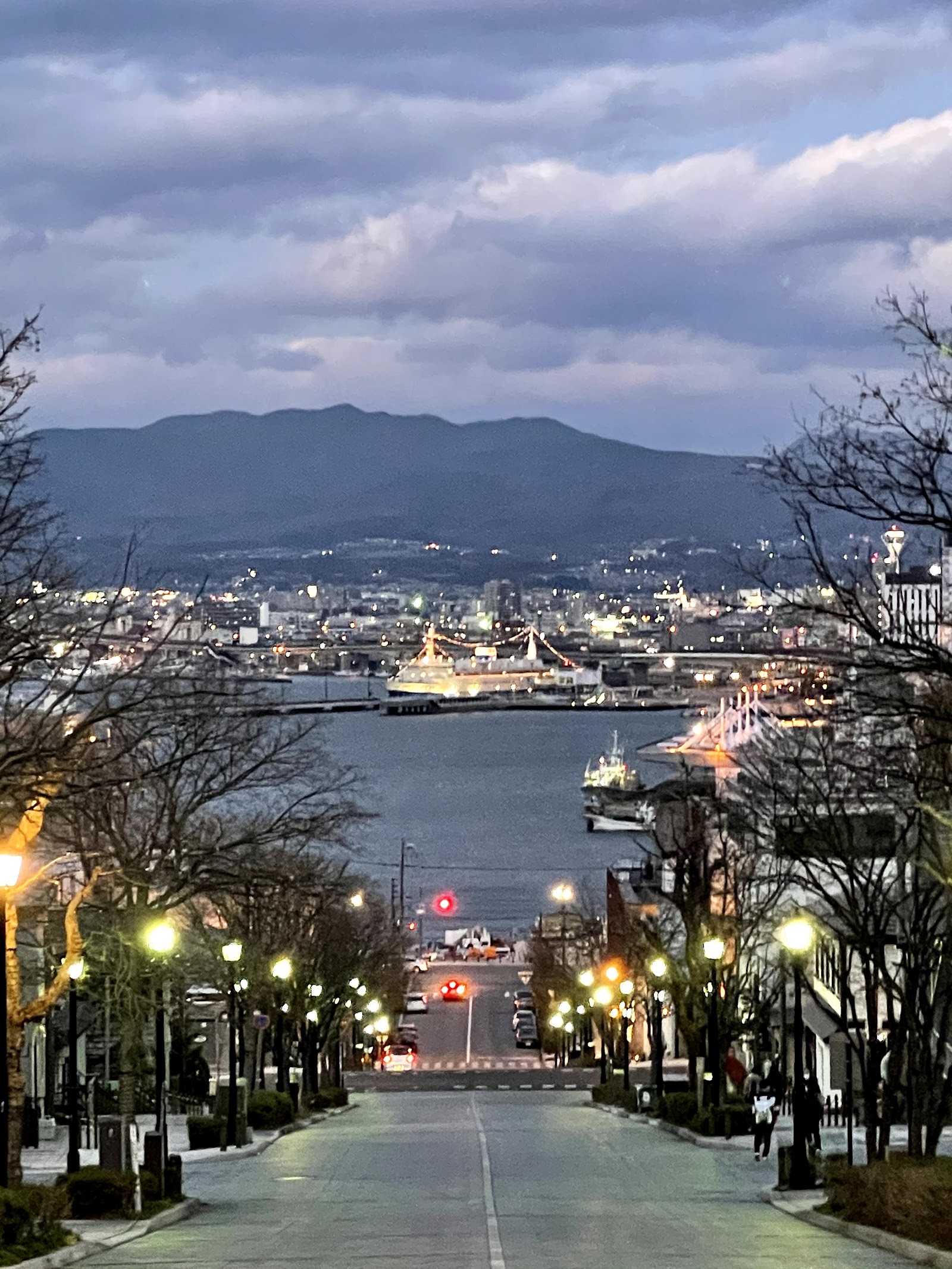
A quieter Motomachi slope offering the district's signature framed harbour view without the crowds.
Kikai-zaka is one of the lesser-known slopes of Hakodate's Motomachi district, and for visitors who want the neighbourhood's signature framed view of the harbour without the crowds that gather on the more famous streets, it makes a rewarding, peaceful discovery. Its name, which references machinery, is said to recall a former machine works or engineering premises that once stood nearby, a small reminder that Motomachi was a working port district as well as a genteel foreign quarter.
The Motomachi slopes all share the same basic magic: streets that climb the flank of Mount Hakodate from the waterfront, so that looking downhill the road becomes a frame channelling the eye to the port and the bay beyond. Kikai-zaka offers exactly this, a clean sightline down to the sea, but in a quieter, more residential setting than the church-lined Chacha-nobori-zaka or the grand, lamplit Motoizaka. This is the slope for travellers who have already seen the headline views and want a calmer moment to absorb the atmosphere of the hillside.
Motomachi grew into its distinctive form after Hakodate opened as one of Japan's first international ports in the mid-nineteenth century, drawing foreign merchants, diplomats, and missionaries who built churches, consulates, and homes in a cosmopolitan mix of styles across the slope above the harbour. The network of named slopes that connect the waterfront to this hillside town each carry their own history and character, and the quieter ones like Kikai-zaka preserve a more everyday, lived-in feel, lined with ordinary houses rather than showpiece landmarks.
The reward here is tranquillity and a sense of discovery. With few other visitors about, you can stand on the slope and take in the framed view of the sea in peace, appreciate the play of light on the water, and enjoy the quiet rhythm of a real neighbourhood going about its day. Photographers value these less-trafficked slopes precisely because they can compose the classic Hakodate image, sloping street leading down to the harbour, without waiting for crowds to clear.
The view is pleasant year-round. Summer brings greenery to the hillside, autumn a touch of colour, and winter the crisp, clear air and occasional snow that so suit the historic quarter, though the gradient calls for careful footing when icy. Because Kikai-zaka is more residential, there are fewer cafes and shops directly on it, so it works best as one stop on a wander through the wider district rather than a destination in itself.
Practically, Kikai-zaka is reached in a few minutes on foot from the Suehirocho tram stop, within the compact, walkable Motomachi quarter and close to the more celebrated slopes, the churches, the Kanemori Red Brick Warehouses, and the Mount Hakodate ropeway. It is a free, always-open public street; allow around fifteen minutes to walk it and take in the view.
For visitors who like to slip away from the main tourist flow, Kikai-zaka offers a quiet, authentic taste of Motomachi, the same beautiful framed view of Hakodate's harbour, savoured in peace on a genuine neighbourhood street.
A local's tip
One of the less-visited Motomachi slopes, its name recalls a former machinery works nearby; come here for the same framed sea view without the crowds.
Best time to visit
Daytime for a quiet framed harbour view
Getting there
A short walk uphill from the Suehirocho tram stop into the Motomachi district; Kikai-zaka is one of the quieter slopes east of the main cluster.
Good to know
- Restrooms
Plan the whole trip offline
Kikai-zaka is one of many places in the Real Japan app — with turn-by-turn directions, nearby spots and full offline maps you can use with no signal.