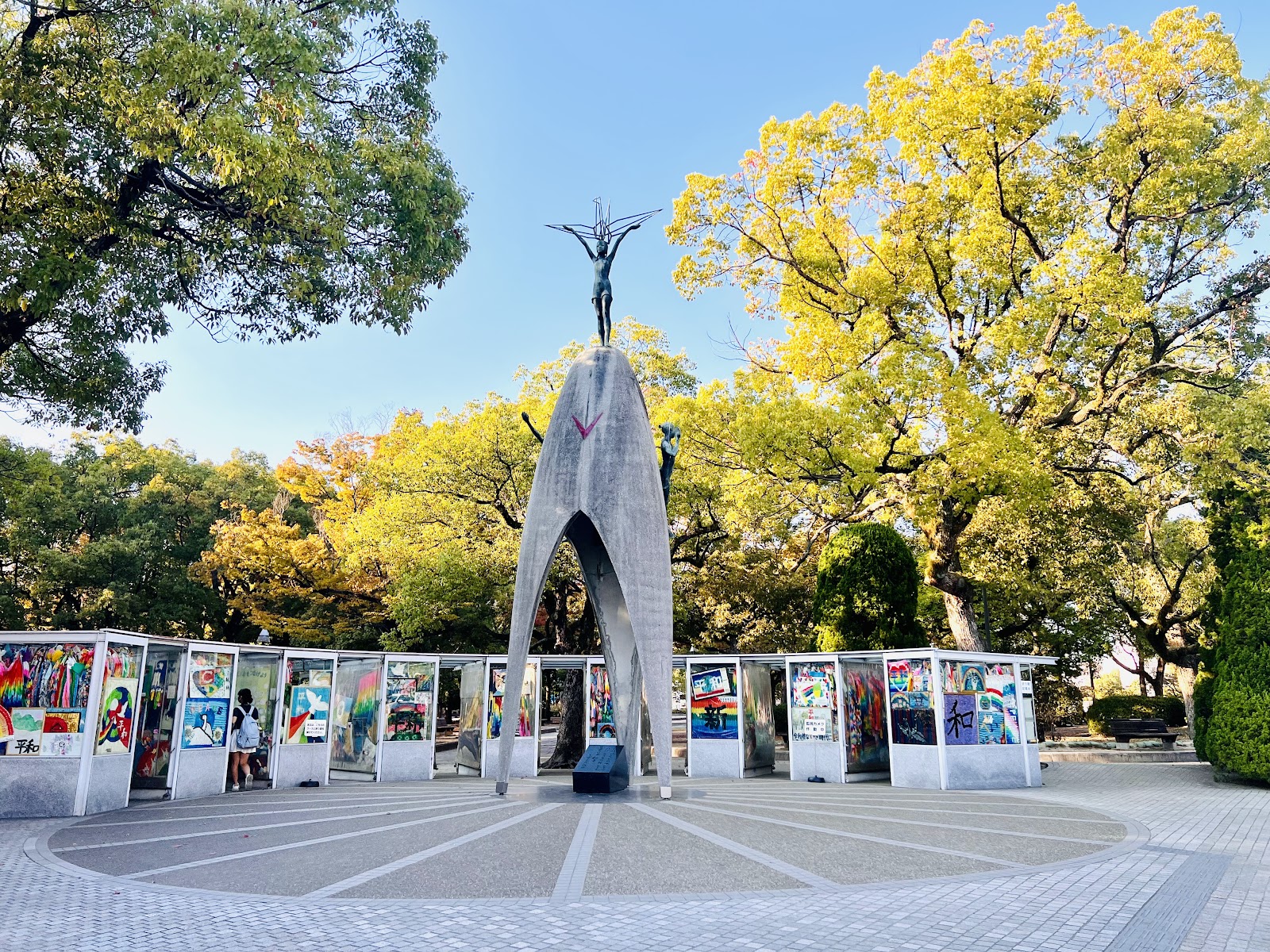
A monument crowned by a girl lifting a folded crane, inspired by Sadako Sasaki and dedicated to child victims.
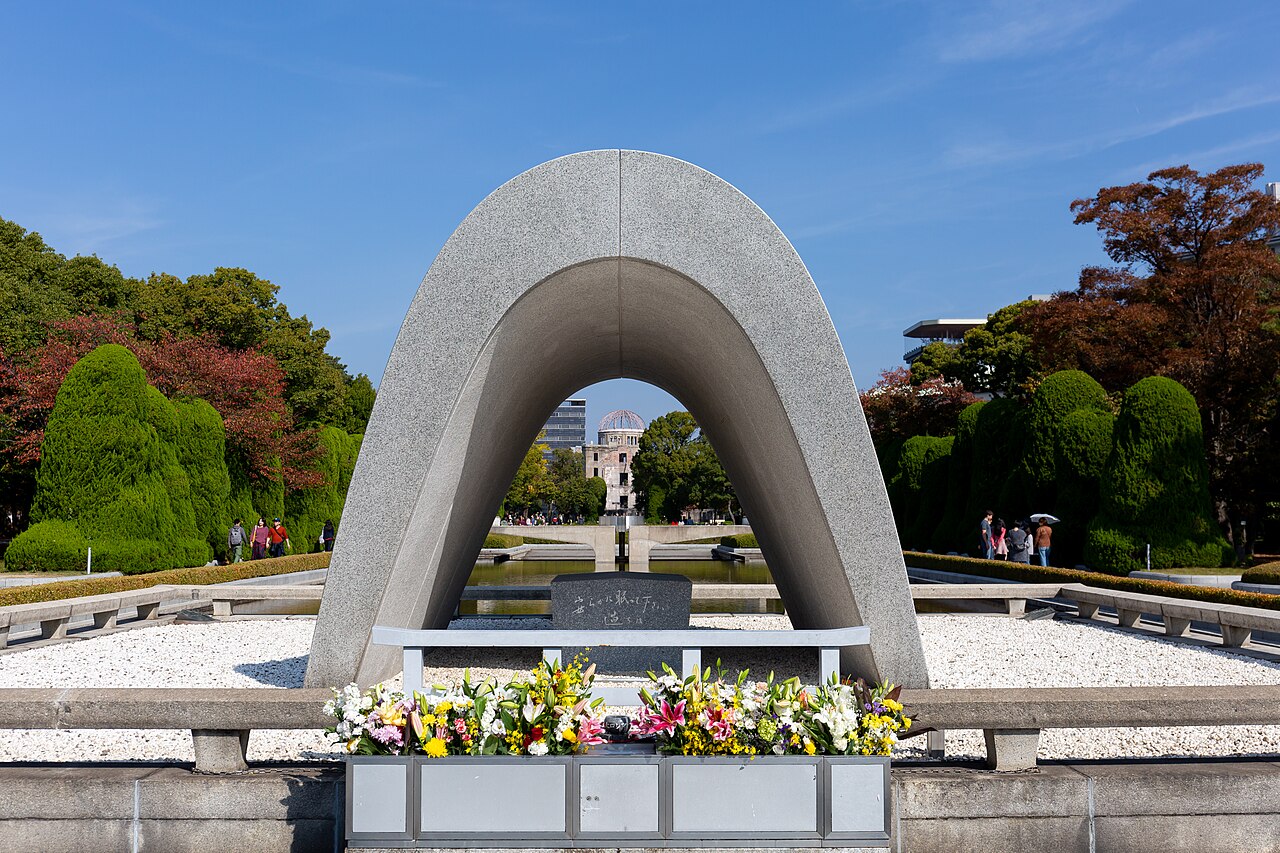
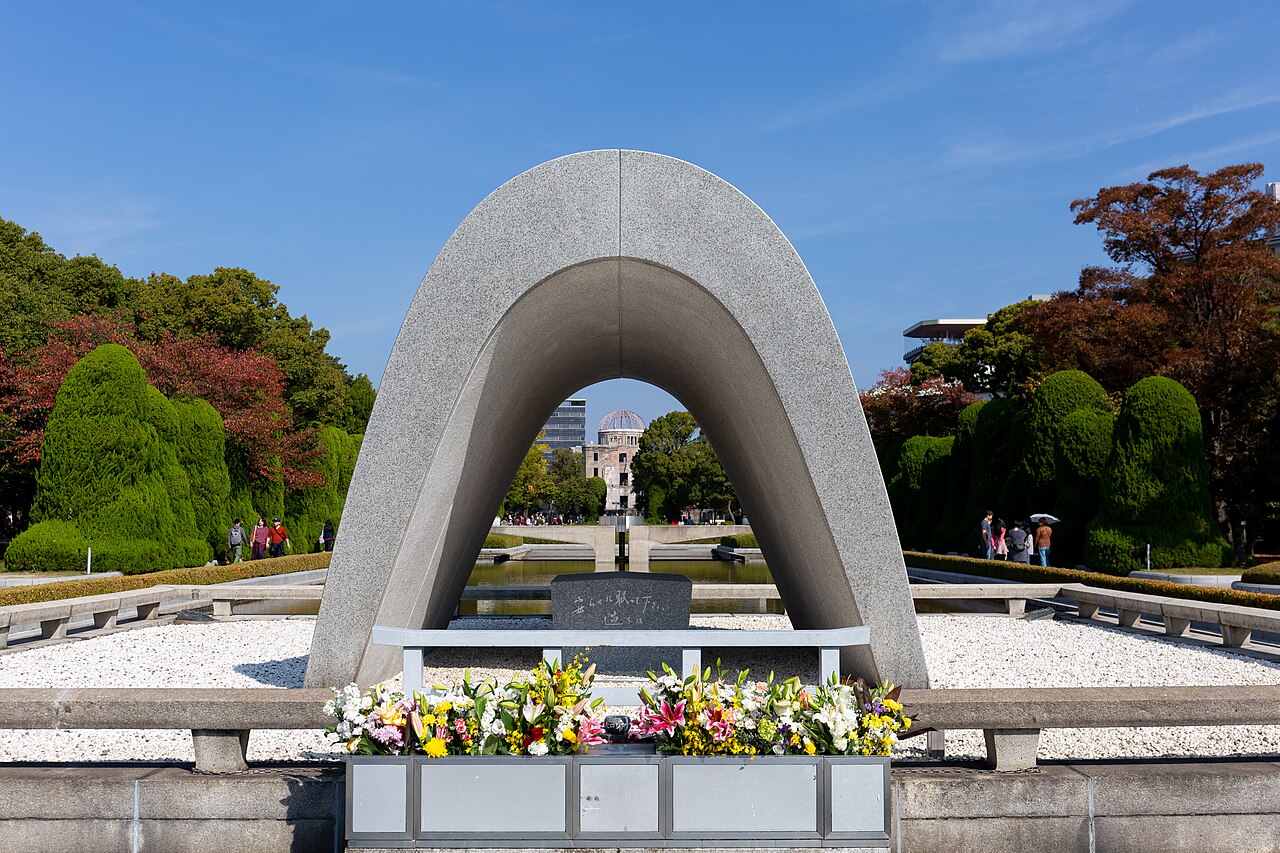
The Children's Peace Monument is one of the most beloved and heart-catching sights in the Hiroshima Peace Memorial Park. Standing between the Atomic Bomb Dome and the Cenotaph, it takes the form of a tall, three-legged domed pedestal, at the top of which a bronze figure of a young girl holds a large folded crane above her head, arms outstretched as if about to release it. The monument is dedicated to all the children who died as a result of the atomic bombing, whether in the blast itself or later from radiation-related illness.
Its story centres on a real girl, Sadako Sasaki, who was two years old and about a mile from the hypocentre in 1945. She survived the bombing and grew into a healthy, athletic child, but at the age of eleven she developed leukaemia, one of the radiation cancers that struck many survivors years afterward. During her long hospital stay she took up the Japanese tradition that says a person who folds a thousand paper cranes will be granted a wish, and she folded cranes ceaselessly from every scrap of paper she could find, wishing simply to live. She died in 1955. Moved by her death, her classmates campaigned to build a monument to her and to all the child victims, and with donations gathered from more than three thousand schools across Japan and abroad, the monument was unveiled in 1958.
Because of Sadako's story, the folded paper crane has become the worldwide symbol of the wish for peace and of the hope for a world free of nuclear weapons. Ranged around the base of the monument are glass display cases that overflow with garlands of brilliantly coloured origami cranes, tens of thousands at a time, sent continuously by children and school groups from every corner of the globe. Millions arrive each year; older strings are carefully archived and recycled to make room for new ones, so the cases are always full and always changing. A bell shaped like a golden crane hangs within the dome, and beneath it an inscription reads, This is our cry, this is our prayer, for building peace in the world.
For families and school groups the monument is often the most accessible way into the difficult history of Hiroshima, because a child's story gives the vast statistics a human face. It is common to see students laying their own hand-folded strings of cranes and pausing for a group photograph, turning remembrance into a living, ongoing act rather than a static memorial.
The monument is free, always open, flat and fully accessible, sitting on the paved central promenade a few minutes from the Genbaku Dome-mae tram stop. A visit takes only a quarter of an hour, but it is an essential stop on the walk through the Peace Park, sitting naturally between the Dome, the Cenotaph and the Peace Memorial Museum.
A local's tip
Look inside the glass cases beside the monument at the millions of folded paper cranes sent by schoolchildren from around the world, replaced constantly as new ones arrive.
Best time to visit
Any time; the surrounding cases of cranes are vivid by day
Getting there
In the Peace Memorial Park, a short walk from Genbaku Dome-mae tram stop, between the Atomic Bomb Dome and the Cenotaph.
Good to know
- Wi-Fi
- Restrooms
Plan the whole trip offline
Children's Peace Monument is one of many places in the Real Japan app — with turn-by-turn directions, nearby spots and full offline maps you can use with no signal.