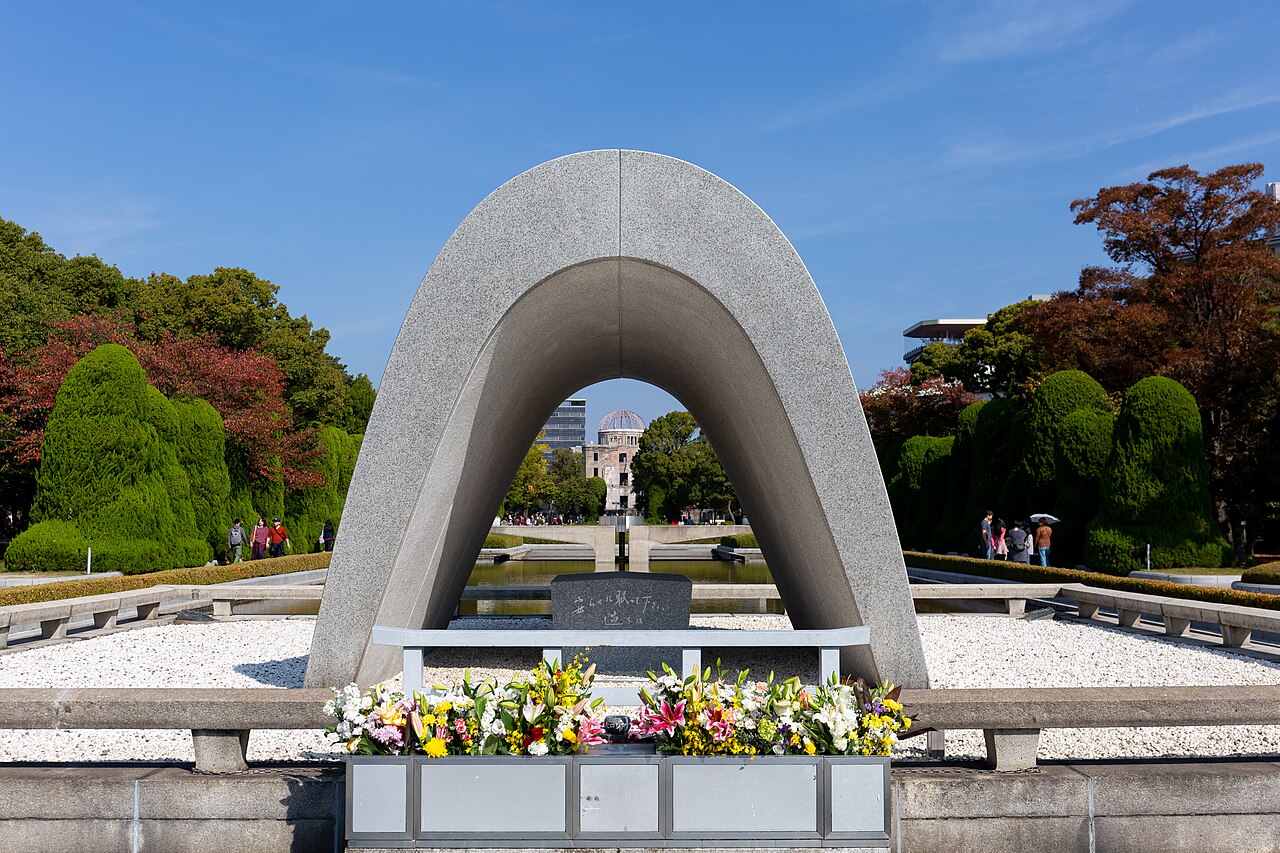
A green riverside park of monuments built on the hypocentre district, dedicated to the victims and to world peace.
Hiroshima Peace Memorial Park occupies the flat delta island between the Motoyasu and Honkawa rivers, land that before 1945 was the bustling Nakajima commercial district, the busiest quarter of the old city. On 6 August 1945 it lay almost directly beneath the atomic blast and was obliterated. Rather than rebuild the neighbourhood, the city chose to leave it open and consecrate it to memory, and in 1949 the Japanese parliament passed a special law designating Hiroshima a City of Peace. An international design competition was won by the celebrated architect Kenzo Tange, whose master plan gave the park its solemn, deliberate geometry.
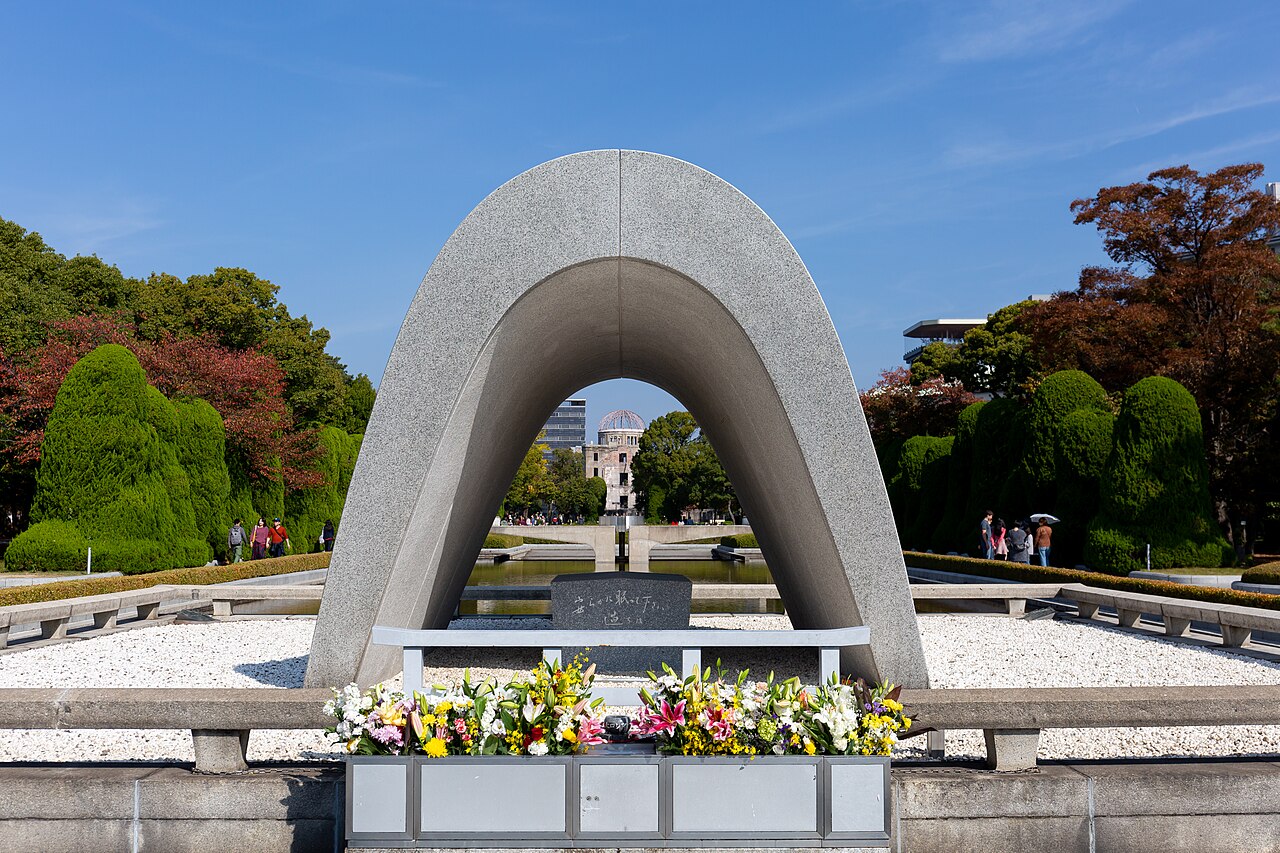
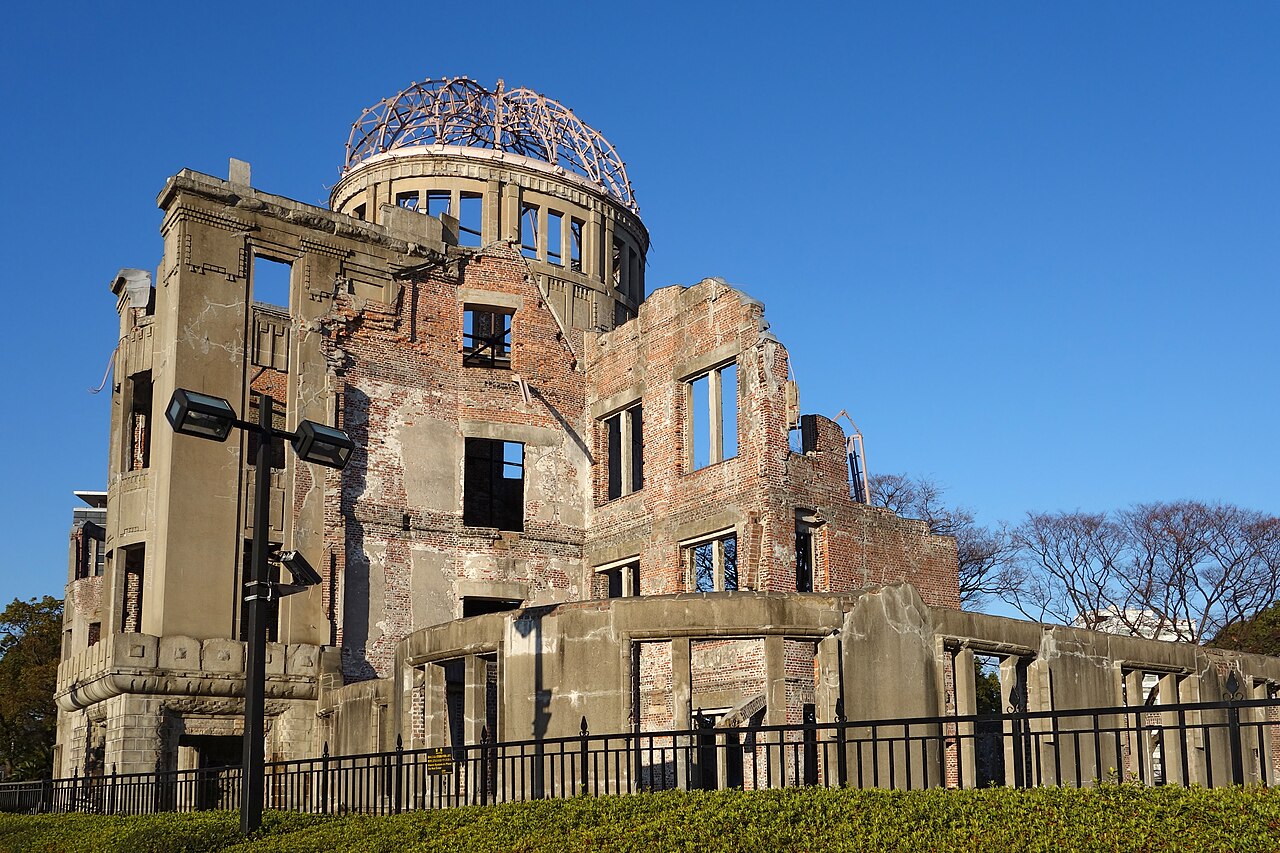
The park is conceived as a single axis of meaning. Standing at its heart is the Memorial Cenotaph, a saddle-shaped arch inspired by the ancient clay funerary houses of Japan, sheltering a stone chest that holds the register of every known victim. Tange aligned the Cenotaph so that, looking through its arch, you see the Flame of Peace and, beyond it, the skeletal Atomic Bomb Dome across the river, three elements read as one continuous line. The Flame of Peace has burned since 1964 and is intended to be extinguished only when the last nuclear weapon on Earth is destroyed.
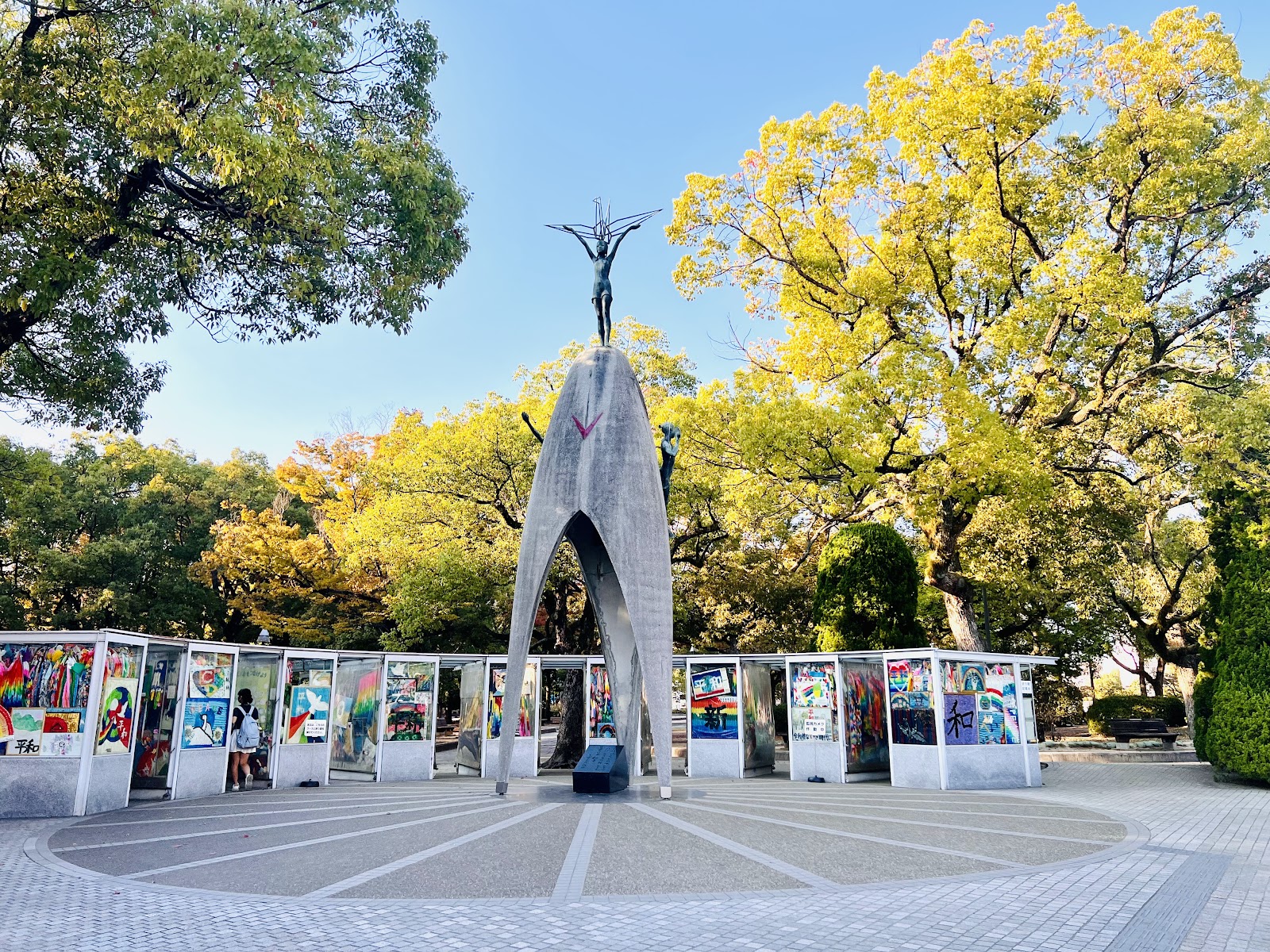
Scattered through the grounds are dozens of further monuments, each with its own story: the Children's Peace Monument crowned by a girl holding a folded crane, the Peace Bell that visitors are invited to ring, the Memorial Mound containing the ashes of tens of thousands of unidentified victims, and the quiet underground National Peace Memorial Hall for the Atomic Bomb Victims. Together they turn a simple riverside green into an open-air museum of remembrance.
The park is at its most charged on 6 August each year, when the Peace Memorial Ceremony draws crowds, survivors and world figures; at 8:15 in the morning, the exact moment of detonation, the whole city falls silent. That evening, thousands of paper lanterns are floated down the rivers to guide the spirits of the dead, one of Japan's most moving public rituals. On any ordinary day, though, the park is a calm, tree-shaded place where schoolchildren, locals and travellers mingle.
The grounds are entirely flat, paved and wheelchair-friendly, and free to enter at any hour. Spring brings cherry blossom along the riverbanks and autumn a scatter of colour, both lending gentleness to a place defined by tragedy. Reach it by Hiroden tram to Genbaku Dome-mae and walk south across the bridge, or by sightseeing bus to the Peace Memorial Park stop. Allow at least ninety minutes to walk the axis, pause at the monuments, and continue into the Peace Memorial Museum at the park's southern end.
A local's tip
Line up the Cenotaph, the Flame of Peace and the Atomic Bomb Dome along the park's central axis for the intended sightline; it was designed to be viewed as one composition.
Best time to visit
Early morning, or 6 August for the memorial ceremony
Getting there
Tram lines 2 or 6 to Genbaku Dome-mae, then walk south across the river into the park; alternatively bus routes stop at Peace Memorial Park.
Good to know
- Wi-Fi
- Restrooms
- Rest Areas
Plan the whole trip offline
Hiroshima Peace Memorial Park is one of many places in the Real Japan app — with turn-by-turn directions, nearby spots and full offline maps you can use with no signal.