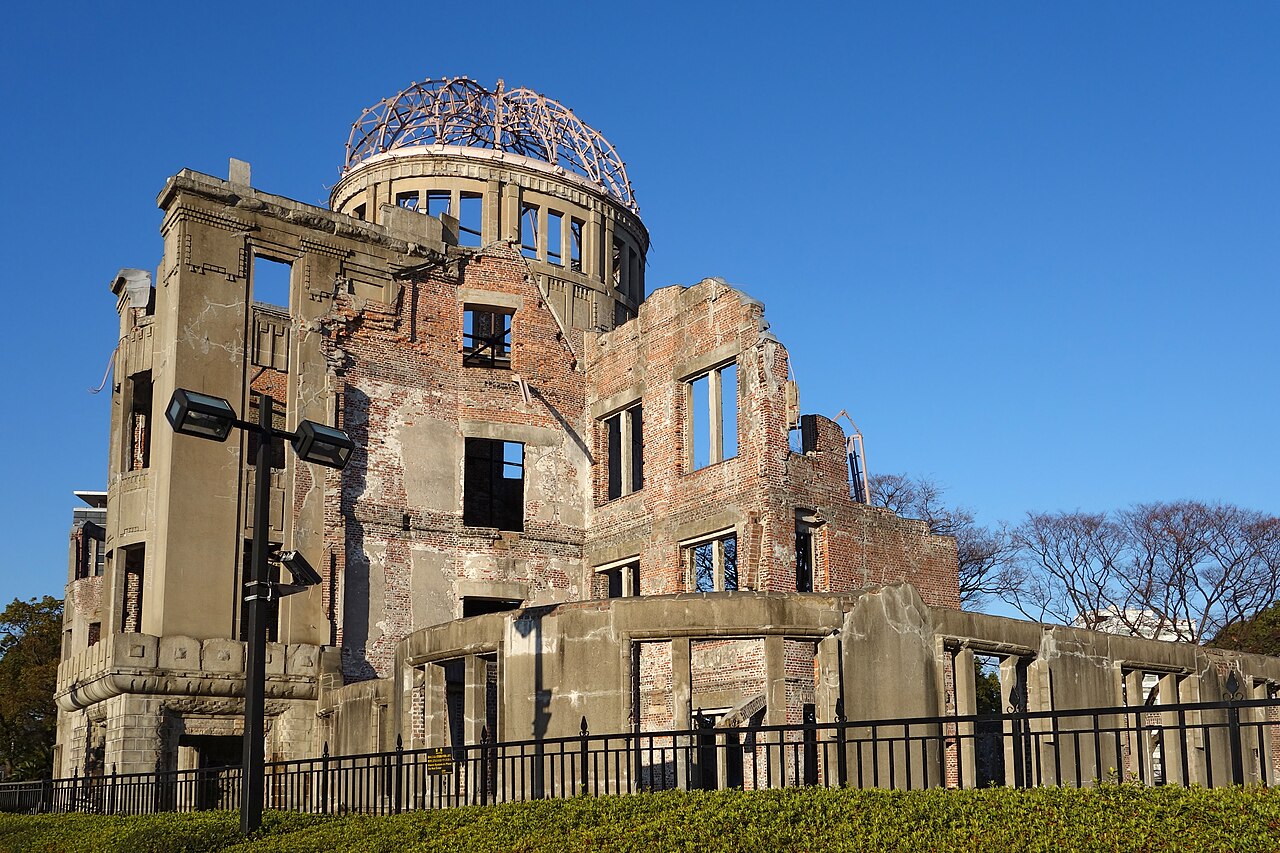
The skeletal ruin left standing beneath the 1945 atomic blast, now a UNESCO World Heritage symbol of peace.
The Atomic Bomb Dome, known in Japanese as Genbaku Dome, is the most powerful surviving witness to the events of 6 August 1945. Originally opened in 1915 as the Hiroshima Prefectural Industrial Promotion Hall, it was an elegant European-style building of brick and steel designed by the Czech architect Jan Letzel, crowned by a distinctive copper dome. On the morning of the atomic bombing, the device detonated almost directly above it, roughly 600 metres up and only about 160 metres to the south-east. Because the blast came from nearly straight overhead, the vertical walls and the steel dome frame absorbed the downward pressure and, improbably, remained standing while almost everything around them was flattened.
Everyone inside the building was killed instantly. In the decades after the war the gutted shell became a subject of fierce local debate: some survivors wanted it demolished because it revived unbearable memories, while others argued it had to be preserved precisely so those memories could never be forgotten. The preservationists prevailed, and in 1966 Hiroshima City resolved to keep the ruin permanently. In 1996 UNESCO inscribed it on the World Heritage List as the Hiroshima Peace Memorial, over objections from a few nations, on the grounds that it stands as a stark global appeal for the abolition of nuclear weapons.
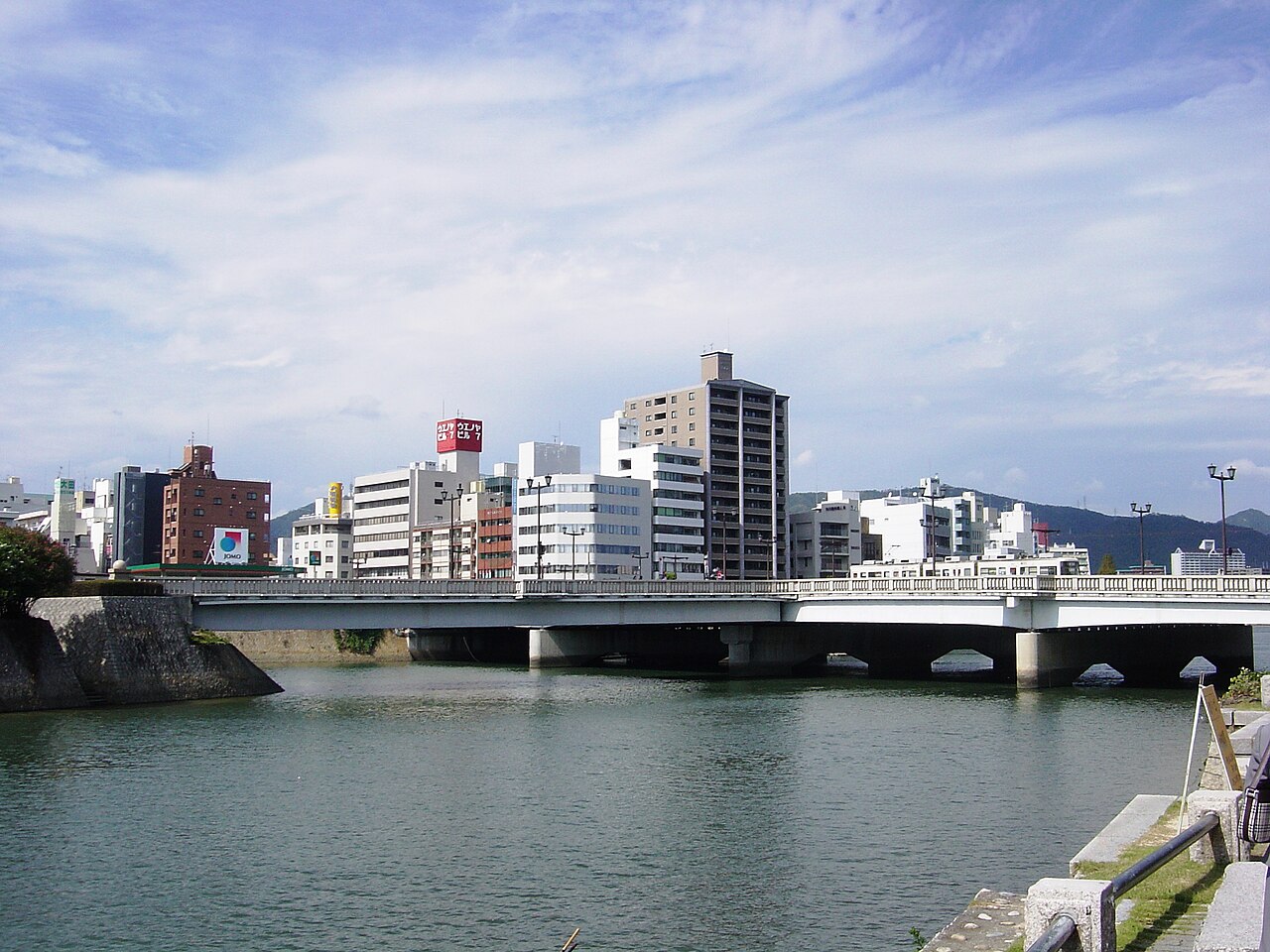
Today the dome sits at the northern tip of the Peace Memorial Park, fenced but fully visible from all sides along the Motoyasu River. There is no admission and no interior access; you view it from the surrounding promenade. Interpretive plaques explain what you are seeing, and the contrast between the twisted metal frame and the calm modern city rising behind it is what makes the site so affecting. Many visitors find it more moving than the museum itself, because it is the real, physical thing rather than a reconstruction.
The experience is best in the quiet of early morning, when tour groups have not yet arrived, or after sunset when floodlights pick out the ribs of the dome against the dark sky. Cherry trees line the riverbank, so spring adds a poignant softness to the scene. The site is completely step-free and accessible, and you can circle it in fifteen minutes, though most people linger longer.
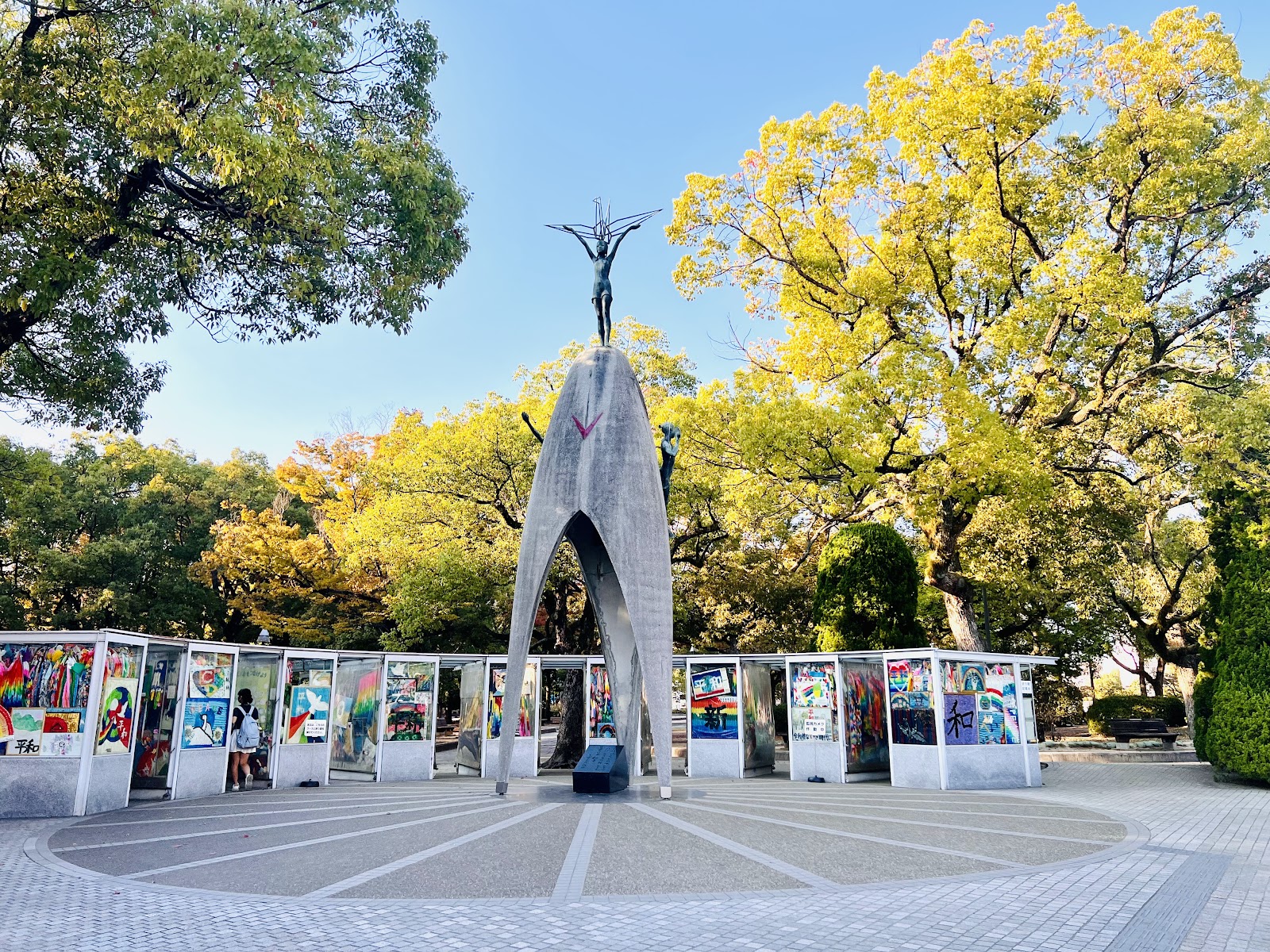
Getting there is simple: the Hiroden tram lines 2 and 6 stop at Genbaku Dome-mae, immediately beside the ruin, a short ride from Hiroshima Station. From here it is a natural start to a walking route that crosses the T-shaped Aioi Bridge, continues through the Peace Memorial Park past the Cenotaph and the Children's Peace Monument, and ends at the Peace Memorial Museum, making a single, unbroken hour or two of remembrance.
A local's tip
Walk to the far (west) bank of the Motoyasu River for the classic reflection shot, and come at opening or after dark to have the site almost to yourself.
Best time to visit
Early morning or dusk when the ruin is lit
Getting there
From Hiroshima Station take the Hiroden tram line 2 or 6 to Genbaku Dome-mae; the ruin is directly beside the stop on the Motoyasu River.
Good to know
- Wi-Fi
- Restrooms
Plan the whole trip offline
Atomic Bomb Dome is one of many places in the Real Japan app — with turn-by-turn directions, nearby spots and full offline maps you can use with no signal.