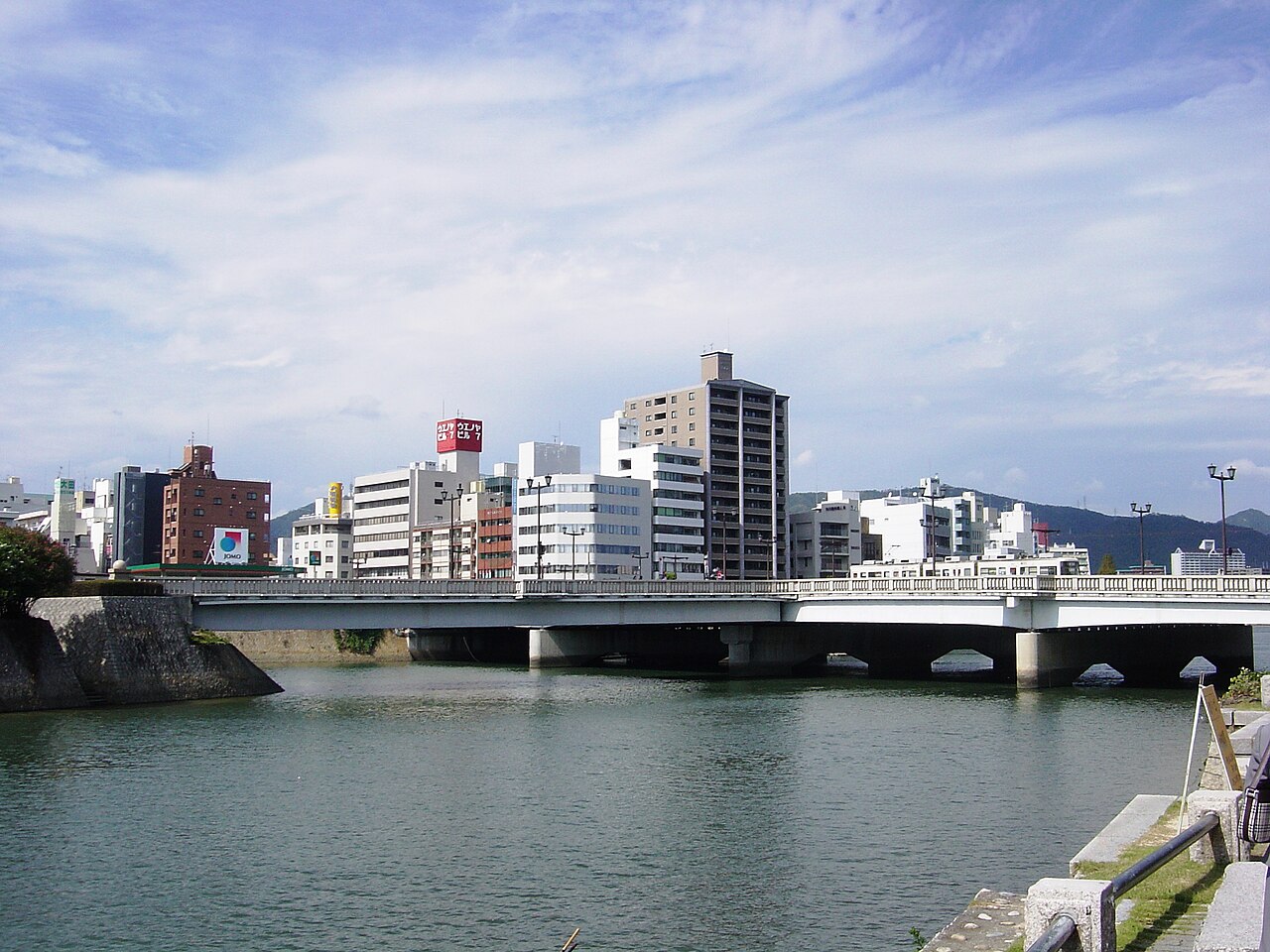
The distinctive T-shaped bridge that served as the atomic bomb's visual aiming point on 6 August 1945.
The Aioi Bridge is an unassuming road-and-tram crossing at the northern edge of the Hiroshima Peace Memorial Park, yet it holds a chilling place in twentieth-century history. What makes it unusual is its shape: rather than a simple straight span, it is built in the form of a letter T, with a main crossing over the Ota River and a third arm branching off at right angles to reach the tip of the delta island where the park now stands. In the flat cityscape of 1945 this large, pale, T-shaped structure was strikingly easy to identify from high altitude, and for that reason the crew of the Enola Gay selected it as the visual aiming point for the world's first atomic bombing.
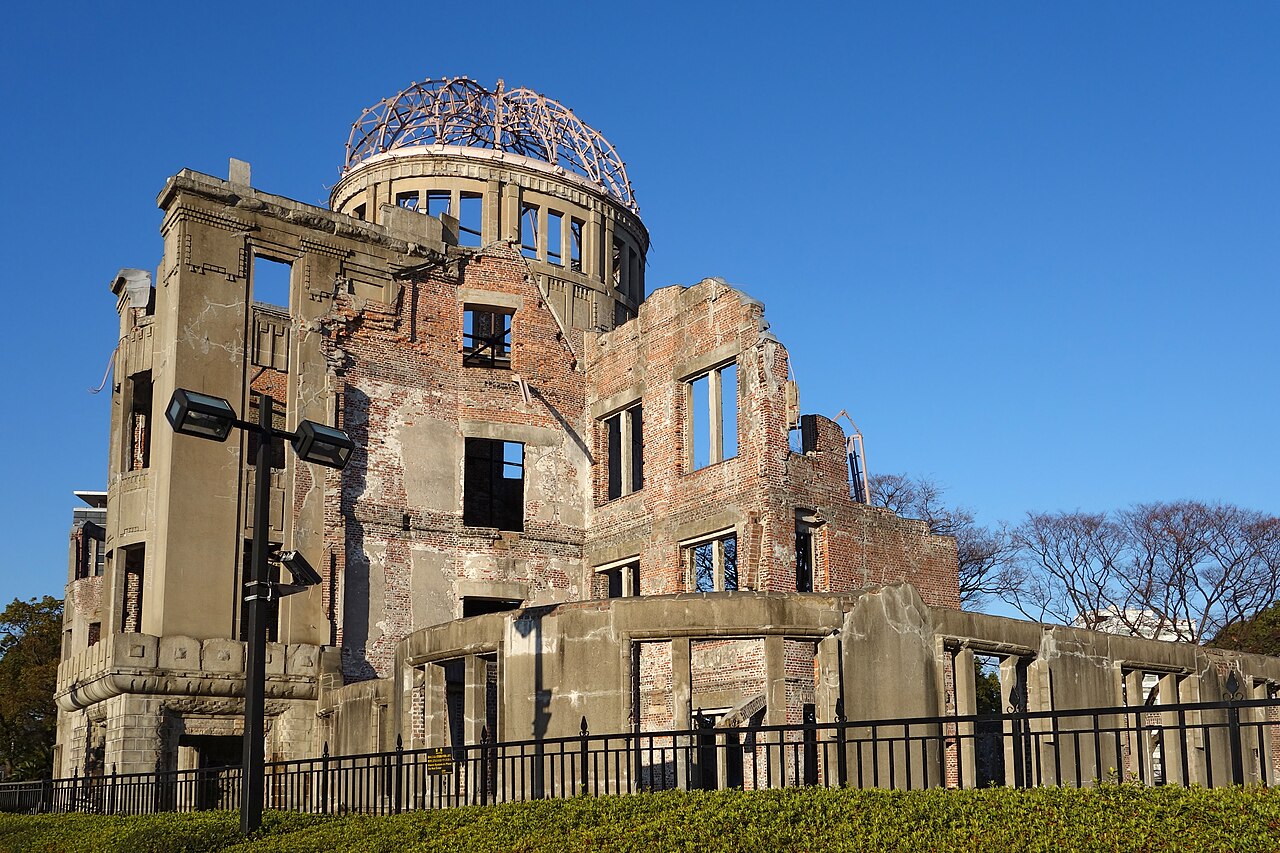
In the event, a crosswind pushed the bomb slightly off target, and it detonated a couple of hundred metres to the south-east, above the Shima Hospital near the Industrial Promotion Hall, the building now preserved as the Atomic Bomb Dome. The Aioi Bridge itself, directly beneath one edge of the blast, was violently shaken: its deck was heaved upward and its central pillars driven downward, yet, remarkably, it did not collapse and remained usable after the war. The damaged original structure served the city for decades until it was finally replaced by the present bridge in the 1980s, rebuilt to the same distinctive T-plan so that its notorious silhouette would be preserved.
Today the bridge carries ordinary traffic and Hiroden trams, and most people cross it without pausing, on their way between the Atomic Bomb Dome and the wider city. But for those who know its story it is a quietly powerful place: standing on its parapet you are looking down at the very geometry that made Hiroshima a target, with the ruined Dome only steps away and the rivers that shaped the delta running beneath you. A modest marker records the bridge's role, and the view from it takes in the Dome, the riverbanks and the green expanse of the Peace Park.
Unlike the great monuments a short walk south, the Aioi Bridge is not a designed memorial; it is a working piece of infrastructure that happens to carry an extraordinary history, and that ordinariness is part of what makes it affecting. It shows how completely the city has knitted the sites of catastrophe back into daily life.
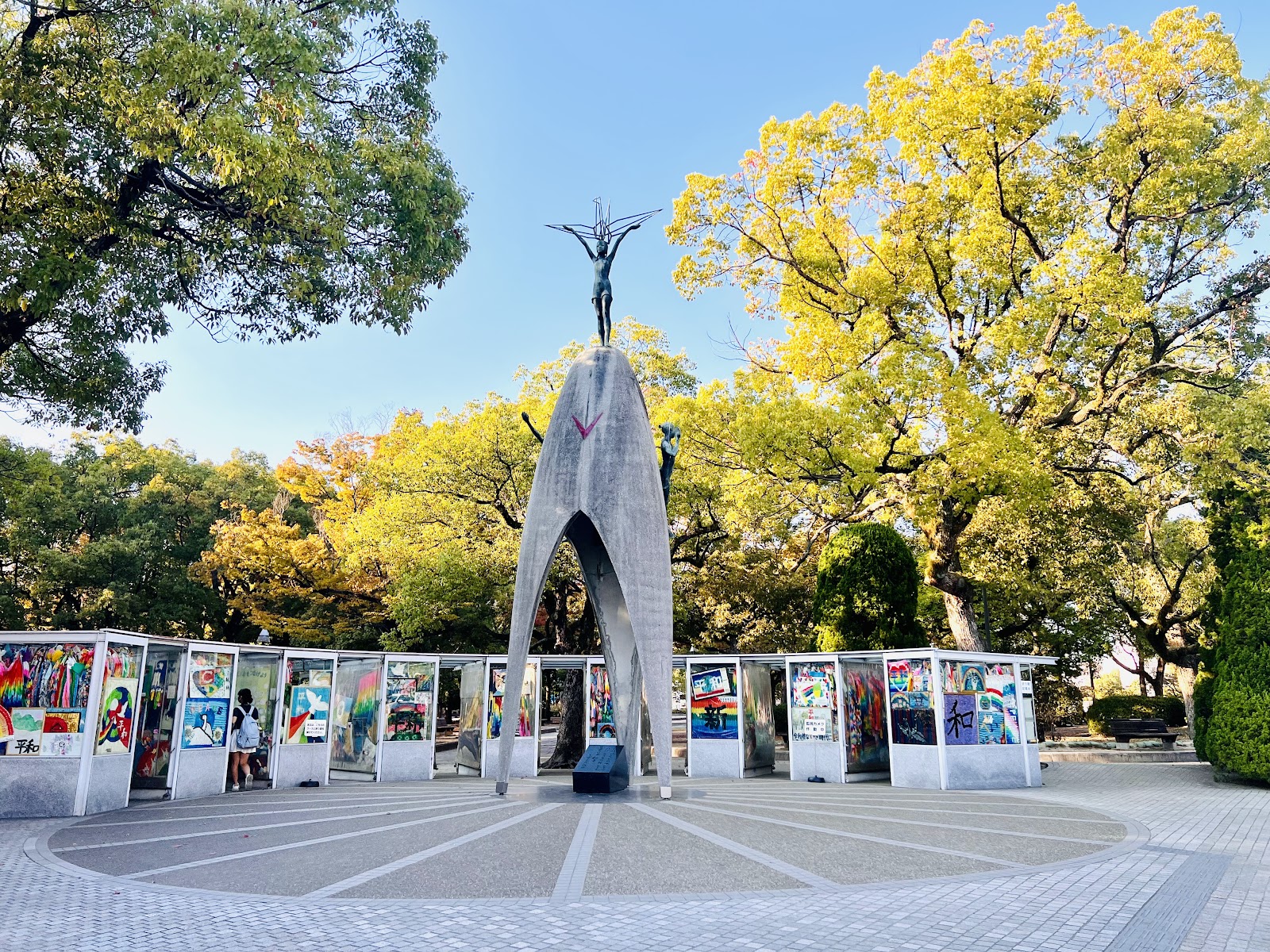
There is nothing to pay and nothing to enter; you simply walk across, and the whole visit takes only a few minutes. The bridge is level and fully accessible, sitting immediately beside the Genbaku Dome-mae tram stop, which makes it the natural first or last step of any walking tour of the Peace Park. Combine it with the Atomic Bomb Dome on the near bank and continue south across the island to the Cenotaph, the Children's Peace Monument and the Peace Memorial Museum.
A local's tip
Its unusual T-shape, clearly visible from above, is exactly why the bomber crew chose it as their aiming point; note the plaque explaining the bridge's history.
Best time to visit
Daytime, combined with a Peace Park walk
Getting there
The bridge is right beside the Genbaku Dome-mae tram stop and the Atomic Bomb Dome, spanning the Ota River at the north end of the Peace Park.
Good to know
- Wi-Fi
- Restrooms
Plan the whole trip offline
Aioi Bridge is one of many places in the Real Japan app — with turn-by-turn directions, nearby spots and full offline maps you can use with no signal.