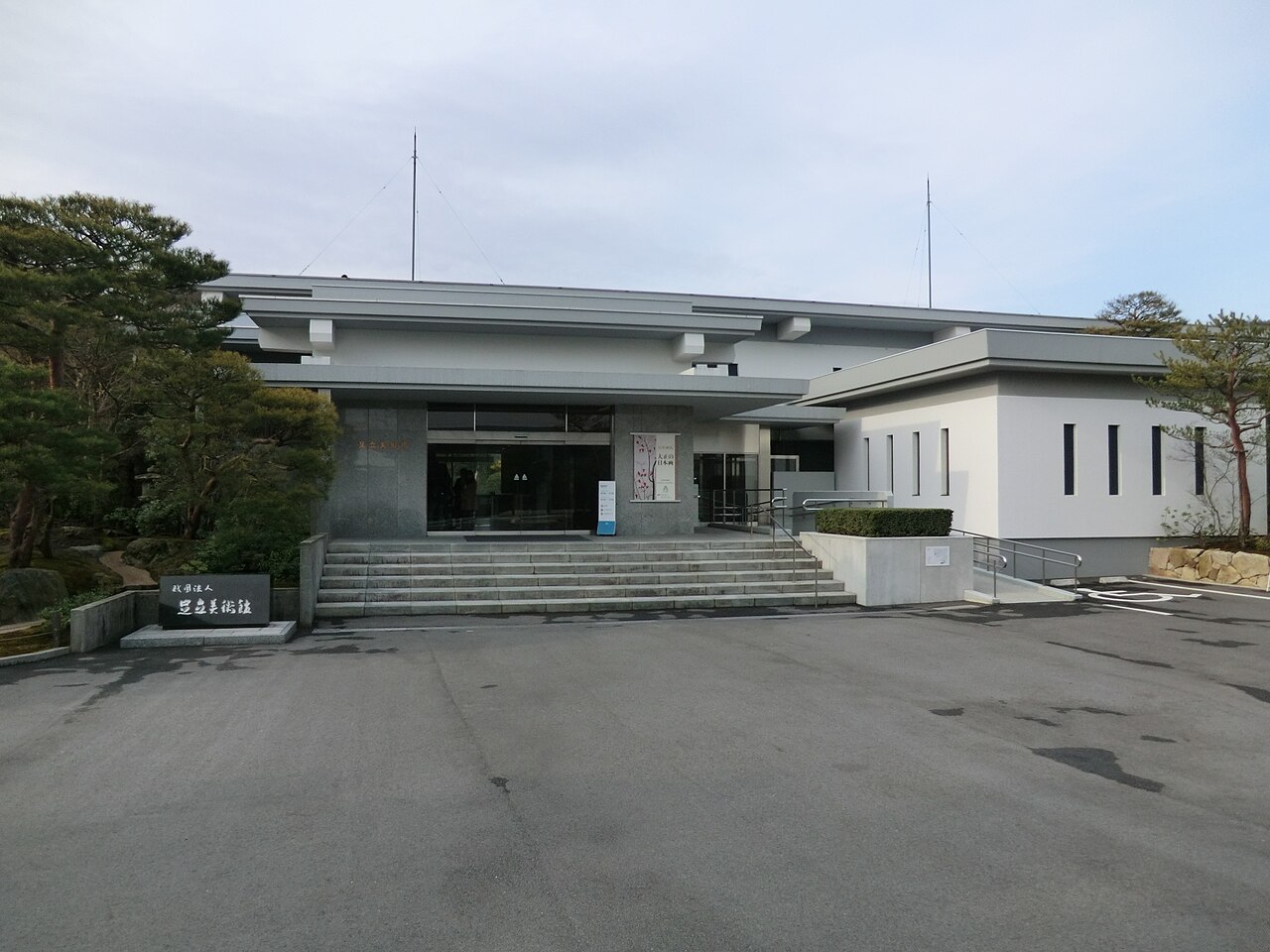
Home to a Japanese garden ranked number one in the country for over two decades, paired with a superb collection of modern nihonga painting.
The Adachi Museum of Art, tucked into the countryside near Yasugi east of Matsue, is famous for a single audacious idea: that a garden can itself be a work of art, framed and viewed like a hanging scroll. Founded in 1970 by the local businessman Adachi Zenko, who made his fortune and poured it into two passions — Japanese painting and landscape gardening — the museum has been ranked the finest garden in Japan every year for more than two decades by the American journal Sukiya Living (the Journal of Japanese Gardening), beating out even the imperial villas and famous temple gardens of Kyoto.
The grounds cover some 165,000 square metres and are divided into distinct scenes: a dry landscape garden of raked gravel and sculpted pines, a moss garden, a pond garden and a white gravel and pine garden that seems to roll away toward the borrowed scenery of the distant mountains. What makes Adachi extraordinary is that visitors do not walk through the gardens at all. Instead, the buildings are arranged so that large plate-glass windows frame the landscape like living paintings — the museum calls them "living hanging scrolls" and "framed pictures." Every tree is pruned daily by a team of gardeners, and the composition is calibrated so that no matter where you stand, the view is balanced and complete.
The garden changes profoundly with the seasons: fresh green in spring, deep emerald in summer, blazing red and gold maples in autumn, and a hushed white world after snowfall, when many consider it at its most beautiful. A waterfall installed on the far hillside, echoing a painting in the collection, adds movement to the vista.
Indoors, the art is no afterthought. The museum holds one of the country's great collections of modern Japanese-style painting (nihonga), anchored by around 120 works by Yokoyama Taikan, the towering early-twentieth-century master. Rotating exhibitions also feature Hashimoto Kansetsu, Takeuchi Seiho, Kawai Gyokudo and ceramics by Kawai Kanjiro and Kitaoji Rosanjin, along with a dedicated hall for the children's-book illustrator and painter of playful figures.
The experience is deliberately unhurried. Cafes and a tea house positioned to overlook the gardens let you linger with a cup of matcha while gazing at the raked gravel and the mountains beyond. Even the round "picture window" in one corridor, which frames a single perfect slice of garden, has become one of the most photographed spots in western Japan.
Because it lies outside central Matsue, the Adachi is easiest reached by the free shuttle bus from Yasugi Station. Allow at least two hours, and if your schedule permits, come in autumn or after snow — the museum's philosophy that nature, carefully composed, is the highest art form has never felt more persuasive than when the maples turn or the pines bow under white.
A local's tip
The gardens are meant to be viewed as living paintings through the windows — don't try to walk into them; instead find the framed 'picture window' viewpoints the designers built.
Best time to visit
Autumn for maple colour; fresh snow in winter
Getting there
From Yasugi Station (about 25 minutes east of Matsue on the JR San'in Line) take the free shuttle bus, which runs roughly every 30 minutes and reaches the museum in around 20 minutes.
Good to know
- Cafe
- Wi-Fi
- Restrooms
- English signage
Plan the whole trip offline
Adachi Museum of Art is one of many places in the Real Japan app — with turn-by-turn directions, nearby spots and full offline maps you can use with no signal.