An ancient first-rank Izumo shrine and the mythic source of sacred fire, set in a quiet river valley.
Kumano Taisha, tucked into the wooded Iu River valley in the Yakumo district south of central Matsue, is one of the most important and ancient shrines in the entire Izumo region, yet it sees only a fraction of the visitors who crowd the more famous Izumo Taisha. For travelers seeking authentic, uncrowded sacred history, it is a rewarding discovery.
The shrine is dedicated primarily to Susanoo-no-Mikoto, the storm god and one of the most dramatic figures in Japanese mythology, the brother of the sun goddess Amaterasu and the legendary slayer of the eight-headed serpent Yamata-no-Orochi. Along with Izumo Taisha, Kumano Taisha was historically ranked as the first shrine of the old Izumo province, a status that reflects its deep antiquity and spiritual weight. Records of the shrine reach back well over a thousand years.
Kumano Taisha's most distinctive role is as the mythic origin of sacred fire. The shrine is regarded as the place where the art of making fire was first established, and it preserves the tools and rituals associated with it. Every year on October 15, in a solemn ceremony called the Kirihi Shinji, or fire-drilling ritual, the shrine ceremonially hands over fire-starting implements, an usu and kine, to priests from Izumo Taisha, who use them to kindle the pure flame for cooking the sacred offerings at the great shrine. This living link means Kumano Taisha is sometimes described as the fire source of Izumo, and the ritual is one of the most fascinating traditions in the region.
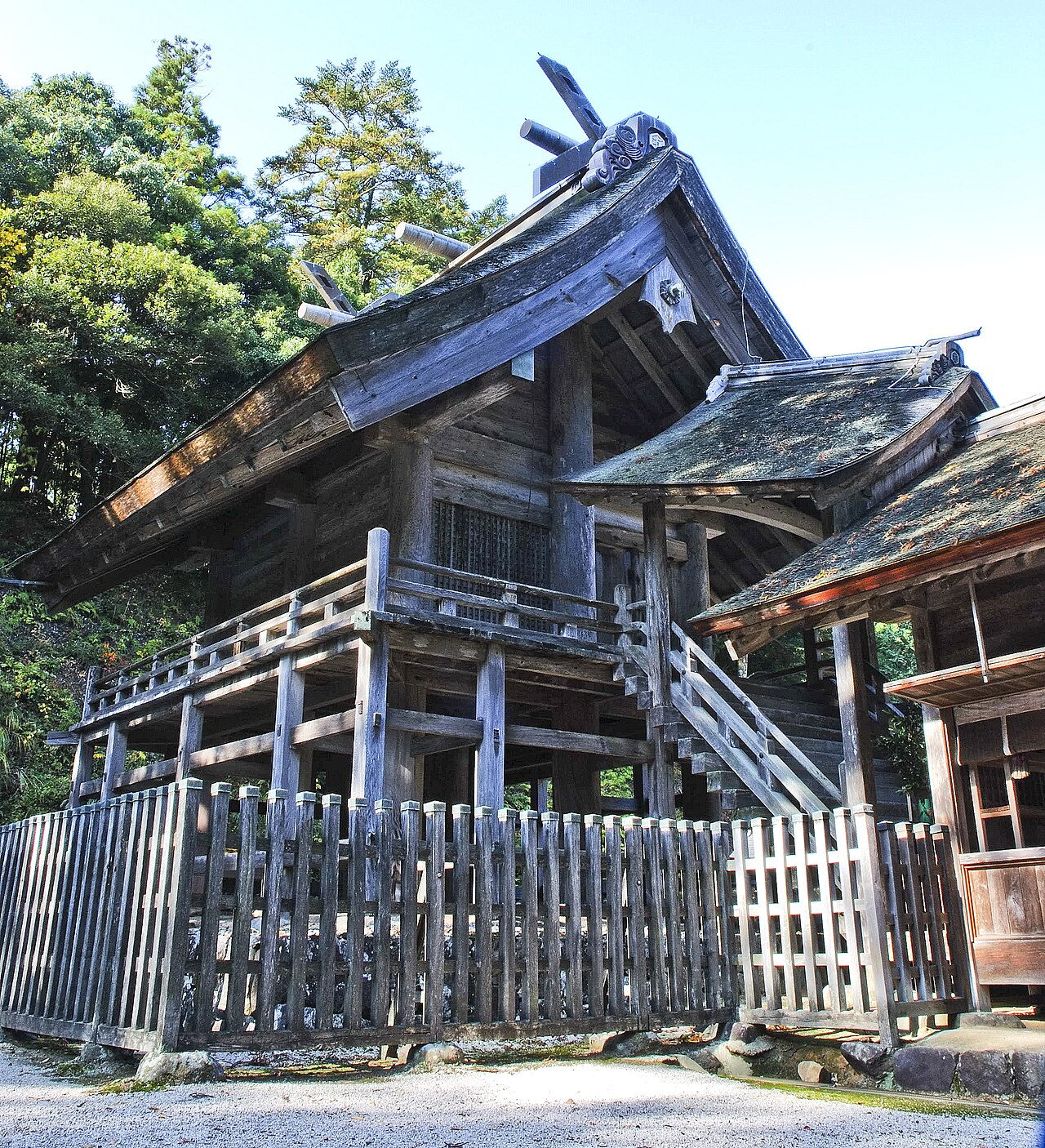
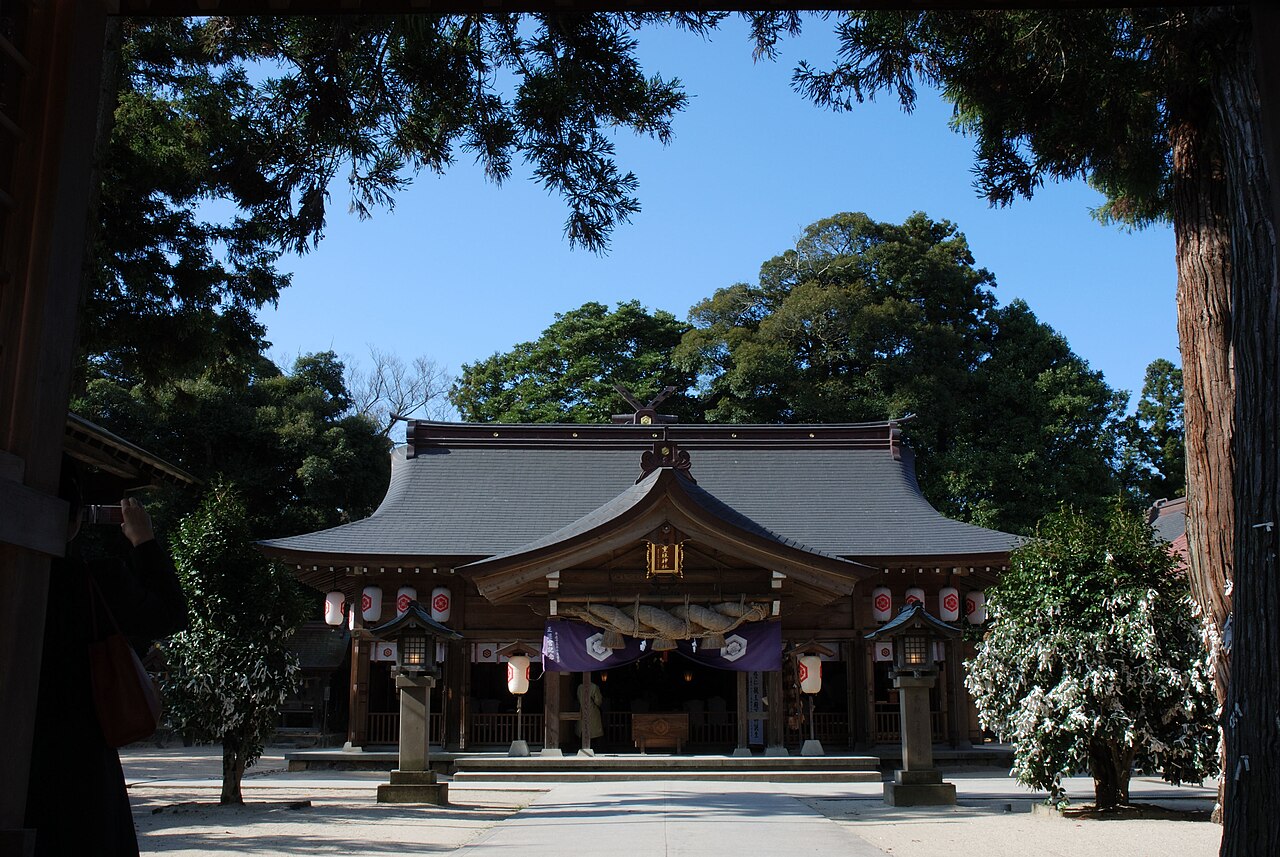
The setting is a large part of the appeal. The shrine grounds spread along a clear river beneath forested hills, with a striking vermilion bridge, ancient trees, moss-covered stone and the simple, dignified architecture of the Izumo tradition, including the distinctive crossed roof finials known as chigi. A subsidiary shrine on the grounds, Inada-jinja, honors Kushinada-hime, the maiden Susanoo rescued from the serpent and later married, tying the site to the same great myth cycle. The atmosphere is hushed and elemental, exactly the kind of primeval woodland sanctuary that gave rise to Japan's earliest religious feeling.
A visit is calm and contemplative. Worshippers cross the bridge, pass beneath the torii and approach the main hall to make an offering, then wander the grounds among the cedars and along the riverbank. In spring cherry blossoms soften the approach, while autumn sets the valley alight with color. Allow around forty-five minutes to an hour to take it in without rushing.
Admission is free, and there is a prayer office where visitors can obtain protective charms and goshuin seal stamps. Free parking makes it easy for drivers, and buses run from Matsue toward the Yakumo area, though a car offers the most flexibility given the rural setting.
Kumano Taisha rewards travelers willing to venture beyond the obvious. It offers a genuine encounter with the roots of Japanese mythology and Shinto ritual, a beautiful and serene natural setting, and a direct, living connection to the sacred fire of Izumo, all without the crowds, making it one of the Matsue area's most atmospheric hidden treasures.
A local's tip
This is where sacred fire-starting tools are ceremonially given to Izumo Taisha each October — ask about the Kirihi Shinji fire-drilling ritual that makes it 'the fire source' of Izumo.
Best time to visit
Morning; October 15 for the fire-drilling festival
Getting there
From Matsue Station take a bus bound for the Yakumo district (Kumano Taisha area); by car it is about 30 minutes south of central Matsue along the Iu River valley.
Good to know
- Parking
- Restrooms
- Prayer office
Plan the whole trip offline
Kumano Taisha is one of many places in the Real Japan app — with turn-by-turn directions, nearby spots and full offline maps you can use with no signal.