A National Treasure shrine whose main hall is the oldest surviving example of the ancient taisha-zukuri style that shaped Izumo's sacred architecture.
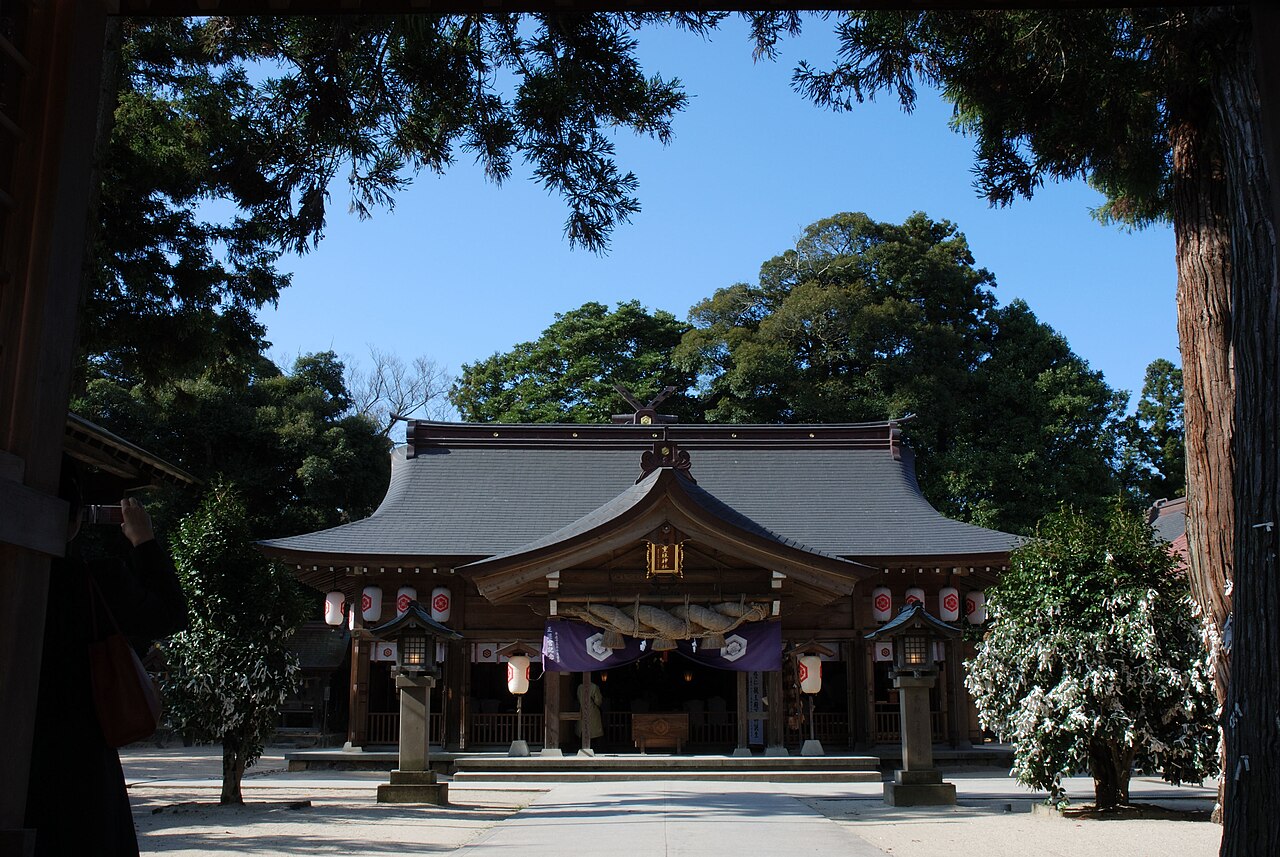
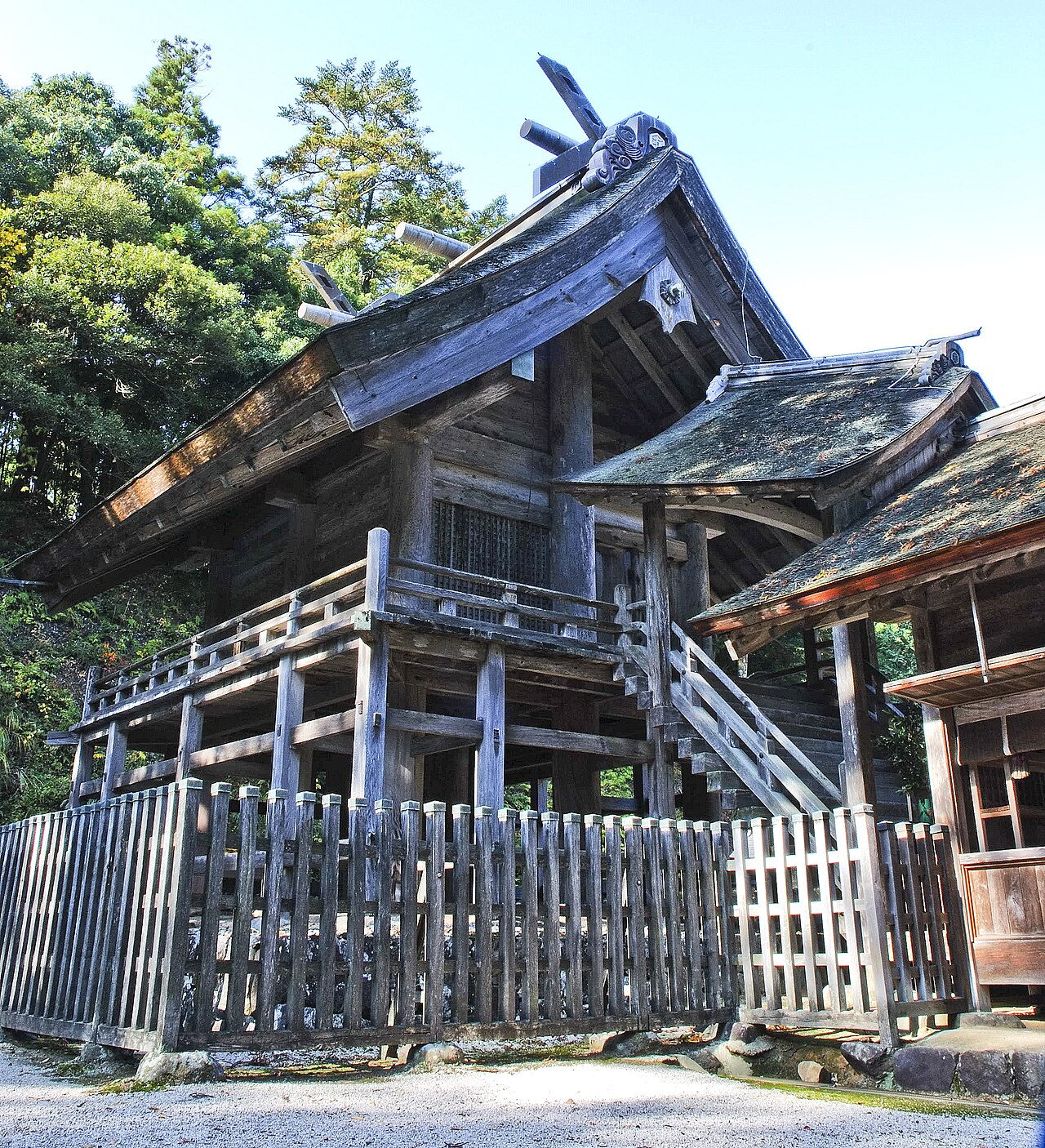
Kamosu Shrine sits at the top of a broad flight of stone steps on a quiet wooded hillside in the southern outskirts of Matsue, and for lovers of Japanese architecture it is a genuine treasure — quite literally. Its main sanctuary, the honden, is designated a National Treasure and is the oldest surviving building constructed in the taisha-zukuri style, the archetypal form of shrine architecture native to the Izumo region and the model on which the great Izumo Taisha itself is based. The present hall dates to 1583, rebuilt in the Momoyama period, but the style it preserves reaches back to Japan's most ancient sacred building traditions.
What makes taisha-zukuri distinctive is its near-square floor plan, its steeply pitched gabled roof, and an entrance placed off-centre beneath the gable rather than on the long side — an archaic arrangement thought to derive from the raised dwellings of prehistoric chieftains. Standing before Kamosu's honden, with its clean cypress-bark roof, crossed finials (chigi) pointing to the sky and heavy cylindrical billets (katsuogi) lining the ridge, you are looking at the purest and earliest expression of a form that defined the spiritual landscape of western Japan.
The shrine is dedicated to Izanami-no-Mikoto, the mother goddess of Japanese mythology who, with Izanagi, is said to have given birth to the islands of Japan and to many of its deities. This association with creation and with the underworld gives Kamosu a solemn, primordial atmosphere very different from the cheerful matchmaking mood of nearby Yaegaki Shrine. The approach, worn stone steps flanked by towering cedars and cloaked in moss, feels genuinely ancient, and on a misty morning the whole precinct seems to belong to an older Japan.
Kamosu is one of the trio of important shrines — together with Yaegaki and Kumano Taisha — that cluster in the Ou district south of Matsue, an area dense with the myths of the Izumo cycle. This corner of Shimane was, in the ancient imagination, the very stage on which the gods walked, and Kamosu's understated grandeur makes it one of the most rewarding places to feel that history. There are no crowds, no commercial bustle, only the quiet of the forest and the extraordinary old hall.
A visit is short, perhaps forty minutes including the climb and a slow circuit of the grounds, and it combines beautifully with Yaegaki Shrine a short distance away, letting you contrast the tender romance of one with the austere antiquity of the other. For travellers who have already admired the reconstructed keeps and polished gardens of central Matsue, Kamosu offers something rarer: an authentic, un-touristed encounter with the roots of Japanese religious architecture, standing exactly where worshippers have climbed to honour the mother of the gods for centuries.
A local's tip
Look up at the honden's roof: it is the oldest surviving example of the taisha-zukuri style, the archetype for Izumo Taisha itself.
Best time to visit
Early morning for still, misty light on the mossy steps
Getting there
Take a bus from Matsue Station toward Kaguraman or Yaegaki (about 25 minutes) and walk a few minutes, or drive 20 minutes south of the city. It sits close to Yaegaki Shrine.
Good to know
- Parking
- Restrooms
Plan the whole trip offline
Kamosu Shrine is one of many places in the Real Japan app — with turn-by-turn directions, nearby spots and full offline maps you can use with no signal.