An ancient shrine tied to Japan's oldest love story, famous for the Mirror Pond where visitors divine the timing of their future romance.
Yaegaki Shrine, hidden among rice fields and low wooded hills south of central Matsue, is one of the most romantic sacred sites in a region already known as the land of matchmaking. It enshrines the storm god Susanoo-no-Mikoto and the goddess Kushinadahime, whose union is described in the Kojiki and Nihon Shoki, Japan's eighth-century foundational chronicles. According to the myth, Susanoo slew the eight-headed serpent Yamata-no-Orochi to rescue Kushinadahime and, having won her, built a palace here surrounded by a "manifold fence" (yaegaki) to protect his bride — giving the shrine its name and its enduring reputation as a place to pray for love and marriage.
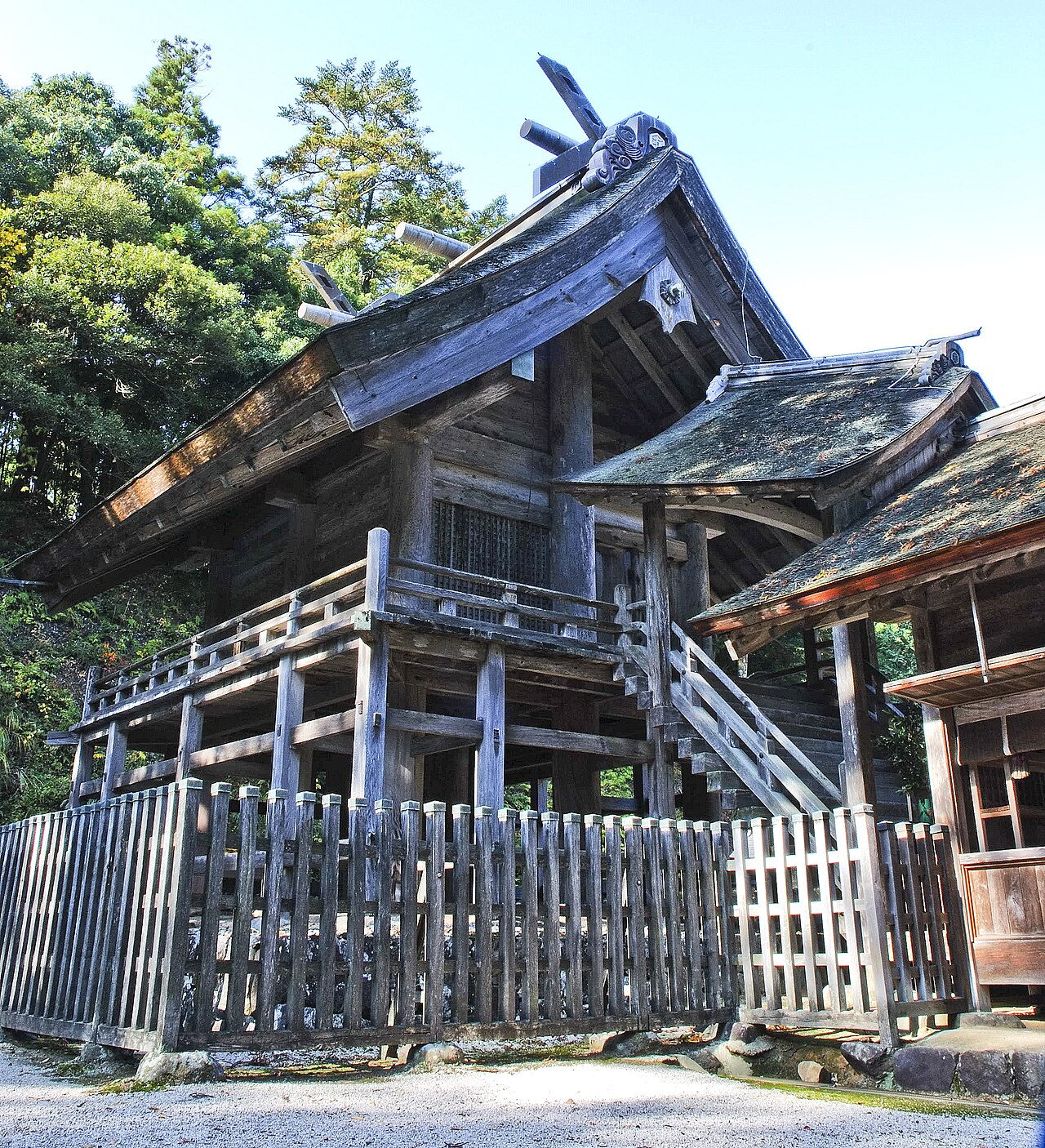
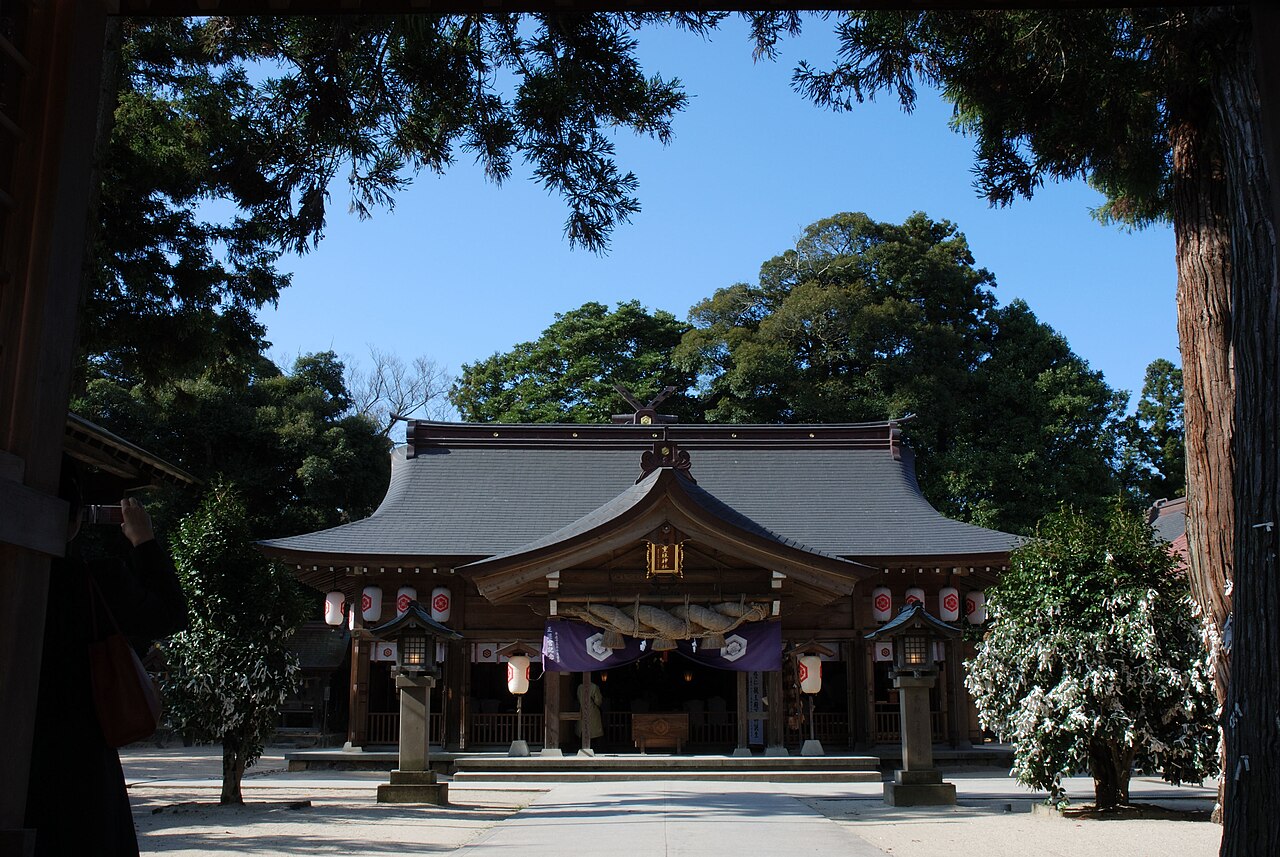
The atmosphere is intimate rather than grand. A vermilion torii leads to a modest wooden hall, and the grounds are wrapped in an ancient camellia and cedar grove designated a natural cultural asset. Behind the main shrine, hidden in the trees, lies the Mirror Pond (Kagami-no-Ike), the site's most beloved feature and the reason young couples travel here from across Japan. Kushinadahime is said to have used the spring's still surface as her mirror. Today visitors buy a special paper fortune from the shrine office, place a small coin (10 or 100 yen) on it, and gently float it on the water. As the paper slowly absorbs the water and sinks, its behaviour is read as an omen: the sooner it sinks, the sooner love will arrive, and the nearer it sinks to the edge, the closer that person already is — while a paper that drifts far before going under suggests a partner from a distant place.
Yaegaki is also famous, and a little startling to first-time visitors, for its collection of ancient objects celebrating fertility and the creative power of the union of male and female. A treasure hall preserves rare Heian-period wall paintings said to depict the divine couple, among the oldest shrine murals in the country.
The shrine draws on the deep mythological importance of the whole Izumo region, the mist-shrouded "province of the gods" where, according to belief, the eight million deities of Japan gather each autumn. Matsue and its surroundings hold an unusual concentration of shrines linked to these creation and marriage myths, and Yaegaki is one of the most personal of them — less about spectacle than about quiet hope.
A visit takes under an hour and pairs naturally with the nearby Kamosu Shrine, whose austere ancient architecture makes a striking contrast. Come on a weekday morning if you can, when the grove is peaceful and the Mirror Pond lies undisturbed; on weekends it fills with couples, students and travellers all leaning over the water, watching their fortunes slowly settle. Whether or not you believe in the omen, there is something genuinely moving about a place where people have come to wish for love for well over a thousand years.
A local's tip
Buy a fortune paper at the shrine, float it on the Mirror Pond with a coin, and watch how quickly and near or far it sinks — tradition says it foretells when and how close your true love will come.
Best time to visit
Weekday mornings to avoid crowds of couples
Getting there
Take a bus bound for Yaegaki from Matsue Station (about 20 minutes) to the Yaegaki Jinja stop, or drive 15 minutes south of the city centre.
Good to know
- Charms
- Parking
- Restrooms
Plan the whole trip offline
Yaegaki Shrine is one of many places in the Real Japan app — with turn-by-turn directions, nearby spots and full offline maps you can use with no signal.