A romantic little museum by Korakuen devoted to Takehisa Yumeji, the Okayama-born artist whose wistful beauties defined Taisho-era style.
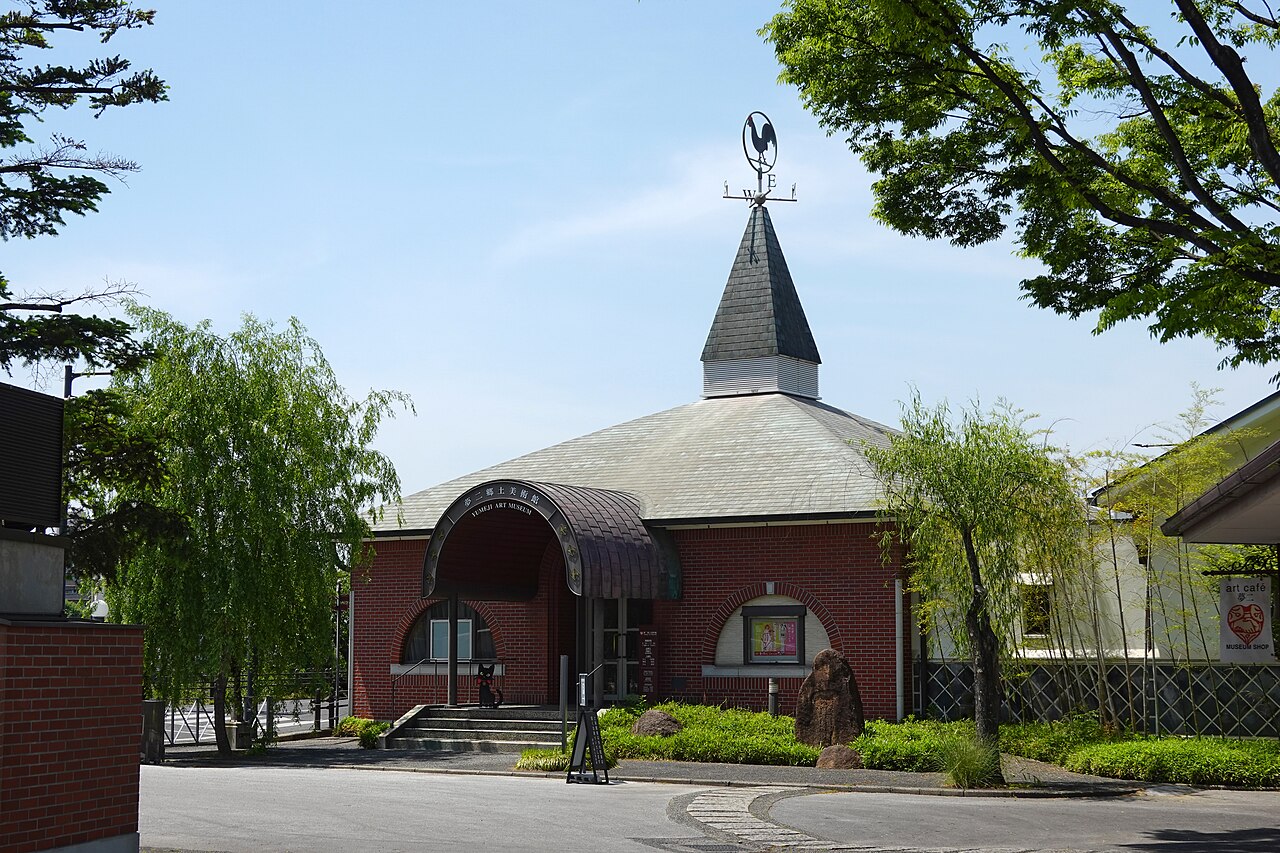
The Yumeji Art Museum (Yumeji Kyodo Bijutsukan) celebrates Takehisa Yumeji (1884-1934), the poet, painter and designer born in Okayama Prefecture who came to embody the dreamy, cosmopolitan mood of Japan's Taisho era. The main museum stands in Naka-ku on the far bank of the Asahi River, directly opposite the famous Korakuen Garden, and its handsome brick-and-tile building blends Japanese and Western elements in keeping with its subject.
Built in 1984 to mark the centenary of the artist's birth, the museum keeps about one hundred works permanently on view while rotating from a further two thousand pieces in its holdings. Yumeji is best known for his bijin-ga, images of slender, melancholy women in kimono with large expressive eyes, but the collection also shows how far his talents reached: hanging scrolls, folding screens, woodblock prints, oil and watercolour paintings, sketches, and above all his graphic design work. He is often credited with bringing an Art Nouveau sensibility into Japan, and his illustrations appeared on songbooks, postcards, book covers and everyday goods, making him one of the first truly popular commercial artists in the country. Signature works held here include the hanging scrolls Tatsuta Hime and Aki no Ikoi.
The museum carries a memorable badge of honour: in 1985 it became the first recipient in Okayama Prefecture of the Suntory Regional and Cultural Prize. It also has a beloved living mascot, a black cat named Kuro, echoing the black cats that recur in Yumeji's art; on certain schedules a special bus decorated in Kuro's likeness even connects the station to the museum.
A lovely detail of the visiting experience is the setting. The building is intimate and softly lit, the kind of place where you slow down, and its riverside position beside Korakuen means a visit naturally pairs with a garden walk. There is a cafe and an unusually appealing shop of Yumeji-designed goods. Note that the historic structure has some steps, so accessibility is partial; staff can advise on the best route.
Spring and autumn are the finest times to come. Cherry blossoms line the river and the garden in spring, and the maples around Korakuen glow in autumn, framing the walk to the museum in seasonal colour that suits Yumeji's romantic sensibility perfectly.
To get there, take the Okaden bus bound for Korakuen from the east exit of Okayama Station and alight near the garden and museum, or ride the Okayama Electric Tramway to the Shiroshita stop and walk about fifteen minutes across the Tsurumi Bridge toward Korakuen. IC cards are accepted on the tram and buses. JR Rail Pass holders reach Okayama Station itself without extra charge on the Sanyo Main Line and Shinkansen, with only the short local bus or tram ride to add. Do not confuse the main museum with the separate Yumeji birthplace memorial and Shonen Sanso annex, which lie in Setouchi city to the east.
A local's tip
Look for the museum's black-cat mascot, Kuro; the gift shop's Yumeji-designed stationery and cat goods are among the most charming souvenirs in the city.
Best time to visit
Spring or autumn, paired with a walk along the Asahi River by Korakuen
Getting there
The main museum sits just across the Asahi River from Korakuen Garden. From Okayama Station take the Okaden bus toward Korakuen and get off near Korakuen/Yumeji-kyodo-bijutsukan-mae, or ride the tram to Shiroshita and walk about 15 minutes over the Tsurumi Bridge. A special Kuro-the-cat bus also runs on some schedules.
Good to know
- Cafe
- Gift Shop
- Restrooms
- Wheelchair Access
Plan the whole trip offline
Yumeji Art Museum is one of many places in the Real Japan app — with turn-by-turn directions, nearby spots and full offline maps you can use with no signal.