The historic guardian shrine of central Nagoya, protector of the castle town and star of its spring festival.
Wakamiya Hachimangu is the sohja, the chief guardian shrine, of central Nagoya, and though it is easily overlooked between the office towers of Fushimi and the arcades of Osu, it carries a civic importance out of all proportion to its quiet appearance. When Tokugawa Ieyasu laid out the new castle town in the early seventeenth century, this shrine was designated protector of the whole district, and it has watched over the heart of the city ever since.
The shrine enshrines Emperor Ojin, deified as Hachiman the god of war and archery, together with associated deities. Hachiman shrines were traditionally revered by the samurai class, and Wakamiya Hachimangu's status as the town's tutelary shrine reflects Nagoya's origins as a fortress city built to guard the strategic approaches between Kyoto and the east. Local families have brought their newborns here for blessings, and their students here for success in examinations, for centuries.
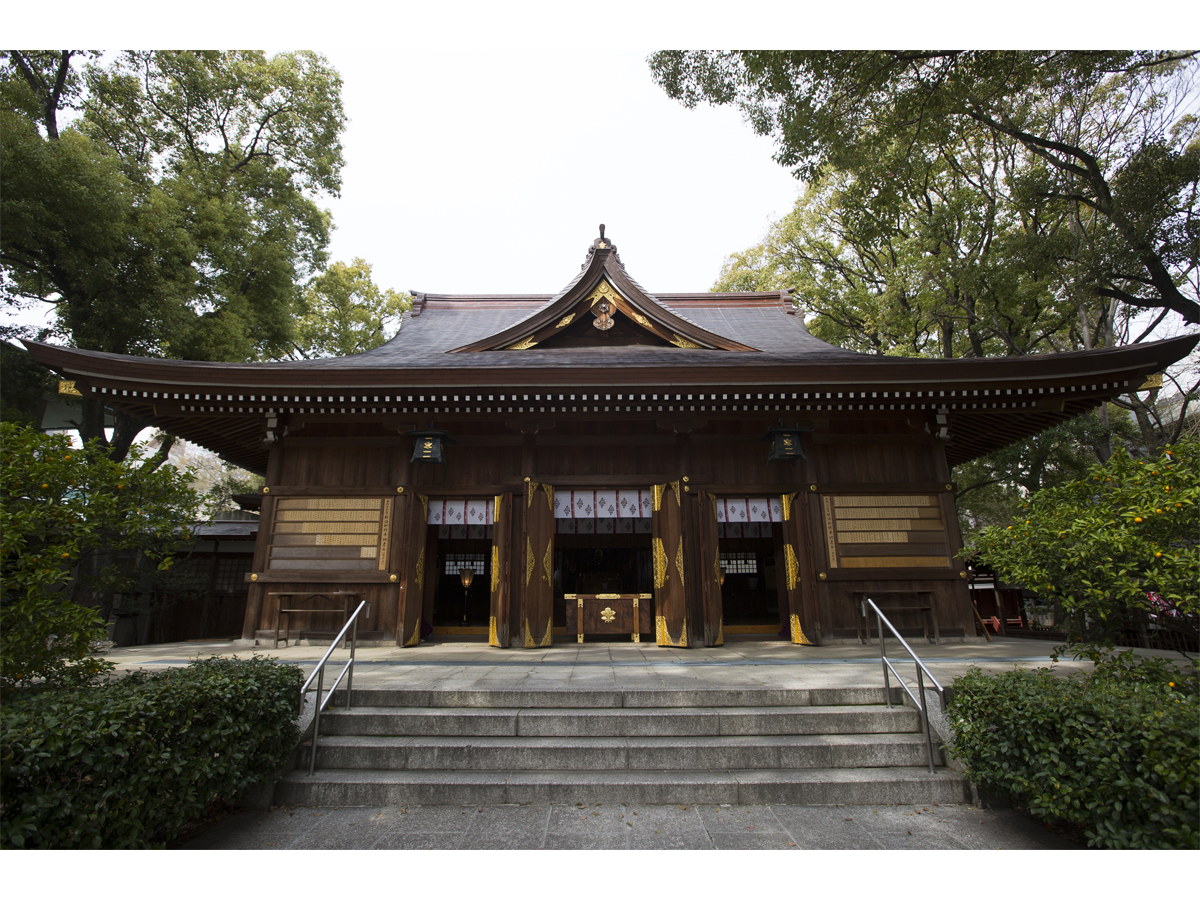
The grounds are compact but dignified, with a handsome worship hall, subsidiary shrines, sacred trees and stone monuments set on a green block insulated from the surrounding traffic. Because it sits in the very centre of the modern city, the shrine offers a striking contrast: step off a busy commercial street and within moments you are standing on gravel beneath old trees, the noise of Nagoya fading behind the torii gate.
Wakamiya Hachimangu's greatest moment comes each spring. It is intimately connected to the Nagoya Festival and to the city's tradition of elaborate wheeled festival floats, or dashi. The shrine's own Fukuroku-ju float is among the oldest surviving in Nagoya, a beautifully crafted wooden car topped with mechanical karakuri puppets that perform to music during processions. Watching these antique automata come to life is a link to the ingenuity of Edo-period craftsmen and, some say, to the roots of the region's later engineering prowess.
The visiting experience is brief and best combined with the neighbouring districts. Pay your respects, admire the carved details of the hall, and note the sense of continuity that a working guardian shrine provides in a city otherwise rebuilt in concrete and glass. Cherry trees blossom on the grounds in spring, and the shrine is busiest at New Year and during its festival, but on an ordinary day you may have it almost to yourself.
Because of its central location, Wakamiya Hachimangu is one of the easiest shrines in Nagoya to fit into a day of city sightseeing. It lies within a short walk of Fushimi Station, the museums of Shirakawa Park, the Osu shopping arcades and the Sakae entertainment district, making it a natural pause between larger attractions. The grounds are flat and fully accessible.
For travellers who want to understand how Nagoya came to be, this unassuming shrine tells the story better than any monument. It is the spiritual anchor around which the castle town was planned, and it remains, four centuries later, the guardian of the modern city that grew from it.
A local's tip
As the tutelary shrine of the old castle town, Wakamiya Hachimangu is the guardian of central Nagoya; its lively May festival features one of the city's oldest surviving festival floats.
Best time to visit
Mid-May for the Nagoya Festival connection
Getting there
From Fushimi Station on the Higashiyama or Tsurumai subway lines, walk south about six minutes toward the Osu district; the shrine sits on a leafy block between the two neighbourhoods.
Good to know
- Restrooms
Plan the whole trip offline
Wakamiya Hachimangu is one of many places in the Real Japan app — with turn-by-turn directions, nearby spots and full offline maps you can use with no signal.