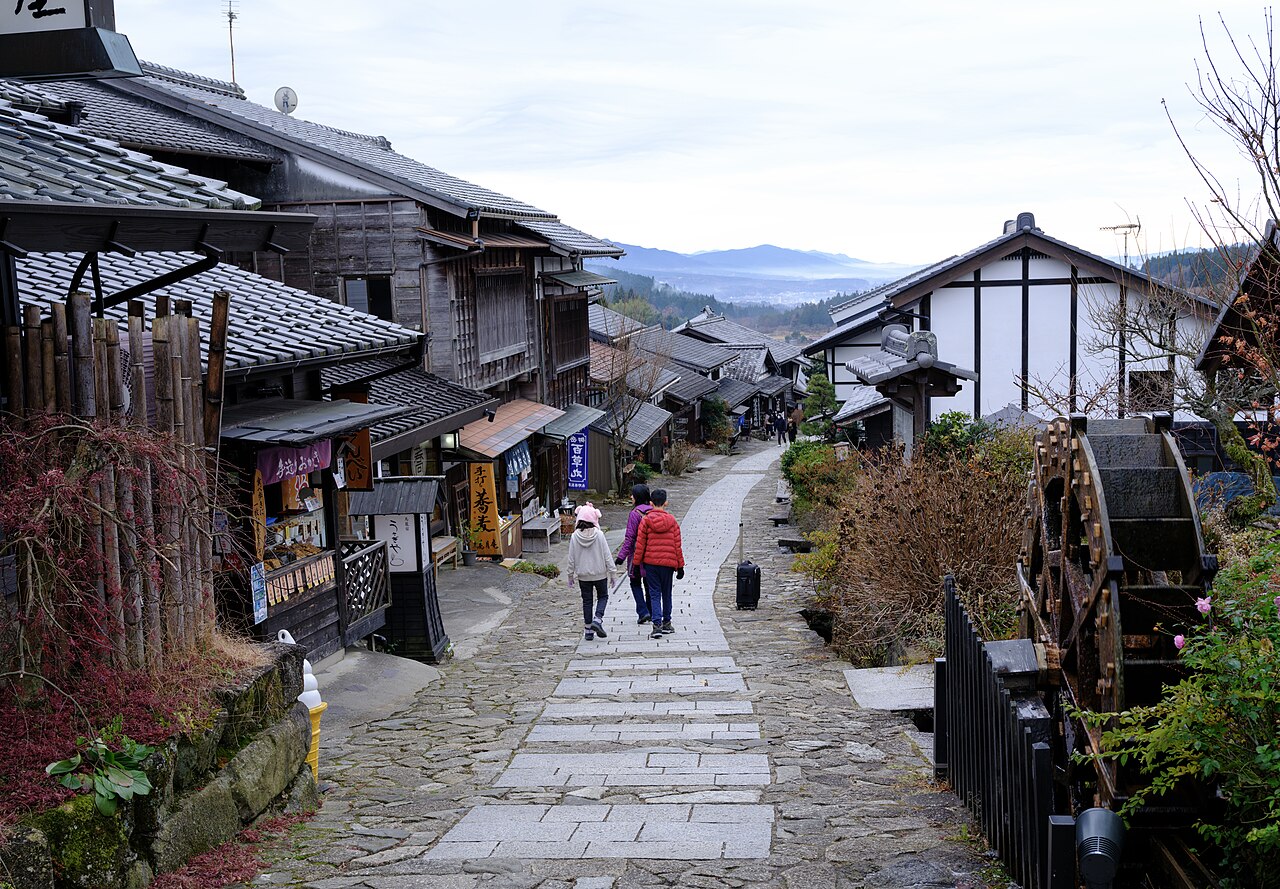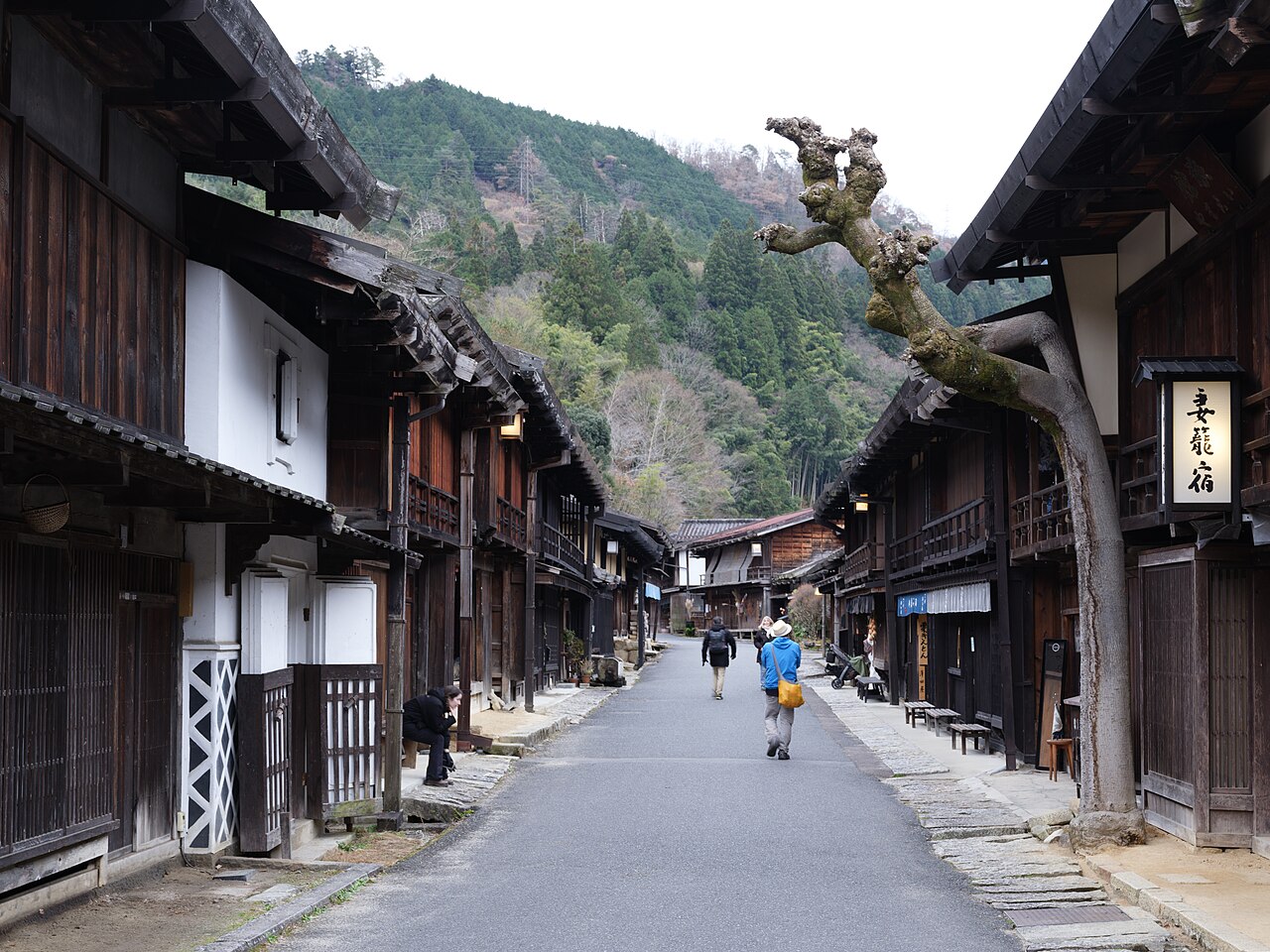
A meticulously preserved Edo-period post town on the Nakasendo, its wooden inns and shops frozen in time and free of visible modernity.
Tsumago-juku is the most famous and most immaculately preserved of the Kiso Valley's old post towns, a single street of dark wooden buildings that looks almost exactly as it did in the Edo period. Once the forty-second of the sixty-nine stations on the Nakasendo — the mountainous inland highway between Kyoto and Edo — Tsumago fell into decline when the railways bypassed the valley, and that very neglect preserved it. In the 1960s the townspeople launched a pioneering conservation movement, and today Tsumago is a living museum of the old road.
What sets Tsumago apart is the completeness of the illusion. Residents adopted a strict charter — not to sell, rent or destroy the historic buildings — and modern intrusions are deliberately hidden: power lines are buried, telephone poles removed, vending machines and cars kept out of sight during the day. Walking the gently curving main street, lined with wooden latticed facades, lattice-fronted inns, water troughs and hanging shop signs, you get one of the most convincing glimpses of Edo-era Japan anywhere in the country.
The town's greatest treasure is its role on the Nakasendo, and the best way to experience it is on foot. The preserved 7.7-kilometre trail between Tsumago and the neighbouring post town of Magome over the Magome Pass is one of Japan's most popular historic walks, a gentle two-to-three-hour hike through forest, past waterfalls, rice paddies and old stone paving, with a bear bell to ring along the way. Many walkers use a convenient baggage-forwarding service between the two towns and ride the bus back.
Within Tsumago itself, you can step inside beautifully preserved buildings such as the honjin (the official inn where daimyo lords once lodged) and the waki-honjin, both open as museums, along with a local history museum that explains the life of the post town. Small shops sell Kiso crafts, wooden goods and regional sweets, and restaurants serve local specialities like gohei-mochi, skewered rice cakes glazed with sweet walnut-miso sauce.
The experience is best savoured outside peak hours. By day, tour groups fill the street; but stay overnight in one of the family-run minshuku, and after the last bus departs the town empties, lanterns glow along the darkened street, and you have the Edo streetscape almost to yourself — an atmospheric highlight of any Kiso Valley visit. Early morning offers the same tranquillity.
Seasonally, spring and autumn are loveliest, with fresh green or fiery foliage on the surrounding mountains; summer is cool and green in the valley. Access is easy: JR Nagiso Station on the Chuo Main Line is a short bus ride or 20-minute walk away, and buses link Tsumago and Magome for the hike. Whether you come for a couple of hours, walk the historic trail, or stay the night, Tsumago-juku offers one of the most authentic journeys into old Japan the country has to offer.
A local's tip
Stay overnight in a Tsumago minshuku — after the buses leave, the lantern-lit street is magical and nearly empty.
Best time to visit
Early morning or evening when day-trippers leave
Getting there
From JR Nagiso Station on the Chuo Line, take a short bus or 20-minute walk to Tsumago; buses also connect to Magome for the famous hike.
Good to know
- Minshuku
- Restrooms
- Restaurants
Plan the whole trip offline
Tsumago-juku is one of many places in the Real Japan app — with turn-by-turn directions, nearby spots and full offline maps you can use with no signal.