A charming hillside post town of stone-paved slopes and wooden houses, the southern gateway to the classic Nakasendo trail to Tsumago.
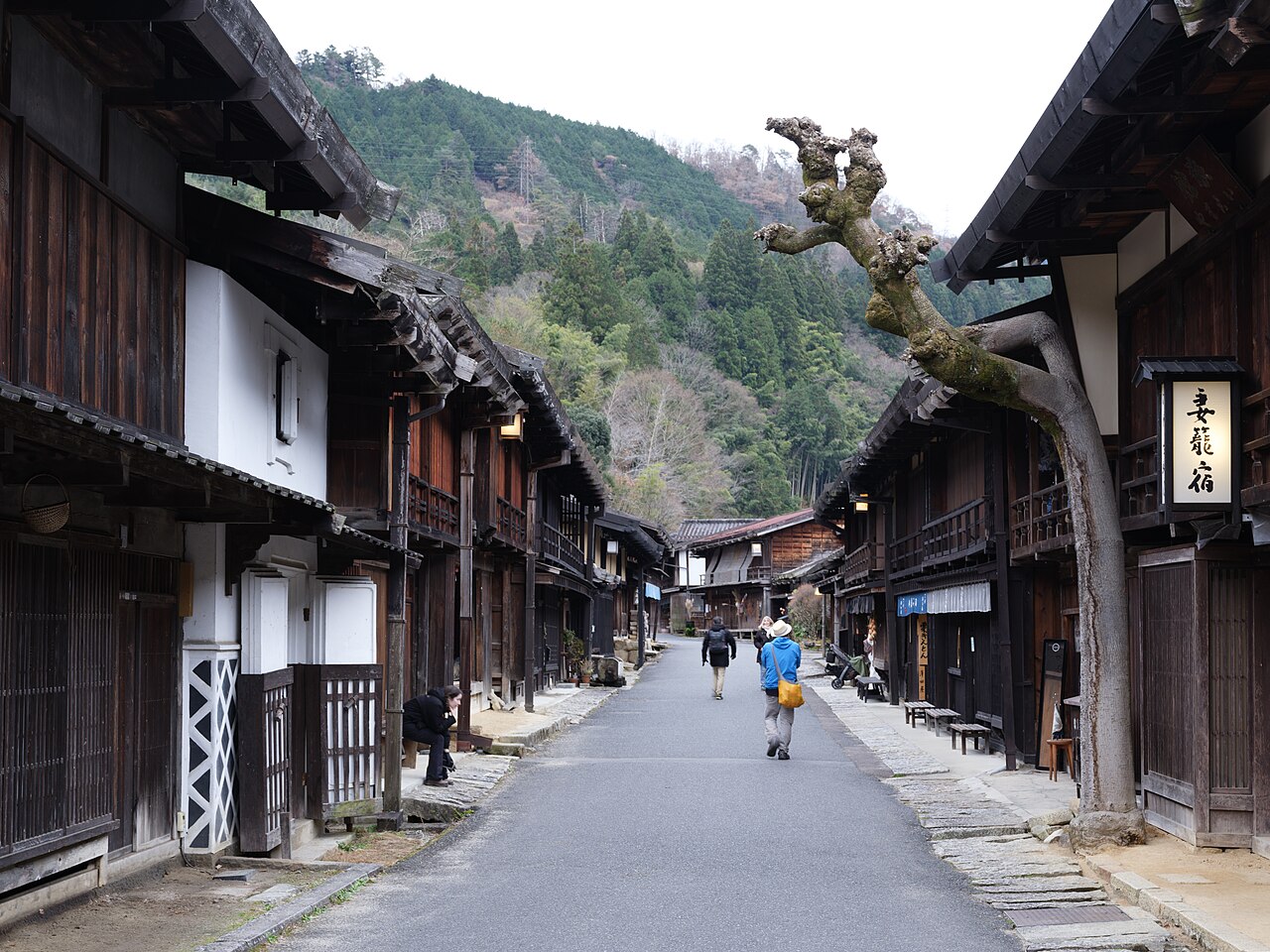
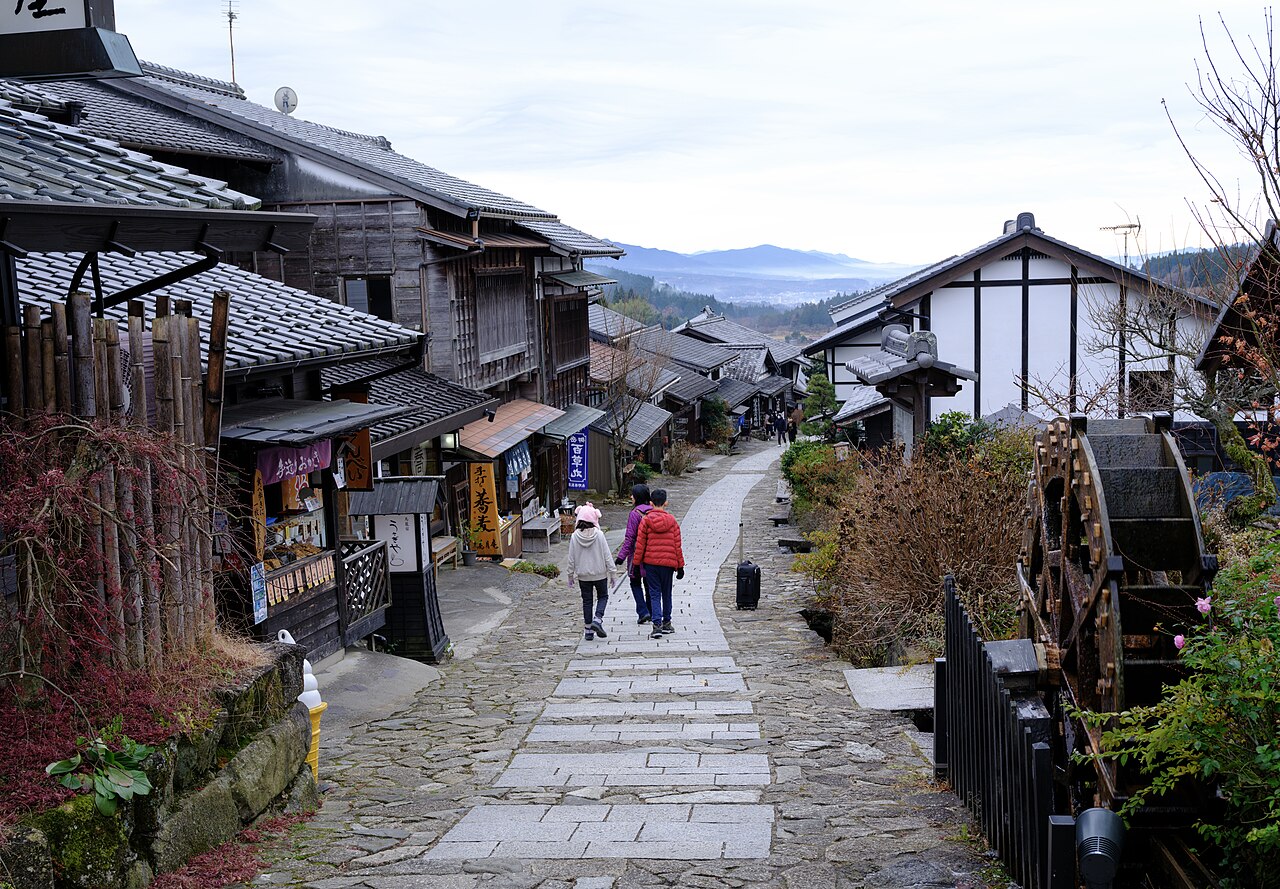
Magome-juku is the picturesque hillside sister of Tsumago, a beautifully restored Nakasendo post town whose steeply sloping, stone-paved main street climbs the mountainside in a series of gentle terraces lined with wooden houses, water wheels and open views over the surrounding hills. As the forty-third station on the old Nakasendo highway and the southern gateway to the celebrated Magome–Tsumago trail, it is one of the most rewarding stops in the entire Kiso Valley.
Where Tsumago runs flat and level, Magome tumbles down a hillside, and this sloping layout gives it a distinct character. The cobbled street rises past cafés, craft shops, sake breweries and restaurants housed in traditional buildings, interrupted by wooden water wheels and channels of running water, and near the top it opens to a viewpoint looking out toward Mount Ena and the ranges of the Central Alps. Because the town faces open valley rather than being hemmed in, it feels brighter and more expansive than its neighbours.
Magome is inseparable from literature and from the road. It was the birthplace of the novelist Shimazaki Toson, whose epic novel Before the Dawn chronicles the Kiso region during the upheavals of the Meiji Restoration; a museum in the town, the Toson Memorial Museum, occupies the site of his family home, which served as the town's honjin, the official inn for travelling lords. The town rebuilt after historic fires, which is why its buildings, though faithful in style, are generally newer than Tsumago's, but the atmosphere remains authentically old-Japan.
For most visitors, Magome is one end of the famous hike. The preserved 7.7-kilometre Nakasendo trail from Magome over the Magome Pass down to Tsumago is one of Japan's finest short historic walks, taking two to three hours through forest, past waterfalls and old teahouses, with bear bells stationed along the route. Many walkers start at Magome, climb to the pass, and descend to Tsumago, sending their luggage ahead and returning by bus. Even without the full hike, wandering up and down Magome's street, tasting gohei-mochi and chestnut sweets and browsing Kiso woodcraft, easily fills a rewarding hour or two.
The experience is warm and unhurried. The sound of running water, the smell of grilling rice cakes, the mountain views at the top of the slope and the friendly shops make Magome a delight to explore on foot. Like Tsumago, it is quietest early and late; midday can be busy with tour groups and hikers setting off.
Autumn is spectacular here, with the hills ablaze above the stone street, while spring green and cool summer days are lovely too. Access is straightforward: from JR Nakatsugawa Station on the Chuo Main Line, a bus runs to Magome in about half an hour, and buses connect to Tsumago for the trail. Whether as a hike's beginning or a destination in itself, Magome-juku captures the romance of the old Nakasendo beautifully.
A local's tip
Walk up the stone street to the top viewpoint for a sweeping look at Mount Ena before starting the hike to Tsumago.
Best time to visit
Autumn for foliage over the sloping street
Getting there
From JR Nakatsugawa Station take a bus to Magome; from there the famous trail climbs over the pass to Tsumago.
Good to know
- Shops
- Restrooms
- Restaurants
Plan the whole trip offline
Magome-juku is one of many places in the Real Japan app — with turn-by-turn directions, nearby spots and full offline maps you can use with no signal.