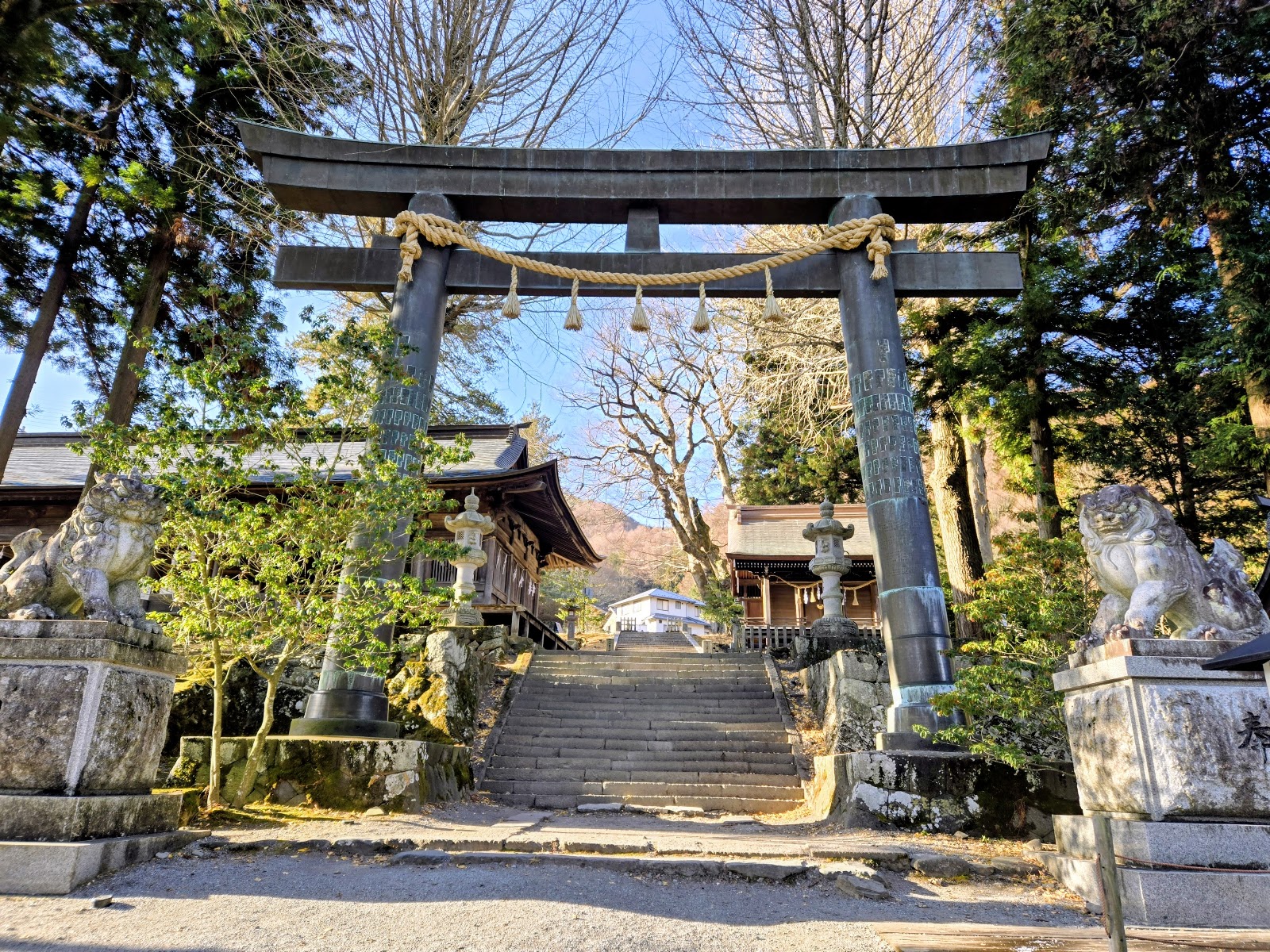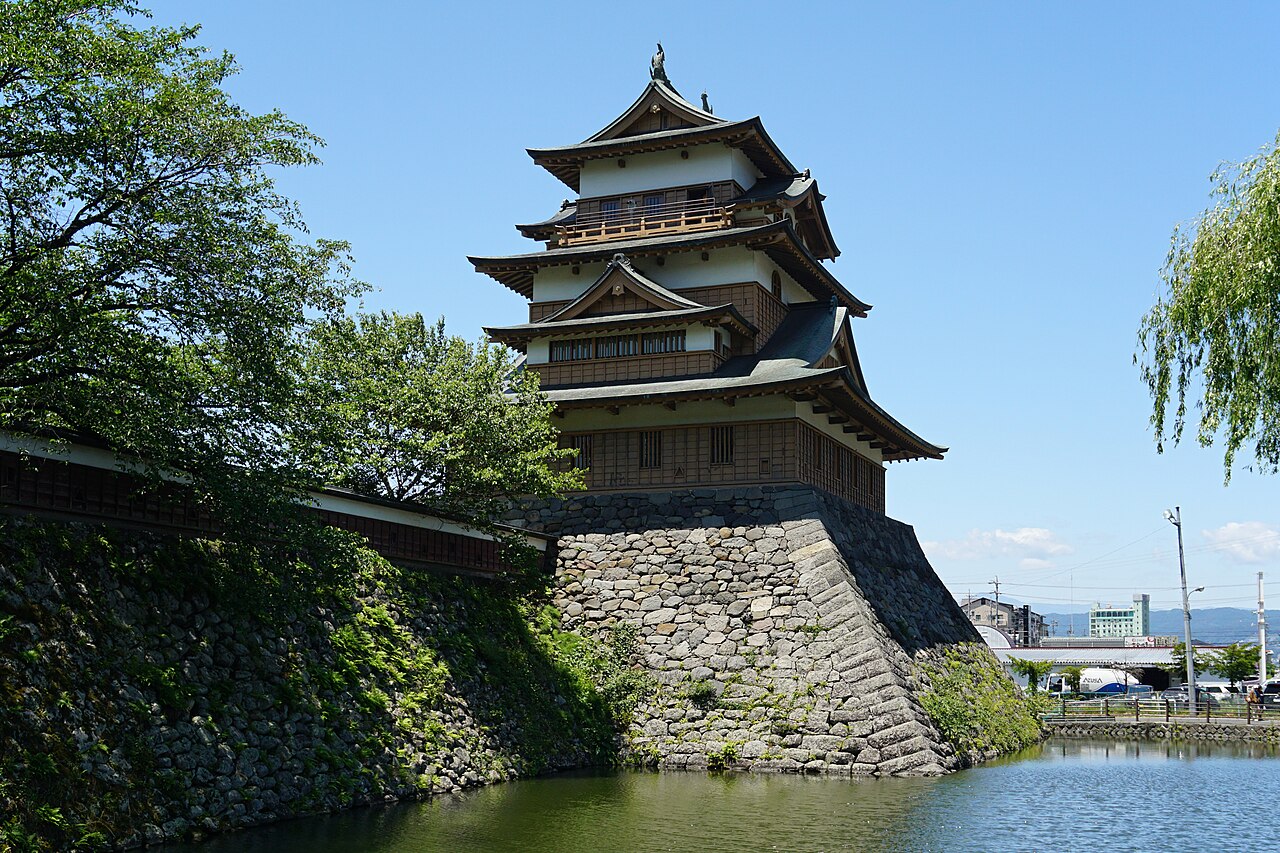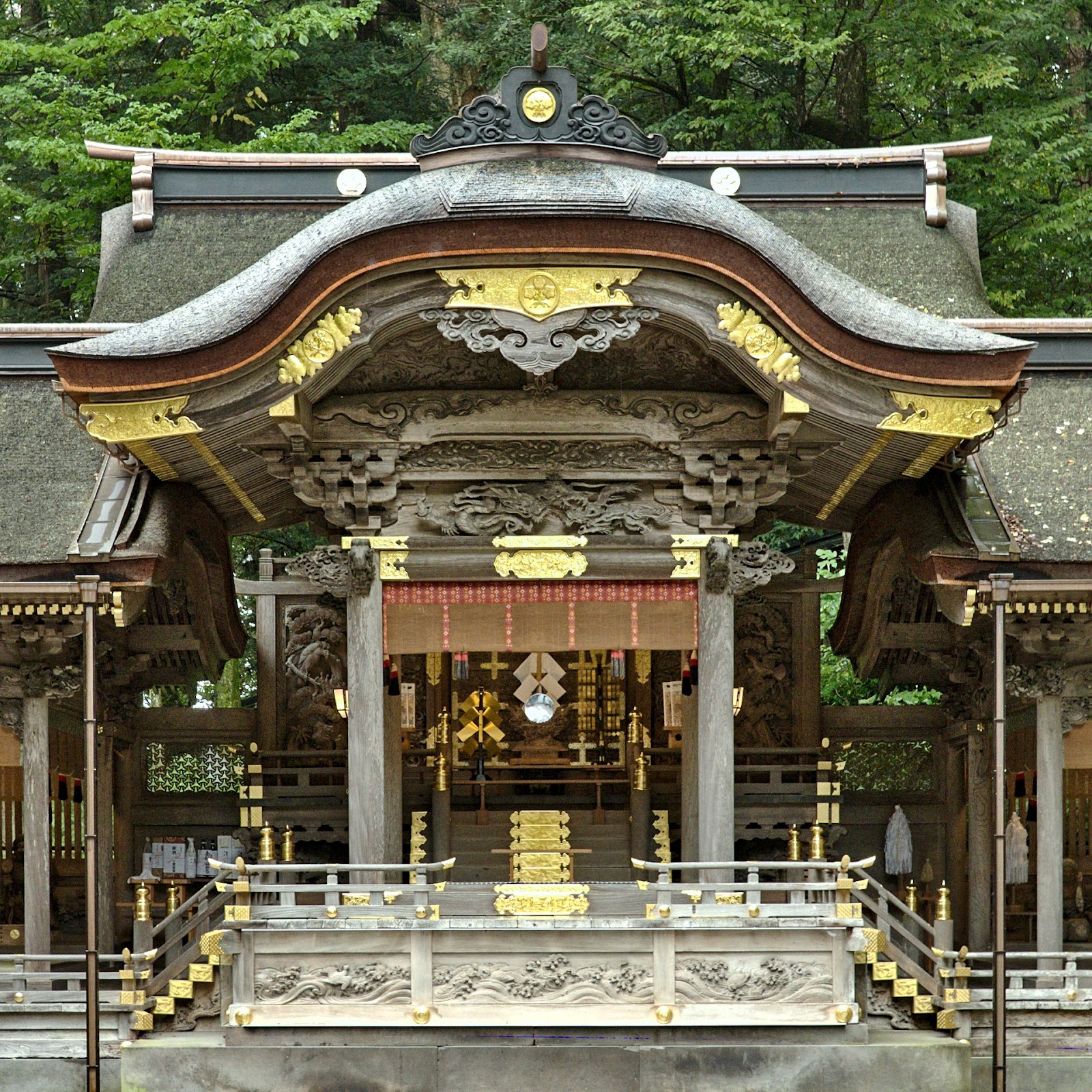
The principal upper shrine of the ancient Suwa Grand Shrine, one of Japan's oldest and most powerful Shinto sites.
Suwa Taisha is one of the oldest shrines in Japan, mentioned in the 8th-century Kojiki chronicle, and its four sites around Lake Suwa form the head of a national network of more than 10,000 Suwa shrines. The Kamisha Honmiya, the Upper Shrine's main hall, sits at the foot of the sacred mountain of Moriya on the south side of the lake, and is the grandest and most atmospheric of the four precincts. It enshrines Takeminakata, a deity of wind, water, hunting and warfare who was revered for centuries by samurai clans, including the Takeda of neighbouring Kai Province.
What makes Suwa Taisha unique is what it lacks: there is no honden, no main sanctuary building housing the deity. Instead the god is believed to reside in the mountain itself, an extremely archaic form of nature worship that predates the arrival of formal shrine architecture in Japan. Worshippers pray toward the forested slope, and the buildings you see, some of them Important Cultural Properties, serve as halls of worship and offering rather than as a dwelling for the kami.
The shrine is most famous for the Onbashira festival, held once every six years in the Year of the Monkey and the Year of the Tiger. Enormous fir trees, some weighing more than ten tonnes, are felled in the surrounding mountains and dragged by teams of villagers down steep slopes, across rivers and through the streets to be raised at the four corners of each shrine precinct. The most dramatic moment, the kiotoshi, sees riders cling to the logs as they hurtle down a hillside; it is one of the most spectacular and dangerous festivals in the country. The four onbashira pillars you can see standing in the grounds today are the survivors of the last festival, and touching them is said to transfer some of their power.
Wander the precinct to find the heavily carved Heihaiden worship hall, the covered corridors, and the small shrine to Moriya, a reminder of the older local deity that Takeminakata is said to have supplanted. The setting is beautiful in autumn when the maples above the lake turn red and gold, and the mountain air is crisp and clear.
Suwa is easily reached on the JR Chuo Line, roughly two hours from Shinjuku on a limited express. From Chino Station or Kami-Suwa Station a short bus or taxi ride brings you to the Honmiya. Serious visitors combine it with the other three sites, the nearby Maemiya and, across the lake, the Shimosha Harumiya and Akimiya, to complete the full circuit of one of Japan's most ancient centres of worship.
A local's tip
Look for the four massive onbashira log pillars standing at the corners of the precinct; they are dragged down the mountains during the wild festival held every six years.
Best time to visit
Autumn; every six years for the Onbashira festival
Getting there
From Chino Station take a bus or taxi (about 10 minutes) toward Suwa Taisha Kamisha Honmiya; buses also run from Kami-Suwa Station.
Good to know
- Parking
- Restrooms
Plan the whole trip offline
Suwa Taisha Kamisha Honmiya is one of many places in the Real Japan app — with turn-by-turn directions, nearby spots and full offline maps you can use with no signal.