A tranquil pond garden a few minutes from Kyoto Station, attached to the Higashi Hongan-ji temple.
Shosei-en, also known as Kikoku-tei, is a serene traditional garden hidden in plain sight just a short walk northeast of Kyoto Station. Belonging to Higashi Hongan-ji, the great Jodo Shinshu Buddhist temple nearby, it serves as a detached villa garden for the temple's abbots. Its convenient location and gentle, uncrowded atmosphere make it one of the easiest classic Japanese gardens to enjoy in the whole city, yet it is often overlooked by visitors rushing off to more famous sights.
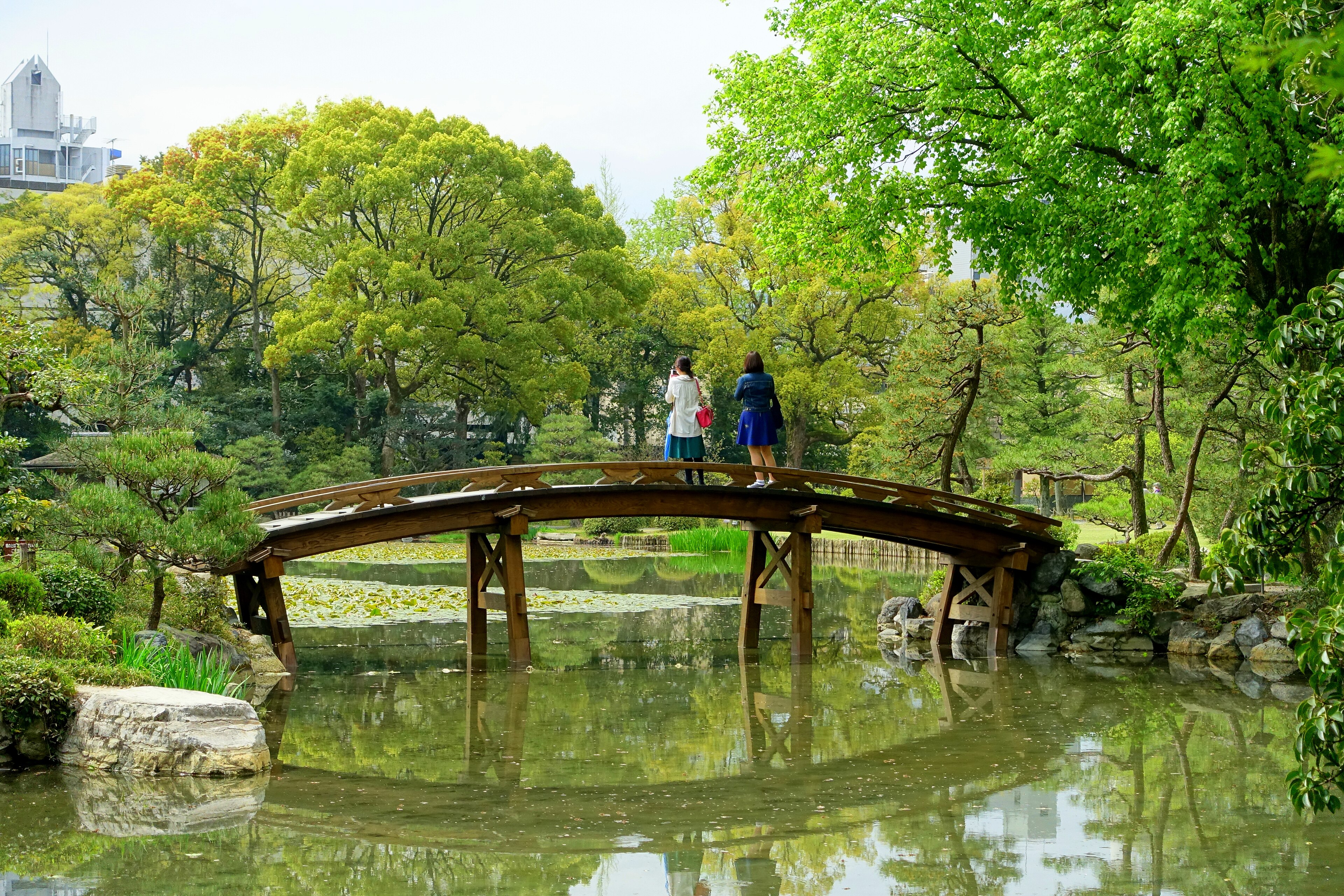
The garden as seen today was largely designed in the seventeenth century, with the involvement of the cultured nobleman and tea master Ishikawa Jozan and the priest Gyonyo, on land historically associated with a much older Heian-era residence. It is a classic chisen-kaiyu, or pond-strolling garden, arranged around the broad Ingetsu-chi pond. Winding paths lead past willow-fringed banks, arched and covered bridges, stone lanterns, and a scattering of elegant teahouses and pavilions, each offering a different framed view across the water. A small island, a graceful covered bridge called Kaito-ro and the reflection of buildings in the still pond give the garden a painterly, contemplative quality.
Shosei-en is a garden for all seasons. Spring brings plum and cherry blossom and the fresh green of new leaves; early summer adds irises, wisteria and lotus rising from the pond; autumn sets the maples around the water glowing red and orange, arguably the garden's finest moment; and winter offers bare, sculptural branches and quiet, clear light. Because it is walled off from the surrounding streets, the garden feels like a pocket of calm even though the modern city presses close on every side, and the sound of traffic quickly fades once you are inside.
The garden requests a modest donation for entry, in return for which visitors receive an attractively illustrated guide booklet explaining the history and the individual pavilions, a nice touch that adds depth to the visit. Paths are flat and easy, with benches for resting, making it comfortable for older visitors and families. It rarely feels busy, so it is an ideal place to slow down and breathe between the crowds of central Kyoto.
Allow around an hour to make a relaxed circuit of the pond and take in the teahouses and bridges, or a little longer if you sit and linger. The garden pairs naturally with a visit to the vast wooden halls of Higashi Hongan-ji just to the west, and both are within easy reach of Kyoto Station, so the whole outing makes a gentle introduction or a restful finale to a day of sightseeing. To get there, walk about ten minutes north from the station's central exit toward Higashi Hongan-ji and continue a short block east; opening hours run from nine in the morning, closing at five in the warmer months and four in winter.
A local's tip
It is a five-minute detour from Kyoto Station yet almost always quiet; the small donation-style entry includes a beautifully illustrated booklet, and the pondside teahouses look their best framed by autumn maples.
Best time to visit
November for maples around the pond; early summer for irises and greenery
Getting there
Walk about 10 minutes north from Kyoto Station's central exit toward Higashi Hongan-ji; the garden lies a short block east of the temple. City buses also stop at Karasuma Shichijo nearby.
Good to know
- Benches
- Restrooms
- Booklet included
Plan the whole trip offline
Shosei-en Garden is one of many places in the Real Japan app — with turn-by-turn directions, nearby spots and full offline maps you can use with no signal.