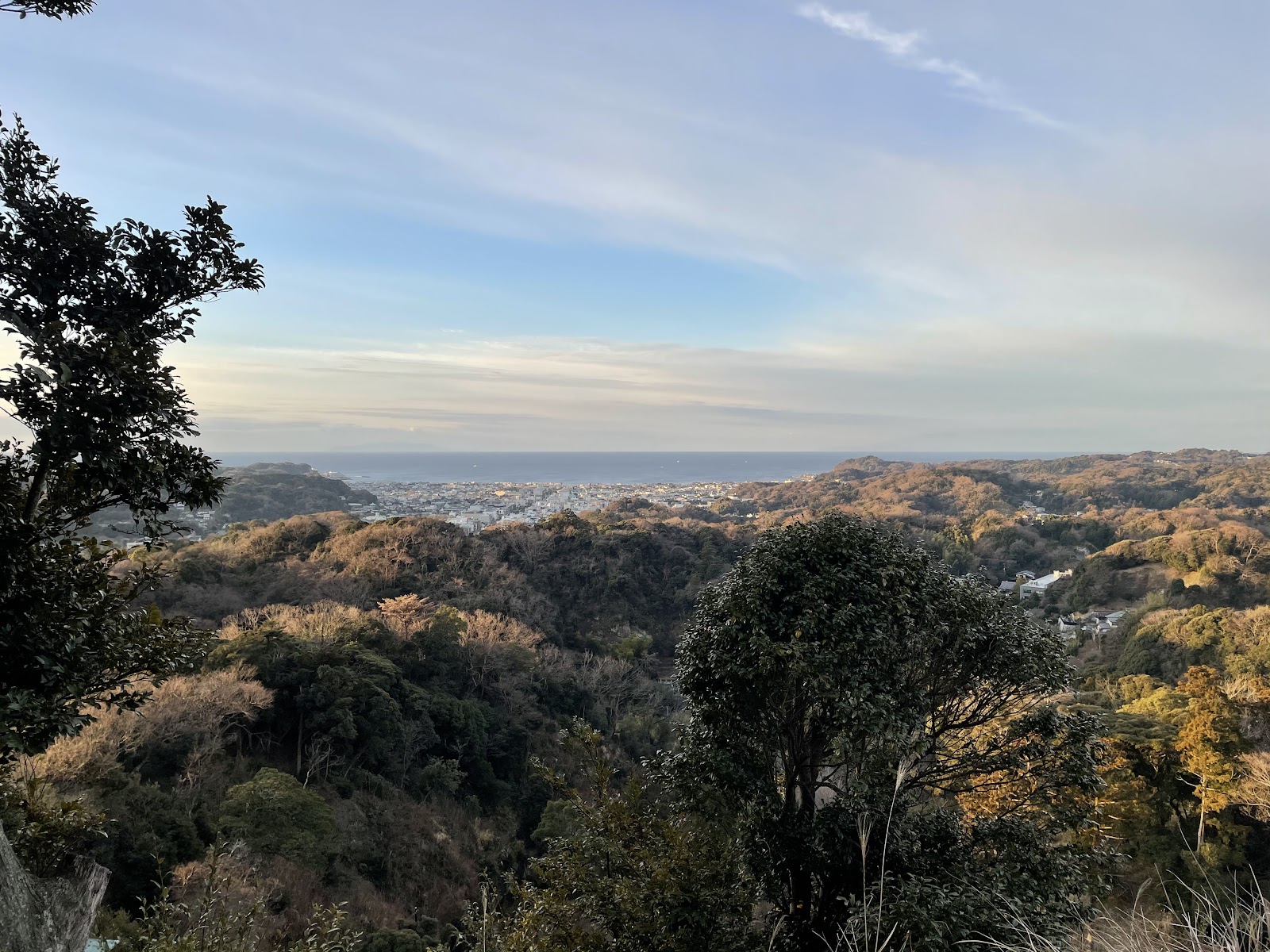
Hilltop deck above Kencho-ji reached through Hansobo Shrine, with sweeping views from Sagami Bay to Mt Fuji.
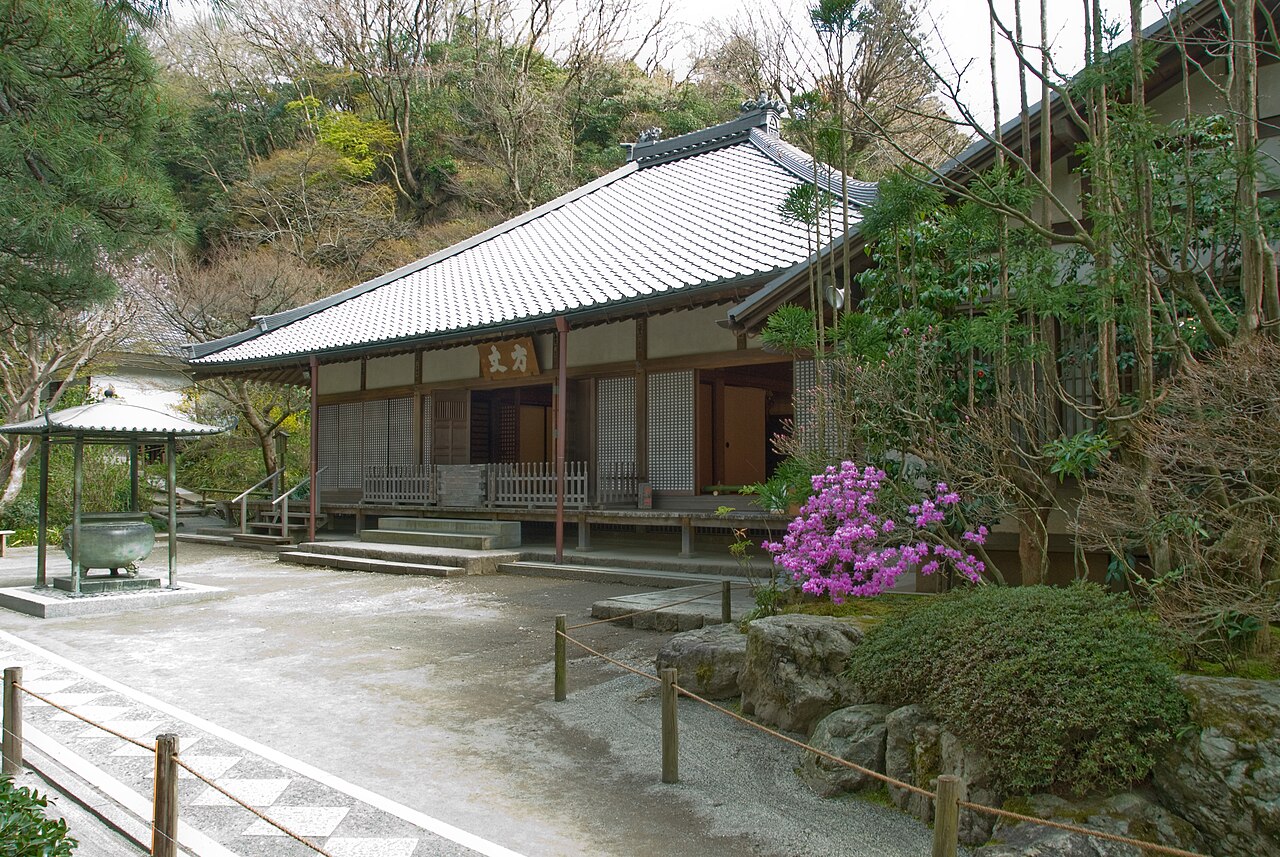
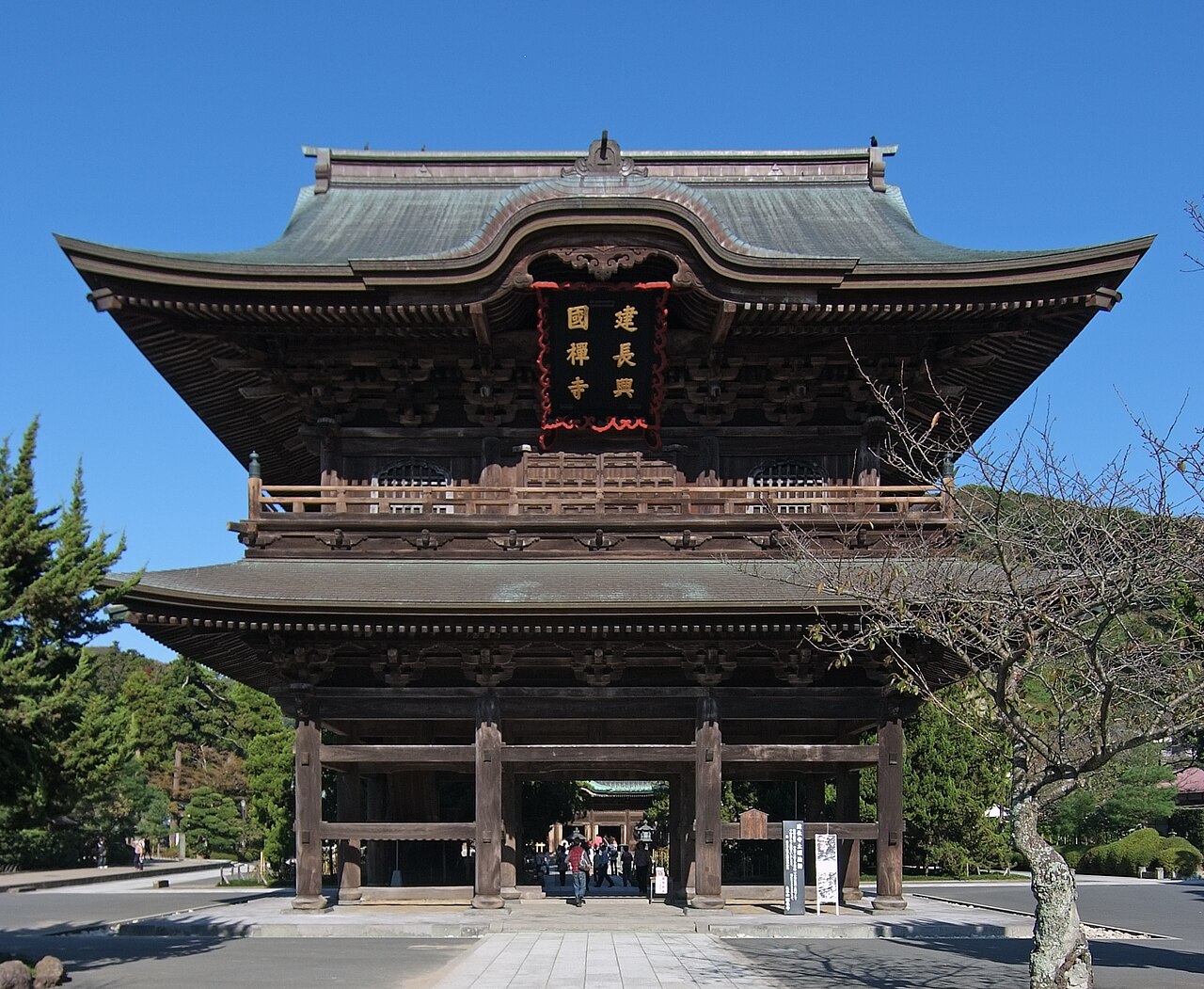
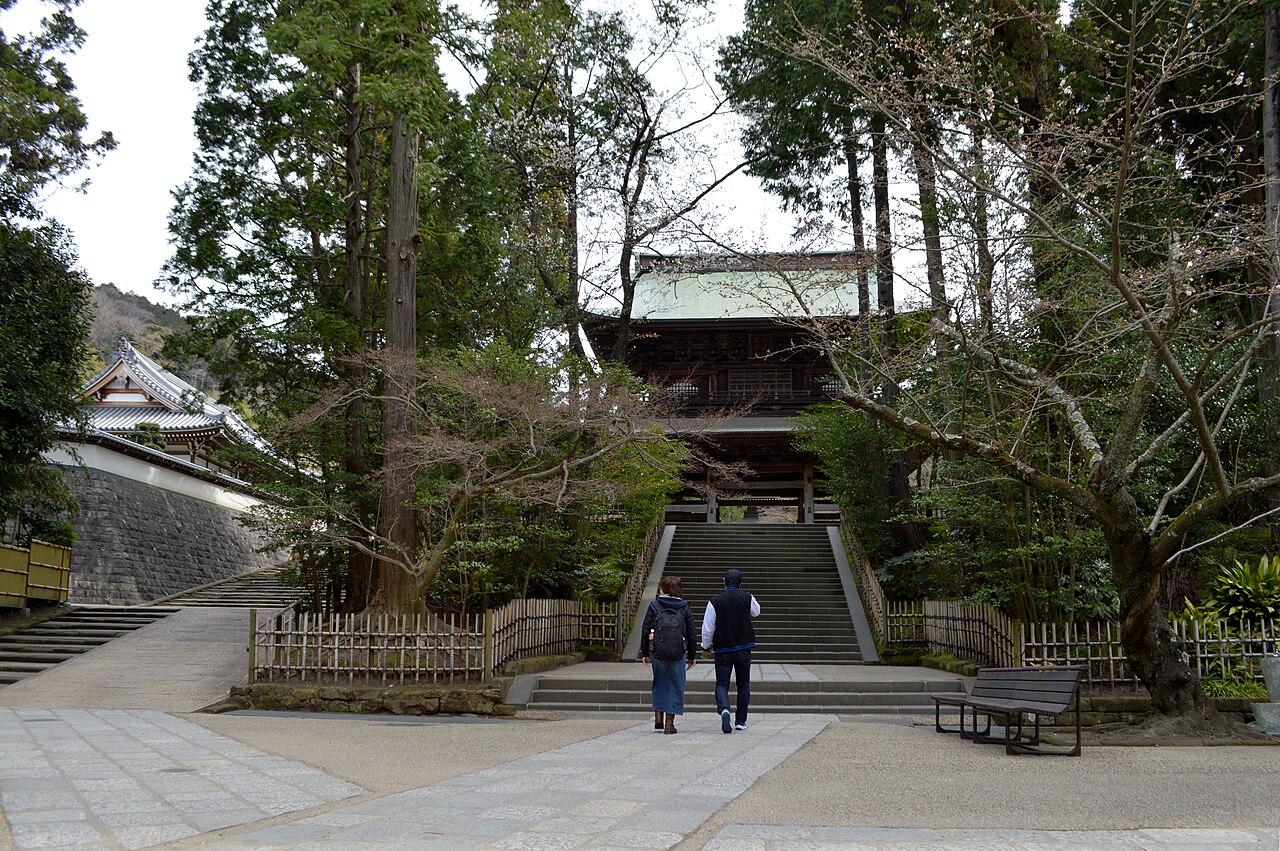
The Shojoken observation deck sits near the summit of the wooded ridge that rises behind Kencho-ji, the oldest Zen training monastery in Japan and first of Kamakura's five great Zen temples. To reach it you walk the full length of the temple grounds, past the great Sanmon gate, the Buddha hall and the Zen gardens, until the manicured precincts give way to forest at Hansobo, Kencho-ji's tutelary Shinto shrine. Hansobo is guarded by bronze and stone tengu, the long-nosed, winged mountain spirits of Japanese folklore, and their fierce silhouettes line the staircase that climbs toward the viewpoint.
The reward for roughly 250 steps of climbing is one of the finest panoramas in all of Kamakura. From the deck the land falls away toward the south, revealing the green folds of the Kamakura hills, the rooftops of the town, and the broad sweep of Sagami Bay beyond. On a clear day the unmistakable cone of Mt Fuji floats on the western horizon, roughly 55 kilometres away, framed by the nearer ridgelines. Directly below, the layout of Kencho-ji unfolds like a map, its halls aligned along a single central axis in the classic Chinese-influenced Zen style.
Kencho-ji was founded in 1253 under the patronage of the regent Hojo Tokiyori, who invited the Chinese Chan master Rankei Doryu to lead it. For nearly eight centuries monks have trained here, and the path up to Hansobo doubles as the start of the Ten-en hiking course that traverses the hills toward Zuisen-ji. This means the viewpoint is not a dead end but a gateway; energetic visitors can continue along the ridge for hours of forest walking.
The experience is as much about the climb as the view. The ascent through cedar and broadleaf forest is steep in places and can be slippery after rain, so proper shoes matter. Benches near the top let you catch your breath while the vista opens. Because Mt Fuji is the star attraction, timing is everything: the mountain is most reliably visible from late autumn through winter, when cold, dry air keeps the horizon crisp, and especially in the first hours after opening before daytime haze builds. From spring through early autumn Fuji often vanishes into humidity, though the bay and town views remain lovely year-round, and the surrounding maples blaze red and gold in late November.
To get there, take the JR Yokosuka Line to Kita-Kamakura Station, a stop covered by the Japan Rail Pass, and walk about 15 minutes south to the temple gate. After paying the admission fee, head straight to the back of the grounds and follow signs for Hansobo, then climb to the Fujimidai platform and continue to the higher Shojoken deck. Allow around 90 minutes to enjoy both the temple and the viewpoint at an unhurried pace, and consider going early to beat both the haze and the crowds that fill Kamakura by midday.
A local's tip
Keep climbing past the first Fujimidai platform where most visitors stop; the higher Shojoken deck gives the cleanest, unobstructed line to Mt Fuji and a bird's-eye view over the whole Kencho-ji complex.
Best time to visit
Clear winter mornings for a sharp Mt Fuji silhouette
Getting there
From Kita-Kamakura Station on the JR Yokosuka Line, walk about 15 minutes south to the Kencho-ji entrance. Pay the temple admission, walk to the very back of the precincts past the Hojo and gardens to Hansobo Shrine, then climb the long stone staircase (around 250 steps) past the tengu statues to the Shojoken deck.
Good to know
- Parking
- Restrooms
Plan the whole trip offline
Shojoken Observation Deck (Hansobo, Kencho-ji) is one of many places in the Real Japan app — with turn-by-turn directions, nearby spots and full offline maps you can use with no signal.