An open-air museum of historic buildings relocated from across Shikoku, set on a wooded hillside below Yashima.
Shikoku Mura, or Shikoku Village, is an outstanding open-air architectural museum spread across a wooded hillside at the foot of the Yashima plateau, just east of central Takamatsu. It gathers together dozens of genuine historic buildings that were dismantled at their original sites across the four prefectures of Shikoku and painstakingly reconstructed here, preserving a vanishing world of rural and traditional Japanese life. Walking its winding garden paths is like taking a journey through the island's architectural and social history, from farmhouses and storehouses to workshops, a lighthouse keeper's residence, and even a rustic thatched kabuki stage.
The collection is remarkable for its variety and authenticity. Among the highlights are traditional farmhouses with steep thatched roofs, a border guardhouse, sugar-pressing huts that recall Kagawa's historic sugar industry, a soy sauce brewery, and fishermen's and merchants' buildings, each furnished and interpreted to convey how people once lived and worked. Because the structures come from all over Shikoku, the museum captures regional differences in building styles and rural crafts that would otherwise be lost, and many are designated cultural properties.
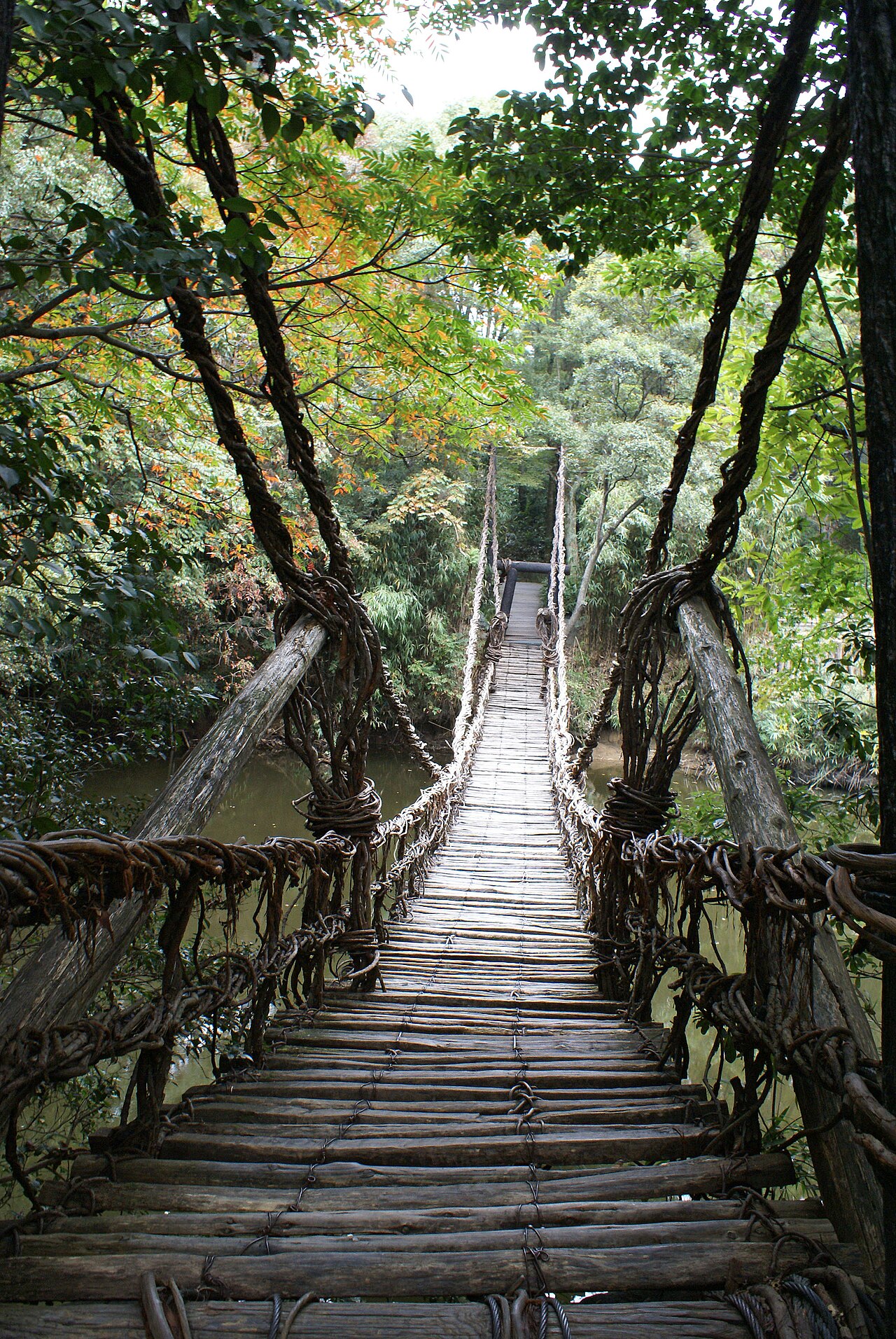
A signature experience awaits right at the start: a swaying vine suspension bridge, a replica of the famous kazurabashi of the remote Iya Valley in Tokushima. Built from woven vines and wooden slats, it bounces and sways as visitors cross the small ravine, offering a taste of the precarious bridges that once linked isolated mountain villages. It sets the adventurous, immersive tone of the whole museum.
The grounds are beautifully landscaped, climbing the hillside through seasonal plantings that make the museum a delight in cherry-blossom spring and fiery autumn alike, with garden vistas and water features between the buildings. Near the upper reaches, the museum incorporates a striking modern element: the Shikoku Mura Gallery, an art museum designed by the acclaimed architect Tadao Ando, whose clean concrete lines and a water garden provide a serene counterpoint to the historic timber structures and display a collection of art. This blend of old and new is characteristic of the Setouchi region's thoughtful approach to culture.
Visitors can also enjoy hands-on and culinary touches, including a well-regarded udon restaurant housed in a traditional building, fitting for a museum in the home of Sanuki udon. Allow a couple of hours to explore fully, as the sloped, spread-out grounds involve a fair amount of walking and some steps; comfortable shoes are recommended.
Shikoku Mura sits directly below Yashima and is a natural pairing with a trip up the plateau to Yashima-ji temple and its viewpoints. It is reached in about a ten-minute walk from Kotoden Yashima Station, connected to central Takamatsu by the private Kotoden railway. For travelers interested in traditional architecture, folk history, and the everyday heritage of rural Japan — presented in a genuinely beautiful outdoor setting — Shikoku Mura is one of Takamatsu's most rewarding and underrated attractions.
A local's tip
Cross the swaying vine bridge, a replica of Iya Valley's famous kazurabashi, near the entrance — an atmospheric start to the open-air village.
Best time to visit
Spring and autumn for pleasant walking through the hillside grounds
Getting there
From Kotoden Yashima Station, walk about 10 minutes to the entrance at the foot of Yashima plateau.
Good to know
- Cafe
- Gallery
- Restrooms
Plan the whole trip offline
Shikoku Mura is one of many places in the Real Japan app — with turn-by-turn directions, nearby spots and full offline maps you can use with no signal.