A free, hands-on science museum with a planetarium and a walk-in freezer room, right beside Shin-Sapporo Station.
The Sapporo Science Center is one of the city's best family attractions and, remarkably, free to enter for its main exhibits. Directly linked to Shin-Sapporo Station by a covered walkway, it is effortless to reach and packed with the kind of hands-on displays that make science tangible for children while quietly entertaining the adults with them. On a cold or rainy day in Sapporo, it is hard to think of a better place to spend a couple of hours.
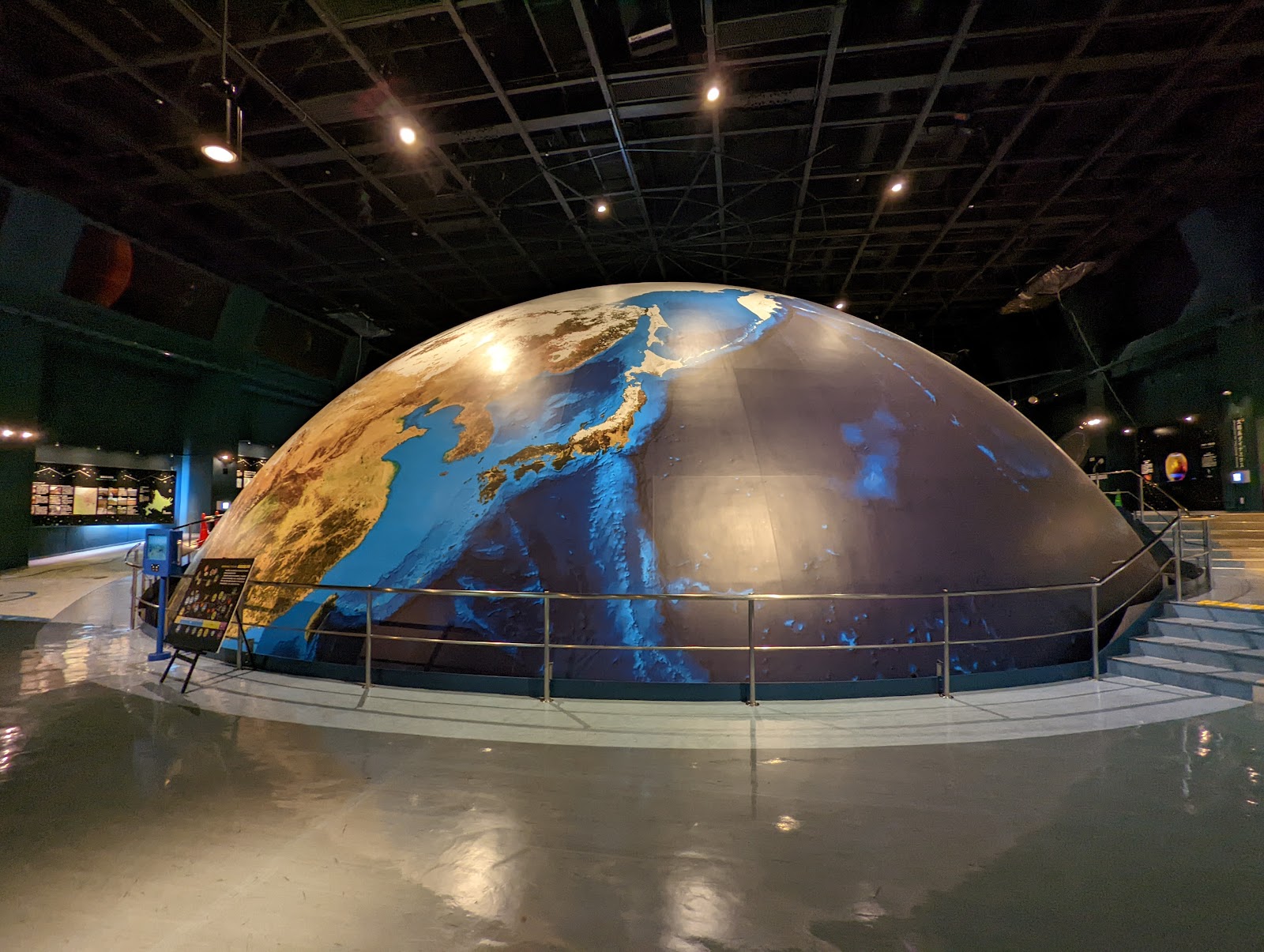
The museum is organised around interactive exhibits that reward curiosity and touch. Across its floors you can experiment with electricity, magnetism, sound, light and mechanics, pedal machines to generate power, and play with illusions and physics demonstrations that turn abstract principles into something you can see and feel. Because so much is designed to be operated rather than merely observed, the atmosphere is lively and engaging, and children move from station to station discovering how things work.
Two features stand out. The first is the planetarium, which projects the night sky in a large domed theatre and runs a rotating programme of shows about the stars, planets and seasonal constellations; it carries a small separate charge and is well worth adding to a visit, especially for anyone who has never sat under a good planetarium dome. The second, particularly appropriate for Hokkaido, is a low-temperature exhibit that chills a room to around minus thirty degrees Celsius, letting visitors experience the extreme cold of a northern winter, watch experiments that only work at such temperatures, and understand the science of ice and snow that shapes life on the island.
A notable strength is how well the centre balances education and play. Exhibits are pitched to genuinely teach without ever feeling like a lecture, and the free admission means families can visit repeatedly without cost, treating it almost as an indoor playground with a scientific backbone. Signage is mostly in Japanese with some English support, but the interactive nature of the displays means language is rarely a barrier to enjoyment.
The visiting experience is relaxed and child-centred. The building is spacious, easy to navigate and fully accessible, with lifts and step-free routes throughout. Restrooms are plentiful, and the adjoining Shin-Sapporo complex offers cafés, restaurants and shops for a break. Allowing around two hours covers the main exhibits and a planetarium show comfortably, though children may want longer.
Because it is entirely indoors, it works in any season and is especially valuable in winter or wet weather, when outdoor sights lose their appeal; the freezer room even turns the cold into part of the fun. Its location beside a major transport hub also makes it easy to combine with other eastern-Sapporo sights such as the Hokkaido Museum and the Historical Village.
Getting there is about as simple as it gets. Shin-Sapporo Station is served by both the JR Chitose Line and the subway Tozai Line, and the science centre is connected to it by a covered walkway just a few minutes long, so you can reach the exhibits without ever stepping outside, a real bonus on a snowy Hokkaido day.
A local's tip
Time your visit around a planetarium show, and don't miss the low-temperature room that recreates minus-30C Hokkaido winter cold.
Best time to visit
Any season; an excellent rainy-day or winter option for families
Getting there
It is directly connected to Shin-Sapporo Station (JR Chitose Line and subway Tozai Line) via a covered walkway, about a 3-minute walk.
Good to know
- Cafe
- Wi-Fi
- Parking
- Restrooms
Plan the whole trip offline
Sapporo Science Center is one of many places in the Real Japan app — with turn-by-turn directions, nearby spots and full offline maps you can use with no signal.