A sprawling open-air museum of relocated Meiji and Taisho buildings recreating Hokkaido's pioneer era.
The Historical Village of Hokkaido (Kaitaku-no-Mura) is a large open-air museum on the eastern edge of Sapporo that gathers more than fifty genuine buildings from the pioneering decades of the Meiji and Taisho eras and arranges them into a walkable recreation of early Hokkaido. Opened in 1983 on a wooded 54-hectare site, it preserves architecture that would otherwise have been lost as the island modernised, and it offers one of the most vivid history lessons in northern Japan.
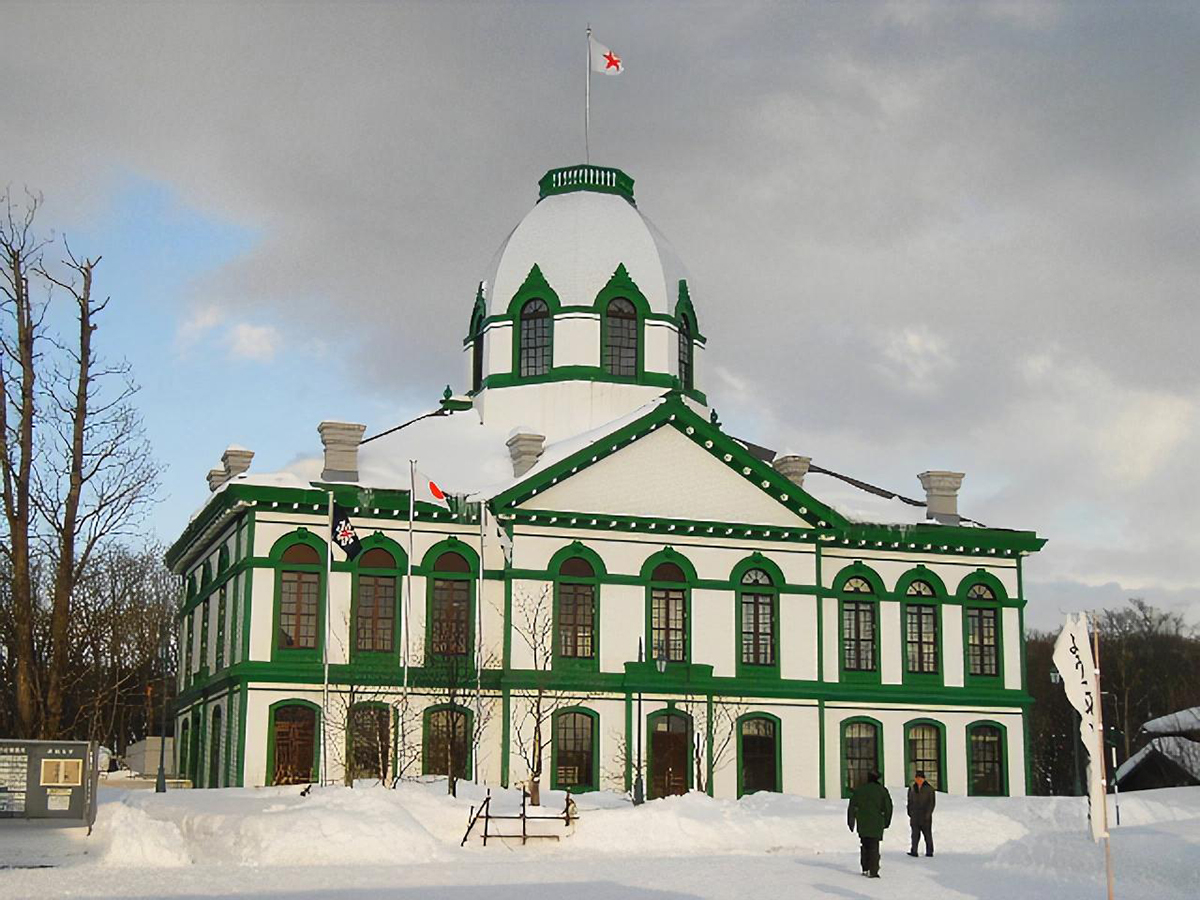
The village is divided into four zones — town, farm, fishing village and mountain settlement — each representing a facet of life as settlers, many of them from mainland Japan, opened up the frontier from the 1860s onward. In the town area a proud main street is lined with relocated originals: a newspaper office, a photographer's studio, an inn, a police box, shops and a fine wooden former railway station, their interiors furnished to look as though the occupants have just stepped out. The farm zone gathers barns and farmhouses that show how families coaxed crops from cold, unfamiliar land, while the fishing village displays the sturdy buildings and gear of the herring boom that once made coastal Hokkaido wealthy. The mountain zone recreates forestry and charcoal-making life deep in the woods.
What lifts the experience above a static collection is the atmosphere and the small touches of living history. In the warmer months a horse-drawn streetcar clip-clops down the main street on rails, and in winter horse-drawn sleighs glide over the snow — the same horsepower the pioneers relied on. Costumed staff and volunteers demonstrate old crafts and daily routines, and you are free to wander into most buildings, climb creaking staircases and sit in period rooms. Seasonal events, from summer festivals to winter candle nights, add to the sense of a place that lives rather than merely displays.
The setting itself is beautiful. Set among trees adjoining a larger park that also contains the Hokkaido Museum, the village bursts with cherry blossom in spring, glows with foliage in autumn and turns thickly, silently white in winter, when snow softens every rooftop and the horse-sleigh ride becomes genuinely magical. Photographers find endless material in the weathered timber, glass shopfronts and lamp-lit interiors.
Because the grounds are extensive and you enter dozens of buildings, plan for at least two to three hours, and dress for the weather since much of the visit is outdoors. Access is straightforward: subway or JR to Shin-Sapporo, then a short bus to the entrance. For families, history lovers and anyone curious about how this cold northern island was settled and built, Kaitaku-no-Mura is among the most rewarding half-days Sapporo can offer.
A local's tip
Ride the horse-drawn streetcar down the main street in summer, or the horse-drawn sleigh in winter — and set aside a full half-day, because the open-air site is much larger than it first appears.
Best time to visit
Any season; winter for sleigh rides
Getting there
Reach Shin-Sapporo Station by subway or JR, then take the JR Hokkaido Bus (Kaitaku-no-mura line) about 15 minutes to the terminus at the village entrance.
Good to know
- Parking
- Gift shop
- Restrooms
- Restaurant
Plan the whole trip offline
Historical Village of Hokkaido is one of many places in the Real Japan app — with turn-by-turn directions, nearby spots and full offline maps you can use with no signal.