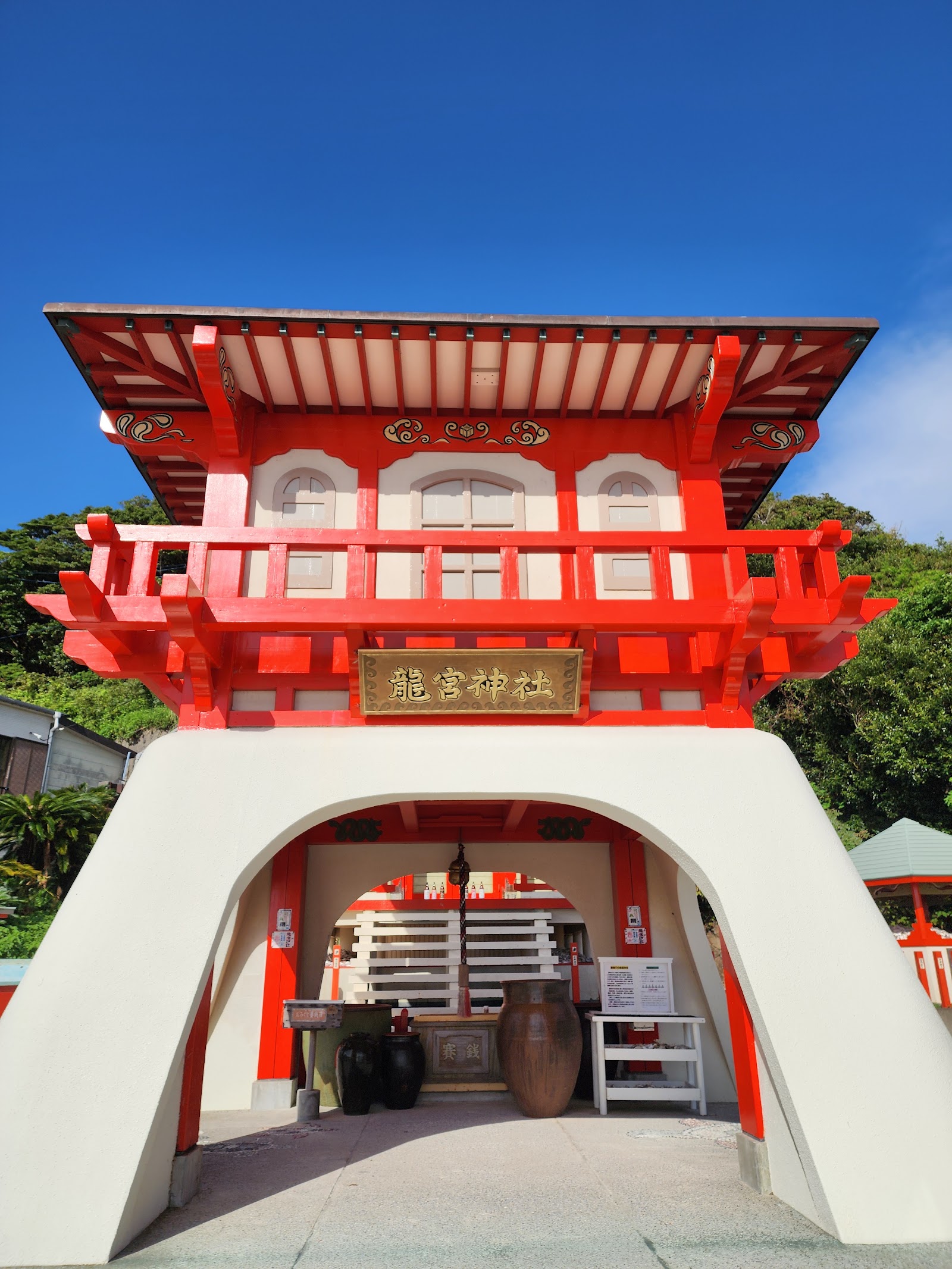
Vivid vermilion seaside shrine at Cape Nagasakibana, tied to the Urashima Taro dragon-palace legend.
Perched dramatically at the tip of Cape Nagasakibana, at the southern edge of the Satsuma Peninsula, Ryugu Shrine is a small but vividly photogenic sanctuary steeped in one of Japan's most beloved folktales. Painted a brilliant vermilion that pops against the deep blue of the sea, the shrine takes its name and its story from the legend of Urashima Taro — the fisherman who, after rescuing a turtle, was carried to Ryugu-jo, the Dragon Palace beneath the waves, and welcomed by the sea princess Otohime. Local tradition holds that this very cape is where Urashima set out, making the shrine a charming point of connection between myth and landscape.
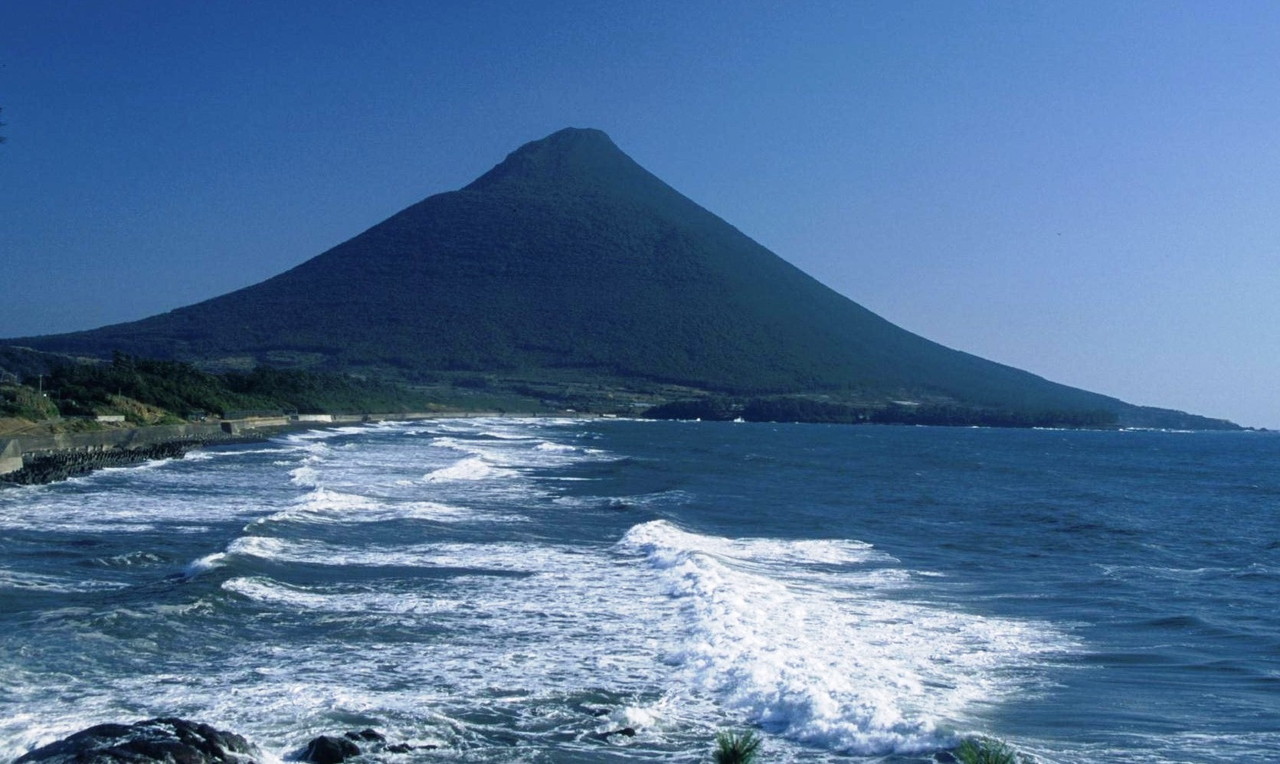
The shrine enshrines Otohime, the dragon-palace princess, and is popular with visitors praying for love, marriage, and safe voyages. Its most distinctive custom replaces the usual wooden ema prayer plaque with a shell: worshippers write their wish on a seashell and place it in the offering box, and the resulting mounds of colorful shells have become a quirky, much-photographed feature. The compact grounds can be explored in a few minutes, but the setting is unforgettable — waves crashing on the rocks below, the wide horizon of the East China Sea stretching south, and on clear days the conical silhouette of Mount Kaimon rising nearby.
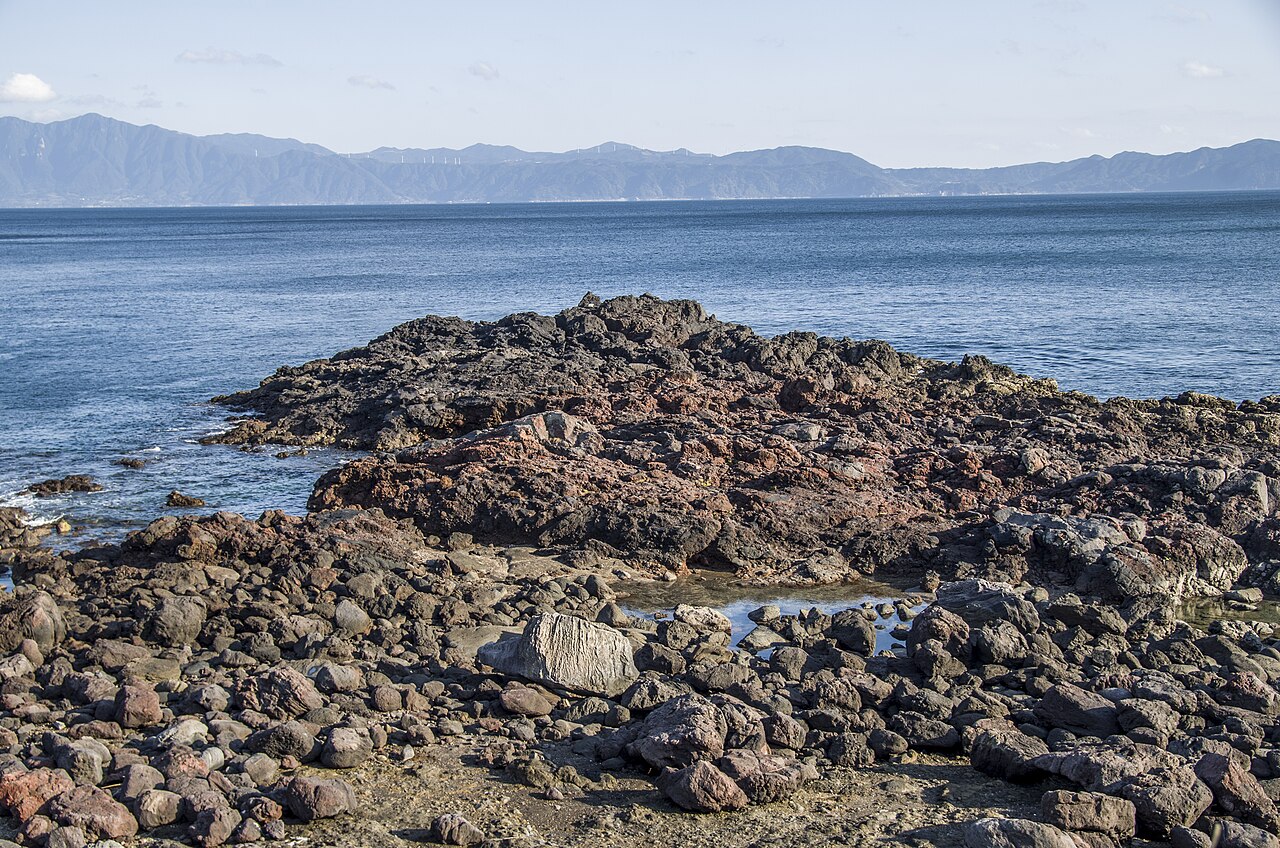
Cape Nagasakibana itself is the southernmost point of the Satsuma Peninsula, a rugged headland of black volcanic rock and windswept scenery. A short walk from the shrine leads to viewpoints and a small lighthouse, and the whole area has a raw, end-of-the-land atmosphere that pairs beautifully with the shrine's mythic theme. The nearby waters are known for good fishing, and the cape is a popular sunset spot, when the sky and sea glow and the vermilion shrine catches the last of the light.
Reaching Ryugu Shrine is easy as part of a wider tour of the southern Satsuma Peninsula. From Ibusuki, famous for its sand baths, a short bus ride or taxi brings you to the cape, and many visitors combine the shrine with Mount Kaimon and the surrounding coastal scenery in a single outing. There is no admission fee, and parking and restrooms are available at the cape.
Allow around thirty minutes for the shrine and its immediate views, longer if you want to walk out along the headland or linger for sunset. Wear comfortable shoes, as the cape is exposed and the coastal paths uneven, and bring sun protection in the warmer months. Though modest in scale, Ryugu Shrine punches well above its weight: a splash of vivid color at the edge of the sea, a living folktale, and a genuinely memorable stop on any journey through Kagoshima's dramatic southern coast.
A local's tip
Instead of a wooden ema, write your wish on a shell here — the local custom ties the shrine to its sea-goddess legend and the shells are stacked in colorful heaps.
Best time to visit
Clear days for sea views over Cape Nagasakibana
Getting there
From Ibusuki Station take a local bus or taxi toward Cape Nagasakibana (about 20 minutes). The vivid vermilion shrine sits right at the cape overlooking the sea.
Good to know
- Parking
- Restrooms
Plan the whole trip offline
Ryugu Shrine is one of many places in the Real Japan app — with turn-by-turn directions, nearby spots and full offline maps you can use with no signal.