A vivid red Buddhist temple at the heart of Nagoya's buzzing Osu district, guarding a priceless medieval library.
Osu Kannon is the most famous temple in central Nagoya and the beating heart of the eclectic Osu neighbourhood that grew up around it. Officially named Kitanosan Shinpukuji Hosho-in, it belongs to the Shingon school of Buddhism and enshrines a statue of Kannon, the bodhisattva of compassion, carved according to tradition by the monk Kobo Daishi himself.
The temple was originally founded in the early fourteenth century in Osu village in present-day Gifu Prefecture. In 1612 the warlord Tokugawa Ieyasu, worried about flooding along the river, ordered it moved to its current site as part of his grand plan for the new castle town of Nagoya. That relocation placed the temple at the centre of the merchant quarter, and the two have thrived together ever since.
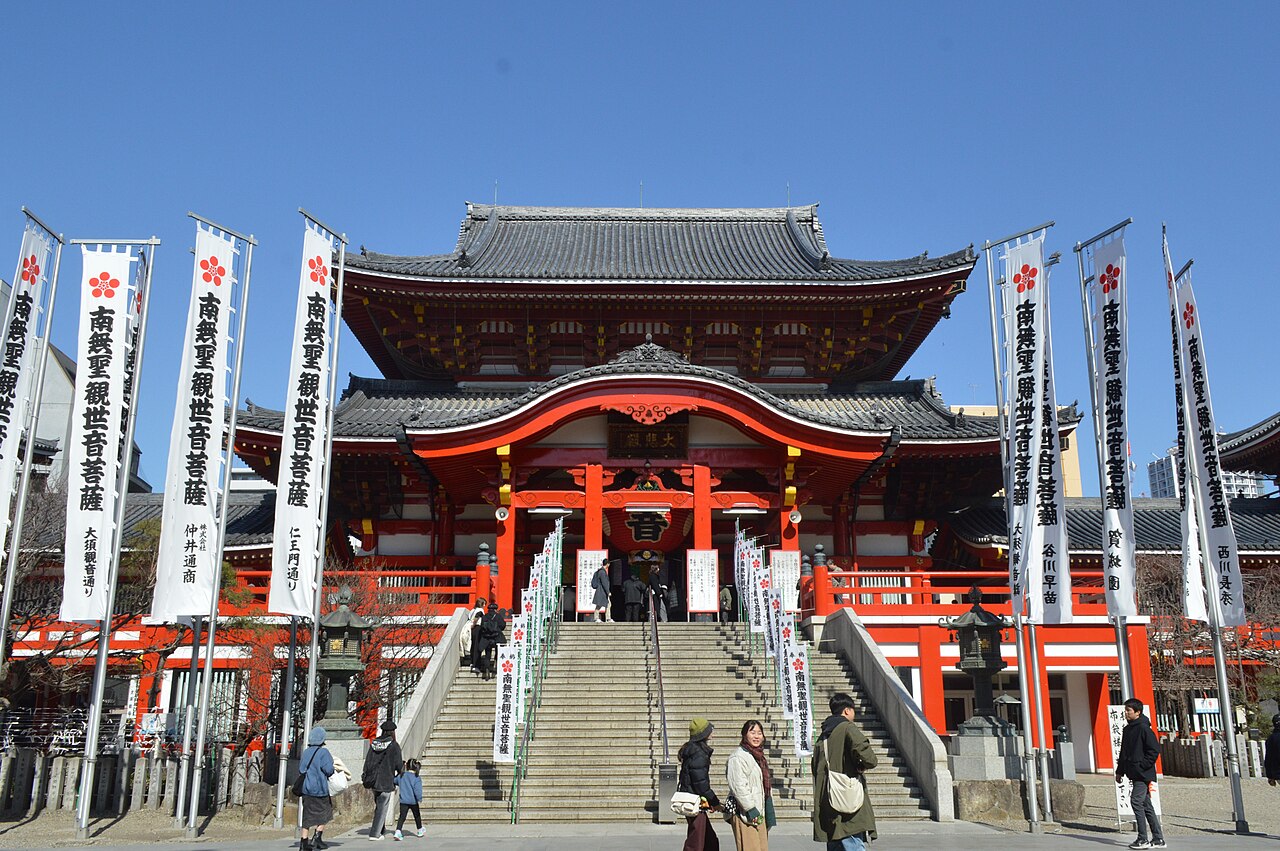
Architecturally the current buildings are twentieth-century reconstructions, the originals having burned in wartime, but the bright vermilion main hall raised on a broad stone platform is genuinely striking. Pigeons wheel across the plaza, incense smoke drifts from the great bronze burner, and worshippers climb the steps to bow before the golden altar. It is an unpretentious, welcoming place rather than a hushed one.
Beneath the main hall lies the temple's true treasure: the Shinpukuji Bunko, one of the four great libraries of medieval Japan. Among its 15,000 classical texts is the oldest existing manuscript of the Kojiki, Japan's foundational chronicle of myth and history, copied in 1371 and designated a National Treasure. Scholars still travel to Nagoya specifically to study this collection.
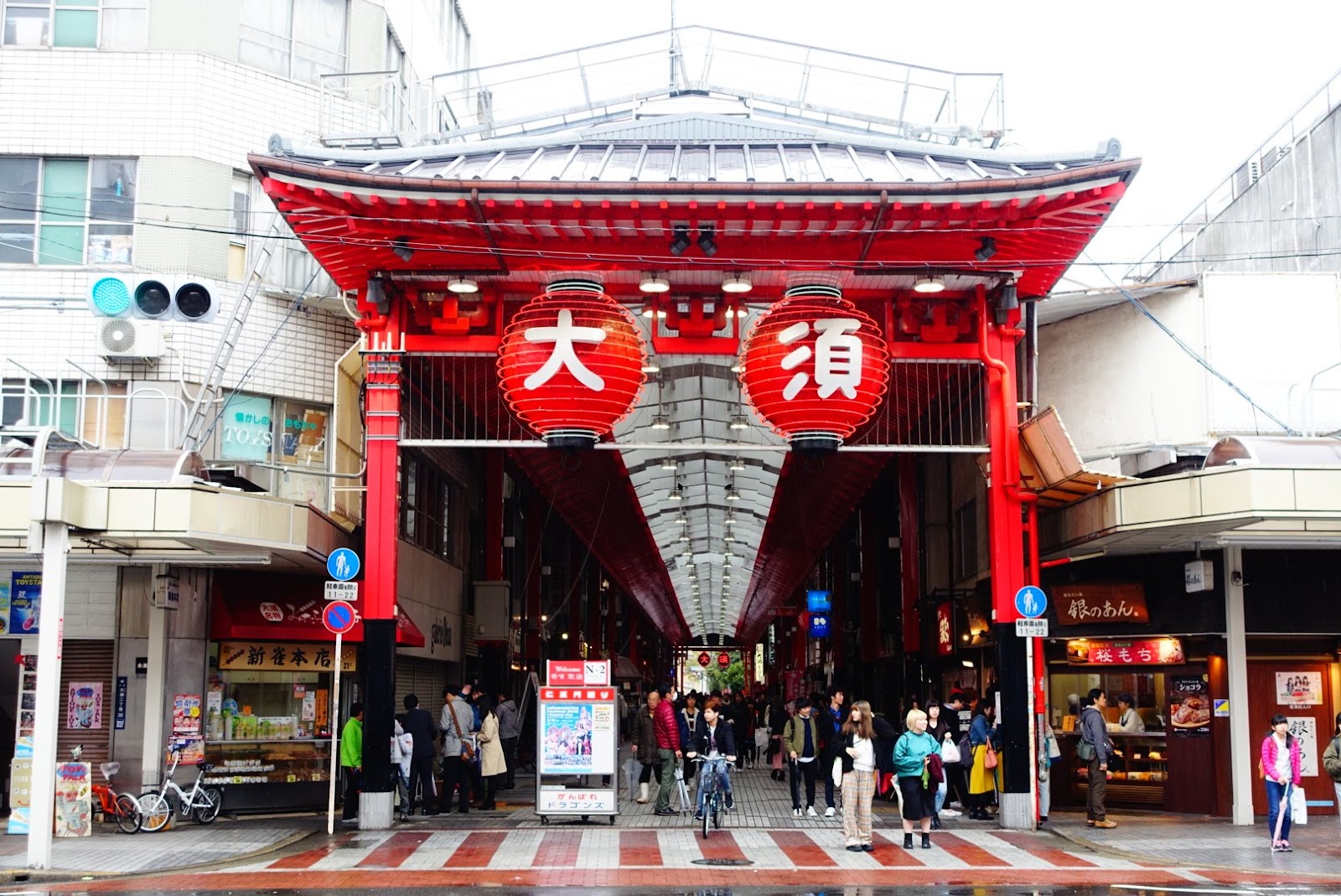
The visiting experience is inseparable from the surrounding district. Twice a month, on the 18th and 28th, the plaza hosts a bustling antiques and bric-a-brac market where vendors spread out old ceramics, kimono, coins and curiosities. On any day the covered Osu shopping arcades radiate outward from the temple gate, mixing centuries-old sweet shops with anime stores, vintage clothing, secondhand electronics and a famously multicultural array of restaurants. Few places in Japan juxtapose the sacred and the delightfully chaotic quite so happily.
A notable local custom is the release of prayers for good fortune and, because Osu Kannon has long been associated with warding off misfortune, many visitors buy protective charms before wandering into the arcades. The temple grounds are flat, paved and fully accessible, and the site sits directly above its own subway station, making it one of the easiest attractions to reach in the whole city.
Osu Kannon is enjoyable in any season and any weather, since much of the surrounding district is covered. Aim to arrive in the late morning, pay your respects at the temple, then lose an afternoon in the arcades; if your timing lines up with a market day, all the better. For travellers who want to feel the everyday pulse of Nagoya rather than its formal monuments, this red temple and its raucous, friendly neighbourhood are the perfect introduction.
A local's tip
The Shinpukuji library beneath the main hall holds one of Japan's most important collections of medieval manuscripts, including the oldest surviving copy of the Kojiki; on the 18th and 28th of each month a lively antiques and flea market fills the temple plaza.
Best time to visit
Daytime, combined with the Osu shopping arcades
Getting there
Take the Tsurumai subway line to Osu Kannon Station and use exit 2; the temple's red gate is directly across the small plaza. From Sakae it is a ten-minute walk south through the Osu district.
Good to know
- Wi-Fi
- Shopping
- Restrooms
Plan the whole trip offline
Osu Kannon Temple is one of many places in the Real Japan app — with turn-by-turn directions, nearby spots and full offline maps you can use with no signal.