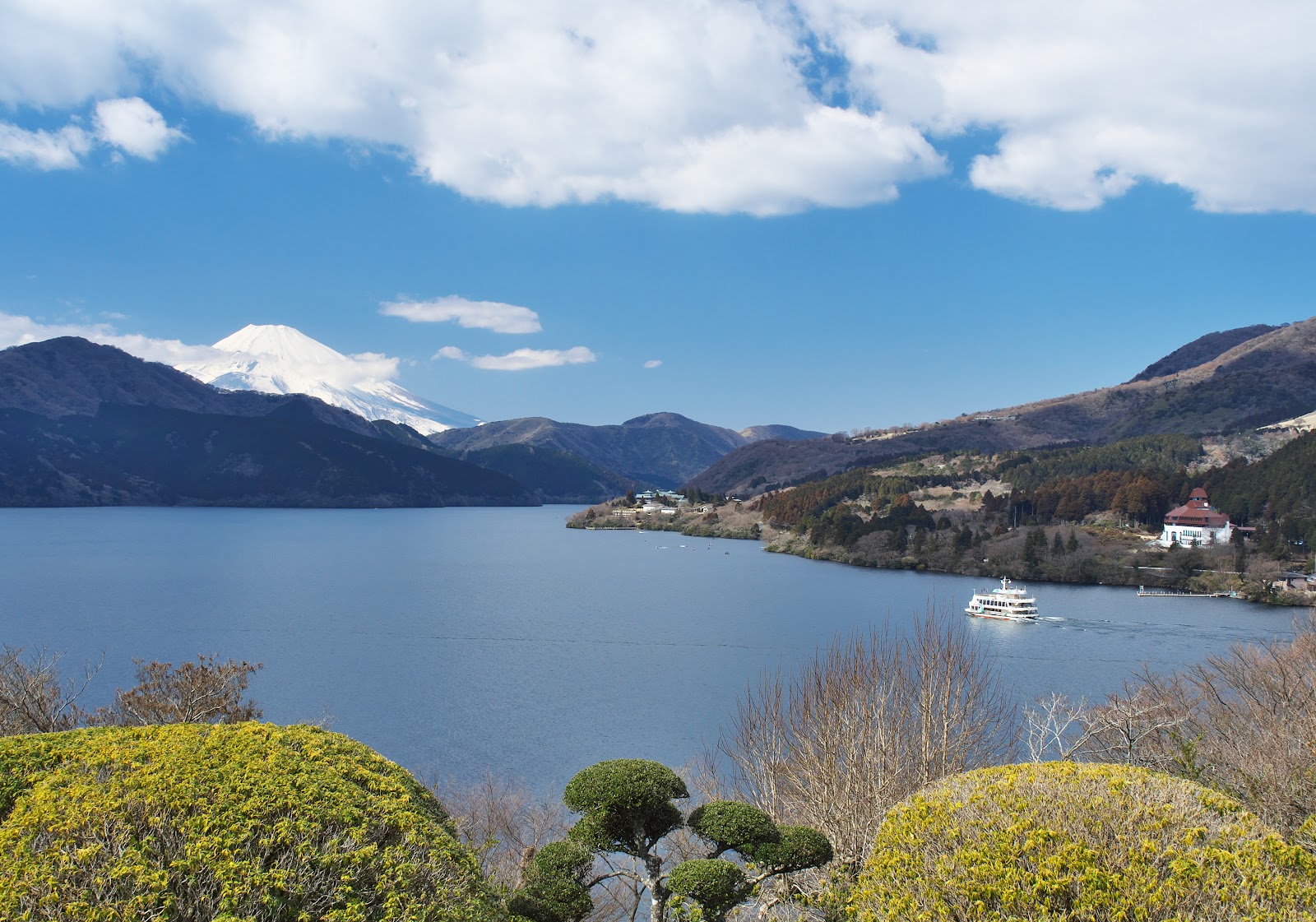
The former imperial summer villa gardens on a wooded cape over Lake Ashi, with a free hilltop Fuji viewpoint.
Onshi Hakone Park spreads across Togashima, a wooded peninsula jutting into the southern end of Lake Ashi between the piers of Moto-Hakone and Hakone-machi. The land was chosen in 1886 as the site of a detached imperial palace - a summer retreat for the Imperial Household - and the villa that stood here paired a grand Western-style mansion with a traditional Japanese pavilion, taking full advantage of the cape's panorama over the lake to Mount Fuji.
The palace itself did not survive. Both buildings were badly damaged in the Great Kanto Earthquake of 1923; the Western mansion was demolished, the Japanese pavilion rebuilt in smaller form, and that replacement was destroyed by a further earthquake seven years later. After the war the imperial family handed the land to Kanagawa Prefecture in March 1946, and that May it reopened as a public park - hence the name Onshi, meaning a gift bestowed by the emperor. What remains is the setting the emperors prized: mature groves, gently curving carriage paths, and a hilltop crowned today by the Lakeside Observation Building, a two-storey lookout that echoes the old mansion's footprint.
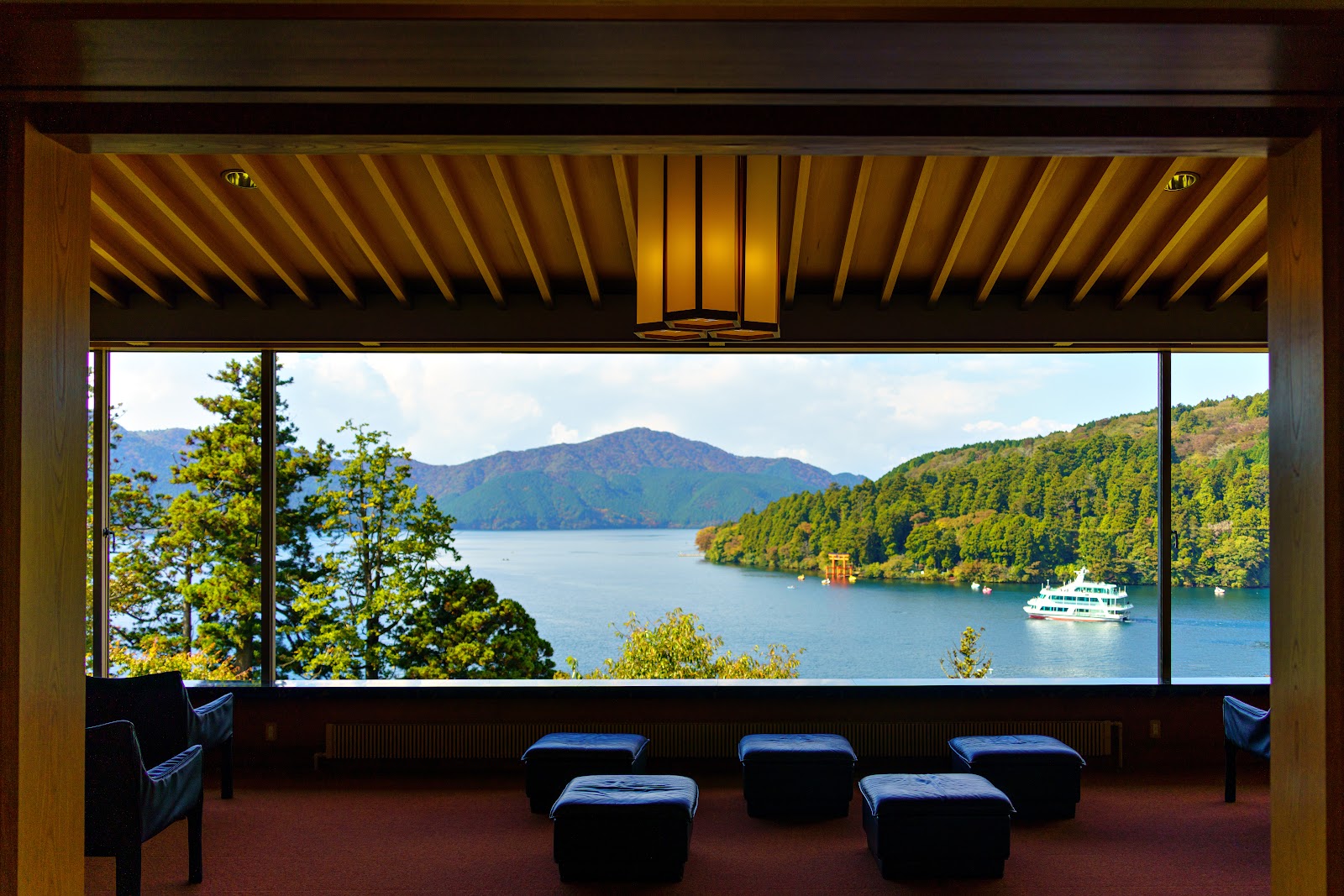
That observation building is the reason to come. From its balconies the ground falls away to Lake Ashi on both sides, and on a clear, still morning Mount Fuji rises cleanly beyond the far shore, often mirrored in the water. Because the park sits on a raised cape the view is broader and less obstructed than from the busy lakeside promenades below, yet it costs nothing to enter and is never as crowded as the pirate-ship cruise piers a few minutes away.
The grounds reward a slow wander in every season. Cherry trees blossom along the central avenue in early April, azaleas and fresh green follow in late spring, autumn brings maples and the russet of the surrounding hills, and even winter has its appeal when a dusting of snow settles over the paths and Fuji stands sharp against a cold blue sky. Wide, well-graded walkways loop the peninsula, most of them gentle enough for strollers and comfortable walking, though the final rise to the observation building involves a modest climb or steps.
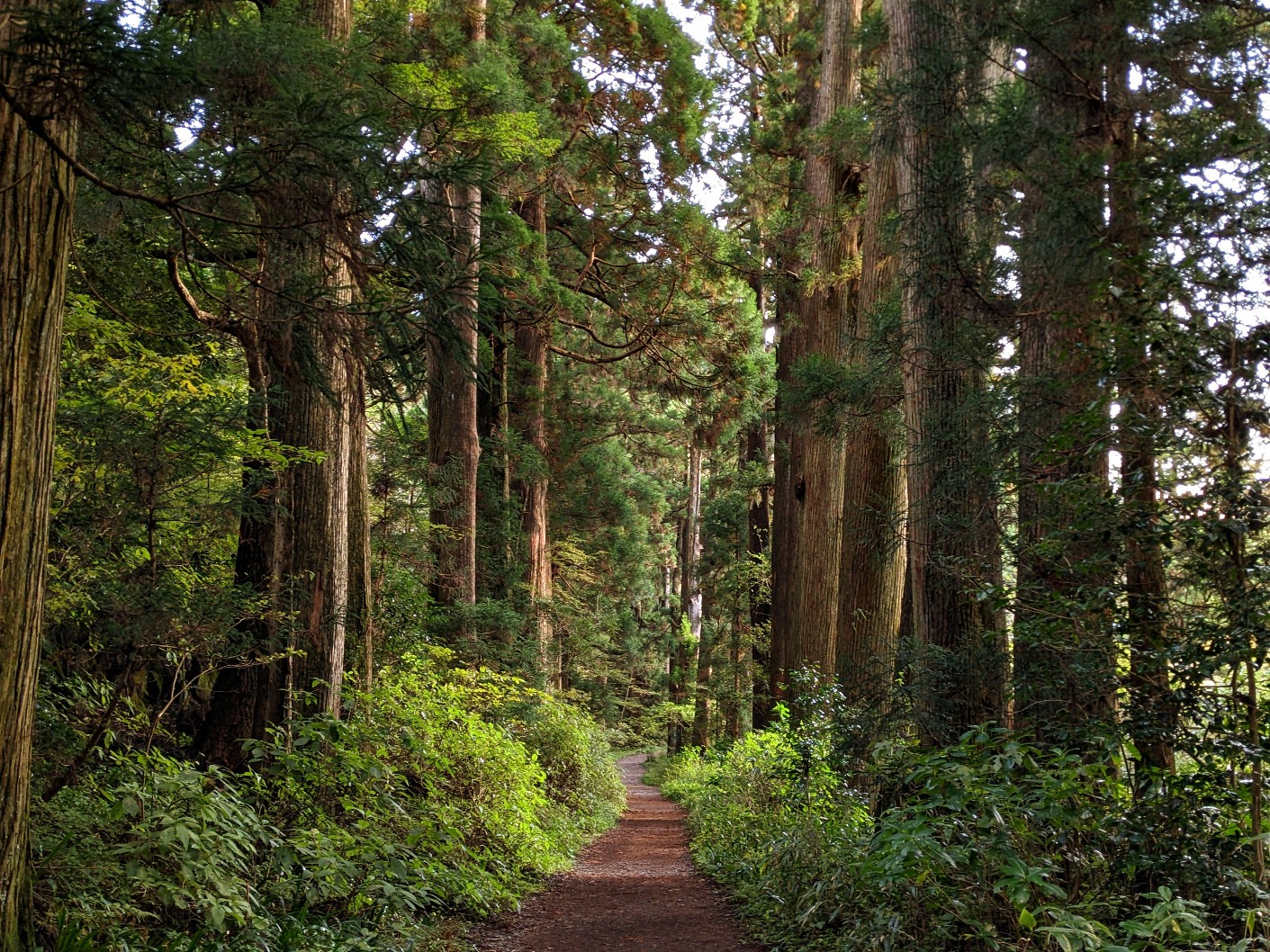
Historically the park anchors the old Tokaido corridor: the reconstructed Hakone Checkpoint and the famous avenue of centuries-old cedar trees lining the former highway are both within a short stroll of the Moto-Hakone side, so the garden slots neatly into a half-day exploring the shore. A typical visit runs about an hour - long enough to climb to the viewpoint, circle the wooded paths and drop back down to the water.
Access is easy and flexible. Hakone Tozan buses and the Lake Ashi sightseeing cruises both call at Moto-Hakone and Hakone-machi, and the park entrance sits roughly midway between the two on the lake road; IC cards are accepted on the buses. As with the rest of Hakone the transport here is run by Odakyu rather than JR, so the Hakone Freepass rather than the Japan Rail Pass is the sensible ticket. Entry to the park is free and the grounds are open through the day, with the observation building keeping shorter afternoon hours.
A local's tip
Climb straight to the Lakeside Observation Building at the top of the rise - on a clear morning Mount Fuji lines up perfectly above the lake, and the crowds who never leave the piers rarely make it up here.
Best time to visit
Clear mornings for Mount Fuji; cherry blossom in early April
Getting there
The park occupies the wooded Togashima peninsula on the south shore of Lake Ashi, a short walk between the Moto-Hakone and Hakone-machi boat piers and bus stops. Take a Hakone Tozan Bus or the sightseeing cruise to either pier.
Good to know
- Parking
- Restrooms
- Free entry
- Observation building
Plan the whole trip offline
Onshi Hakone Park is one of many places in the Real Japan app — with turn-by-turn directions, nearby spots and full offline maps you can use with no signal.