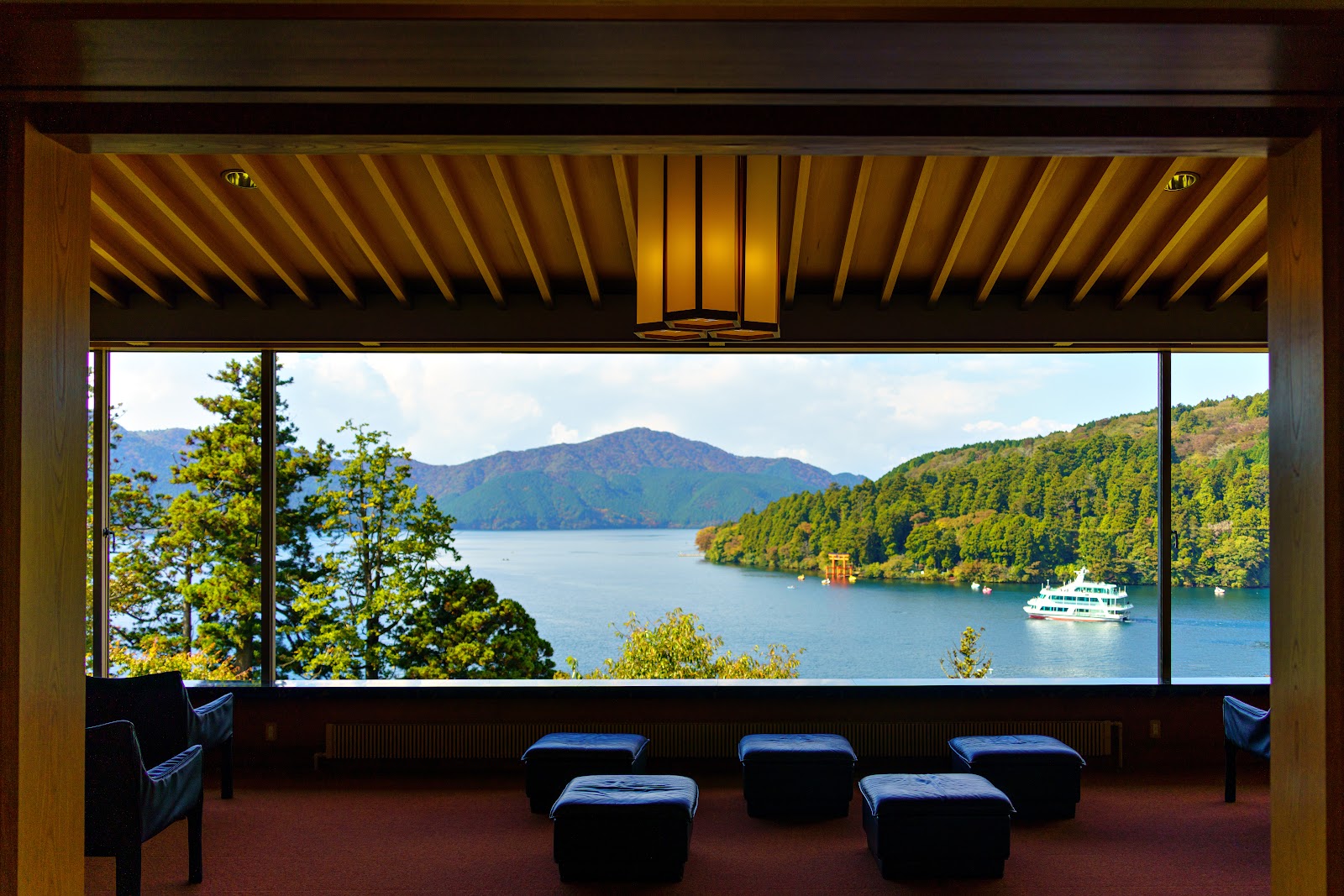
Modern Japanese-style paintings with a panoramic lounge framing Mt Fuji, Lake Ashi and Hakone Shrine's torii.
The Narukawa Art Museum stands on the wooded hillside above Moto-Hakone, at the southern end of Lake Ashi, and offers a rare double pleasure: a serious collection of modern Japanese painting and quite possibly the finest indoor view in all of Hakone. Opened in 1988, it specialises in Nihonga — Japanese-style painting made with traditional mineral pigments, ink and gold on silk or paper — and holds some 4,000 works by leading twentieth-century and contemporary masters of the genre.
Nihonga is a quieter, more contemplative art than the European collections elsewhere in Hakone, and Narukawa presents it beautifully. Rotating exhibitions draw on the museum's deep holdings to show seasonal landscapes, flowers, birds and figures rendered in the luminous, matte pigments that give Nihonga its distinctive glow. Because the works are light-sensitive, displays change through the year, so repeat visitors always find something new. The museum also awards a well-known prize that has helped keep the tradition alive among younger painters.
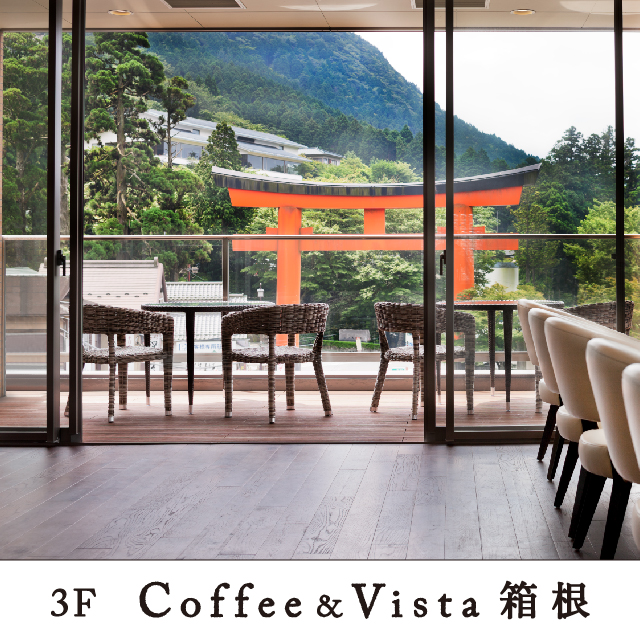
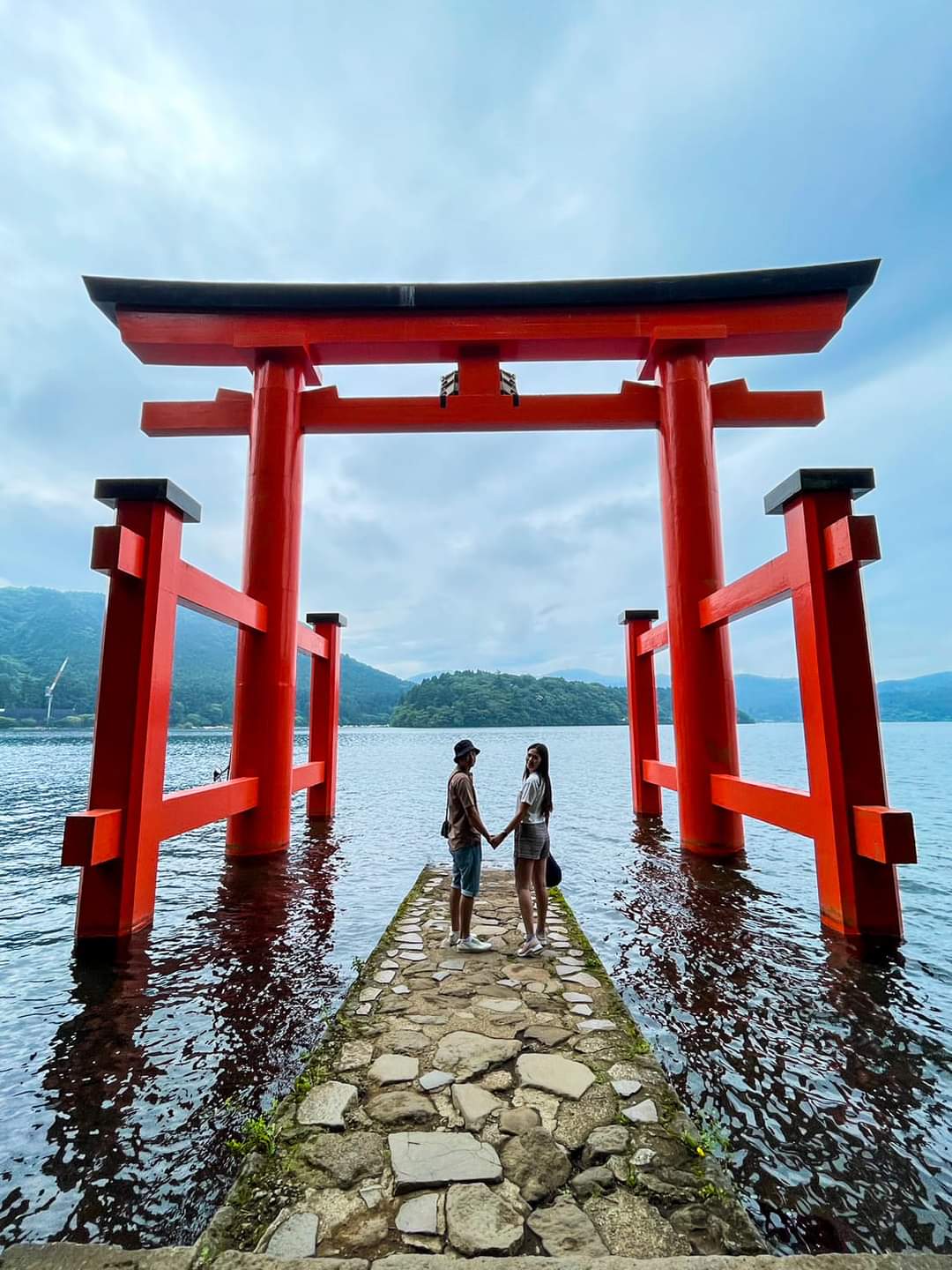
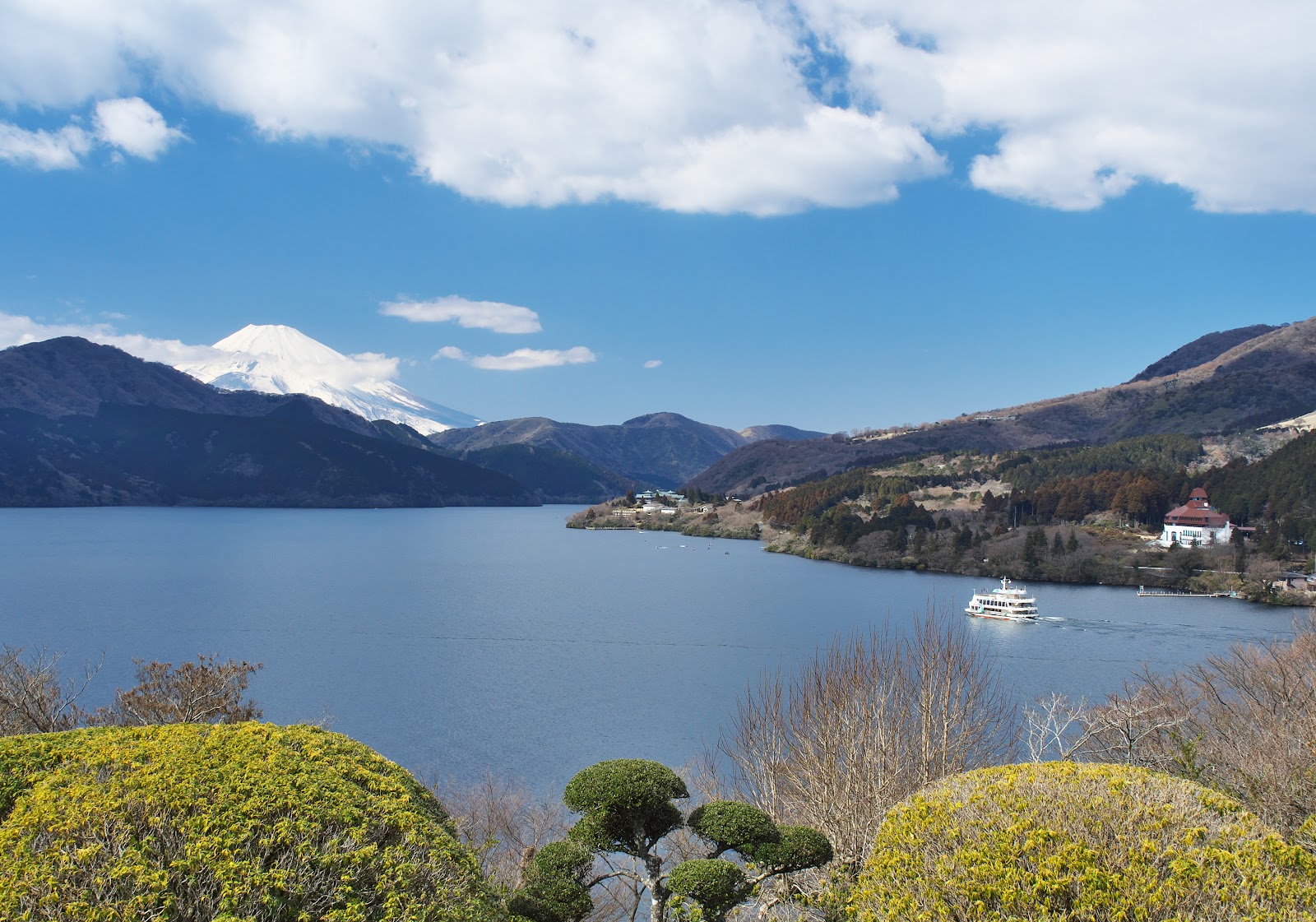
What makes Narukawa unforgettable, though, is its panoramic observation lounge. A vast plate-glass window some 50 metres wide frames Lake Ashi below, the vermilion torii gate of Hakone Shrine standing in the water, and — on a clear day — the perfect cone of Mt Fuji rising behind it. It is the classic Hakone postcard, seen in warmth and comfort, with the museum's café serving coffee and sweets so you can sit and watch the light change over the lake. In winter, low kotatsu-style heated tables face the glass, an irresistibly cosy touch.
The visiting experience is calm and unhurried. The galleries are compact and easy to walk, the building is accessible with lifts, and the crowds are thinner than at the marquee museums on the Gōra side, so the mood stays peaceful. Many visitors spend as much time in the lounge and at the window as in the galleries themselves — and that is entirely the point here.
Timing is worth a thought. The paintings are indoors and rewarding year-round, but the view is a lottery: Mt Fuji is famously shy and most reliably visible on clear, crisp mornings, especially in autumn and winter when the air is dry. Aim to arrive early on a fine day and you may catch the mountain before cloud gathers around its summit.
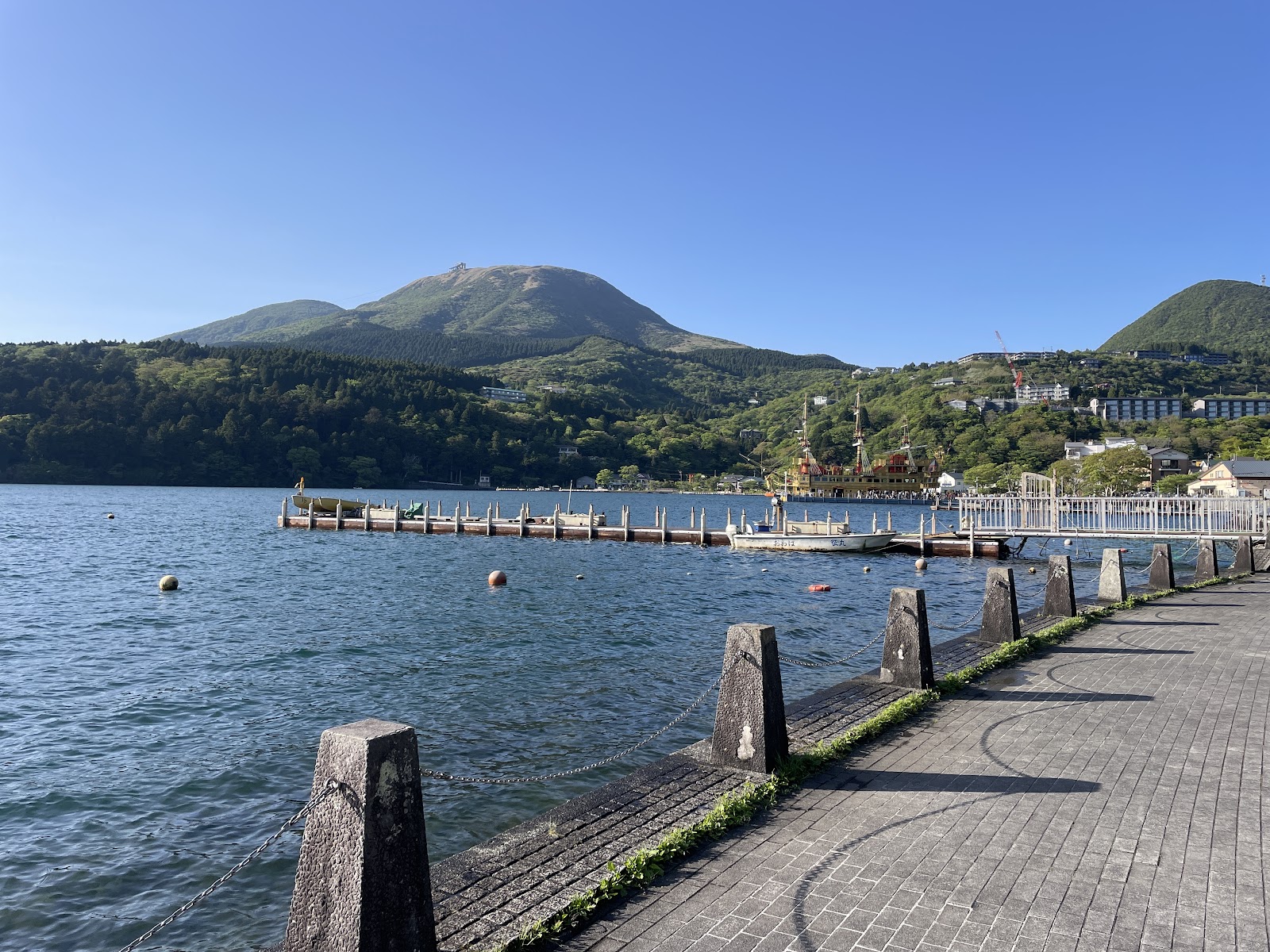
The most atmospheric way to arrive is by water: take the Hakone Sightseeing Cruise — the galleon-style 'pirate ships' — across Lake Ashi to Moto-Hakone Port, then walk about eight minutes up the hill to the museum. You can also reach it by Hakone Tozan or Izuhakone bus to the 'Moto-Hakone' stop. As everywhere in Hakone, the boats, buses and trains run on the Odakyu-affiliated network rather than JR, so a Japan Rail Pass does not apply; the Hakone Freepass, which includes the cruise, is the ticket to buy.
A local's tip
Even more than the paintings, come for the panoramic observation lounge — on a clear day Mt Fuji rises straight behind the red torii of Hakone Shrine in the lake. Free foot-warming kotatsu tables face the window in winter.
Best time to visit
Clear mornings for the Mt Fuji view over Lake Ashi
Getting there
Ride the Hakone Sightseeing Cruise 'pirate ship' across Lake Ashi to Moto-Hakone Port, then walk about 8 minutes uphill. Also reachable by Hakone Tozan Bus to 'Moto-Hakone'.
Good to know
- Cafe
- Shop
- Restrooms
- Observation Lounge
Plan the whole trip offline
Narukawa Art Museum is one of many places in the Real Japan app — with turn-by-turn directions, nearby spots and full offline maps you can use with no signal.