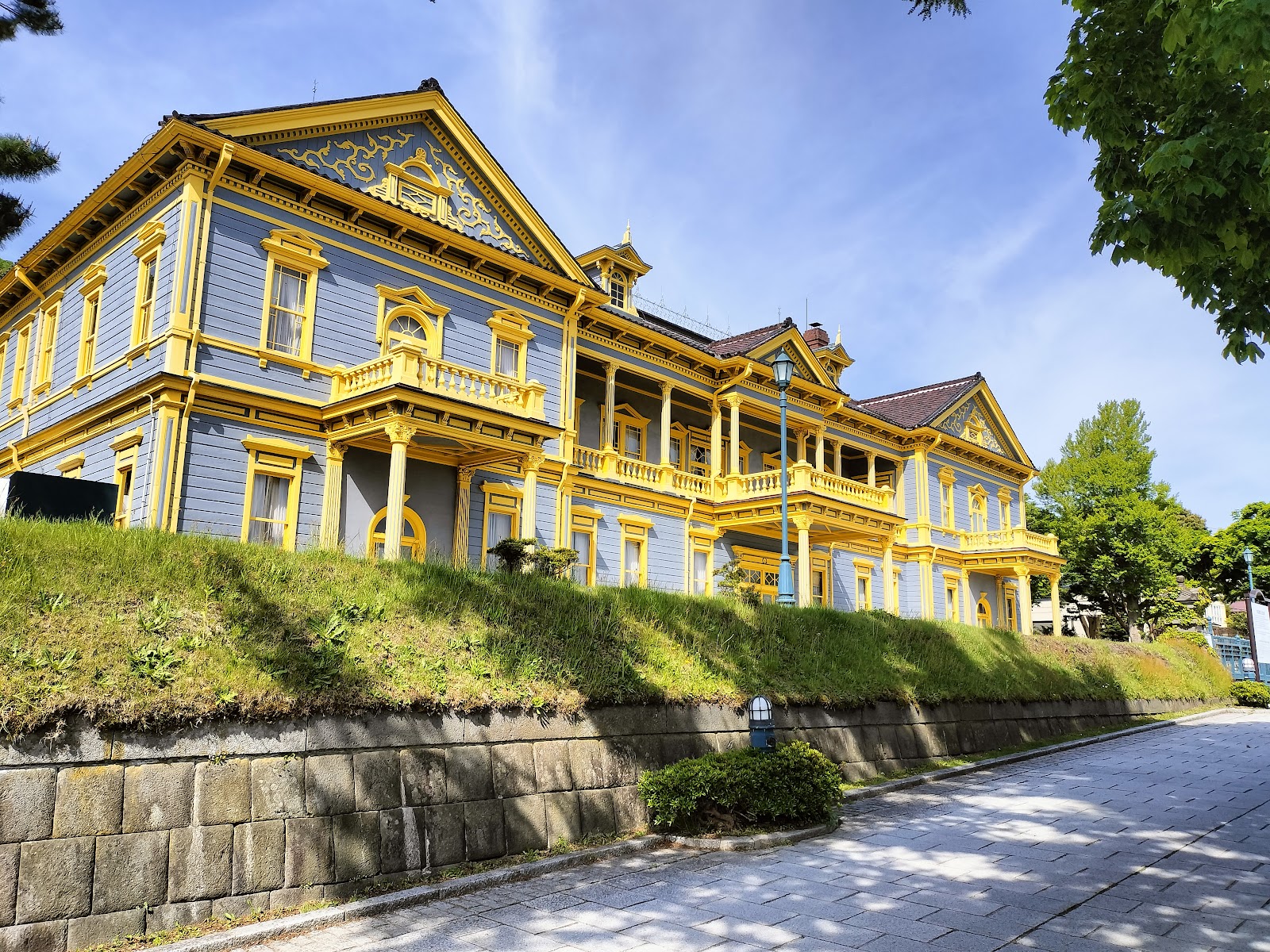
An ornate 1910 blue-and-yellow colonial hall crowning Motomachi, a designated Important Cultural Property.
The Old Public Hall of Hakodate Ward is one of the most photogenic Western-style buildings in Japan, an ornate two-storey colonial hall painted in distinctive dove-blue and pale-yellow that crowns the Motomachi hillside. Completed in 1910, it was built as a public gathering hall and social centre for the citizens of Hakodate after an earlier assembly building was destroyed by fire. The construction was funded in large part by a wealthy local merchant, reflecting the pride and prosperity of the port city at the height of the Meiji era. It is designated an Important Cultural Property of Japan.
Architecturally the hall is a confident, symmetrical expression of the late-Meiji taste for Western style. A columned portico and a broad second-floor balcony face down the slope toward the harbour, while the interior blends imported design ideas with Japanese craftsmanship. The colour scheme, restored to its historic blue-grey and yellow, makes the building instantly recognisable and a favourite backdrop for photographs, particularly with the sweep of the bay behind it.
What to see lies mostly inside. The ground and upper floors preserve grand reception rooms, a ballroom-like hall, elegant staircases and period furnishings that evoke the formal gatherings once held here. Tall windows flood the rooms with light, and the second-floor balcony offers a fine framed view down over Motomachi and the water beyond, the same outlook that visiting dignitaries would have admired. A popular feature is a rental service that lets visitors dress in Meiji or Taisho-era Western gowns and pose in the historic rooms, a small piece of living theatre that has become a signature experience.
A notable historical footnote concerns royalty: the hall was grand enough to serve as accommodation and a reception venue for members of the imperial family and other high officials when they visited Hakodate, underscoring the building's status as the city's premier ceremonial space in an age when Hakodate was one of Japan's most important northern ports.
The visiting experience is compact and comfortable, typically taking around forty-five minutes. A modest admission fee applies, and interior photography is generally allowed. Because the hall stands at the top of a sloping park within the Motomachi district, reaching it involves an uphill walk, and the paths can be slick in winter, so good footwear is advisable. The building has undergone extensive seismic and preservation work in recent years and reopened beautifully restored, so the interiors are in excellent condition. Benches in the surrounding park invite a rest with a harbour view.
Every season flatters the hall. Its pastel facade glows in summer sun, harmonises with autumn colour, and stands out crisply against winter snow, while spring offers mild, quiet visiting. During Hakodate's December illumination events the building and its slope are lit up attractively in the evenings.
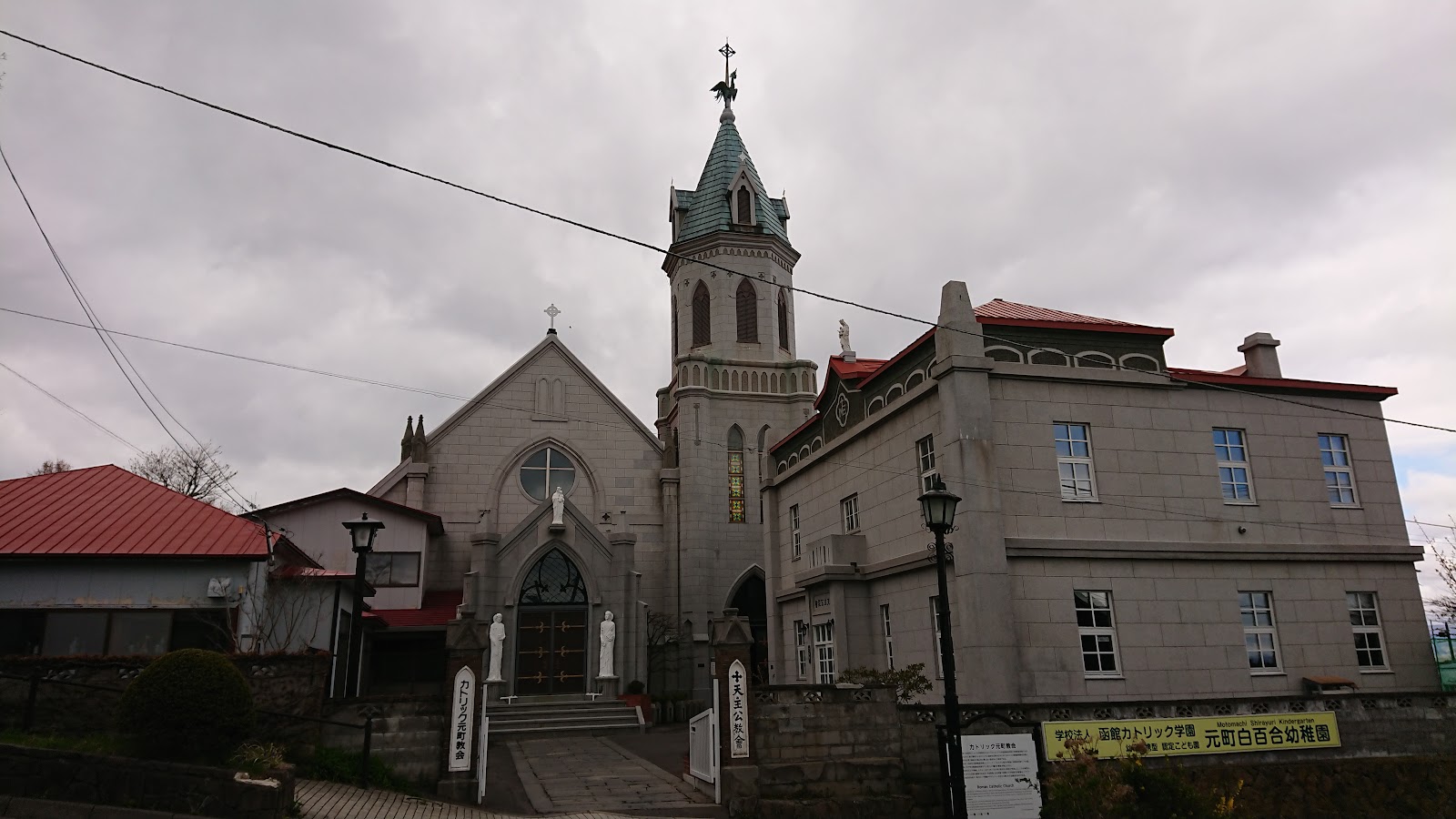
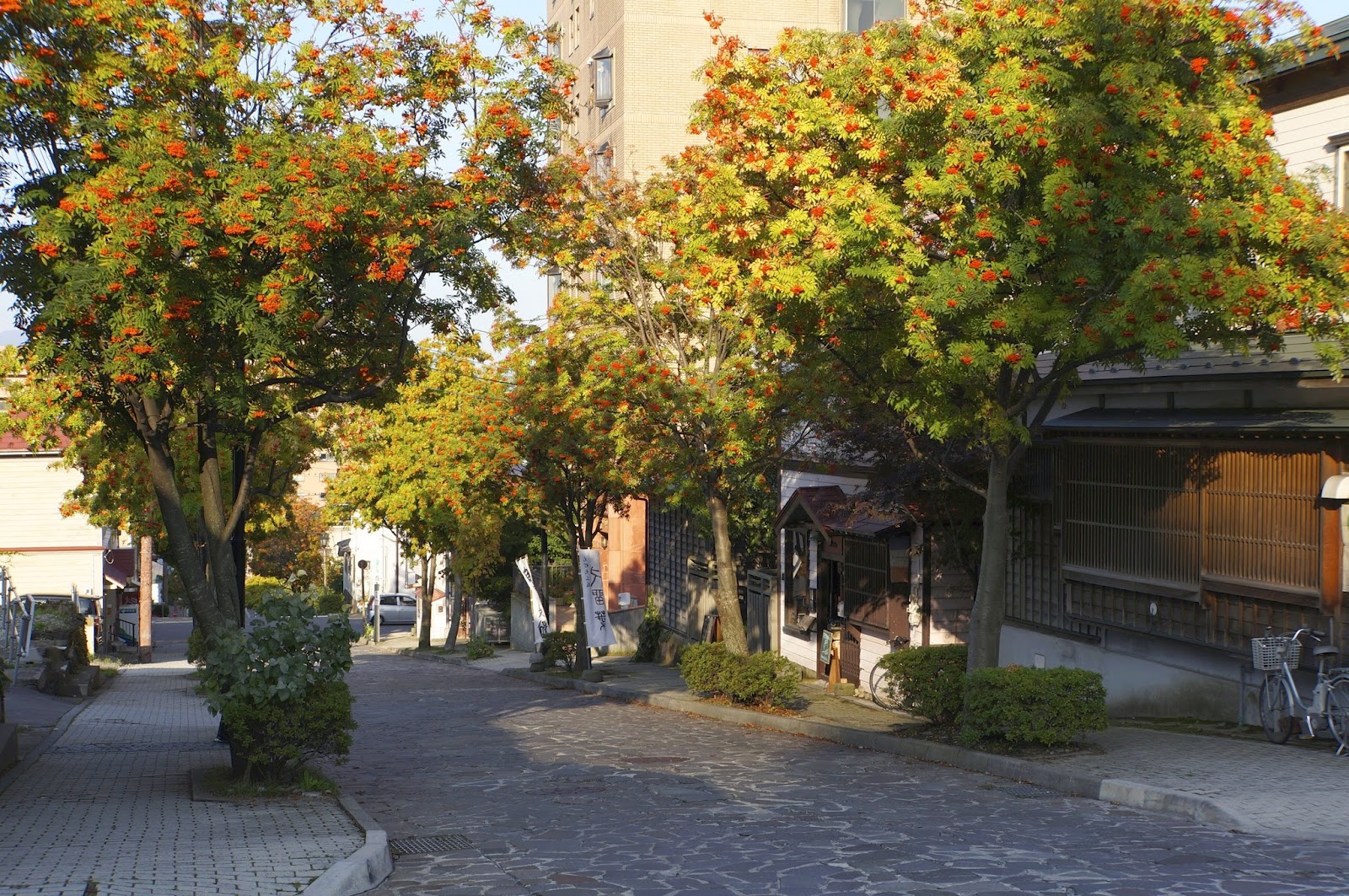
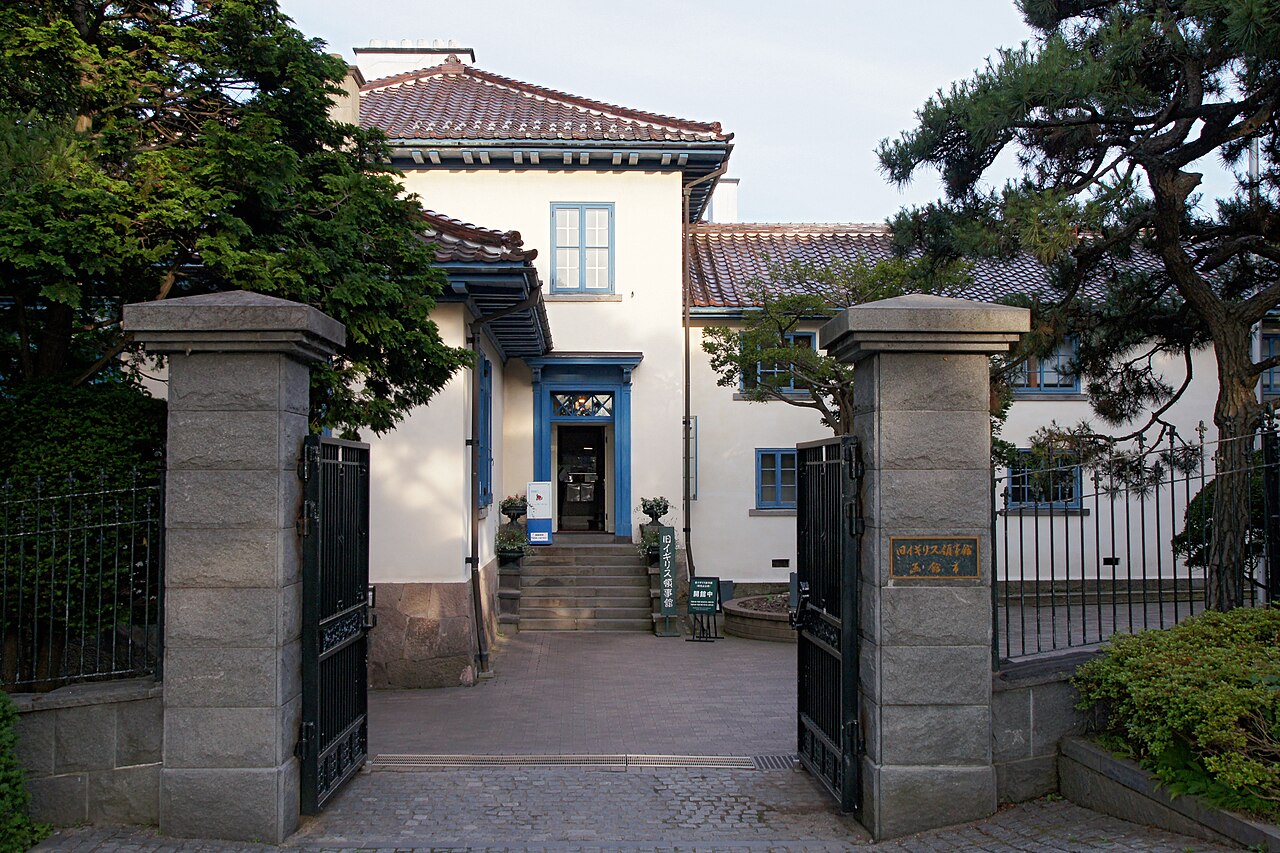
Getting there follows the standard Motomachi approach. From JR Hakodate Station take the historic city tram and alight at Suehirocho, then walk about twelve minutes uphill through the district, following signs to the top of the Motomachi park. IC cards are accepted on the tram. The hall sits among the district's churches and old consulates and just below the ropeway base station, making it a natural stop on a walking tour of the old town that can finish with the Mount Hakodate night view.
A local's tip
Step onto the second-floor balcony for a framed view straight down the hill and over the harbor, the same panorama Meiji-era dignitaries once enjoyed.
Best time to visit
Daytime for the blue-and-yellow facade in full light
Getting there
Take the tram to Suehirocho and walk about 12 minutes uphill through Motomachi to the top of the sloping park.
Good to know
- Wi-Fi
- Gift Shop
- Restrooms
Plan the whole trip offline
Old Public Hall of Hakodate Ward is one of many places in the Real Japan app — with turn-by-turn directions, nearby spots and full offline maps you can use with no signal.