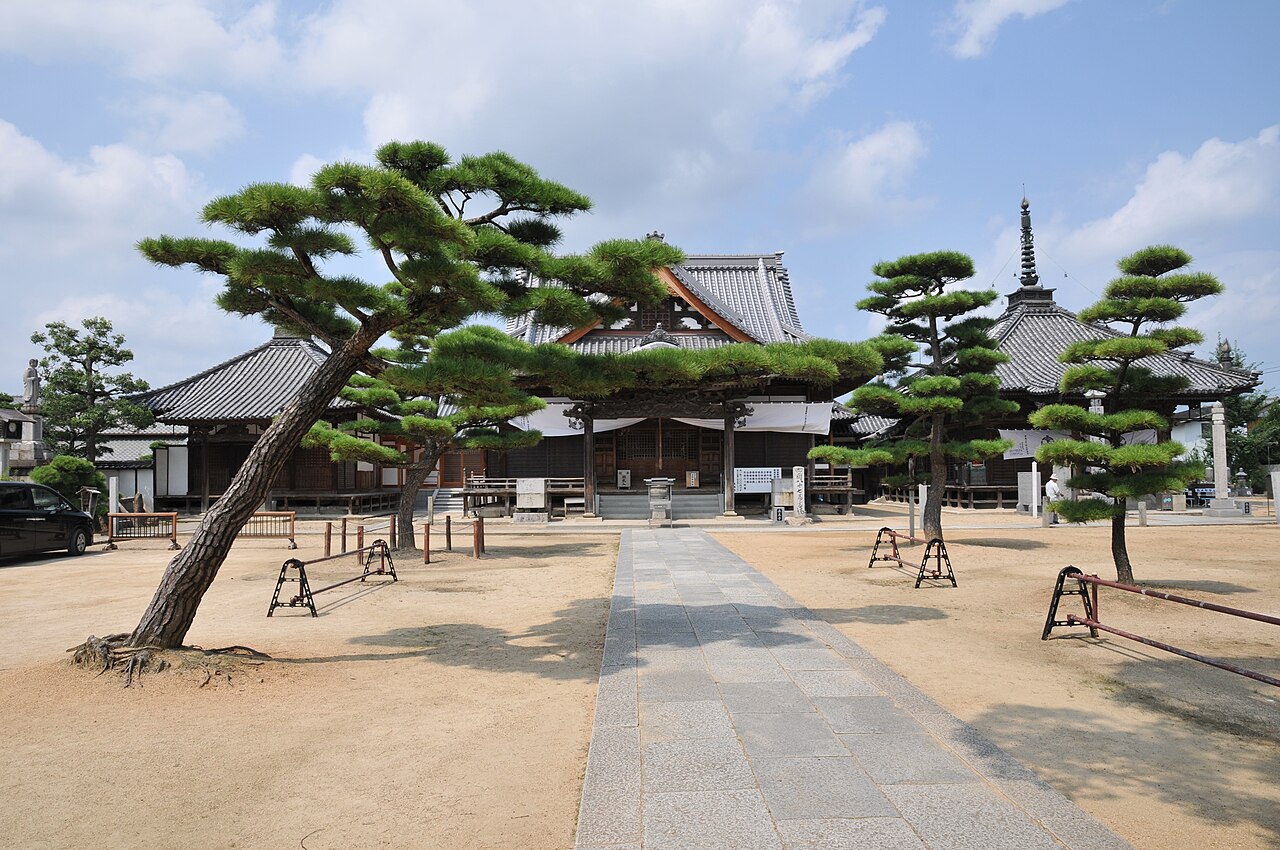
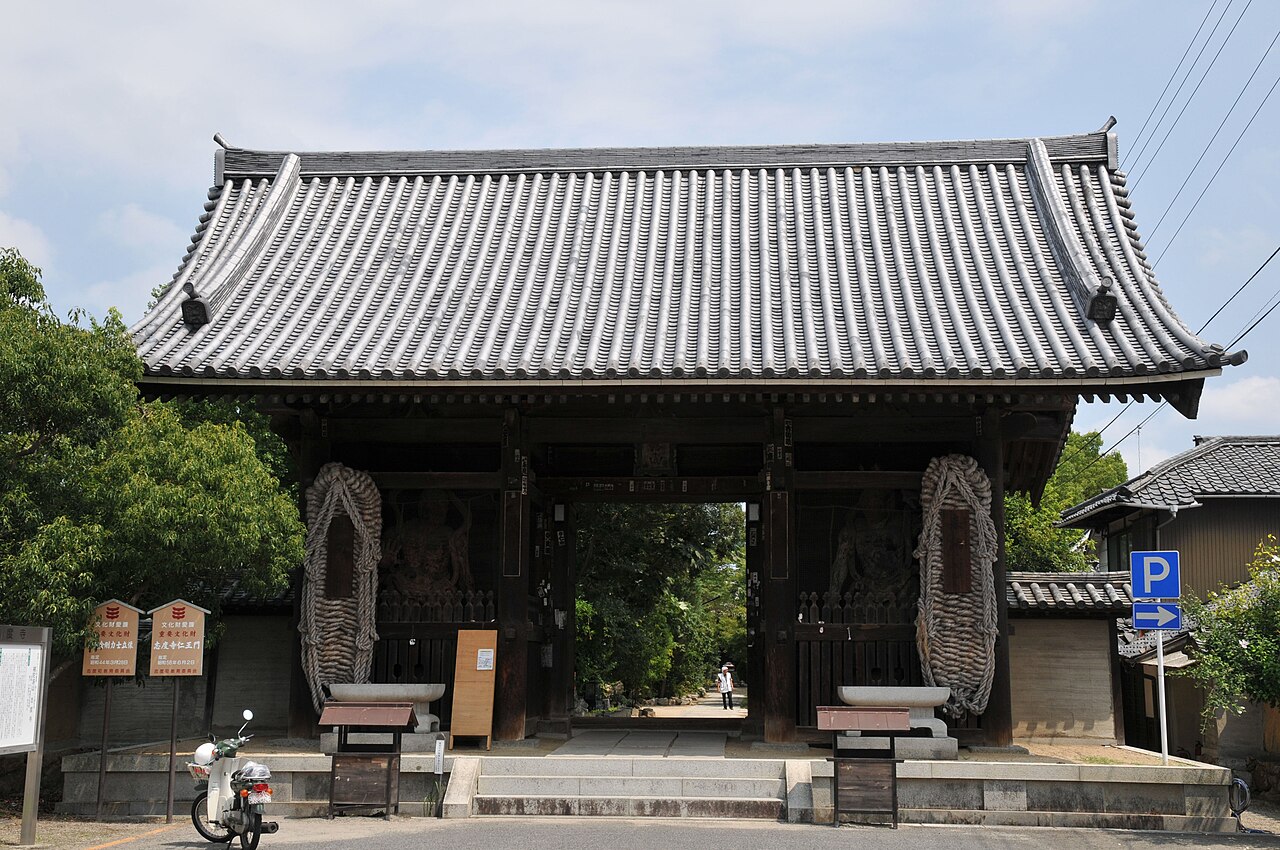
The 88th and final temple of the Shikoku pilgrimage, high in the mountains where the journey is fulfilled.
Okubo-ji is the 88th and final temple of the Shikoku pilgrimage, hidden in the mountains of Sanuki City at around 450 metres above sea level. For the ohenro who have walked, driven or bused their way around all 88 sacred sites of Shikoku, this is the emotional summit of the whole journey — the kechigan-dojo, the 'temple of completion and fulfilment', where a pilgrimage that may have taken weeks and hundreds of kilometres finally comes to rest.
The temple is traditionally attributed to the monk Gyoki in the 8th century and, inevitably, to Kobo Daishi (Kukai), the founder of Shingon Buddhism whose spiritual presence pervades the entire route. Its principal image is a Yakushi Nyorai, the Buddha of healing and medicine. The mountain setting is magnificent: the halls climb a steep, forested valley, backed by rugged peaks and connected by stone stairways, with the main hall and Daishi hall nestled among towering cedars. In November the maples turn the valley into a blaze of red and gold, drawing visitors who come purely for the foliage, while spring brings cherry blossom and fresh green.
The temple's most powerful feature is its role in the pilgrimage's rituals of completion. Traditionally, pilgrims who have finished the circuit leave their kongozue, the wooden walking staff that has been their companion and, symbolically, the body of Kobo Daishi walking beside them, at Okubo-ji. A hall here holds hundreds of these staffs, retired at journey's end — a genuinely moving sight that speaks of countless personal quests brought to a close. Many pilgrims then travel on to Koyasan in Wakayama to report their completion at Kobo Daishi's mausoleum, closing the spiritual circle.
Because it is a remote mountain temple, reaching Okubo-ji takes some effort, which only heightens the sense of arrival. There is no train to the door; most visitors ride a community bus up from Nagao Station (around an hour) or drive the winding mountain road, while walking pilgrims complete the final forest ascent from temple 87 on foot. Parking, restrooms and a small cluster of shops and eateries serve those who make the trip. The elevation keeps the air cool and clean, and the atmosphere, especially when mist drifts through the cedars, is deeply serene.
Devotions here carry extra meaning: purification, incense and candles, sutra chanting at the main and Daishi halls, and the collection of the final temple stamp that completes the pilgrimage book. Many pilgrims are visibly emotional, and the shared sense of accomplishment among strangers is part of what makes Okubo-ji special.
Allow around an hour to climb the grounds, visit the staff hall, and simply absorb the mountain quiet and the weight of the place. Pair it with temple 87 (Nagao-ji) below to trace the pilgrimage's final steps. Whether or not you are a pilgrim yourself, treat Okubo-ji with real respect — for many of those around you, standing here is the culmination of a life-changing journey.
A local's tip
This is the kechigan-dojo, the temple of fulfilment — pilgrims traditionally leave their walking staff here, having completed the full 88-temple circuit.
Best time to visit
November for autumn foliage
Getting there
From Nagao Station take the community bus up into the mountains (about 60 minutes), or drive; walking pilgrims climb the forest trail from temple 87 to complete the circuit on foot.
Good to know
- Parking
- Restrooms
Plan the whole trip offline
Okubo-ji (Temple 88) is one of many places in the Real Japan app — with turn-by-turn directions, nearby spots and full offline maps you can use with no signal.