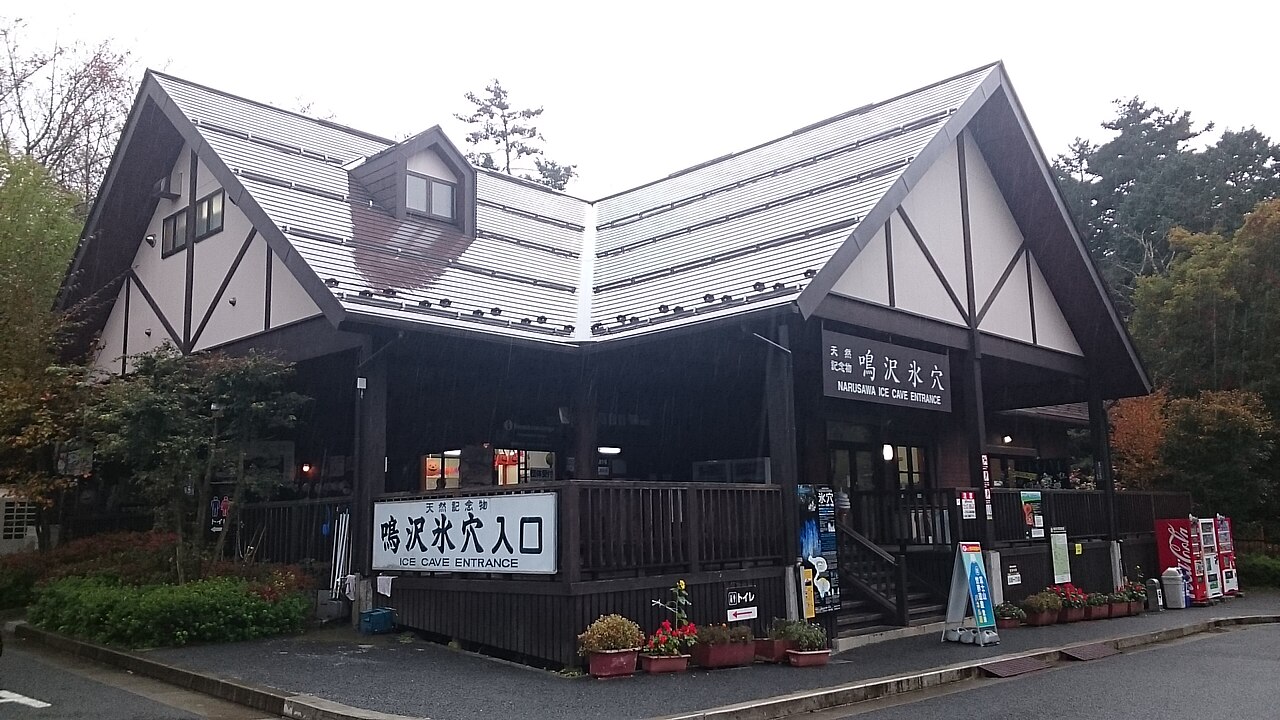
A lava cave near Aokigahara where ice pillars survive year-round in the chilled underground air.
The Narusawa Ice Cave, or Narusawa Hyoketsu, is a lava tube on the western side of Mt. Fuji, formed during a massive eruption of the nearby Nagao volcano around the year 864, the same eruption that created much of the Aokigahara forest and the western lakes' landscape. Designated a Natural Monument, it is one of a pair of famous caves in the area, the other being the Fugaku Wind Cave a short distance away, and it offers visitors a striking, cool descent into the volcanic underworld beneath the forest floor.
What makes the Narusawa cave remarkable is its ice. The tube is shaped in a way that traps cold air, and the temperature inside stays close to freezing all year round, so that ice pillars and sheets form and persist even through the heat of summer. Historically this natural refrigeration was put to practical use: the cave was employed to store ice and, in later years, silkworm cocoons and seeds, taking advantage of its stable cold. Today, artificial ice columns are sometimes added in the cool season to enhance the display, but the year-round chill and the glassy ice formations that survive into midsummer are entirely genuine and quite unexpected in warm weather.
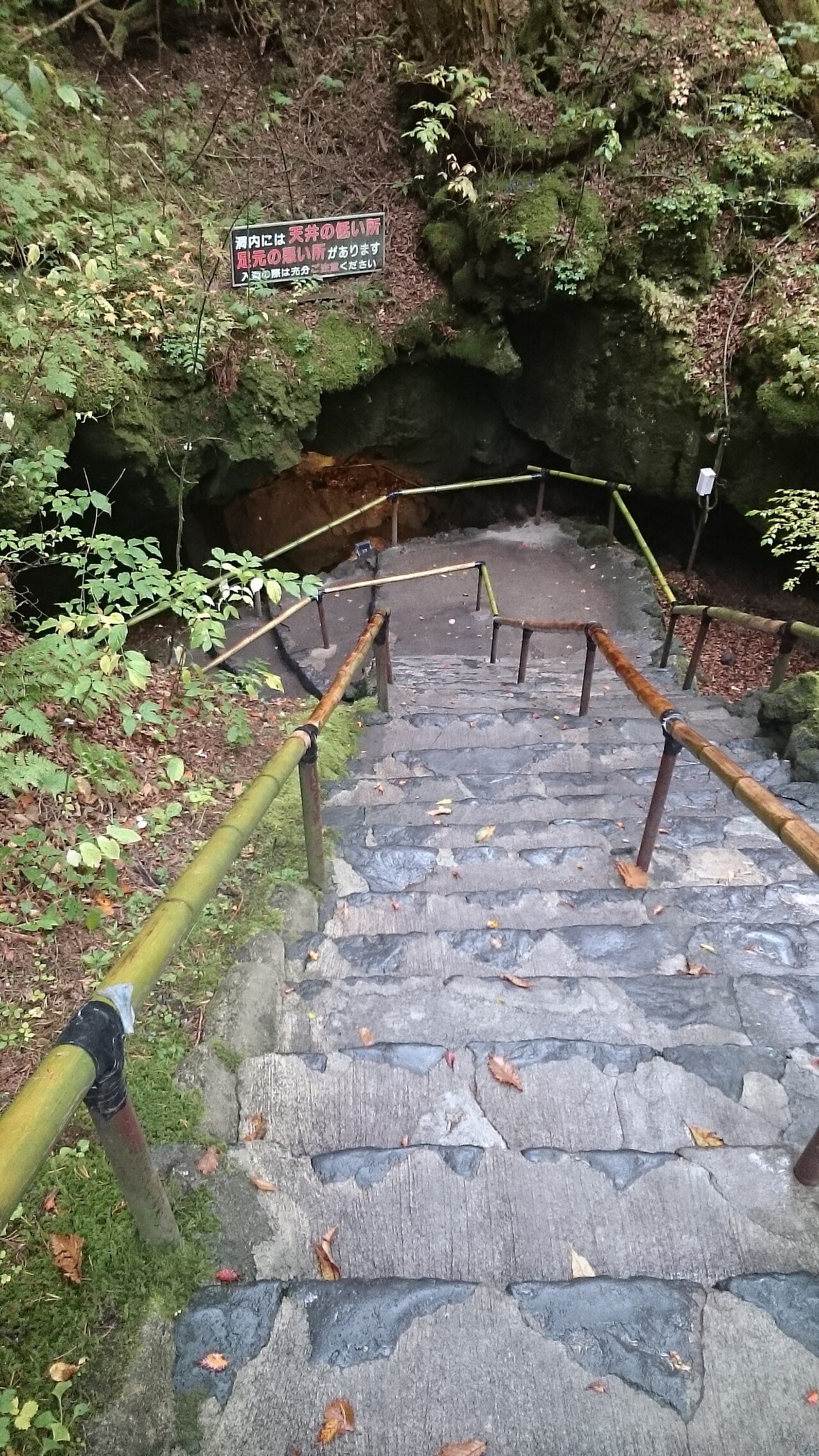
The cave itself is a compact loop of around 150 metres, descending by stairs into the lava tube and following a circuit past ice walls, low ceilings and narrow squeezes before returning to the surface. It is a short visit, typically around half an hour, but an atmospheric one. Parts of the passage are tight, dropping to well under a metre in height, so visitors must crouch and watch their footing on steps made slick by dripping meltwater and ice. Sturdy shoes and care are essential, and helmets are provided at the busy spots; the confined, chilly passages can also be a squeeze for anyone uncomfortable in enclosed spaces.
Because the cave sits within the forested lava fields on Fuji's western flank, it pairs naturally with the neighbouring Fugaku Wind Cave and a walk through the surrounding woodland, which forms part of the broader Aokigahara area. The contrast between the warm, green forest above and the frozen, black-walled tube below is the essence of the experience, and it is especially popular in summer, when stepping from a hot day into a natural icebox feels almost magical.
A small admission fee is charged, and the cave keeps daytime opening hours that vary a little with the season. Facilities at the entrance include parking, restrooms and a gift shop, and the site is reachable by the sightseeing buses that loop out from Kawaguchiko Station toward the Aokigahara area, taking around half an hour. For families and anyone curious about the volcanic forces that shaped the Fuji Five Lakes, the Narusawa Ice Cave is a short, memorable and affordable adventure that reveals a hidden, frozen side of the mountain.
A local's tip
Wear grippy shoes and mind your head: the passage narrows to under a metre in places and the ice-slicked steps are genuinely slippery. A jacket helps even in August.
Best time to visit
Summer, when the ice contrasts most with the outside heat
Getting there
Take the Fujikyu 'Blue Line' sightseeing bus from Kawaguchiko Station toward the Aokigahara area; the ride is about 30 minutes. The cave entrance is a short walk from the bus stop and car park.
Good to know
- Parking
- Gift shop
- Restrooms
Plan the whole trip offline
Narusawa Ice Cave is one of many places in the Real Japan app — with turn-by-turn directions, nearby spots and full offline maps you can use with no signal.