The solemn forested tomb attributed to Japan's legendary first emperor, at the foot of sacred Mount Unebi.
At the foot of Mount Unebi in Kashihara lies the Mausoleum of Emperor Jimmu, the tomb attributed to the legendary founder of the Japanese imperial line. Whether or not Jimmu existed as a historical person, this quiet, deeply solemn site occupies a central place in the national story, and visiting it offers a very different experience from the castles and painted tombs elsewhere in the region — hushed, formal and heavy with symbolism.
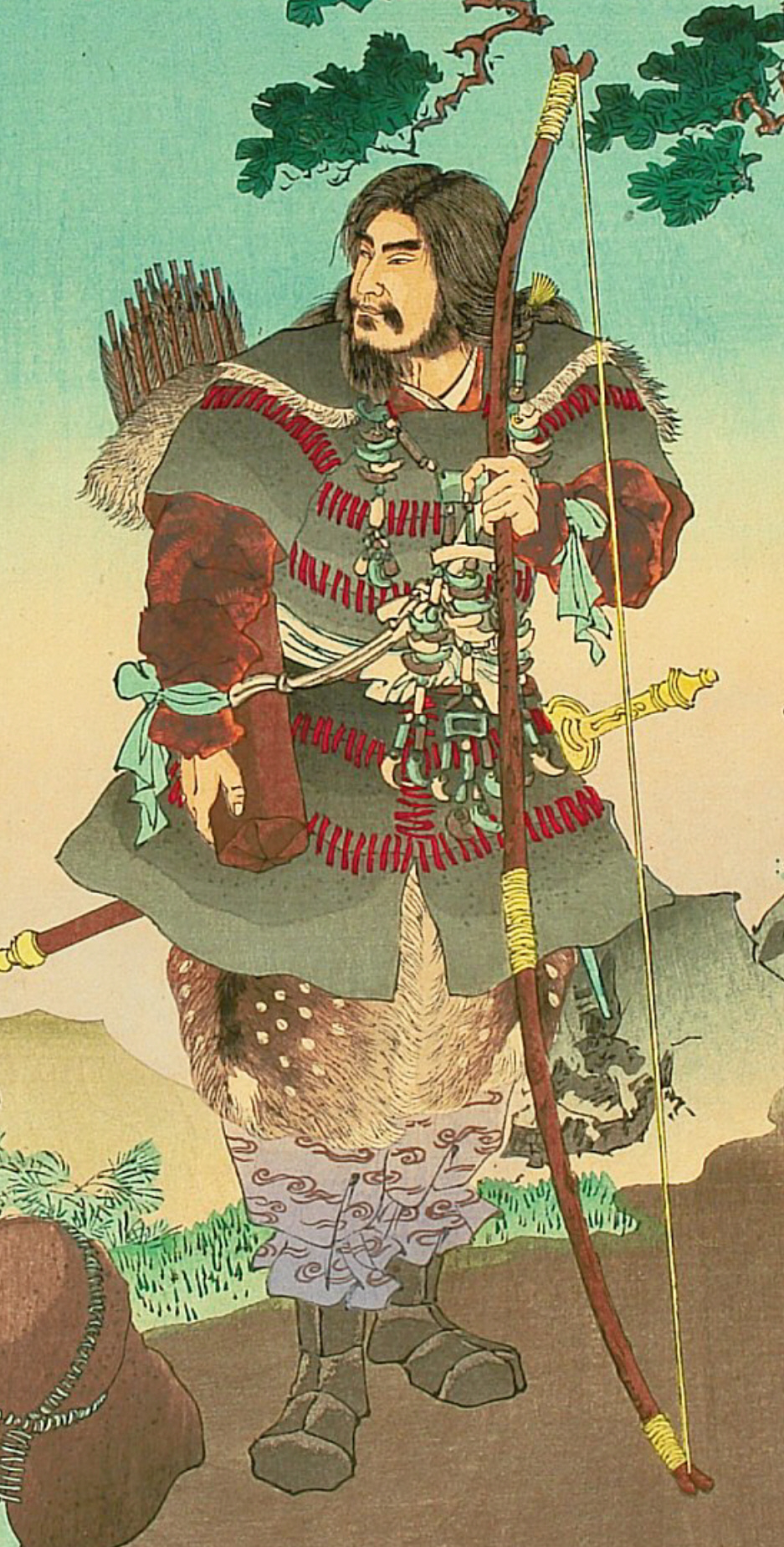
According to the ancient chronicles the Kojiki and Nihon Shoki, Emperor Jimmu was a descendant of the sun goddess Amaterasu who led an expedition eastward and, in the year traditionally given as 660 BC, founded the Japanese state and ascended as its first emperor in the Yamato basin — the very landscape that surrounds this tomb. He is a figure of myth as much as history, but the imperial family and the modern state have long regarded this spot as his resting place.
The mausoleum as seen today was formally designated and grandly landscaped in the 19th century, during the Meiji era, when the imperial institution was being placed at the heart of a modernising nation. The result is a large, immaculately kept precinct: a broad approach of raked white gravel leads to a torii gate and a simple wooden fence, beyond which a low forested mound rises among towering trees. Because it is an active imperial tomb administered by the Imperial Household Agency, the mound itself is off-limits; visitors pay their respects from the forecourt, and the atmosphere is one of quiet reverence rather than sightseeing. The scale of the trees, the stillness and the pale expanse of gravel give the place a genuine gravity.
The mausoleum sits immediately beside Kashihara Jingu, one of the most important Shinto shrines in Japan, which was also established in the Meiji period and is dedicated to Emperor Jimmu and his consort. The two sites were conceived together as a monumental expression of the founding of the nation, and they are almost always visited as a pair. Kashihara Jingu's vast wooden halls, wide courtyards and forested grounds complement the solemnity of the tomb, and together they draw large numbers of worshippers at New Year and on national holidays.
For the traveller, the appeal here is contemplative. There are no exhibits and little to 'do' in the usual sense; the reward is standing in a place charged with meaning, at the mythic origin point of the imperial line, framed by the sacred mountain of Unebi and the great cedars of the precinct.
Getting there: the mausoleum is a peaceful 15-minute walk north from Kashiharajingu-mae Station, served by both the Kintetsu Kashihara and Yoshino lines, and is easily reached from Nara, Osaka or Kyoto. The forecourt is open during daylight hours and free to enter. Pair it with Kashihara Jingu next door, and with the nearby Fujiwara Palace ruins and Imai-cho old town, for a day tracing the deepest roots of Japan's history and legend.
A local's tip
This is an active imperial tomb administered by the Imperial Household Agency, so visitors stop at the reverent gravel forecourt rather than approaching the mound. Combine it with Kashihara Jingu next door for the full founding-of-Japan story.
Best time to visit
Any season; peaceful year-round
Getting there
A quiet 15-minute walk north from Kashiharajingu-mae Station, at the foot of Mount Unebi. Often combined with a visit to the adjacent Kashihara Jingu shrine.
Good to know
- Parking
- Restrooms
Plan the whole trip offline
Mausoleum of Emperor Jimmu is one of many places in the Real Japan app — with turn-by-turn directions, nearby spots and full offline maps you can use with no signal.