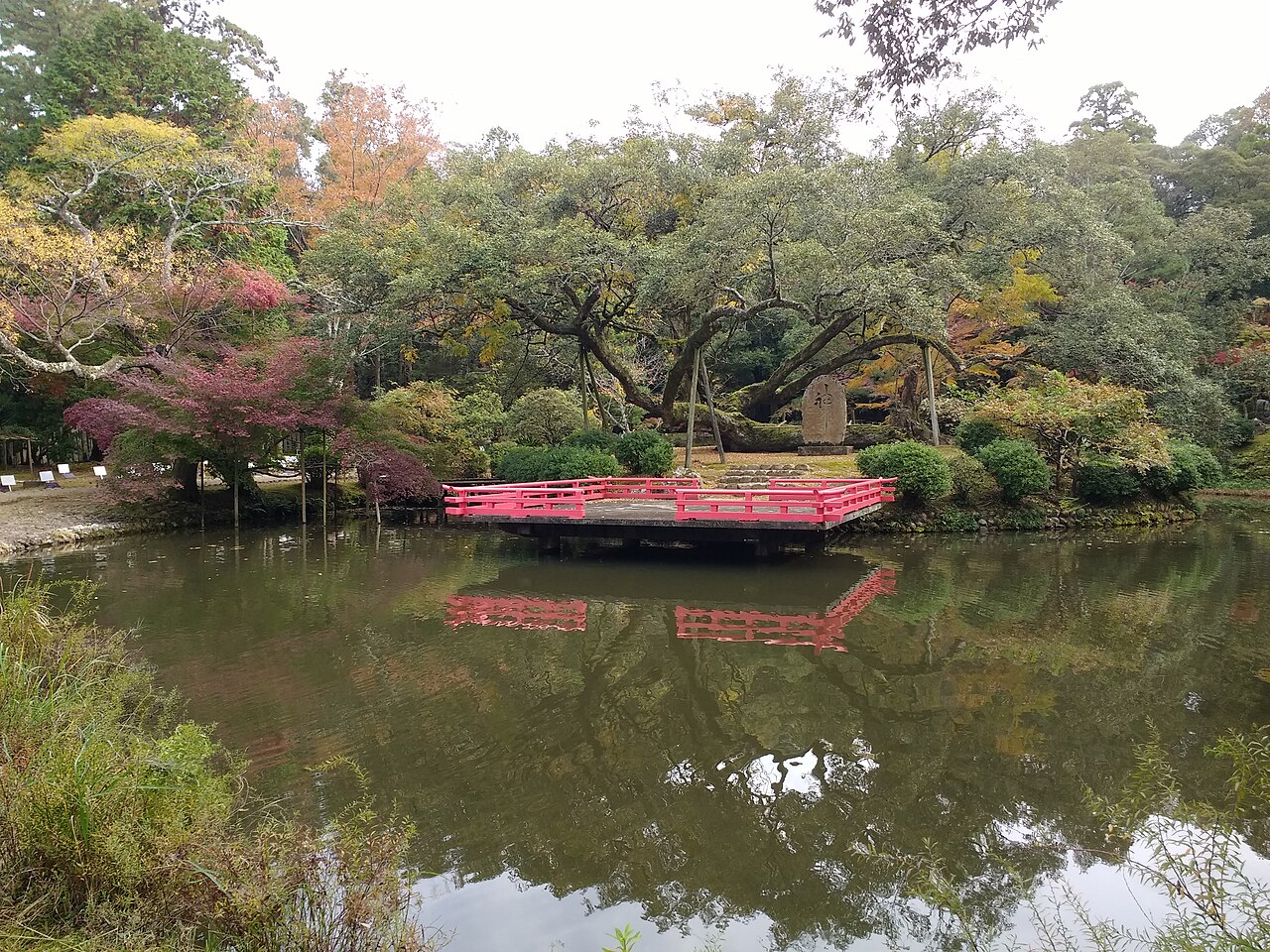
Japan's oldest Manyo garden, growing around 300 plants named in the ancient Manyoshu poetry anthology.
The Manyo Botanical Garden, set within the sacred precincts of Kasuga Taisha, is the oldest botanical garden of its kind in Japan, opened in 1932. Its theme is unusually poetic: rather than displaying plants by scientific family, it gathers together the flowers, trees and grasses named in the Manyoshu, the great eighth-century anthology of Japanese verse whose poems date from the Nara period and earlier. Around 300 species mentioned in that collection are cultivated here, each often accompanied by a wooden plaque bearing the very poem in which it appears, so that a walk through the garden becomes a walk through the earliest layers of Japanese literature.
The garden lies along the tree-lined Omotesando approach to Kasuga Taisha, between the first and second great torii gates, in a shaded pocket of the Kasugayama forest. It is divided into themed sections — including areas for the plants of the Manyoshu, a garden of the five grains, and specialist collections — laid out around paths, a central pond and a small stream. Because so many of the plants are seasonal, the garden looks completely different from month to month, and part of its charm is that it rewards repeat visits across the year.
Its single most celebrated feature is wisteria. The wisteria is the sacred flower and heraldic crest of Kasuga Taisha, and the garden maintains a dedicated wisteria section with around twenty different varieties trained over trellises and frames. In late April and early May these burst into cascades of purple, white and pink blossom, drawing their heaviest crowds of the year; the pond and the surrounding forest make an ideal backdrop, and the scent hangs over the whole enclosure. Beyond the wisteria, early spring brings plum and camellia, summer irises and bush clover, and autumn its own quieter seasonal flowers, all chosen for their appearance in ancient verse.
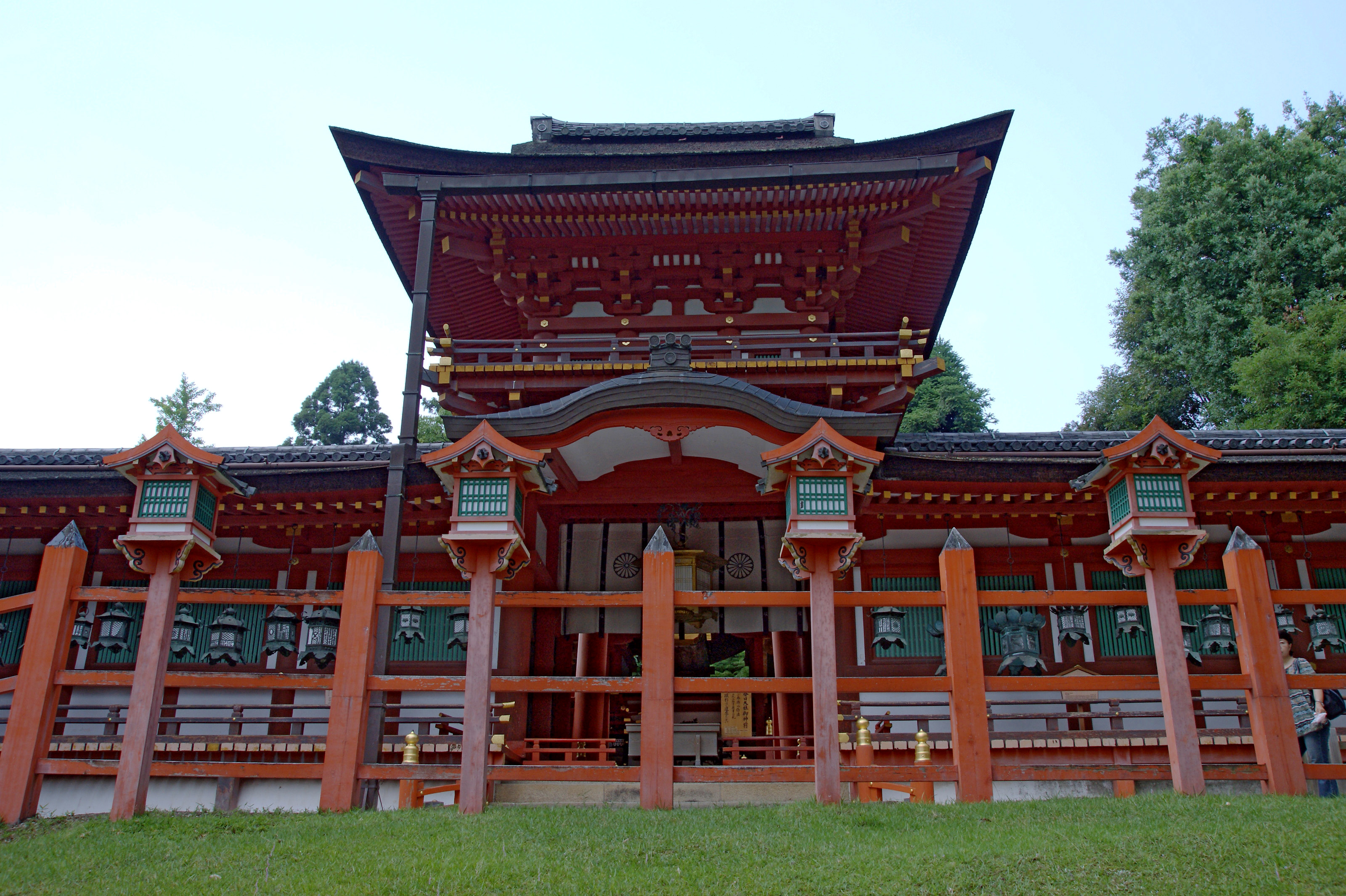
For visitors, the garden offers a calm, cultured hour a short distance from the vermilion halls and hanging lanterns of Kasuga Taisha itself. Paths are level and easy, benches are set among the planting, and a small shop and rest area allow for a pause. Because it charges a modest admission and sits slightly off the busiest shrine route, it is usually far quieter than the main hall of Kasuga Taisha, making it a restful addition to a temple-heavy day.
The garden is open daily, from 9:00 to 17:00 in the warmer months and closing a little earlier in winter, with an entry fee of around 500 yen. It fits naturally into a visit to Kasuga Taisha and can be combined with the surrounding Kasugayama forest and Nara Park.
Getting there means walking east through Nara Park from Kintetsu Nara Station, a journey of about thirty minutes along the shrine's forested approach, or taking a City Loop bus to the Kasuga Taisha stop and continuing on foot. For anyone interested in Japanese poetry, the Nara period or simply seasonal flowers in a historic setting, the Manyo Botanical Garden is one of the most distinctive green spaces in the ancient capital.
A local's tip
Time your visit for the wisteria season in late April - the garden holds around twenty varieties, and Kasuga Taisha's shrine crest is itself a wisteria.
Best time to visit
Late April to early May for the wisteria
Getting there
Within the grounds of Kasuga Taisha, between the first and second torii gates on the Omotesando approach. Walk east through Nara Park from Kintetsu Nara Station (about 30 minutes) or take the City Loop bus to Kasuga Taisha Honden.
Good to know
- Shop
- Restrooms
Plan the whole trip offline
Manyo Botanical Garden is one of many places in the Real Japan app — with turn-by-turn directions, nearby spots and full offline maps you can use with no signal.